SCAD FASH draws a bead on C.Z. Guest’s personas through her stylish wardrobe
This story was originally published by ArtsATL.
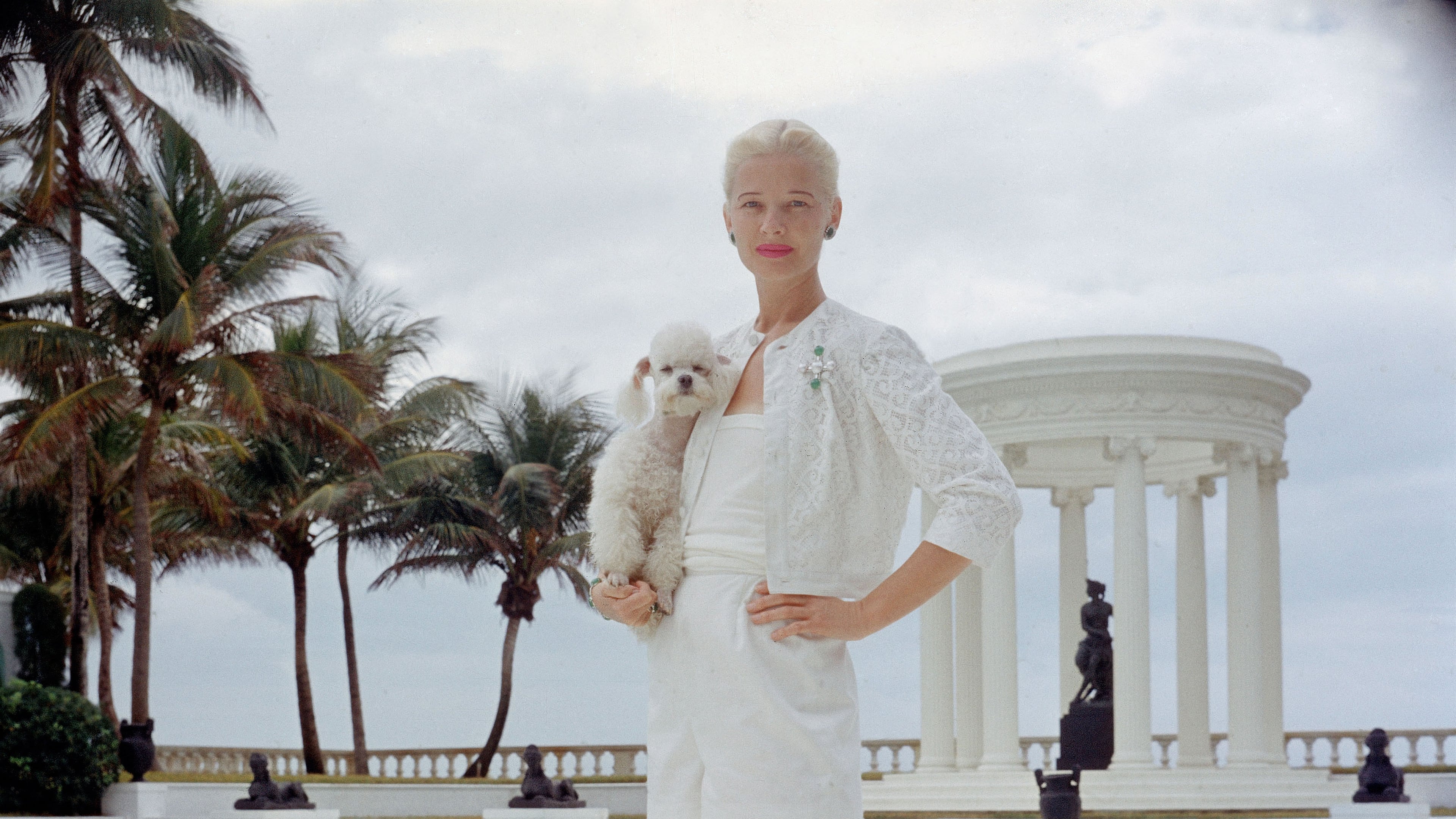
Truman Capote called C.Z. Guest “blanc de blanc perfection” in his introduction to her 1975 book, “First Garden: An Illustrated Garden Primer.” The description neatly captures the public persona of the celebrated socialite, style icon and Capote “Swan.”
C.Z. Guest: Portrait of an American Style Icon,” on view at SCAD FASH Museum of Fashion + Film through Feb. 21, gathers the photographs, garments and accessories that helped create that image. The more intriguing question is whether the exhibition reveals the woman behind it or simply burnishes the myth of Capote’s “cool vanilla lady” of “ice-cream reserve.”
Guest was born Lucy Douglas Cochrane in 1920 to a wealthy Boston family. By her teens, the striking, refined C.Z., whose nickname was a corruption of her younger sister’s attempt to call her “sissy,” was already appearing in the society pages.
At 24, she landed a job on Broadway as a dancer in the famed Ziegfeld Follies. A meeting with Darryl Zanuck led to a screen test and a contract with 20th Century Fox, but she left Hollywood after only nine months. In her book celebrating Guest’s life, gardening and enduring style, Susanna Salk quotes Guest as saying, “I had no talent at all, but I enjoyed every minute of my experience.”
After returning to Boston for a time, she made her way to Mexico, where the famed muralist Diego Rivera painted her nude portrait. In 1947, she married steel fortune heir and international polo champion Winston Frederick Churchill Guest in a ceremony at Ernest Hemingway’s Havana home.
Throughout the 1950s and 1960s, Guest became one of the era’s most photographed women, gracing the cover of Time magazine in 1962 under the headline “What’s It Like Today in Society?”
That remarkable trajectory is central to the exhibition’s portrait of Guest. Stefano Tonchi, who co-curated “Portrait of an American Style Icon” with Ariel Stark, described her as someone whose public life spanned dramatic changes in fashion and American culture, calling her “almost like a mirror of the path of American women from the ’30s to the ’90s.”
The exhibition opens with photographs by Cecil Beaton, Slim Aarons, Bruce Weber, Andy Warhol and others, making a strong case for why Guest mattered and why she still might. In one early image, she is backstage at a Hollywood studio doing her hair, looking every inch the budding screen siren; photographs from the 1970s and 1980s, by contrast, could almost have been lifted from the pages of Martha Stewart Living.
“She really pioneered the gardening-as-lifestyle industry,” said William Norwich, a former gossip columnist at the New York Post, where Guest began writing a gardening column in 1978.
By opening with this sweep of images, the exhibition establishes the remarkable longevity of Guest’s career as a style icon and positions her as far more than merely one of Capote’s Swans, that circle of wealthy, glamorous socialites into which the writer insinuated himself.
But while the photographs reveal how Guest fashioned and refashioned her public persona, a more elusive question remains: Do they bring us any closer to knowing the woman behind it?
If the photographs keep Guest at a certain remove, her clothes offer a more intimate way of reading her. “It is only shallow people who do not judge by appearances,” Oscar Wilde observed, and “C.Z. Guest: Portrait of an American Style Icon” suggests, somewhat paradoxically, that we might best come to know Guest through what she wore.
As Guest herself put it, “Style is what you are inside.”
From its opening photographic portraits, the exhibition moves into a gallery divided between “C.Z. on the Town” and “C.Z. in the Country,” contrasting the worlds of New York and Palm Beach, Florida, society with life at Templeton, the family estate in Old Westbury, New York, where Guest cultivated her legendary gardens.
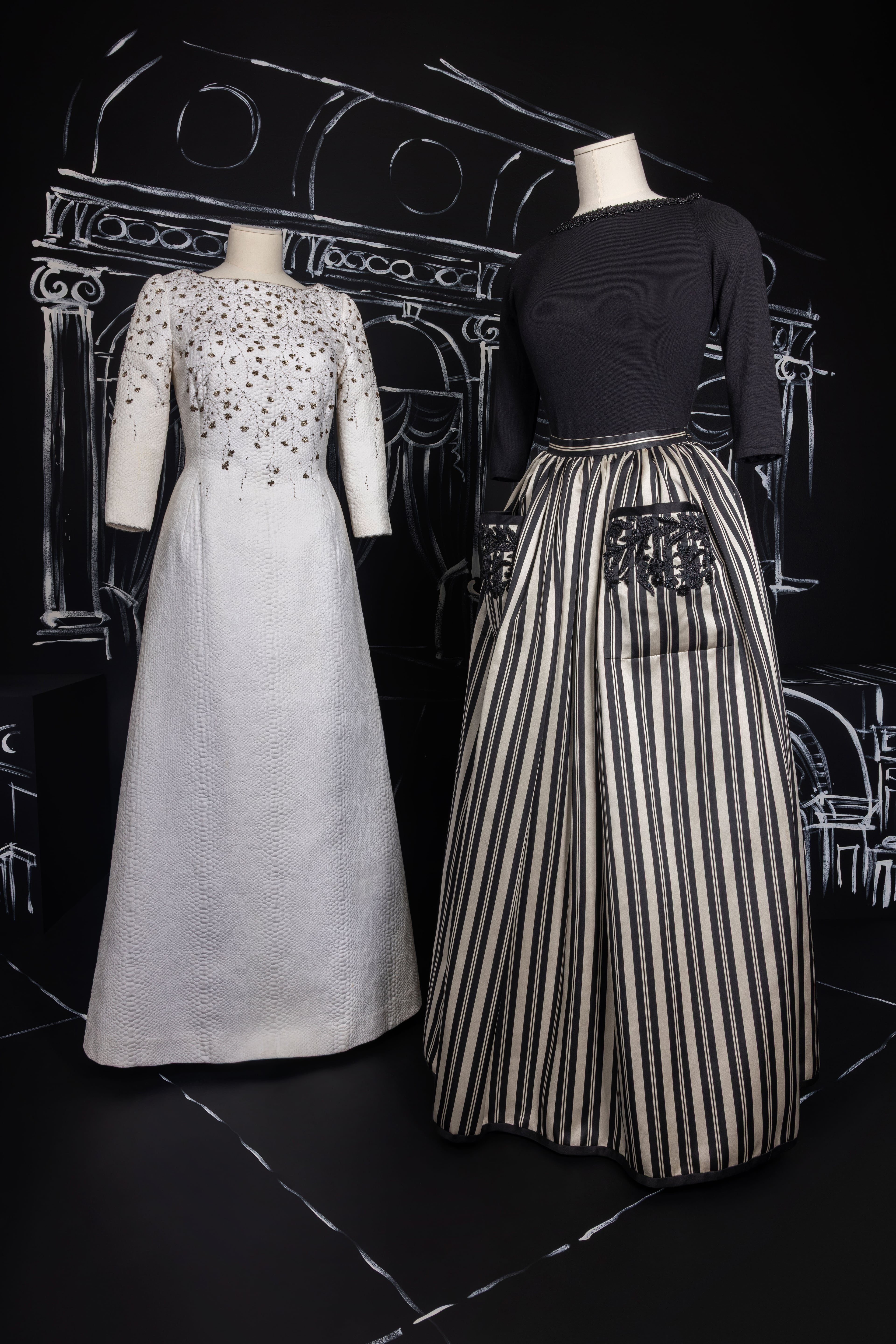
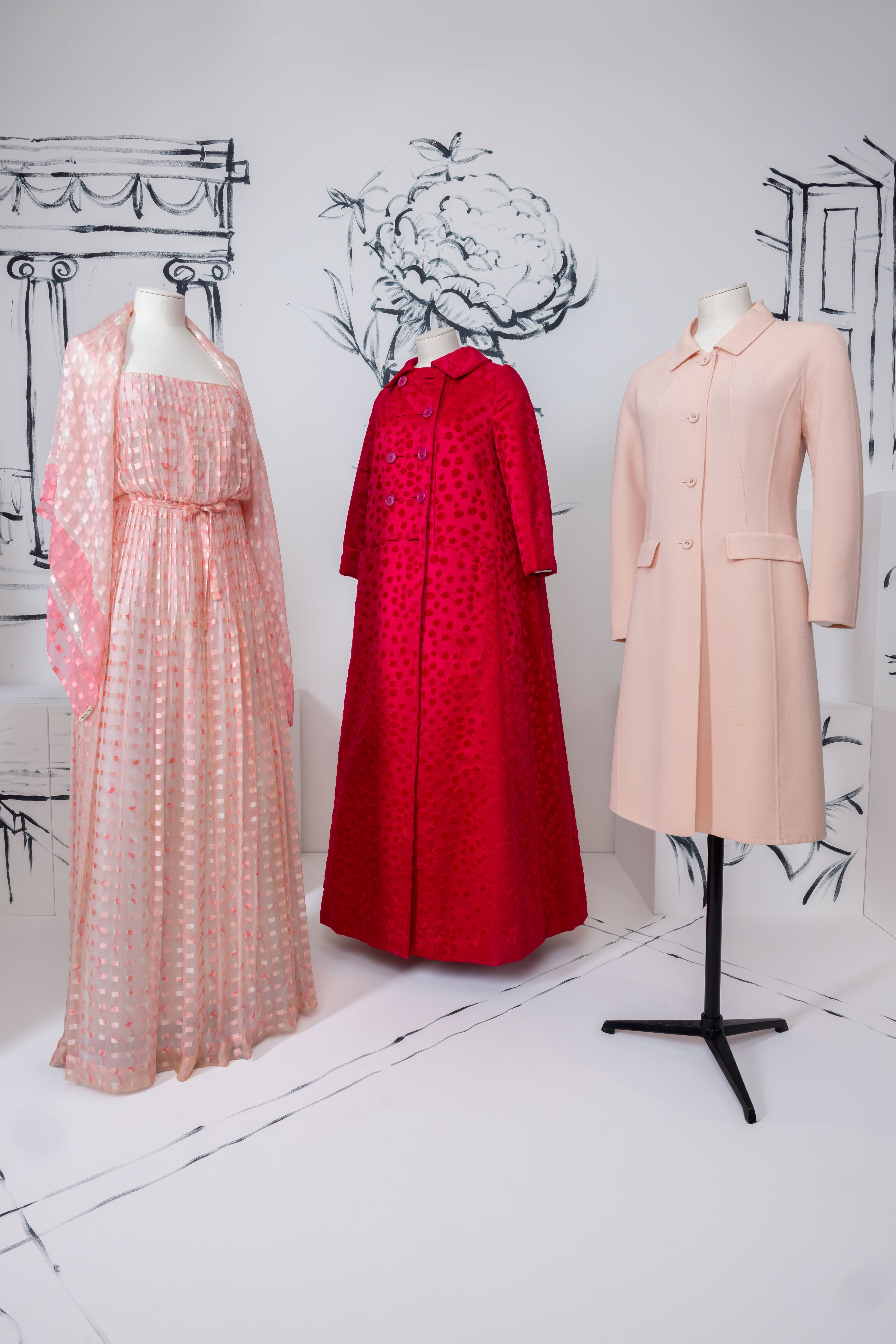
In “Capote’s Women,” Laurence Leamer writes that Guest “had the confidence to wear what she wanted when she wanted to wear it,” and the garments on view bear that out. When Guest found something that suited her, she often acquired it in multiples, reinforcing the sense that her wardrobe was less about novelty than about refining a personal uniform.
The garments are beautiful, impeccably crafted and often surprisingly understated. Rather than simply chase the marquee designers of the day, Guest developed enduring preferences: Main Bocher, the American-born couturier with whom she had a close relationship; Oscar de la Renta; Carolina Herrera; Max Mara, a sponsor of the exhibition; and the lesser-known Adolfo Sardiña.
“My mother never dressed to impress,” said Guest’s daughter, Cornelia, who donated the garments to SCAD. “She always dressed with a purpose.” It is here, in that sense of purpose, that Capote’s portrait of Guest as “blanc de blanc perfection,” a woman of “ice-cream reserve,” begins to grow more complicated.
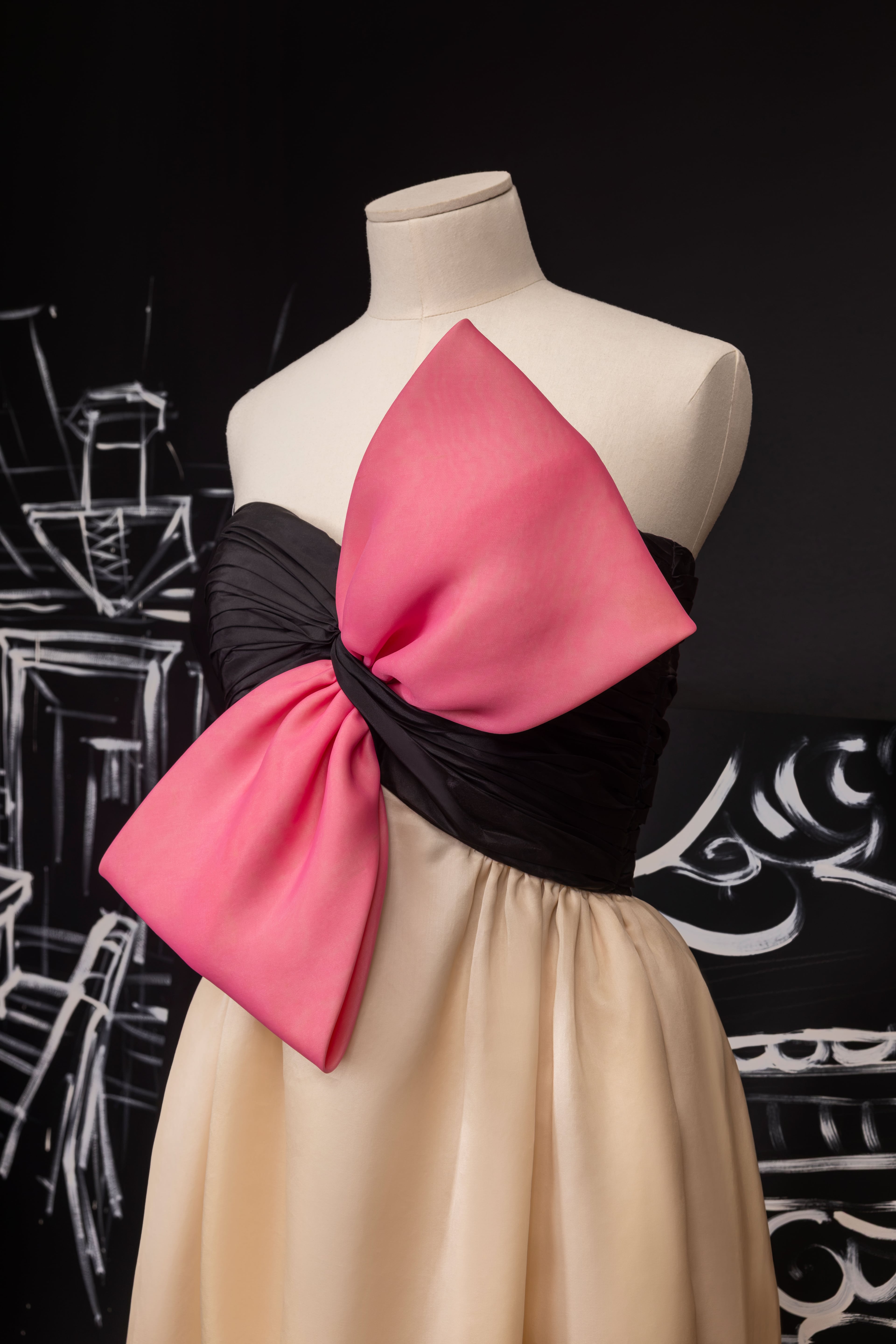
That sense of purpose complicates the apparent effortlessness of Guest’s style. What the exhibition reveals, particularly through its emphasis on uniformity and repetition, is a wardrobe governed by rigorous self-discipline and a remarkably firm sense of self.
Yet it also raises a question: Can such deliberate self-fashioning be a truthful expression of the person underneath?
Particularly revealing is a seemingly modest navy puffer coat. As Stark points out, its fur is concealed on the inside rather than displayed on the exterior, a detail she interprets as an expression of Guest’s confidence and subtlety: “I don’t need to show my fur. My fur is on the inside. It’s for me.”
It is a small but telling sartorial choice, suggesting a private pleasure amid a life lived under the public gaze.
That moment offers only a tiny glimpse, but perhaps that is enough. The exhibition gives us considerable access to Guest’s taste while offering less access to her interior life. Yet perhaps that is precisely the point.
To paraphrase Oscar Wilde: Give a woman a mask and she will tell you the truth. To search for some more authentic Guest behind the immaculate image may be to misunderstand her.
“C.Z. Guest: Portrait of an American Style Icon” never entirely separates Guest from Capote’s vision of “blanc de blanc perfection,” but perhaps it isn’t meant to. Instead, it suggests something more intriguing — that Guest and the immaculate image she created were ultimately inseparable.
The image was not simply a mask she wore; it was an expression of who she was.
EXHIBIT PREVIEW
“C.Z. Guest: Portrait of an American Style Icon”
Through Feb. 21. 10 a.m.-5 p.m. Tuesday-Saturday, noon-5 p.m. Sunday. $5-$10 (free for college students with ID). SCAD FASH Museum of Fashion + Film, 1600 Peachtree St. NW, Atlanta. 404-253-3132, scadfash.org.
Opening at SCAD FASH on Nov. 11: “Emily in Paris: Fashion Without Rules — Costumes by Marylin Fitoussi,” fashion from the Netflix series, through March 14. scadfash.org.
::
Robert Stalker is an Atlanta-based freelance writer who writes about modern and contemporary art.

MEET OUR PARTNER
ArtsATL (artsatl.org) is a nonprofit organization that plays a critical role in educating and informing audiences about metro Atlanta’s arts and culture. ArtsATL, founded in 2009, helps build a sustainable arts community contributing to the economic and cultural health of the city.