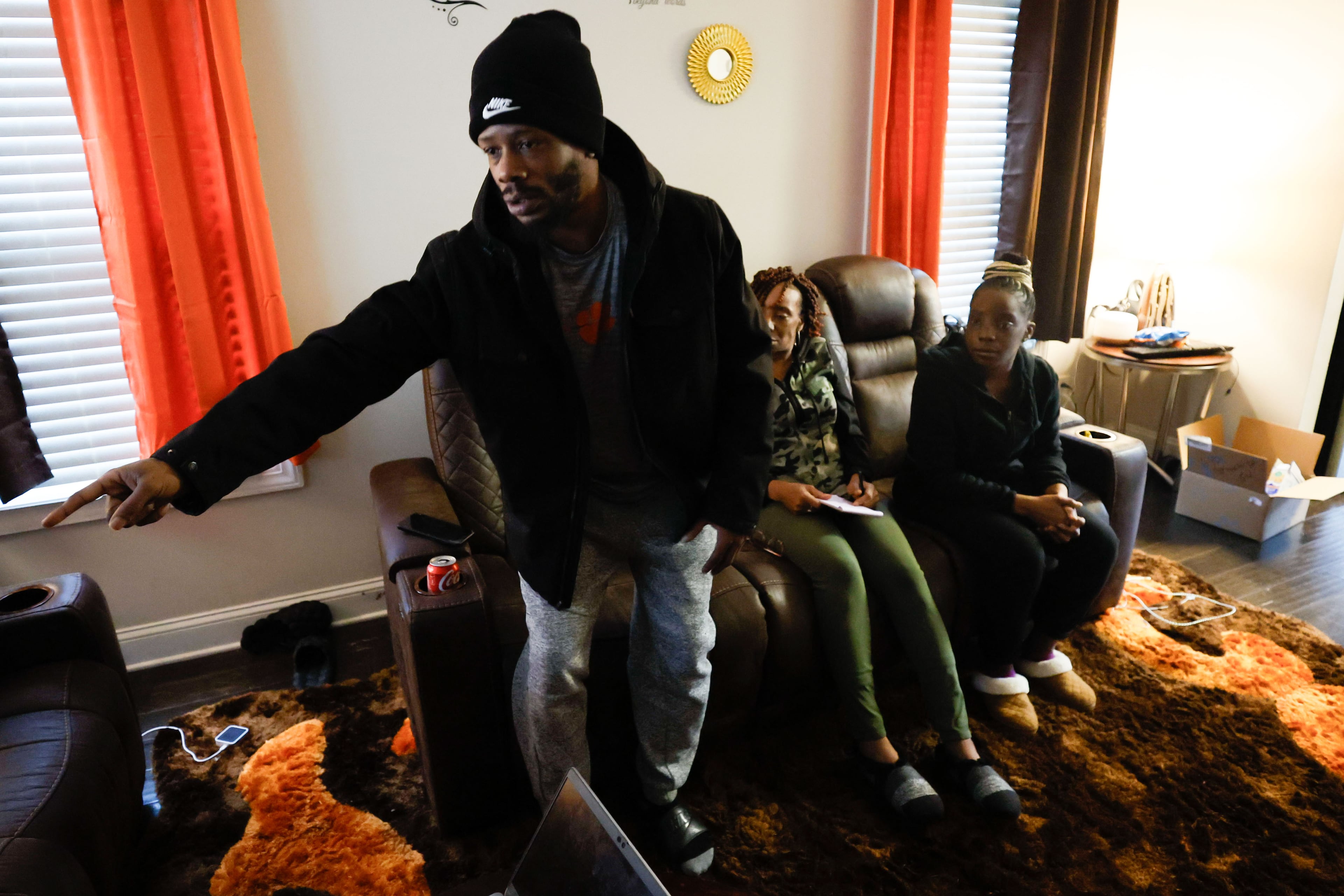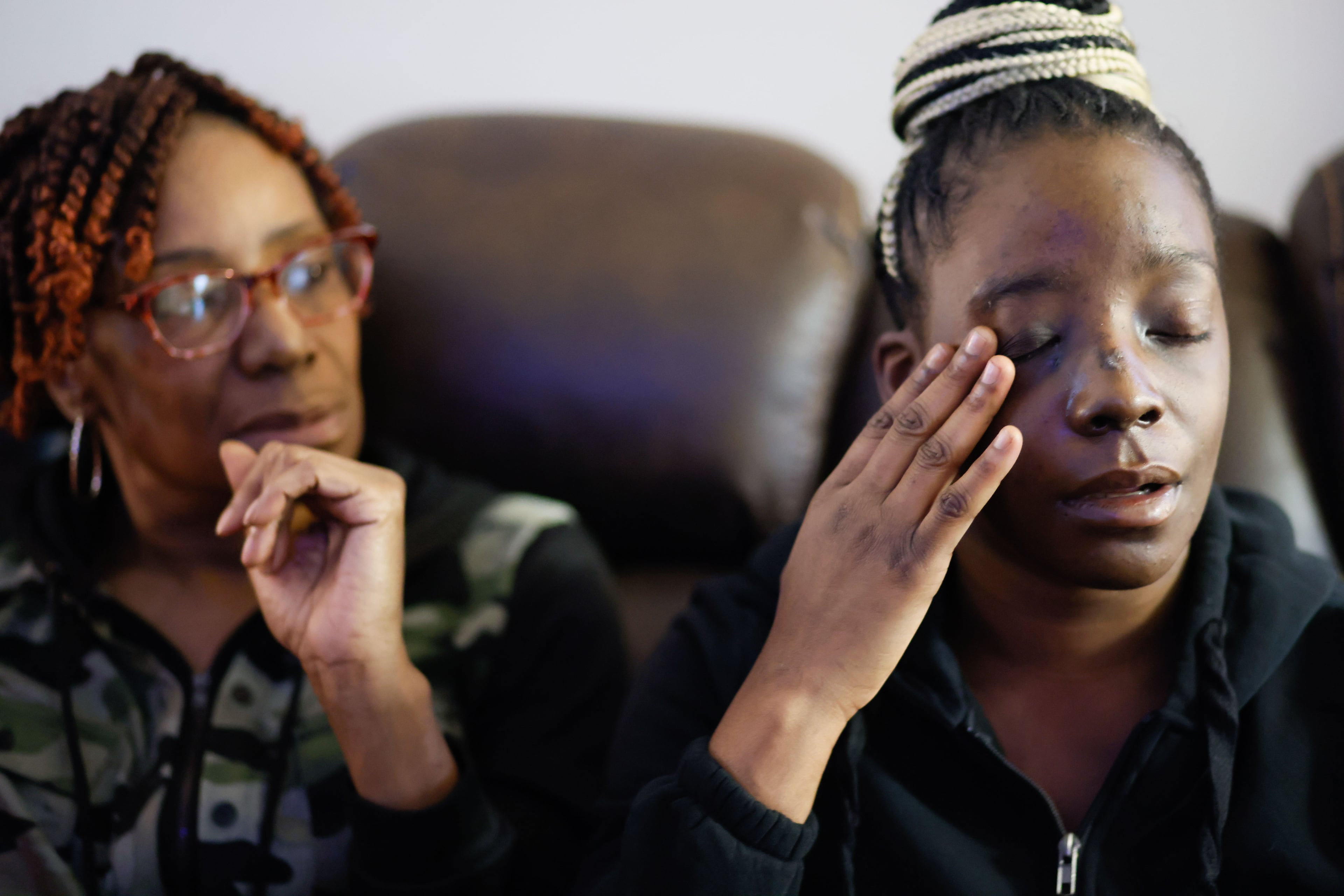
It was a cool afternoon in early January and Brittany McElrathbey was lounging at her brother’s apartment in southwest Atlanta, scrolling on Instagram, when a stray bullet smashed through the window.
The bullet pierced the couch, hit Brittany in the back of the neck and exited through the bridge of her nose.
Stunned, the 30-year-old mother crawled to the floor, dripping in blood, as her brother grabbed a pillow to cover the wound.
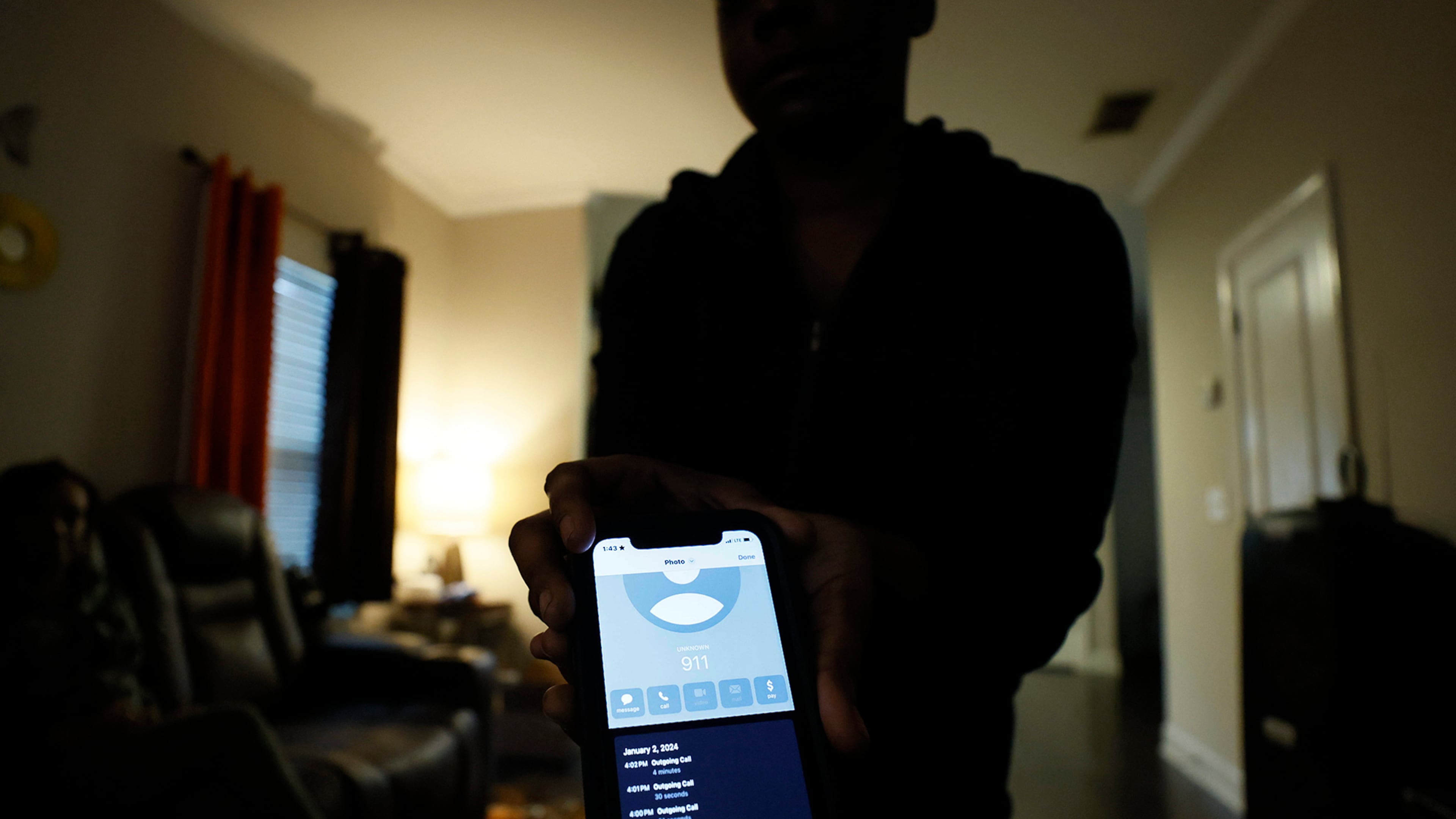
Her mother screamed. Her 12-year-old son begged for someone to dial 911. More than one person tried, but they couldn’t get through.
“When you have a situation like this, and you try to call 911 and no one answers, what do you do?” Brittany’s mother, Tonya, said as she recalled the incident weeks later. “It’s like you’re left out there alone, in a crisis.”
The McElrathbeys’ problem with 911 is all too common for residents across metro Atlanta, an investigation by The Atlanta Journal-Constitution found. The AJC reviewed data representing millions of calls across Atlanta and the metro counties and found, time and again, that an alarmingly high number of callers were left waiting for a 911 operator to answer. While most calls are answered within seconds, others are placed on hold for minutes at a time. Some callers wait so long that they hang up in frustration and panic before they reach an operator.
Last year in Atlanta, about 30% of emergency calls were put on hold for longer than the industry standard – which requires that nearly all calls be answered by a 911 operator within 20 seconds. Atlanta hasn’t met that standard in four years. In Gwinnett County, the 911 center failed to meet the standard for a third of emergency calls in 2023, placing those callers on hold for more than 20 seconds. In DeKalb County, it’s worse: About half of emergency calls took longer than 20 seconds to answer, according to county data.
The AJC’s investigation found that the problem worsened in recent years, reaching a dire level in some communities as the pandemic depleted the workforce in 911 centers and positions went unfilled. This left thousands of callers across the metro area on hold while in crisis.
The AJC interviewed dozens of people who shared their stories of getting placed on hold when they called 911 for help. They described feelings of terror and disbelief, and a shattered trust of the emergency services system. The callers’ stories included a church usher put on hold after watching a parishioner collapse and become nonresponsive; a young woman attacked in a domestic violence dispute who called for help and got the automatic hold message from 911; a partygoer held on the emergency line after a fellow guest had a seizure.
The consequences of placing a 911 caller on hold can be dangerous, even deadly.
“We can help provide insight, information, and direct instruction on how to stop a bleed, give CPR, get somebody out of a burning building,” said Ty Wooten, a director at the International Academies of Emergency Dispatch of 911 centers, later adding: “Every single second counts.”
Missing the mark
Metro Atlanta is covered by a patchwork of 911 centers run by county and city governments. The AJC requested call data from more than two dozen local 911 centers and found a mix of successful response times combined with troubling delays.
The AJC measured every agency against the standard for 911 answer times, as set out by industry professionals: that 90% of calls are answered within 15 seconds, and 95% of calls are answered within 20 seconds.
Poor performing agencies included DeKalb County E-911, Gwinnett County E-911 and Atlanta E-911. Among the key findings:
♦ At DeKalb County E-911, just over half of calls in 2023 were answered within 20 seconds — the worst response time among the metro area agencies the AJC examined.
♦ At Atlanta E-911, which has the largest call volume in the metro region, 30% of calls in 2023 took longer than 20 seconds to answer and 1 of every 10 calls took longer than a minute to answer.