Raffensperger urges Supreme Court to reject Trump’s mail-in ballot plan
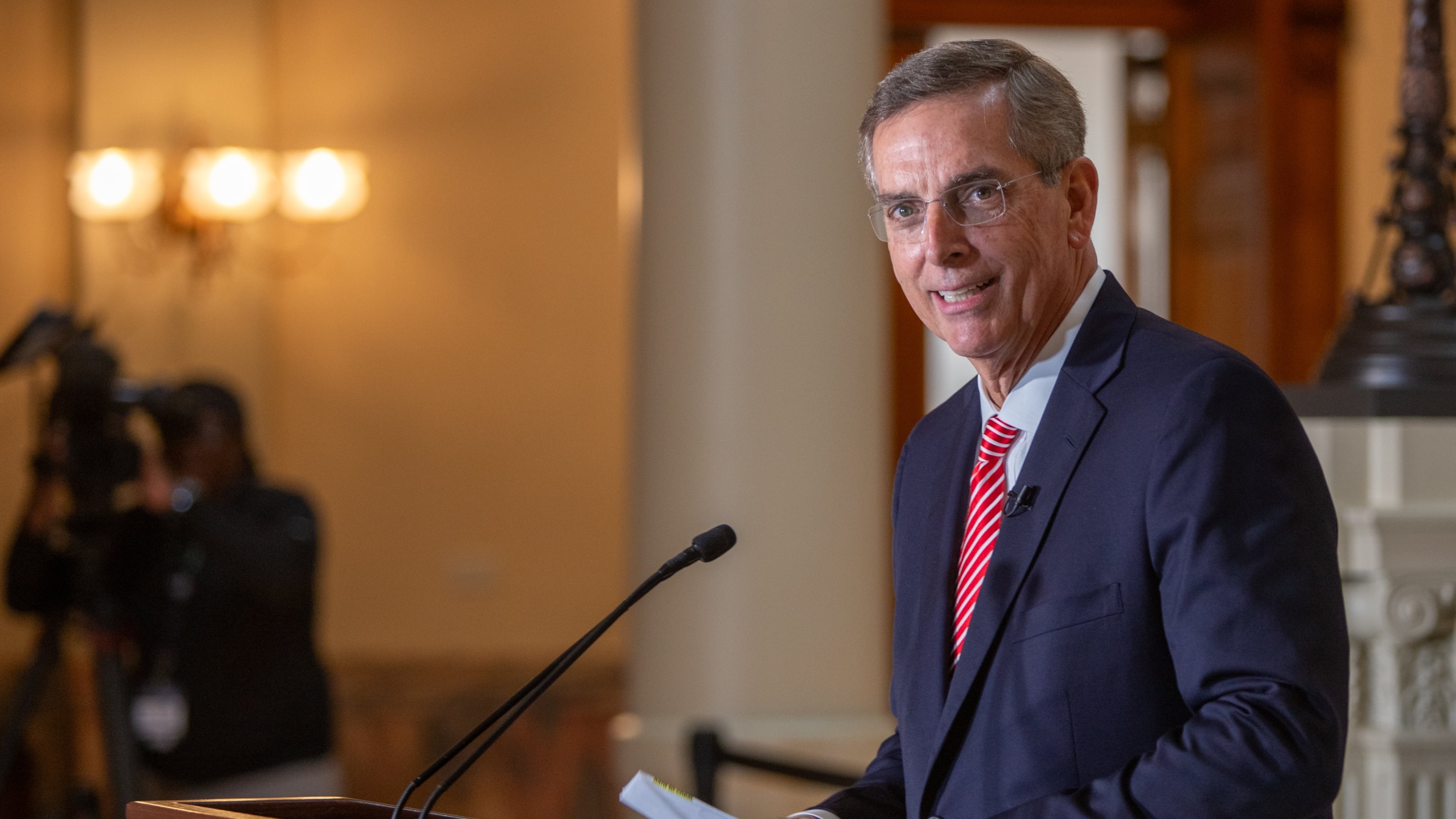


Georgia Secretary of State Brad Raffensperger Wednesday joined a bipartisan group of elected officials urging the U.S. Supreme Court to reject the Trump administration’s plans to use the U.S. Postal Service to vet voters for the November election.
In a brief filed with the court, 38 current and former state and local officials from 10 states took no position on the legality of Trump’s plan to create a national database of registered voters and to instruct the Postal Service to deliver absentee ballots only to people who appear on the list. But they said it’s too late to implement the plan this year, given that one state has already begun issuing ballots and others will follow shortly.
The officials said the work they would need to do to ensure that the process goes smoothly “cannot be responsibly accomplished in the time that remains in a manner that ensures both that the rule is implemented correctly and other crucial preparations do not fall by the wayside.
“Attempting to implement the rule now will almost certainly lead to mistakes, delays and confusion for both voters and election officials,” the officials argued.
Raffensperger was joined in the brief by more than a dozen current and former local and state election officials in Georgia. Numerous officials from other states — many of them controlled by Republicans — also joined the brief, prepared by two Atlanta attorneys.
Raffensperger and the other Republicans, including the Republican secretaries of state of Kansas, Kentucky and North Dakota, are a noteworthy addition to the state officials who have urged courts to block Trump’s moves to dictate the rules for the November election. Numerous Democratic officials across the country have taken the lead so far.
Earlier this year Trump ordered federal authorities to compile a national list of verified citizens and instructed the Postal Service to refuse to deliver ballots from anyone who does not appear on the list.
Democrats have argued Trump’s order is illegal. Among other things, they say the Postal Service has no authority to refuse to deliver ballots.
Trump’s order has been held up in court. But on Sunday the Trump administration urged the Supreme Court to allow its plans to move forward. The administration argued the Postal Services’ final rule “imposes only modest envelope-design and addressee-information requirements for federal-election ballots sent via U.S. Mail.”
On Wednesday, the bipartisan group featuring Raffensperger weighed in with an amicus brief describing the difficulty of implementing such an order so close to the election. They said Trump’s plan would require significant work by the states and the Postal Service, including testing new systems, creating compatible data systems and establishing new processes for mailing ballots. That’s in addition to normal election preparations.
“For election officials, elections are not something that simply happen on Election Day — preparations have been underway this entire year, and crucial preparations are occurring now,” they argued. “In many respects, the election is already underway.”
North Carolina has already mailed out its first ballots, and federal law requires states to transmit ballots to military and overseas voters by Sept. 19. Georgia is set to begin mailing its military and overseas ballots on Sept. 15 and other absentee ballots on Oct. 5.
Among other challenges, the Trump rule also requires states to use a federal ballot portal “that does not yet exist” and enroll on the national list every voter who casts their ballot by mail, the officials argued. They said “election officials’ plates are already full with the normal but crucial tasks of preparing for an election.”
Cherokee County Elections Director Anne Dover, who signed onto the brief, said she doesn’t understand how the administration’s mail ballot plan can be implemented without “throwing everything into chaos.”
Regardless of the legality of Trump’s actions, the brief urges the Supreme Court to allow this year’s election to be conducted under current rules.
Election officials don’t expect Trump’s plan to go into effect. Even if it prevails in court, it would be hard to implement.
Bartow County Elections Supervisor Joseph Kirk, who signed onto the brief, said it takes at least a year to overhaul any major elections process.
The cacophony of events and punditry around the Trump administration’s plan makes Kirk worry that no matter what happens, “voters are just going to check out.”
The Trump administration’s proposed rule would affect a small minority of voters in Georgia. Most Georgians typically cast ballots during early voting. Mail voting is usually a relatively small percentage of turnout — about 5% of voters used mail ballots in 2024.
Raffensperger brief isn’t the only one from Georgians objecting to Trump’s plans. Georgia’s two Democratic U.S. senators and several Democratic representatives were among the hundreds of current and former members of Congress who filed a separate brief. Several metro Atlanta election officials and the Norcross-based civil rights group Asian Americans Advancing Justice-Atlanta also joined separate briefs.
Clarification
September 17, 2026This story has been updated to include information on other Georgians who filed briefs opposing the Trump administration’s mail-in ballot plan.