Georgia Democrats talk property taxes as they eye a possible House takeover
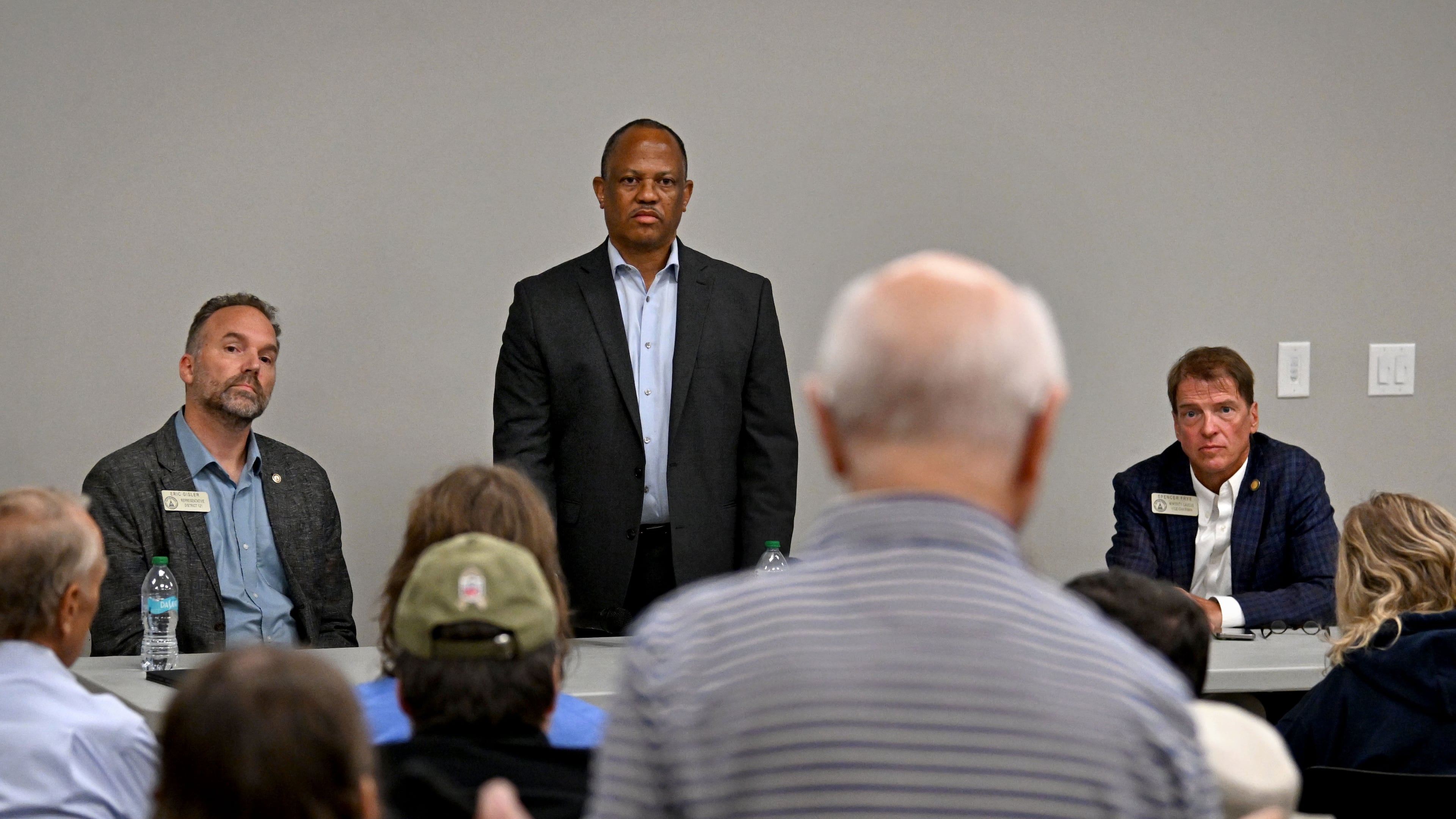
BOGART — At a library 20 minutes from downtown Athens, Democratic state Rep. David Wilkerson asked for a show of hands.
“Raise your hand if getting rid of property taxes is the number one thing that you’re concerned about,” he told the crowd of about 40 people at the Bogart Library.
No one raised their hand.
Instead, legislators and local residents wanted to talk about affordable housing, expressing concerns about companies that buy thousands of homes and local zoning restrictions that make it harder to build houses.
It’s been more than two decades since Democrats have been able to pass major legislation in Georgia. Republicans have controlled the General Assembly and governor’s office for a generation, and they have recently focused on cutting income taxes and property taxes.
But after years of chipping away at the GOP majority, Democrats believe they have their best chance in years to regain power in one chamber at the Georgia Capitol. If they do, Democratic ideas about taxes could challenge Republican tax-cutting orthodoxy.
To prepare, Democrats are hosting a series of meetings throughout the state aimed at listening to voters about what they should do if they get the chance.
So far, the Democrats have not coalesced around specific tax proposals. But Wilkerson believes these town hall meetings will help the party craft bills that appeal to ordinary Georgians — not just the elected officials and lobbyists who can travel to the Gold Dome to testify.
“That’s important,” Wilkerson said. “The people that have been missing in this whole conversation are the people actually paying the taxes.”
Republican tax cuts

Republicans have spent years trimming income and property taxes — sometimes with help from Democrats.
Under Republican Gov. Brian Kemp and the GOP-controlled General Assembly, Georgia’s income tax rate has fallen from 6% to 4.99%. As a result, revenue has leveled off despite economic and population growth.
Democrats supported a series of one-time tax rebates. But they generally opposed recent income tax rate cuts, saying they would primarily benefit wealthy Georgians and potentially force the state to raise sales taxes that disproportionately affect low- and middle-income people.
Republicans have also sought to trim property taxes. Two years ago, they limited the growth of assessments on individual properties (a proposal Georgia voters affirmed). But the limits were optional, and many school districts and local governments opted out.
This year, Republicans took their tax-cutting proposals to new lengths. Lt. Gov. Burt Jones, who at the time was seeking the Republican nomination for governor, proposed eliminating the individual income tax that generates 42% of state revenue. House Speaker Jon Burns proposed eliminating property taxes on primary residences, a major source of revenue for local governments and schools.
The Legislature ultimately approved scaled back proposals that nonetheless could significantly curtail income and property taxes.
Kemp signed both laws. But he said the income tax cut blew a $1.3 billion hole in the state budget. That led him to veto or disregard more than $300 million in spending, including money for cost-of-living raises for state retirees. He’s counting on revenue growth and the state’s dwindling budget reserves to cover the rest.
More property tax cuts could be in the works. A Republican-led House committee is studying local government funding issues, including property taxes.
State Rep. Chas Cannon, R-Moultrie, who chairs the committee, said it will focus on ways to make local government funding “more simple and efficient.” He wants to give local governments options to fund services in a way that works for governments and taxpayers.
“The last thing (taxpayers) need is the local government to jack up their taxes and take their money and spend it inefficiently,” he said.
State Rep. Shaw Blackmon, R-Bonaire, led negotiations on property tax legislation this year. He hopes the committee will find additional ways to lower property taxes.
“We feel like there is a path forward such that a homeowner can get some substantial relief — if not a full elimination (of property taxes) — and still find a way to fund local governments,” Blackmon said.
Democratic alternatives?
Wilkerson said the Democrats’ town hall meetings differ in an important way from the official Republican-led study committee. The official committee meets during the day and — at least in its first meeting — has heard primarily from local government officials. The Democratic committee meets at night and seeks to engage taxpayers.
Democrats believe there are ways to address concerns about housing affordability besides cutting property taxes.
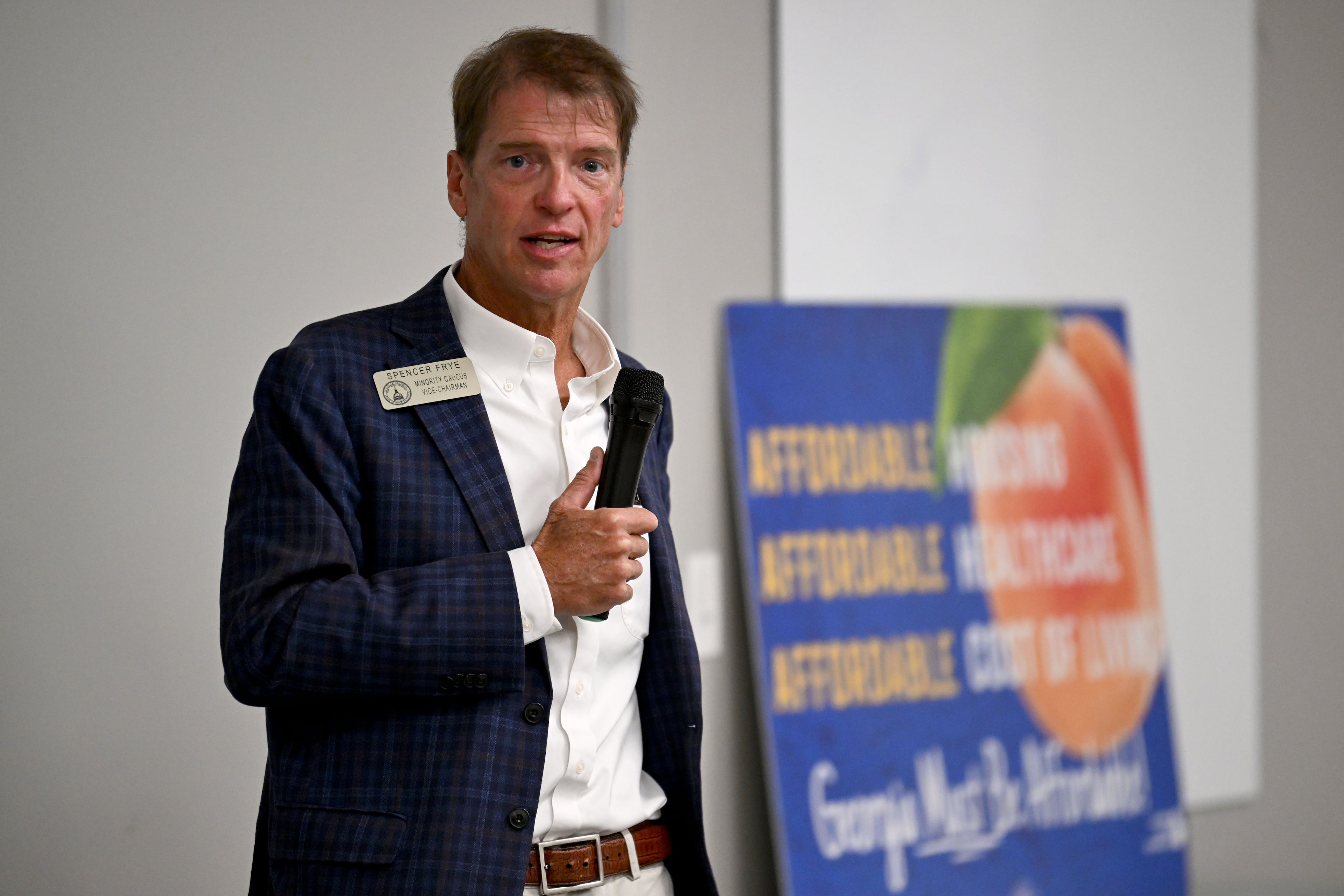
On Tuesday, state Rep. Spencer Frye, D-Athens, won applause when he spoke of corporations outbidding families for homes. He said the corporate search for investment properties is limiting the housing supply and making homes less affordable for ordinary people.
“Nobody in this room is ever going to win as long as we let that system stay in place,” Frye said.
A new federal law caps the number of houses that can be purchased by real estate investors, but the Democrats suggested the state could do more.
Frye, executive director of Athens Area Habitat for Humanity, also suggested legislators could encourage local governments to loosen zoning laws that limit the kind of dense developments that he said could increase the housing supply.
“If you had more houses for people to live in, your property taxes wouldn’t go up as high as they are now,” he said.
Athens resident Kathy Adams said the conversation about local zoning was enlightening, and she plans to start attending county commission meetings.
Others were less impressed. Clarke County resident Donna Carter said she wanted to hear more about reducing government spending to ease property taxes.
Wilkerson told the audience their feedback will help Democrats address their concerns.
“If we were in the majority,” he said, “it would be a lot easier.”