Saving Georgia’s newspapers is not the same as saving local news
When I learned that local funders, supported by the Miami-based John S. and James L. Knight Foundation, had helped purchase two historic Georgia newspapers, my first reaction was hopeful skepticism.
Then I learned that from one of my sources that one of those papers has only about 2,000 subscribers.
Read that again: 2,000 subscribers in a region of more than 500,000 people.
The Pivot Fund, which I lead, is often described as an investor in some of the country’s smallest newsrooms. But the purchase of a legacy newspaper with fewer than 5,000 subscribers turns that assumption on its head. Newsrooms supported by Pivot reach millions.
The nonprofit purchase of The Macon Telegraph and The Columbus Ledger-Enquirer offers hope for two historic institutions. But changing ownership will not, by itself, restore their audiences or reach.
The Georgia Trust for Local News, a subsidiary of the National Trust for Local News, purchased the papers from McClatchy in July for an undisclosed amount. Local foundations financed the acquisitions, while Knight Foundation’s earlier $5 million investment helped build the Georgia Trust’s infrastructure.
These are meaningful investments. But nonprofit ownership is not necessarily local control.
Reverse the doom loop of disinvestment
The National Trust entered Georgia after beginning in Colorado and expanding to Maine.
National Trust sold 21 of its newspapers in metro Denver in 2025 in order to cut costs and restructure.
The Georgia Trust remains its subsidiary. Knight is headquartered in Miami, and the Georgia Trust’s executive director is based in metro Atlanta — not Macon or Columbus.
None of that prevents them from serving these communities well. But a Georgia-branded subsidiary is not community governance. Local control should be treated not as a description of this transaction, but as a standard the new owners must meet.
Who controls the philanthropic dollars? Who sets editorial priorities? What power will residents have beyond being asked to subscribe, donate or attend a listening session?
My ties to these newspapers run deep. I worked for the Ledger-Enquirer and for The Telegraph’s sister newspaper in Milledgeville. I retain great affection for these institutions, for the people they served well — and those they never fully served.
The irony is not lost on me: I am writing what may sound like an obituary for newspapers in The Atlanta Journal-Constitution, which became fully digital in 2026. But the AJC’s evolution underscores my point: A newspaper is a platform. Journalism is the mission.
This is not an argument for letting newspapers die. It is an argument against mistaking the survival of a newspaper for the survival of local news.
The former owners of these papers did not merely erode revenue. They eroded audience. The 2,000-subscriber figure shows how thoroughly a storied institution can lose its relationship with its community.
That pattern is playing out across McClatchy, the former owner of the two Georgia newspapers. Recently, the company confirmed 90 newsroom layoffs at 17 newspapers after consumer revenue fell 41% over five years. Media executive Dick Tofel describes the nation’s for-profit metro newspapers as “going out of business in slow motion.” The cycle is familiar: Cut the journalism, lose readers, then use that loss to justify more cuts.
That is the cycle the Georgia Trust inherited — and must break.
Transparency is critical to building community trust

Leaders of the National Trust for Local News say they share the goal of building sustainable, community-rooted news organizations. “We invest in local news, sales and leadership, and centralize what we can in order to invest more in what matters most — the newsrooms themselves and the quality, hyperlocal journalism they produce,” Shannon Holfoth, the National Trust’s director of communications, told me.
Holfoth also cautioned against judging a news organization’s prospects by a single metric. That’s fair. Yet neither the National Trust nor its Georgia subsidiary would disclose the newspapers’ current subscription figures or their subscriber counts at the time of acquisition.
Cynthia DuBose, who has led the Georgia Trust for just six months, told me she was uncomfortable releasing those numbers.
There are encouraging developments. The Georgia Trust recently announced that veteran Columbus journalist Chuck Williams, who spent more than three decades at the Ledger-Enquirer, will return as its editor and publisher. The Trust says it added four employees during its first 90 days of ownership, with another reporting position planned.
These investments deserve recognition. Rebuilding struggling newspapers is complicated, and subscription figures alone cannot tell the whole story.

But transparency is not optional when philanthropic dollars are being used to reshape a community’s information infrastructure. Subscription figures are not the only measure of success, but they provide an important baseline for assessing whether these investments are rebuilding audience relationships or simply sustaining institutions.
And transparency is only part of the equation. Hiring local journalists and strengthening newsrooms are important. But who ultimately controls the resources, sets the priorities, and determines what success looks like? Nonprofit ownership does not automatically confer community control. Building a resilient information ecosystem also requires accountability, shared power, and investment in the trusted news and information providers that communities have already built.
Run toward the audience, not the platform

It also raises a harder question: Why did philanthropy mobilize millions around two legacy newspapers while largely overlooking the independent news ecosystem that emerged as those newspapers lost readers, reach and revenue?
There is an opportunity cost. Community-rooted newsrooms generally operate with less overhead and require less capital. Some of the money mobilized around these two institutions could have supported several hyperlocal outlets, reaching more communities and strengthening more of Georgia’s civic-information infrastructure.
This did not have to be an either-or choice.
Full disclosure: NotiVisión Georgia is a former Pivot grantee. Its Latina-led newsroom delivers actionable information to Spanish-speaking residents in Macon, Warner Robins, Fort Valley and surrounding communities in Middle Georgia. Despite its small staff, NotiVisión reaches more than 1 million people across Middle Georgia and beyond.
A historic name does not guarantee reach, just as a small staff does not mean a small audience.
The Georgia Trust should build durable partnerships with newsrooms already serving residents the legacy papers neglected. Those partnerships cannot give larger newspapers free content, borrowed credibility or access to audiences they did not cultivate. Community-rooted outlets must be compensated, credited and included in decisions about coverage, distribution and success.
To save local journalism, the new owners must walk away from platform-first thinking and run toward audience — especially audiences these newspapers never truly served.
The real test is whether power and investment move into Macon and Columbus — and into the hands of people rooted there.
The platform is not the mission. The audience is.
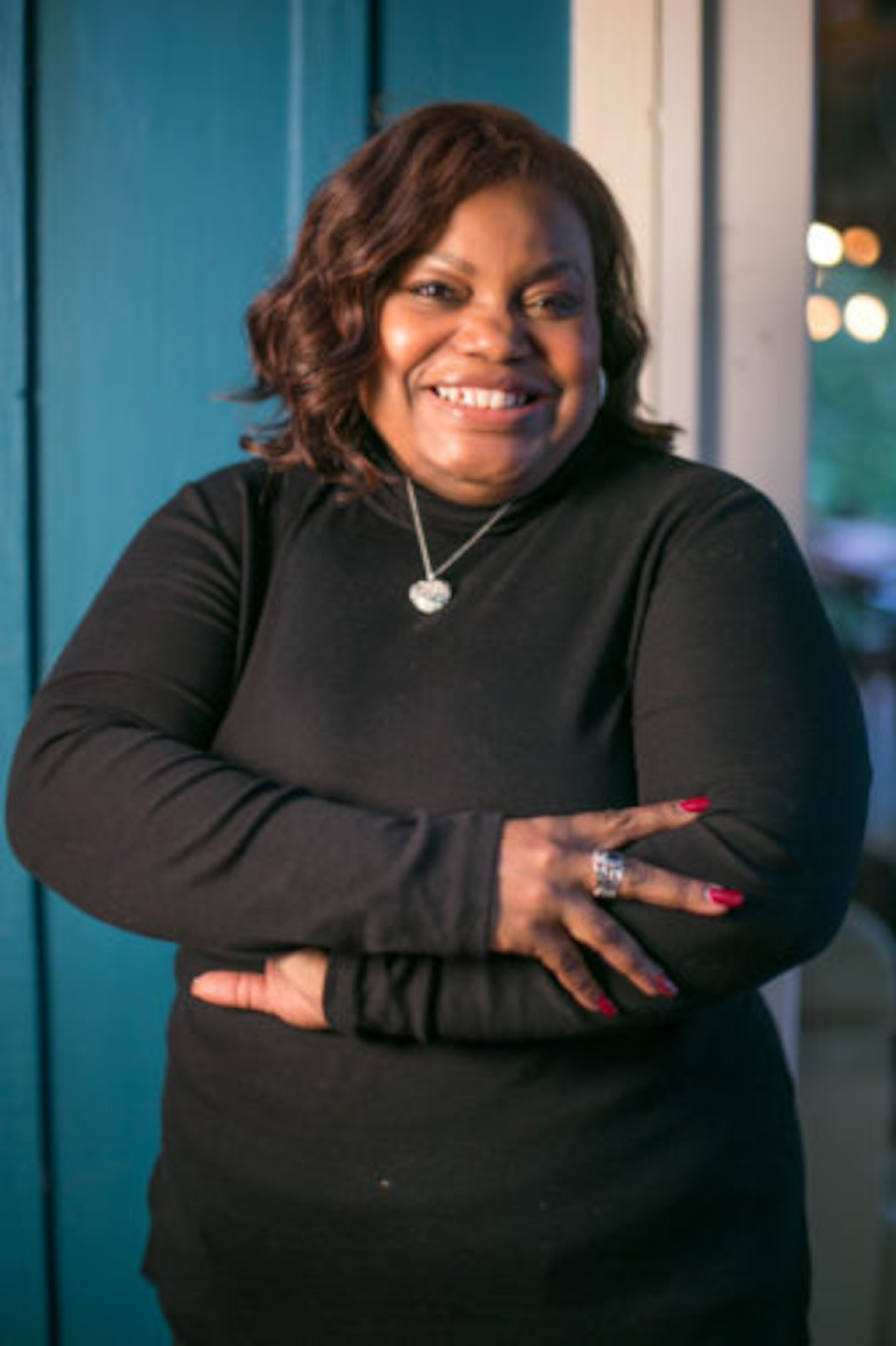
Tracie Powell is CEO of The Pivot Fund, which invests in hyperlocal civic news and information.
The opinions expressed are those of the writer and do not necessarily reflect the views of The Atlanta Journal-Constitution.
Send letters to the editor of 250 words or fewer with your name, city or town and contact information to letters@ajc.com.