Keisha Lance Bottoms owes rural Georgians little. They need her leadership.
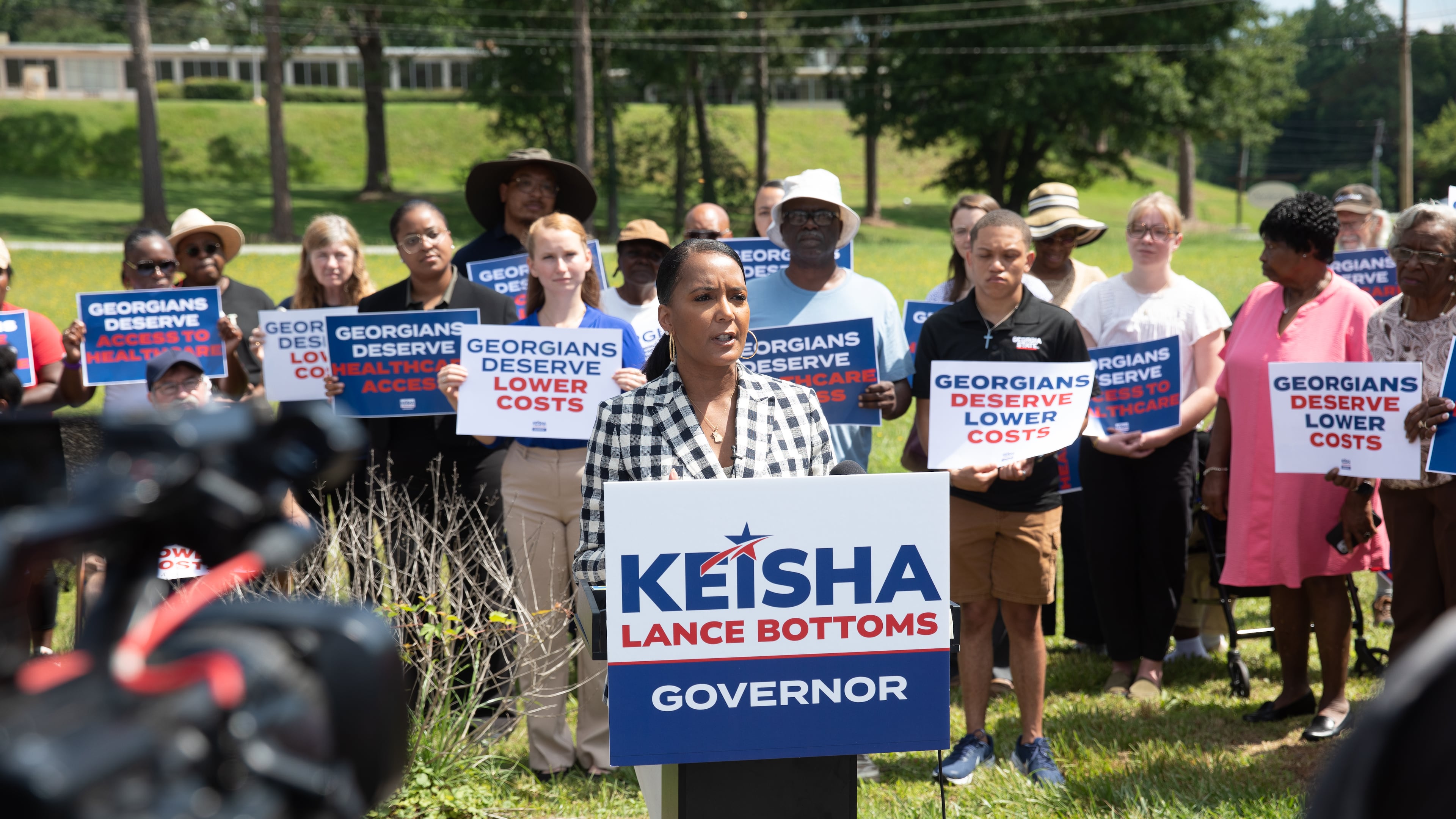
Georgia just elected a governor who didn’t need rural Georgia to win. That may turn out to be the most important fact about this election, more important than the staggering size of Gov.-elect Keisha Lance Bottoms’ margin.
Every Georgia county moved toward the Democrats this year, but not equally. The exurbs on Atlanta’s edge and the small-city counties moved half again as much as rural Georgia did.
Four years ago, the exurbs voted almost exactly like rural Georgia. Now they vote a lot more like metro Atlanta.
So, the line between the two Georgias isn’t disappearing. It’s moving. The growing, diversifying, better-educated places around Atlanta are drifting into the ATL’s orbit, politically as well as economically.
Rural Georgia, which I’ve written about for more than 15 years, is being left smaller, older and more isolated than ever. And it just watched a governor get elected without it.
Bottoms’ ancestral roots are in Crawfordville

Bottoms, the first woman and first Black Georgian elected governor, built her career and her margin in Atlanta. Politically, she owes rural Georgia very little.
But as the AJC reported, the day before the election she drove 90 miles east to Crawfordville, the seat of Taliaferro County, the least populous county in Georgia.
Her great-great-grandparents were enslaved there. She spoke to about 100 people, then knelt at her great-great-grandmother’s grave and wept. Her family left for Atlanta in a horse and buggy. Millions of rural Georgians, Black and white, have made some version of that trip since.
The question is whether she governs like someone who remembers it.

She can conclude that Democrats don’t need rural Georgia. Or she can notice that rural Georgia moved toward her, too, by about 13 points, and treat that as an opening.
I’d urge the latter for moral and practical reasons. Rural Georgia’s problems don’t stay there. Its collapsing hospitals send patients to Atlanta’s emergency rooms, and its struggling schools send underprepared workers to Atlanta’s job market. And a governor who wants a second term will need more than metro Atlanta behind her.

Economic development has to reach rural Georgia
Republicans have governed Georgia for two decades on rural votes, and rural Georgia has declined the whole time. Bottoms can show that Democrats will actually show up.
Healthcare comes first. Rural hospitals are the clearest marker of rural decline, and the lack of a full Medicaid expansion is a big part of why so many have struggled. She’ll have to fight the legislature for expansion while putting money into clinics, emergency care and doctors for places that have already lost their hospitals.
Next, the regional hub cities. If Macon, Columbus, Albany and Augusta keep losing ground, the rural counties around them go too.
And economic development has to reach rural Georgia. The state doesn’t spend millions luring industry; it spends billions. Those deals matter.
But they almost always land near interstates, ports and metro labor pools, while much of rural Georgia slides deeper into a socioeconomic abyss. A state that can find billions for a handful of big plants can find real money for the schools, clinics and broadband any community needs before an employer will even look at it.
New governor will have to make tough decisions
Now the blunt part. Doing right by rural Georgia will require decisions that almost certainly won’t be popular.
It will mean admitting that the state can’t save every county. Georgia has 159, more than any state but Texas, and many are too small to sustain a hospital, a school system or even a full county government. Consolidating services and school systems, let alone erasing county lines, has long been the third rail of rural Georgia politics. But spreading thin resources across that many counties hasn’t worked.
And it will mean putting people ahead of places. Some rural communities will keep shrinking no matter what Atlanta does. Helping the people who live there get educated, get healthy and get to opportunity should be the priority, not propping up failing towns and counties.
That raises a question I’ve thought about for years: Is a governor’s first duty to Georgia’s places, or to the Georgians who live in them? When a county can no longer keep a hospital open, run decent schools or balance its books, its residents are still Georgia citizens.
At some point, the state has to decide whether local control is protecting those people or abandoning them. I don’t know exactly where that point is. But I’m fairly sure Georgia has passed it in more than a few places.
None of that is likely to win votes. All of it is what it would take to start closing the gap between the two Georgias.
Bottoms knelt at a grave in Crawfordville the day before the election. Her critics will say it was just another campaign stop. I’d like to think it was the start of a commitment.
Charlie Hayslett is a retired political journalist and public relations executive who has been writing about the decline of rural Georgia for more than 15 years. His latest work appears at https://charliehayslett.substack.com (“Trouble in God’s Country”).
Send letters to the editor of 250 words or fewer with your name, city or town and contact information to letters@ajc.com.
The opinions expressed are those of the writer and do not necessarily reflect the views of The Atlanta Journal-Constitution.