Nonsexual deepfake images should have real consequences under Georgia law

It’s hard to keep track of all the lawsuits, transparency complaints and general chaos that have plagued the city of College Park for the past several years.
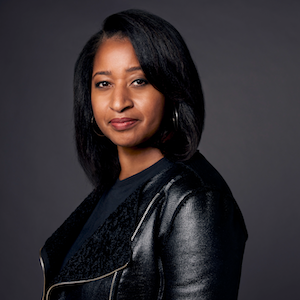
The ongoing battle over who governs the city has fractured both city leadership and the community. But last month brought a new tangle to the web of municipal government when a manipulated image of Mayor Bianca Motley Broom entered the chat.
The photo shows Motley Broom, who has been married for 13 years, kissing an unidentified man who is not her husband, in a bar at Braselton’s Chateau Elan Resort. The fake image was posted alongside a real image of Motley Broom in conversation with the man.
A regents professor of digital media at Georgia Tech who reviewed the images for the Atlanta Journal-Constitution was 99.9% sure the picture of Motley Broom and the man kissing was the handiwork of AI.
The photo may be fake, but the professional and psychological damage it can cause is real.
While technology has made deepfakes more realistic and accessible, existing laws should cover a broader range of what is considered AI abuse and make it easier for victims to address harm.
In 2020, Motley Broom became the first woman and Black person to serve as Mayor in the city’s 130-year history. In her first run for public office, she ousted the 24-year incumbent. It seemed the city was ready for a new chapter.
But after her reelection in 2023, the atmosphere shifted as Motley Broom, members of the City Council and multiple city managers vied to control executive operation of the city.
The disputes flowed into the public sphere and community members divided into factions. Social media became a forum for individuals or groups operating under alias accounts to air grievances about city leaders.
One account, which has offered up vile and gendered criticism of the mayor, published, on Labor Day weekend, the altered photos of the mayor at a January retreat in Braselton.
Jamelle McKenzie, a city council member, was reportedly taking photos at the retreat and previously acknowledged feeding information to the alias account but denied involvement in creating or distributing the images of Motley Broom.
Yet, even with the understanding that the images were fake, McKenzie stated at a city council meeting in September that she was “appalled as a married woman” to see the photos of Motley Broom.
Presumably, she thought it more productive to feed the narrative that Motley Broom was having extramarital relations than be appalled by the real problem.
McKenzie’s fake outrage over a fake image is an example of the way AI can alter reality. The harm is in the opportunity a fake image creates for crass individuals to heap humiliation and degradation on the intended victim.
Highly visible women, particularly politicians, journalists and celebrities, are disproportionately the targets of technology-facilitated abuse.
“When women officials are depicted in explicit scenarios, even obviously fabricated ones, the content reduces them from serious political actors to sexual objects in the public consciousness,” according to a 2025 policy brief from New America.
It is even more disturbing when fellow women react as McKenzie did, piling on instead of responding with empathy and recognizing that they too could one day become a target.
In 2022, Sabrina Javellana, the youngest city commissioner elected in Broward County, Florida, testified in support of a bill that would become one of the first in the country to address pornographic deepfakes online.
She had spent months trying to fight AI-manipulated images of her that had circulated online but found her options limited.
After testifying, she was stunned when a female Senator blamed her for the synthetic images that someone else created, reported the New York Times.
When the bill passed, Javellana considered pursing legal action against the perpetrators but was overwhelmed by the potential cost. Instead, she ended her political career.
Despite deepfakes proving to be a threat to democracy, state and federal lawmakers have failed to deliver the kind of comprehensive protection that would address scenarios like Motley Broom’s.
Many states, including Georgia, now have statues that criminalize AI-generated nonconsensual intimate imagery. But unlike Javellana, in Motley Broom’s case, the images are not nude or necessarily sexually explicit and likely would not be covered under existing AI laws.
Last year, some state lawmakers attempted to pass legislation that would prevent states from regulating AI entirely. Fortunately, those attempts failed but Georgia has yet to enact bills that adequately address protection from a broad range of deepfakes including the use of AI in political campaigns.
Motley Broom said she would consider legal action under Georgia’s existing defamation laws but that presents significant hurdles in determining the source of the images and the intent of the creator or distributor.
In addition, when women decide to take legal action against deepfakes, it means they must also take on legal, administrative and financial burdens while still performing the official duties of their jobs.
Filing police reports or posting rebuttals online are other ways women have tried to address deepfakes in the past, but that also requires an expenditure of time and energy that a politician should be using to govern.
In an interview with the Guardian, Motley Broom said deepfakes should have consequences. “I hope that lawmakers can address this in a way that balances not only First Amendment protections, but the right of an individual not to have completely false accusations being levied,” she said.
This should at least be one thing on which city officials in College Park can agree.
Read more Real Life (www.ajc.com/opinion/real-life-blog/) and find Nedra on Facebook (www.facebook.com/AJCRealLifeColumn) and X (@nrhoneajc) or email her at nedra.rhone@ajc.com.