Atlanta has a duty and mandate to fulfill people’s will on Beltline transit

In my lifetime, metro Atlanta has grown from 2 million residents to about 6.5 million. Living in Zone 5 — which includes Midtown, Downtown, Ansley Park and Castleberry Park — for 20 years, I’ve watched Atlanta boom.
Before 1950, Atlanta’s streetcars carried more than 100 million riders per year. Today, Atlanta has repeatedly failed to implement comprehensive transit solutions to scale with the city’s growth.
The city sold us a plan to create a new mass transit solution as early as 2005, when it established the Beltline Tax Allocation District (TAD).
After the Federal Transit Administration’s 2012 assessment, Atlanta voters were pitched a plan for a new light rail system More MARTA — 71% of the city voted in favor of raising taxes to fund that rail plan in 2016.
In 2025, that plan was halted months before local elections without notice to Atlanta’s voters.
The opposition to Beltline rail prefers autonomous vehicles

In the past two years, opposition to the light rail project has suddenly appeared with arguments presented in the media without grassroots public support.
Well-connected opponents are manufacturing conflicts of “rail vs. bicycles,” “Eastside vs. Southside,” or “concrete vs. green space” — each of which is widely criticized online.
The Eastside and Southside rail are part of the same system and should be built simultaneously.
Atlanta Beltline Inc’s website shows that Beltline rail was always envisioned as rails-on-grass.
Several critics of Beltline rail hold financial interests in autonomous cars, according to opinion columns in the AJC. Either they, their clients or the companies they invest in are in the business of providing autonomous cars, paid parking, or supporting businesses.
Instead of presenting unique transit solutions, the opponents arrive at the same conclusion: Atlanta needs autonomous cars driving on the Beltline and surrounding roads. They want the city to rent or buy autonomous cars with tax dollars that carry just a few people, while riders pay 10 times more per trip, creating more traffic.
Despite this public relations push by well-connected opponents of rail, the 2015 vision remains enshrined on Atlanta Beltline Inc.’s (ABI) website and in the final 2015 plan report:
“Transit has always been at the core of the Atlanta Beltline. Conceived as a 22-mile transportation corridor where pedestrian-friendly light rail transit and urban trails coexist, the Beltline aims to create ‘whole communities’ where people can easily access jobs, services, goods, amenities, and the City’s larger transit network without relying on cars.” — ABI
The light rail plan was designed to scale with the city’s growth and carry passengers to work and entertainment destinations citywide. ABI reported more than 2.5 million visits to the Beltline and 91,000 full-time jobs supported by the Beltline in 2025. With that number only expected to grow, Atlanta needs a transit solution that can serve today’s needs and scale for decades to come.
The real questions about transit: capacity and cost per mile
Automation can be an effective long-term solution in large-scale, complex systems when deployed with open architecture standards that support hardware or software from various vendors. This prevents the single-source risk and cost overruns often found with proprietary solutions.
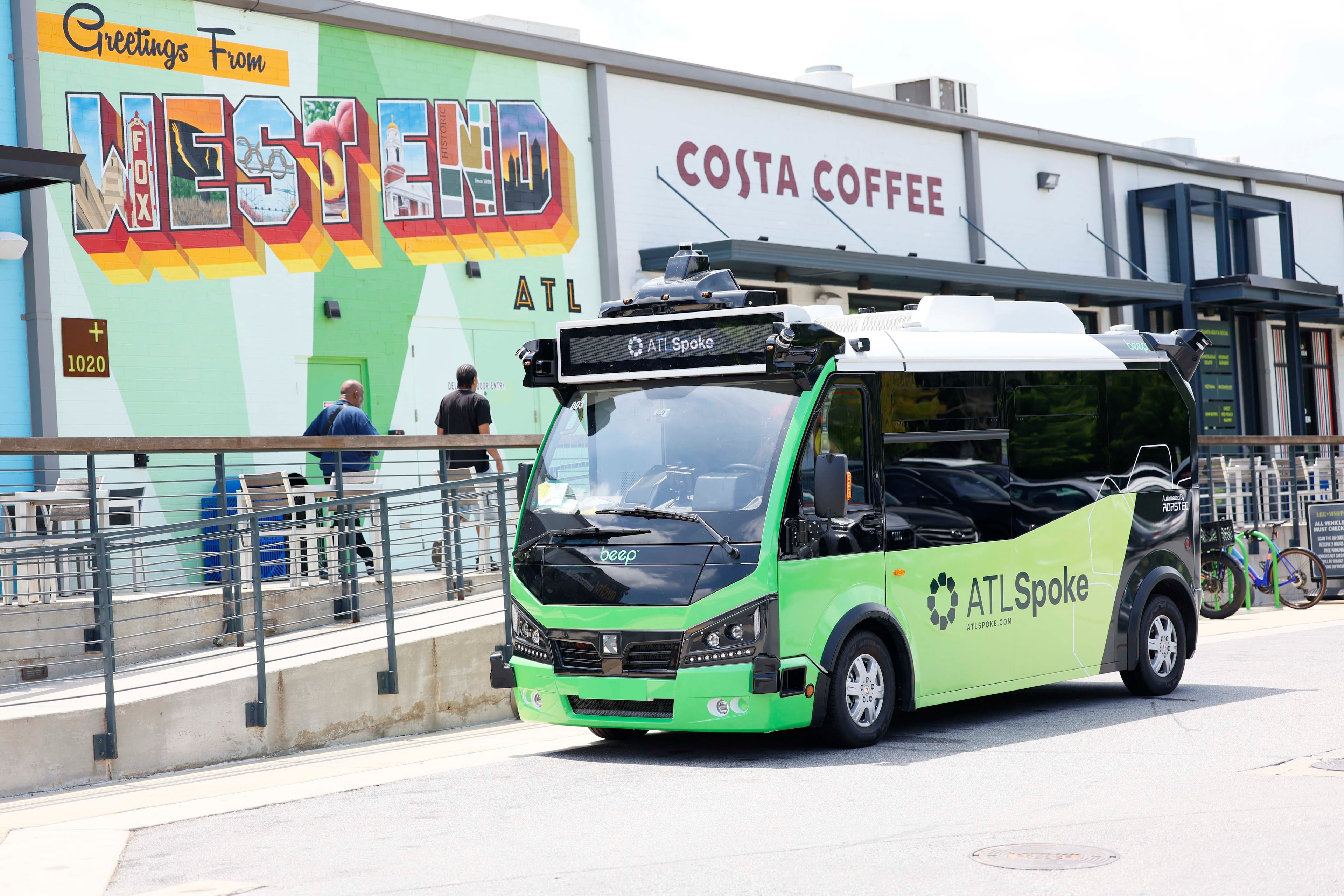
The autonomous ATL Spoke 12-month project is a perfect cost example. $3 million for four automated vans to make 40 trips per day each for year. At $8,219 per day, Atlanta pays more than $51 per trip, empty or full. At the end of this $3 million rental, the city owns nothing. The tax dollars are gone.
Compare this to MARTA buses: about $700,000 new. MARTA could have owned three new, high-capacity buses and hired several bus drivers for three years for the same amount the city paid to rent four luxury vans for a single year.
Buying autonomous vehicles instead of renting them creates even more liability. Autonomous vehicles are proprietary; the only place to get software updates, spare parts, and service is the company that sold them to you. Buying an autonomous car is a bet on a small tech startup’s future. Tech startups frequently fail; Atlanta’s leadership shouldn’t gamble with our tax dollars.
A rail car carries dozens of people; trains carry hundreds. The city can source parts from dozens of trusted vendors who all make interchangeable products. This lets the city negotiate costs and ensure tax dollars are spent wisely as it scales over decades.
Light rail can move 10,000-plus passengers per hour for cents per passenger mile, according to a National Transit Database report. ATL Spoke costs taxpayers $51 to take 12 passengers on a one-mile trip.

A promise of a long-term vision
The final issue is the integrity of our citywide elections. In 2016, 71% of the city voted for a transit tax that included this “More MARTA” rail plan. The city has already collected nearly a billion dollars in those transit taxes; taxes that will continue for decades.
Those funds are a juicy target for many companies and individuals. ABI and a unanimous Atlanta City Council vote on Sept. 21 have both affirmed the support for building the comprehensive light rail transit system Atlanta voted for.
The MARTA program management team, made up of MARTA and city officials under the 2020 intergovernmental agreement (IGA), must now create a construction timeline, develop a financial model, and choose a project delivery and procurement methodology for approval by the program governance committee and, finally, the MARTA Board.
Ultimately, MARTA CEO Jonathan Hunt and Atlanta Mayor Andre Dickens will need to lay out a governance plan within the new IGA to spearhead that effort past the initial planning stages.
Years were spent developing a vision for rail transit that promised Atlanta a system that could serve us over decades of growth. Modern light rail is the only solution that can scale over time to provide predictable, low-cost transit for Atlanta’s taxpayers.
The leaders who make it a reality will be remembered for decades as the system’s champions. Anything short of it will be an unforgettable breach of trust.
Casey Stokes is an Atlanta resident and media strategy consultant specializing in industrial systems and automation at scale. He has written more than a hundred articles on automation technology integrations, covering real-world costs, risks, and challenges, as well as the best practices for successful implementation.
Send letters to the editor of 250 words or fewer with your name, city or town and contact information to letters@ajc.com.