Shared autonomous vehicles, not rail, are the future of the Atlanta Beltline
Few projects have transformed Atlanta more dramatically than the Beltline. What began as a visionary idea has become one of the nation’s most successful urban redevelopment efforts, connecting neighborhoods, creating green space, attracting investment and enhancing quality of life for residents across the city.
The Beltline’s success is undeniable. The question now is not whether mobility should be part of its future — it should. The question is whether Atlanta should spend billions of dollars and wait decades to build a rail system conceived more than 20 years ago or embrace a more flexible, affordable and innovative solution that can deliver transportation benefits much sooner.
Recent opinion essays in the AJC have reignited this debate. Cox Enterprises Chairman Alex Taylor argues the Beltline should move away from rail and embrace emerging mobility technologies, contending that the transportation landscape has changed dramatically since the project was first envisioned.
Beltline Rail Now board member Ivan Schustak offers a different perspective, arguing that rail remains essential to fulfilling the Beltline’s promise as a transportation corridor and that abandoning transit would undermine efforts to improve affordability, accessibility and economic opportunity for Atlantans.
Both authors raise important issues. Taylor correctly notes that transportation technology has evolved dramatically since the Beltline was first envisioned. Schustak is equally right that mobility and accessibility must remain central to the Beltline’s future.
The challenge is determining how to achieve those goals in a way that reflects today’s realities rather than yesterday’s assumptions.
Don’t spend money on yesterday’s technology

The question is not whether the Beltline should include mobility options that connect people to jobs, neighborhoods and opportunity. The question is what form those connections should take.
This is not a new debate for me. For nearly a decade, I have argued in the AJC opinion section that autonomous transit vehicles — what many today call autonomous shuttles and what may ultimately evolve into autonomous trams — offer the most practical and forward-looking transportation solution for the Beltline.
My position has never been anti-transit. Quite the opposite. I strongly support improving mobility and connectivity along the Beltline corridor.
What I oppose is spending enormous sums on yesterday’s technology when better options exist today.
When the Beltline vision was developed in the early 2000s, the world looked very different. The Beltline itself was largely a concept on paper.
No one fully understood how rapidly surrounding neighborhoods would develop, how construction costs would escalate or how transportation technology would advance.
Most importantly, autonomous vehicle technology was still science fiction.
Today, it is becoming reality.
ATL Spoke offers a futuristic path for Atlanta
Across Georgia, autonomous transportation is moving from pilot projects to real-world deployment.
In Atlanta, Waymo and Uber are already providing autonomous ride-hailing services, while additional autonomous vehicle operators continue to expand their presence in the market.
In the Cumberland area, autonomous shuttles are operating today and plans are underway to expand autonomous mobility options connecting major destinations throughout the district.
Near Hartsfield-Jackson Atlanta International Airport, autonomous transit technology is being tested to improve connectivity in one of the region’s busiest transportation corridors.
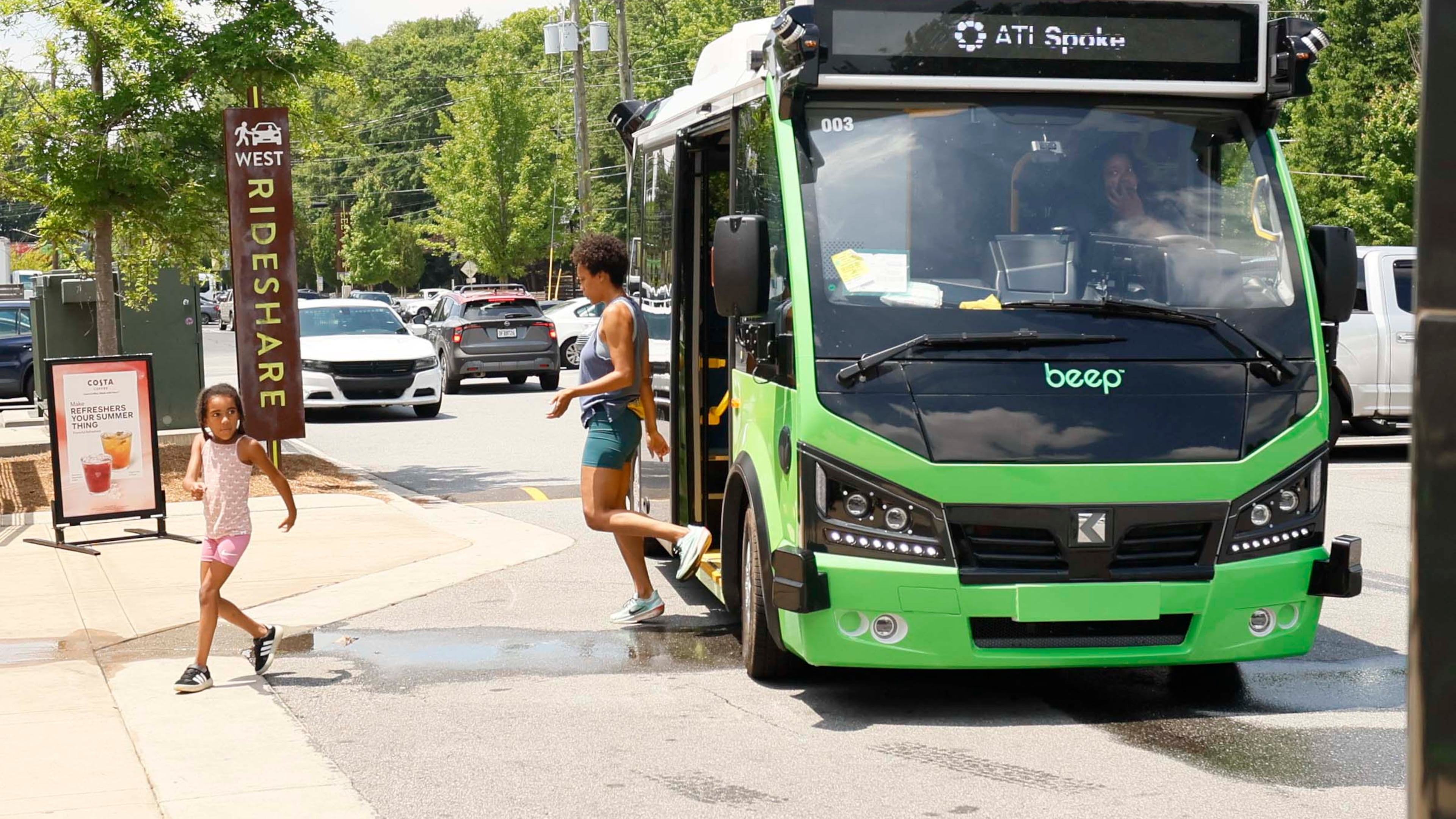
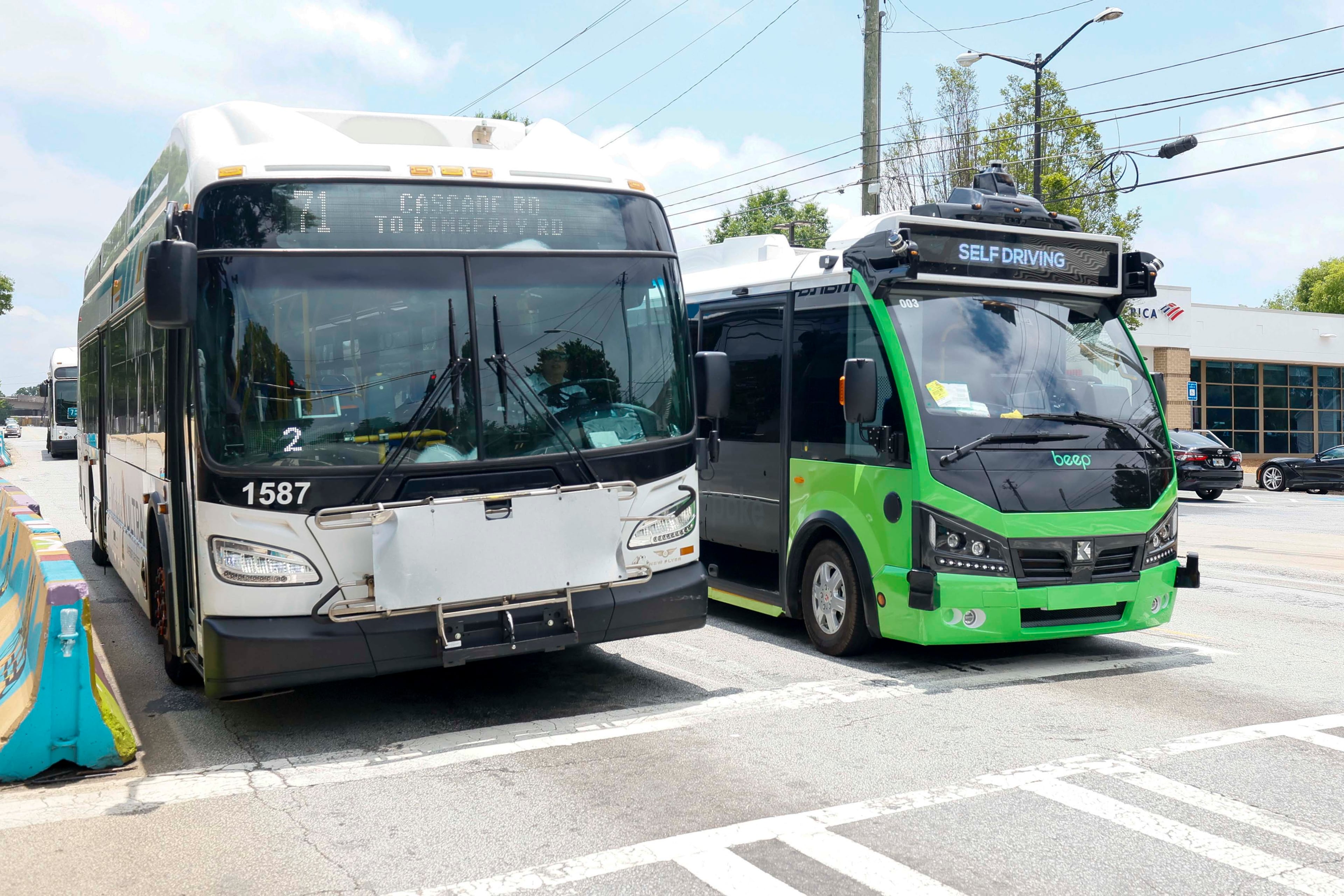
Most notably, Atlanta Beltline Inc. recently launched ATL Spoke, Atlanta’s first autonomous public transit service, connecting the West End MARTA Station with destinations along the Southwest Beltline corridor. What seemed futuristic a decade ago is increasingly becoming part of everyday life.
That matters because successful projects evolve.
There is nothing wrong with revisiting assumptions made more than two decades ago. The Beltline itself has changed in important ways as community needs, development patterns and economic realities have evolved. Smart cities regularly reassess plans, embrace innovation and adapt to changing circumstances. Transportation planning should be no different.
Georgia has emerged as a national leader in autonomous vehicle innovation. Rather than investing billions in a transit technology rooted in the past, Atlanta has an opportunity to showcase the next generation of mobility solutions through one of the country’s most celebrated urban redevelopment projects.
The financial realities alone warrant a fresh look.
The estimated cost of Beltline rail has climbed dramatically over the years and will likely continue to rise. Even if funding can be assembled, Atlantans could wait many years — perhaps decades — for a complete rail system to become operational. By then, technology will have advanced even further, potentially making today’s investment less relevant to tomorrow’s transportation needs.
Meanwhile, Beltline users continue asking a simple question: Where is the transit?
Assess AV trams before moving on rail projects
Autonomous trams and shuttles offer a compelling answer. Unlike autonomous passenger vehicles, which primarily move individuals or small groups, these autonomous transit vehicles are designed specifically for shared mobility. They can carry larger numbers of passengers, operate on or near the Beltline corridor and provide a transportation experience more comparable to traditional public transit.
Just as importantly, AV trams can be deployed far more quickly and at a fraction of the cost of rail. They provide flexibility to adjust routes and service levels as demand changes. Unlike rail, AV trams operating on or near the Beltline could also connect adjacent neighborhoods and activity centers, extending the benefits of Beltline mobility beyond the corridor itself.
Vehicles can be upgraded as technology improves rather than locking the city into a fixed system. Most importantly, they would allow Atlantans to experience meaningful transportation improvements in the near future rather than waiting another generation.

Too often, this debate is framed as a choice between rail and no rail. That is a false choice. The real choice is between spending billions on a fixed-rail system that may take decades to complete or deploying a modern transportation solution that can serve Beltline users much sooner while preserving flexibility for future innovation.
Atlanta should carefully evaluate the results of the ATL Spoke pilot and use those lessons to guide future Beltline transit decisions. Let policymakers and the public compare costs, ridership, safety, reliability and user experience. Let data — not assumptions made two decades ago — guide the decision.
Before committing taxpayers to a multibillion-dollar rail project, Atlanta should determine whether AV trams operating on or near the Beltline can achieve the same mobility goals faster, cheaper and more flexibly.
The Beltline has always been about reimagining Atlanta’s future. We should not allow a transportation plan conceived in the past to prevent us from embracing technologies that can better serve Atlantans today.
The goal is not rail. The goal is mobility. If AV trams can deliver that mobility faster, cheaper and more effectively than rail, Atlanta should have the courage to move forward.
Eric Tanenblatt is global chair of public policy and regulation at the global law firm Dentons with a major location in Atlanta. He previously served in the administrations of three U.S. presidents, as senior adviser to former U.S. Sen. Paul Coverdell, and as chief of staff to former Georgia Gov. Sonny Perdue. He has written extensively on transportation innovation and autonomous vehicles.
Disclosure: Dentons has an Autonomous Vehicles team that helps clients navigate AV laws, regulation and deployment.
Send letters to the editor of 250 words or fewer with your name, city or town and contact information to letters@ajc.com.