Goooooaaaaal! World Cup success positions Atlanta for greatness.

Cape Verde proved it could punch above its weight.
Argentina demonstrated Messi’s team reigned as the kings of comebacks.
And Atlanta showed the world it was more than worthy of being a World Cup city in 2026.
We are starting to feel the withdrawals of an exciting tournament that brought the globe together to celebrate soccer, camaraderie and a sense of community.
Multiple cities across North America put on a good show, but Atlanta stood out among all of them. It passed the test and distinguished itself among cities with a history of hosting big events.
No event is too big for Atlanta.
Credit that to multiple factors: a long history of embracing multiculturalism and putting out the welcome mat to visitors and newcomers alike; a beautiful stadium that was described by commentators and visitors as the best experience of the tournament; and an inclusive fan experience that brought people together in downtown, Decatur, and bars and restaurants across the 6 million-plus population region.
Thanks to the leaders who made this happen, including the Atlanta World Cup Host Committee and numerous tireless elected, civic, business and community luminaries who wanted Atlanta to shine for its great history of civil rights, its focus on commerce and its willingness to accommodate hundreds of thousands of fans eager to see their teams play — or perhaps just to satisfy their curiosity about why people find the fútbol experience so incredible.

Ingredients that will make A-Town shine in the years ahead
Arthur Blank, owner of the Atlanta Falcons and operator of Mercedes-Benz Stadium (known as Atlanta Stadium during the World Cup) deserves accolades for being a visionary when it comes to seeing Atlanta as a soccer city. Not just for the World Cup but beyond, because of all the investment in soccer fields across the region for the benefit of the youth and bringing professional women’s soccer to the region in 2028. Don’t forget that the U.S. Soccer Federation’s headquarters, the Arthur M. Blank U.S. Soccer National Training Center, is in Fayetteville.
MARTA came through with safe, busy and efficient rides, taking fans to their destinations and bringing in a strong public safety and volunteer presence to make riders feel secure. The odds were stacked against metro Atlanta’s transit operator given some missteps and the killing of a great-grandmother on a train before the start of the tournament, but the system delivered, doubling its ridership and exceeding projections.
Hartsfield-Jackson Atlanta International Airport and Mercedes-Benz Stadium put Atlanta at an advantage. Moreover, the investments and development in downtown, including the massive Centennial Yards project, South Downtown and The Center (styled as The CTR) will continue to make the city an even more attractive destination, 24 hours a day, 365 days a year.
That means more Super Bowls, more Final Fours, more All-Star games, more college football championships, and more top-tier concerts and experiences. Who knows? Perhaps the Olympics will return to Atlanta one day.
Atlanta, which frequently gets criticized for its traffic congestion, showed that great planning and resources yield the quality experience that visitors expect.
While Atlanta works to solve several mobility issues, this experience shows what’s possible.
This is a moment the city should celebrate, and it portends greater things for Atlanta as a global destination.

Turn World Cup experience into year-round success
Thirty years ago, Atlanta hosted its first Olympics, beating out original city Athens, Greece, for the centennial games. Former Mayor and U.N. Ambassador Andrew Young, along with attorney Billy Payne, played an outsize role in positioning Atlanta as a global hub.
Since 1996, Atlanta has grown into the city with the most efficient and busiest airport in the world. It has hosted three Super Bowl games, with the next one in 2028.
In addition to the Falcons, it is the home of the Braves, the Hawks, the Dream and Atlanta United.
It hosts multiple institutions of higher education, including eight of Georgia’s historically Black colleges and universities, and is the model for a multiracial democracy where people can dream, prosper and thrive.
Atlanta is the unmatched capital of the South, a region which has now surpassed the Northeast in gross domestic product and which is transforming into the nation’s political and economic epicenter.
The World Cup experience had to succeed to continue this powerful trajectory.
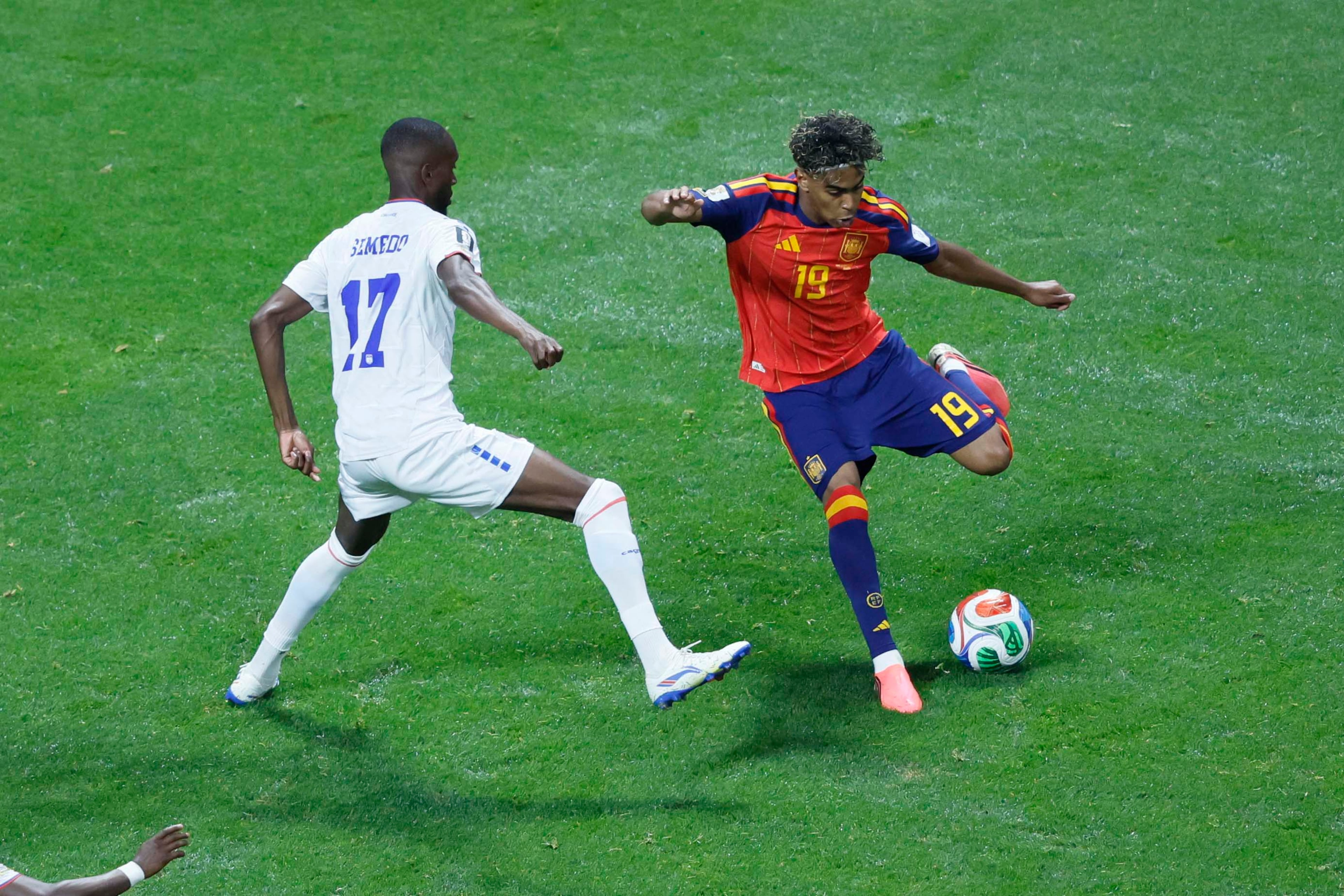
All eight matches in Atlanta — from June 15 to July 15 — brought excitement and joy inside and outside the stadium whether you were at a match, among fans or watching from home on a screen.
Spain and Argentina — and their fan bases — experienced A-Town twice and felt the vibe.
When the championship match between those two nations begins at 3 p.m. Sunday in New Jersey, people in Atlanta may be watching from home or from the festival at Piedmont Park.

They will be united not just to say goodbye to the 2026 tournament, but also to bask in the success that showed the world that Atlanta was ready, Atlanta succeeded and Atlanta is prepared for the next opportunity.
Atlanta’s biggest opportunity is to ensure that the unity experienced by people across the city the past month is felt year-round and not just every 30 years. Atlanta doesn’t need the world’s attention to bring us together. It should simply be who we choose to be.
That’s hard to do. Massive global events don’t happen every day, but if leaders across the region commit to building on one thing from the success of the World Cup every year, imagine how far the city will go.
For now, take a bow, Atlanta. Well done!
This editorial was written by AJC opinion editor David Plazas on behalf of and in consultation with the AJC Editorial Board, which comprises president and publisher Paul J. Curran Jr., editor-in-chief Leroy Chapman Jr., head of standards and practices Samira Jafari, and Plazas.
Send letters to the editor of 250 words or fewer with your name, city or town, and contact information to letters@ajc.com.