Supreme Court ‘colorblind’ decisions preserve status quo and ignore the past
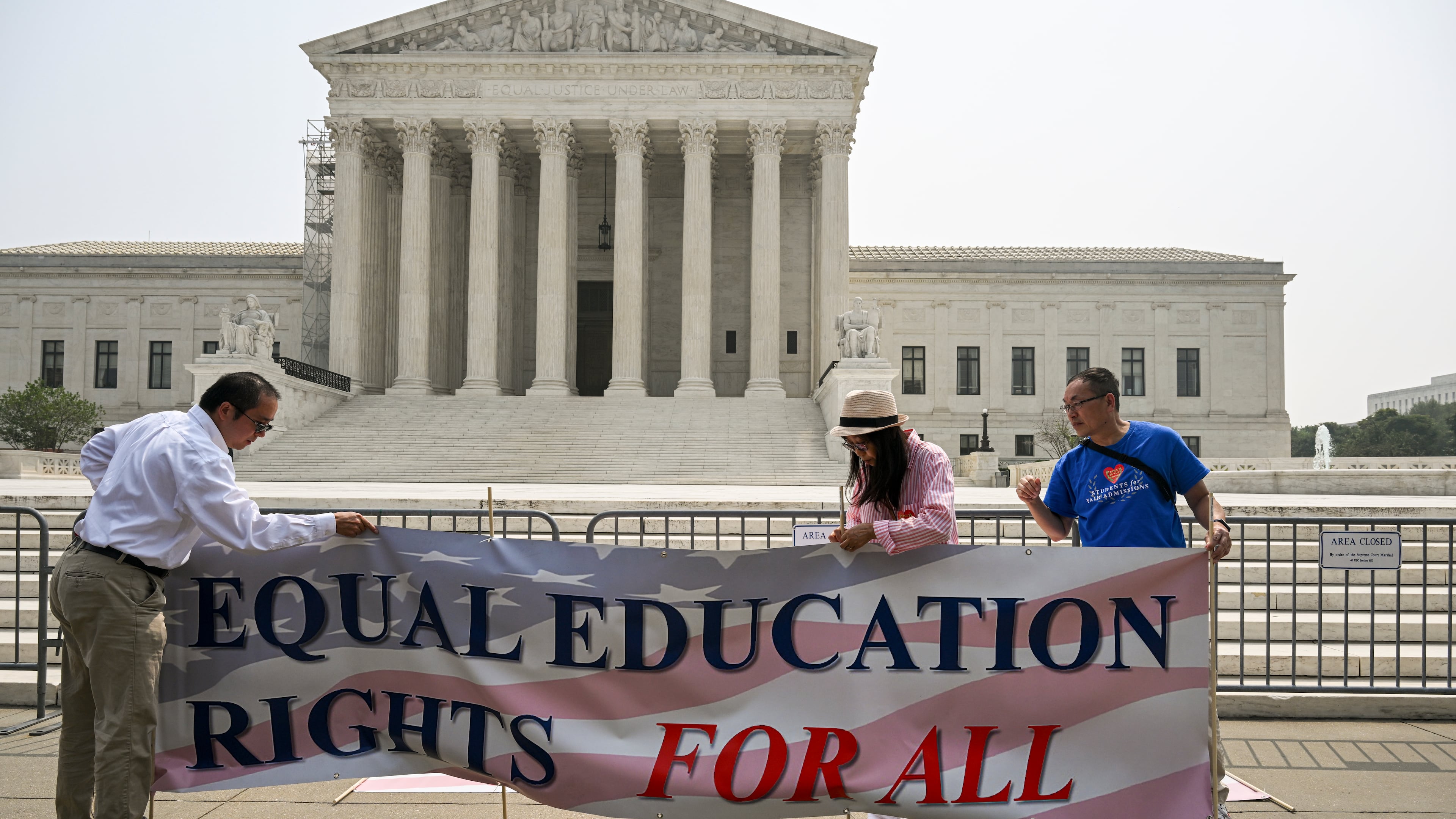
There is a certain elegance to the argument that race should disappear from public decision-making. It sounds like progress. It sounds like fairness. It sounds, most of all, like closure.
Chief Justice John Roberts has given that instinct its most famous line in Students for Fair Admissions v. Harvard: The way to stop discriminating on the basis of race is to stop discriminating on the basis of race. It is simple enough to repeat and clean enough to believe.
That is precisely why it works.
But simplicity is not the same as truth. And in this case, it hides the very thing it claims to resolve.
Because race was never incidental to the construction of power in this country. It was instrumental. It determined who could own, who could learn, who could accumulate, who could be believed and who could be protected, shaping neighborhoods, schools and wealth through policies like Federal Housing Administration redlining policies that explicitly sorted opportunity by race.
So, when we say now that race should be removed, what we are really saying is something far less neutral: that the distribution created when race mattered most should be treated as if it were natural, fair and complete.
Fairness requires recognition of history, structure and accumulated advantage

Colorblindness, in that sense, is not an erasure. It is a preservation strategy.
It freezes outcomes while pretending to cleanse the process.
And yet, millions of people find this argument compelling — not because they are indifferent to fairness, but because they believe they are defending it. The appeal is moral. If discrimination is wrong, then any use of race must be wrong. If equality is the goal, then neutrality must be the method.
That logic feels airtight. It also ignores sequence.
You cannot referee a game fairly if one team has been playing for a century and the other was only just allowed onto the field. Declaring that the rules will now be applied evenly does not correct the score. It legitimizes it.
What Roberts offers is a principle without a timeline. It assumes that removing race today operates on a clean slate. But there is no clean slate. There is only a ledger.
And the question is not whether we should treat people equally in the abstract. The question is whether equal treatment, applied to unequal conditions, produces justice or simply disguises inequality as merit.
This is where the conversation becomes uncomfortable because it forces a distinction many would rather avoid: fairness is not always sameness. Sometimes fairness requires recognition of history, of structure, of accumulated advantage.
That is not punishment. It is calibration.
It is an acknowledgment that systems do not reset themselves just because we declare them neutral.
And this is where critics of race-conscious policies misunderstand their purpose. These policies are not about inserting race into a system that would otherwise be pure. They are about confronting the fact that race was already embedded in the system’s outcomes. They are imperfect tools, often blunt, sometimes flawed, but they are attempts to account for a reality that neutrality alone cannot fix.
Removing race from the conversation does not remove its consequences

What Roberts gets right is the aspiration. A society where race does not determine outcomes is a worthy goal.
What he gets wrong is the assumption that we have arrived there.
And that is why his view resonates now, not because it is historically grounded but because it is emotionally satisfying. It offers a way to move forward without looking back. It allows people to claim fairness without engaging its cost.
A textbook case of intention colliding with impact.
It is, in many ways, the most palatable version of justice — one that asks nothing of the present except restraint and nothing of the past except silence.
But if the goal is not just to feel fair, but to be fair, then the work is harder.
It requires us to see that removing race from the conversation does not remove its consequences. It requires us to accept that neutrality can entrench advantage just as easily as it can prevent discrimination. And it requires a willingness to use policy not just to avoid harm going forward but to address harm that has already shaped the ground beneath us.
The real question is not whether race should matter forever. It is whether we are willing to do the work necessary so that, one day, it truly does not.
Until then, pretending not to see it is not progress.
It is permission.
James White III is a Georgia attorney and former prosecutor.
Send letters to the editor of 250 words or fewer with your name, city or town and contact information to letters@ajc.com.