Trump wants SAVE Act only to ensure his side wins every future election

The late NFL legendary coach of the Green Bay Packers, Vince Lombardi, once said, “Winning isn’t everything, it’s the only thing.”
That philosophy may be appropriate on the gridiron, where the objective is clear and the stakes are confined to sport. But it has no place in the electoral process of a democratic society — yet it is precisely the mindset that has come to define the “win at any cost” approach that President Donald Trump has toward American elections.
As our country approaches the 2026 midterm elections, we are once again witnessing blatant efforts to reshape the rules of participation in ways that threaten the very foundation of our democracy.
With the probability of a shift in control of the U.S. House of Representatives to Democrats, Trump and Republican congressional leaders have doubled down on strategies designed not to persuade more voters, but to limit who gets to vote in the first place.
One of the most visible tactics by Trump was his push in 2025 for aggressive gerrymandering in Republican-controlled state legislatures like Texas and Florida. This ploy to redraw congressional districts was intended to predetermine electoral outcomes in favor of republicans.
But beyond redistricting, a more insidious narrative is taking hold — one that falsely claims widespread noncitizen voting in American elections.
The Heritage Foundation, a conservative think tank based in Washington, D.C., reported that there were only 77 instances of noncitizens who successfully cast a ballot from 1999 to 2023, according to an analysis of Heritage data by the Bipartisan Policy Center.
These minuscule numbers pale against the backdrop of the number of votes that were legally cast during this same time period.
“Nationwide, records from a federal citizenship verification tool show that just 0.04% of voter verification cases are returned as noncitizens," according to the Bipartisan Policy Center.
States already manage elections effectively
The Safeguard American Voter Eligibility (SAVE) Act is the latest manifestation of this strategy. The facts suggest that the SAVE Act is not needed. Elections in the United States are administered by the states, and existing systems already include multiple layers of verification.
According to the National Conference of State Legislatures, 36 states, including Georgia, have laws requesting or requiring voters to show identification at the polls, while the remaining states and the District of Columbia use alternative methods to verify voter identity.
Congressional Democrats, a few Republicans, and voting rights advocates argue that the SAVE Act would do far more harm than good by introducing new barriers to lawful voters — particularly those from marginalized communities.
On March 23, Sen. Lisa Murkowski, R-Alaska, warned that its passage may lead to voter disenfranchisement. Senate Minority Leader Chuck Schumer, D-N.Y., stated that the act would “force Americans to register to vote in person, something that only 5% of Americans do today” (a claim PolitiFact deemed “half true” on March 21, saying that the figure was between 11% and 42%).
Supporters of the bill point to public opinion polls showing broad support for voter ID requirements. Indeed, surveys from organizations such as Harvard CAPS/Harris, Pew Research Center, Gallup, and Rasmussen Reports indicate that a significant majority of Americans favor some form of voter identification. But these polling figures, while notable, do not tell the whole story.
The SAVE Act goes beyond simple ID requirements by mandating documentary proof of citizenship for voter registration — a far more stringent and burdensome standard.
This distinction matters. Millions of eligible voters do not have ready access to documents such as passports or birth certificates. For many Americans — particularly seniors, low-income individuals, and people of color — obtaining these documents can be costly and time-consuming. The result is not enhanced security, but disenfranchisement.
This is not a new story in American history. The tactics may evolve, but the intent remains familiar. During the Jim Crow era, tools such as literacy tests and arbitrary measures like the count the “jelly beans in a jar” test were used to suppress the Black vote under the pretense of ensuring an informed electorate. Today’s efforts, cloaked in the language of election integrity, risk repeating that shameful legacy.
Expand, don’t restrict, voter rights
I am reminded of my political mentor, the late Congressman John Lewis, D-Atlanta, who dedicated his life to the cause of voting rights.
He understood that the right to vote is the cornerstone of citizenship and the primary means by which individuals can shape their government. To place unnecessary obstacles in the path of that right is to undermine the very principles for which he fought.
As chairman of the Fulton County Board of Commissioners (2007-17), I worked alongside colleagues from both parties to expand access to the ballot. With bipartisan support, Fulton County was among the first in Georgia to implement three weeks of early voting, Saturday voting and initiatives like “Souls to the Polls,” which empowered communities to participate in the democratic process. These efforts were rooted in a simple belief: Democracy works best when more people, not fewer, are engaged.
The SAVE Act represents a stark departure from that principle. It is not about strengthening democracy; it is about controlling its outcome. It reflects a perverted view in which victory is pursued at any cost — even if that cost is the erosion of fundamental rights.
The U.S. House of Representatives passed the SAVE Act on April 10, 2025, and it is currently being debated in the Senate. These lawmakers are facing a critical choice: to uphold the inclusive ideals of our democracy or to endorse a measure that restricts them.
I encourage all Georgians to support Sens. Jon Ossoff and Raphael Warnock to reject this legislation. The integrity of our elections is not preserved by limiting participation, but by ensuring that every eligible citizen has a fair and equal opportunity to vote.
In the end, democracy is not a game to be won — it is a system to be protected. And if we allow the pursuit of victory to override our commitment to fairness and inclusion, we all stand to lose.
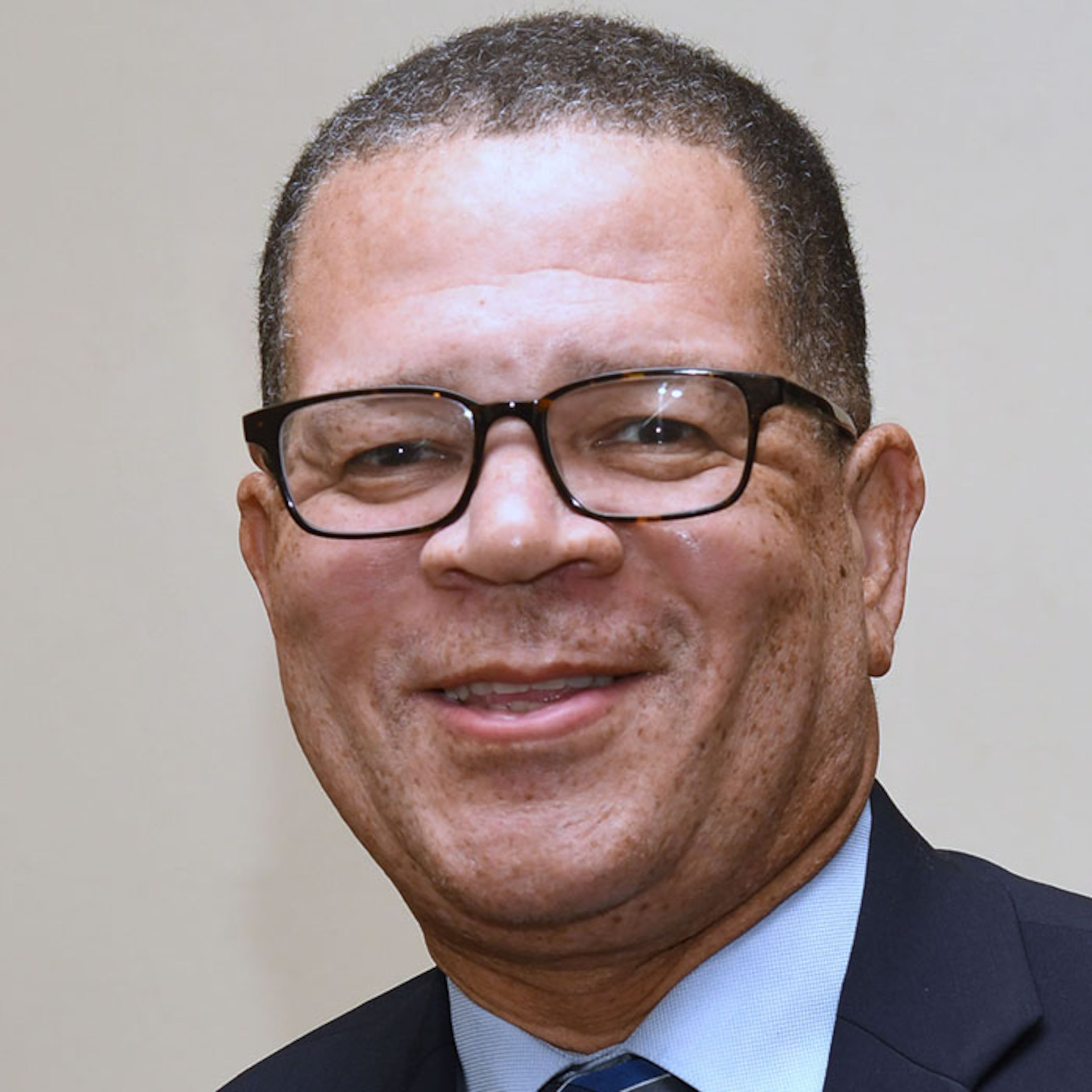
John H. Eaves, an Atlanta Journal-Constitution contributing columnist, is a former Fulton County Commission chairman and a senior instructor in the Department of Political Science at Spelman College.