Rhone: End of AJC’s print edition is both a loss and an opportunity

In February 2006, I arrived for duty at The Atlanta Journal-Constitution. I was still a newish reporter, having embarked on journalism as a second career, and I was excited for two reasons: I would be working at a legacy newspaper and I would be living in the South.
So in August, when the AJC announced it would end the print edition of the newspaper on Dec. 31, I felt sad, nostalgic, and a little surprised. I knew the moment was coming, but I wanted more time.
The first full-time reporting job I held was at a tabloid. Because tabloid pages are half the size of broadsheet pages, I learned to write efficiently.
My swan song as a tabloid reporter was writing a story for a series that was the 2005 Pulitzer Prize finalist in explanatory journalism. After that, I was ready to spread my wings, but newspapers as I had known them were already changing.
Paid newspaper circulation as a percentage of households had been declining since the 1950s. During graduate school in 2000, online journalism was the newest track of study, but as someone who grew up immersed in newspapers, books and magazines, I only had eyes for print.

The realization that the road ahead would be rocky came later in 2005 when the paper I worked for asked willing employees to take buyouts. Even though our tenure was short, I left with a crop of young reporters. I was the only one who flew South.
For the past few weeks, the AJC has published old stories and classic columns as a celebration of the printed paper’s 157-year legacy in this city. This deep history is what drew me to Atlanta, and I know that nothing about the next chapter will change that part of the past.
So instead of looking back at highlights of the print paper, I’d like to look back at our journey toward digital, as a reminder to myself, and to you, reader, that the AJC is not going anywhere.
We have been “doing digital” for a while now, and remembering that has helped me reframe the future by focusing on the opportunities ahead instead of what is being lost.
In my early days at the AJC, I spent a lot of time as a shopping and fashion reporter trying to write my way onto the front page of the printed paper.
This was valuable real estate at the AJC and fashion was a long shot, but I found success in the fall of 2006 when Macy’s took over Marshall Field & Company, a department store that was to Chicago what Rich’s had been to Atlanta.
My editor allowed me to return to my hometown (at my expense) and cover the story. I was ecstatic.
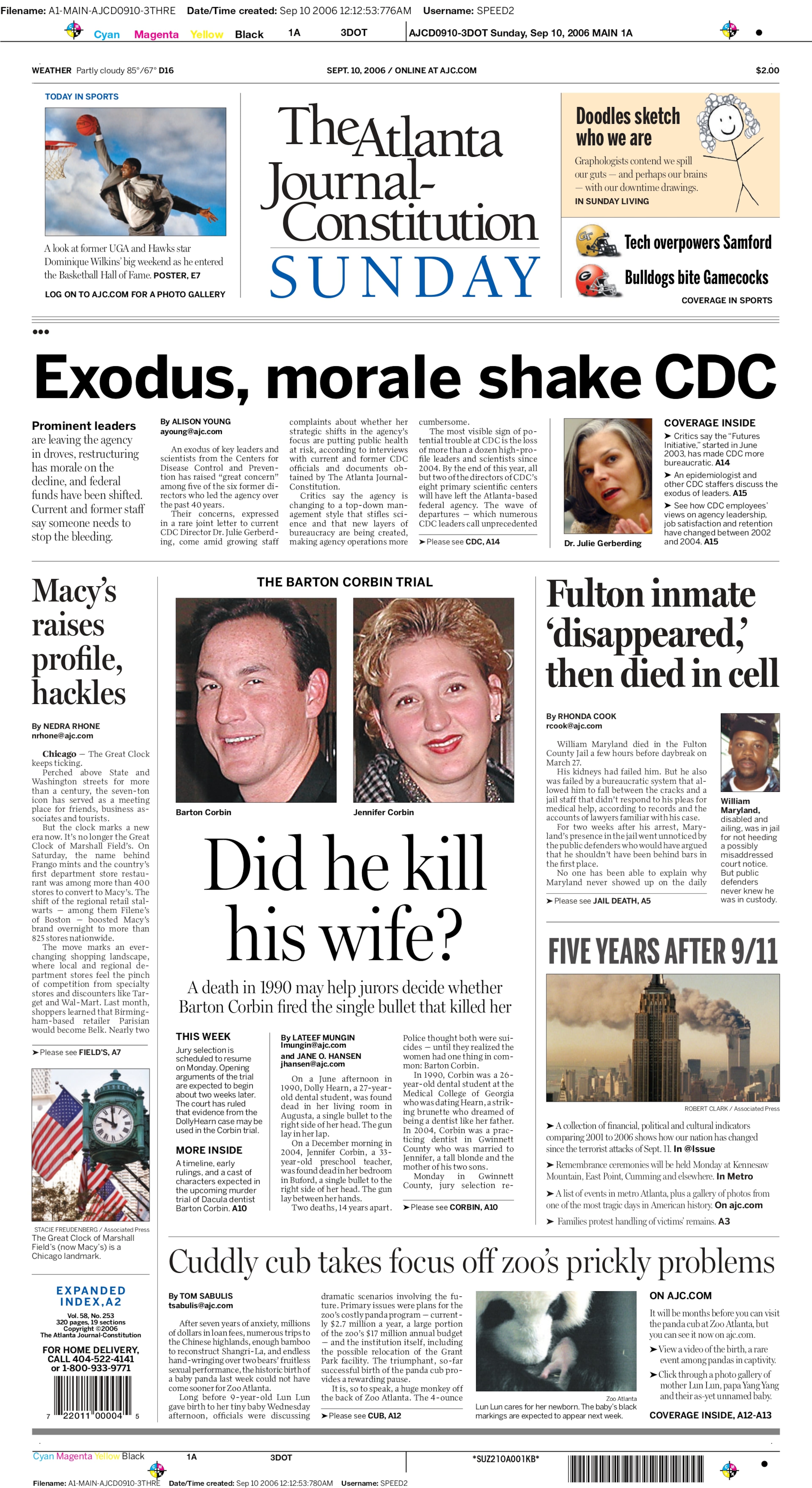
When the story published on A1, I sent a copy home. My mom shipped it off to a printer and turned it into souvenir place mats to mark my achievement and the end of a Chicago institution.
It was prescient that she thought to preserve that moment the way she did because it was clear that the printed newspaper was fading as the primary mode of delivering news.
Back then, stories on ajc.com were free; that was how much we still believed in the power of print. But we also experimented a lot as the AJC edged its way toward a digital future.
Sometimes it seemed as if we were moving in reverse. Recognizing that the Sunday paper was our most profitable edition, newsroom leaders reassigned some writers and editors to a Sunday-only team.
Newspaper subscribers could only read our stories in the printed Sunday paper. My editor at the time quizzed me to make sure I understood the assignment.
Him: Which edition do you write for?
Me: Sunday.
Him: What do you say if anyone asks you to write for any other edition?
Me: No?
Him: Yes!
I think we were on the same page.
But there was no way around digital. In the late 2000s, reporters at the AJC were creating content solely for online consumption, like the blog a colleague and I wrote (in addition to covering our regular beats) about home design and décor.
At one point the AJC began charging $10 a month to anyone who wanted to read the paper on tablets (print subscribers paid $3), even though most of the stories were still free if viewed on laptops or smartphones.
When I began writing about personal finance during the economic downturn, the AJC was deep in the digital universe. I was officially part of a team of reporters with the mantra “digital first” and the mission to create content that was online-ready and resonated on social media.
In 2013, the AJC introduced a paywall for the first time. We launched a separate premium website with a more streamlined look that was only accessible to subscribers. For readers who were willing to go digital but still wanted a traditional-looking paper, we offered the e-paper.
The economy eventually turned up, and I turned my focus to writing about the news, the people and the places that made Atlanta, Atlanta. Some of those stories landed in the print edition, some didn’t, but I enjoyed having the freedom to write about the things that mattered to the people of this city.
Much of that reporting is lost, since we weren’t as savvy about the importance of archiving born-digital content, but I suspect we will do better with that in the future.
Now with the AJC’s expansion into film and video, podcasts and live events, we are meeting and informing readers in so many different ways.
It is not how we deliver the news that matters most, it is that we keep delivering it in every way that we can.
We have learned many lessons in our march toward becoming a modern media company, but the one we should hold closest in the final days of the printed paper is knowing that we have the ability to evolve.
Sign up to get my column sent straight to your inbox: ajc.com/newsletters/nedra-rhone-columnist
About the Author
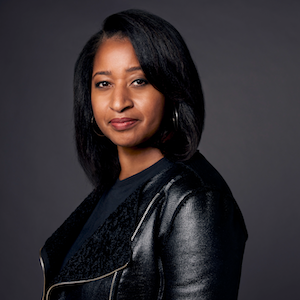
Nedra Rhone is a lifestyle columnist for the Atlanta Journal-Constitution where she has been a reporter since 2006. A graduate of Columbia University School of Journalism, she enjoys writing about the people, places and events that define metro Atlanta. Sign up to have her column sent to your inbox: ajc.com/newsletters/nedra-rhone-columnist.