Deal, in election year, ready with raises

Under the Gold Dome
With the 2014 session of the General Assembly opening on Jan. 13, The Atlanta Journal-Constitution will offer a series of pre-session reports on the major issues facing lawmakers. Coming this week: the debate over medical malpractice, guns and the cityhood movement. Next Sunday, our legislative guide wraps up the issues, the players and the politics and leads with an exclusive AJC poll of Georgia voters.
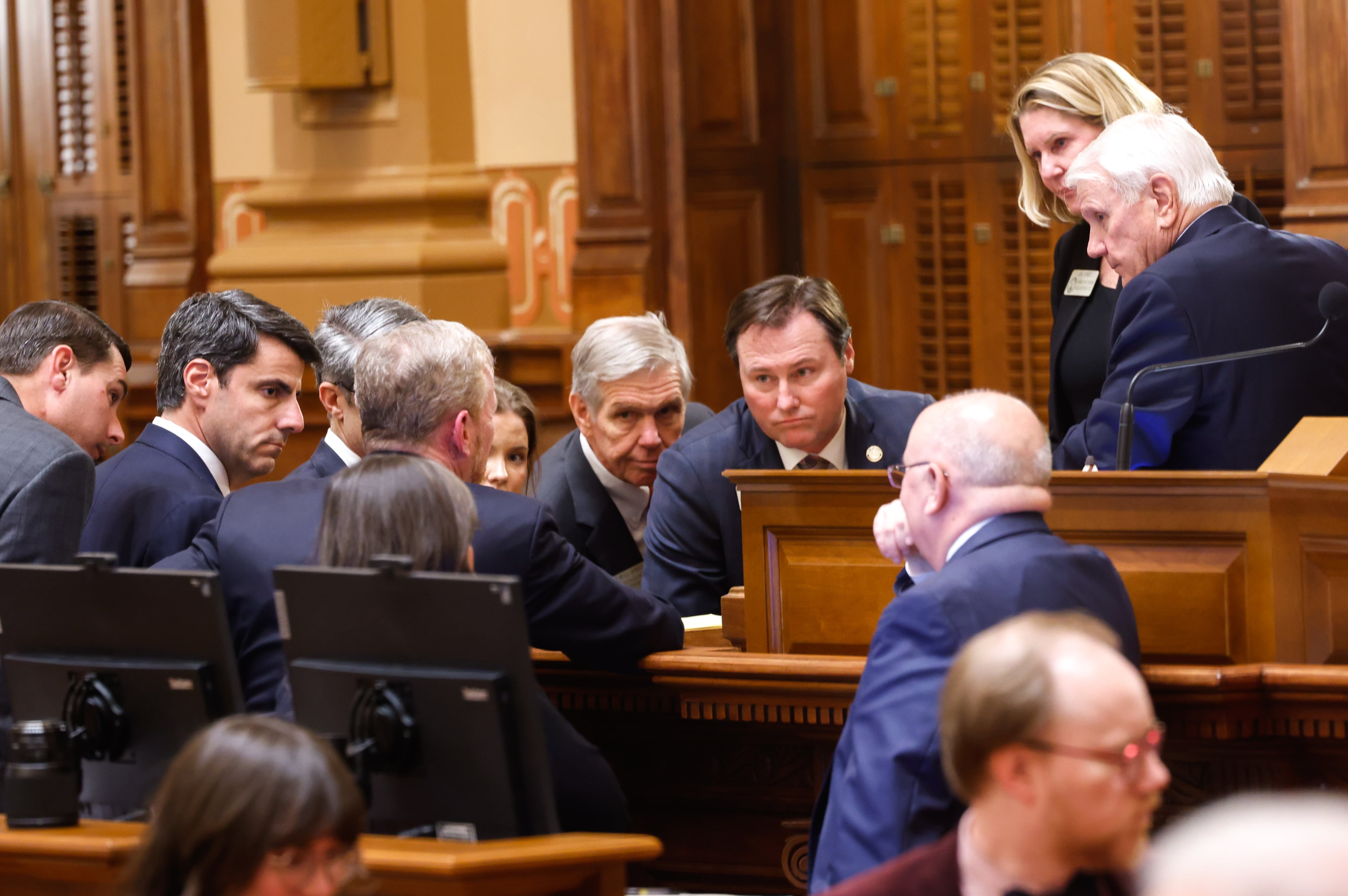
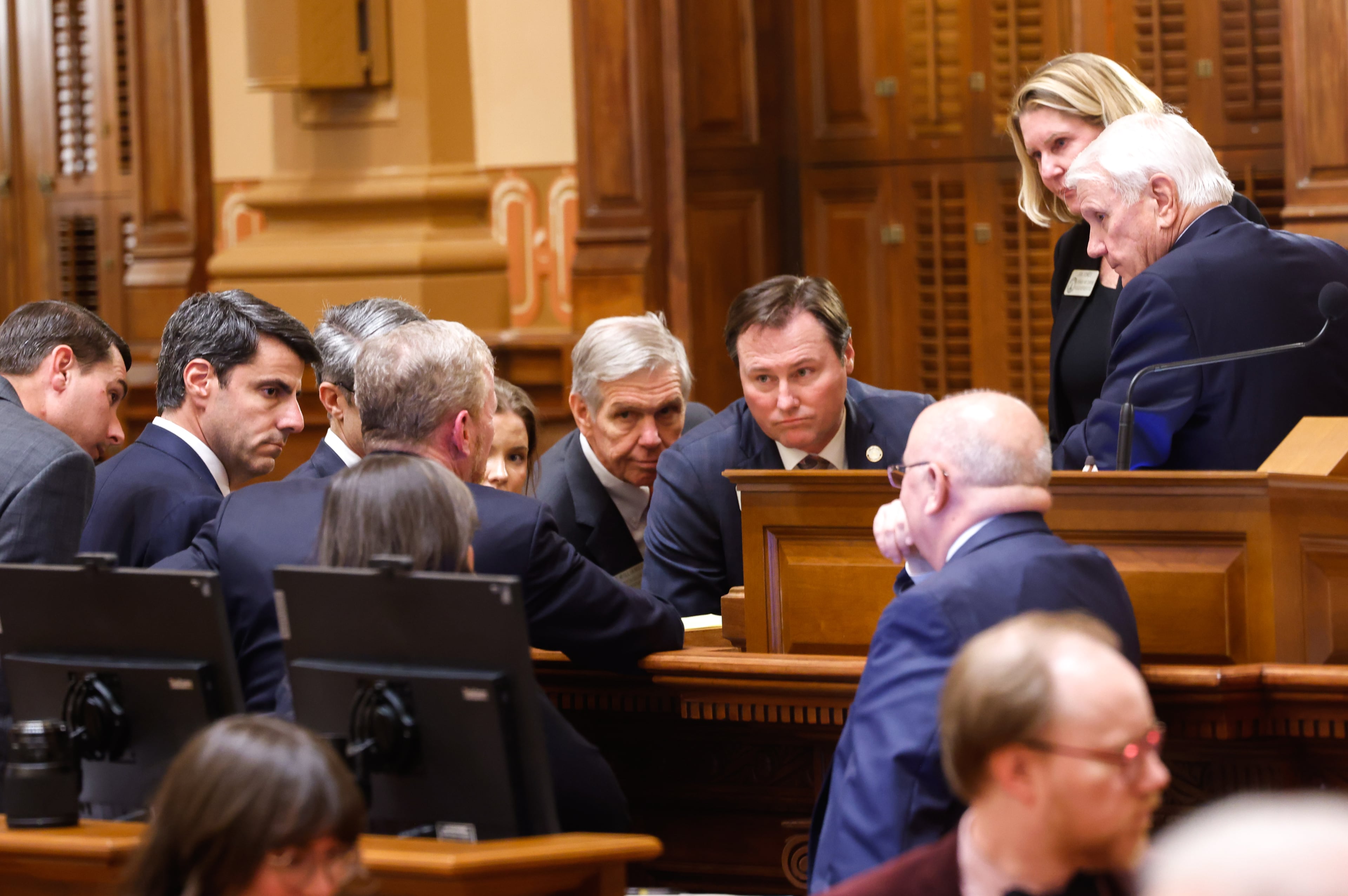
Gov. Nathan Deal heads into his election-year legislative session next week with an economy on the uptick and a relatively fat state bankroll, the first since the Great Recession.
If past gubernatorial re-election sessions are a measure, he won’t have any trouble finding ways to spend the money. But Georgians shouldn’t expect a Pork-o-Rama, either.
With $900 million in reserves and revenue climbing, Deal is expected to put enough money into the $20 billion state budget to give teachers raises and let agencies and colleges offer merit increases. They would be the first state-funded raises in five years for the roughly 200,000 state workers who are not senior executives in their departments. (Top managers at some state agencies received pay raises during the downturn while their employees went without.)
Deal will also put more money into construction projects, such as erecting new college buildings or deepening Savannah’s harbor, and he has already committed to spending more on the state’s troubled child welfare system. The governor is expected to announce these and other voter-pleasing measures when he releases his budget plan in 10 days.
Happy budget news is typical for most governors seeking re-election. They want to assure Georgians things are looking up and earn the good will of key voting groups, such as the state’s more than 100,000 public school teachers.
“It’s a big-money year,” said Bill Tomlinson, a retired state budget director. “You want to impact as many votes as you can.”
Deal, who is seeking a second term this year, will repeat the playbook of past governors in their re-election legislative sessions by putting the biggest chunk of the extra spending into schools.
“This will be a big year for public education,” Deal promised.
‘It’s about time; we deserve a raise’
A raise would be good news for the state’s teachers, who have seen their pay stagnate while the cost of health insurance and other benefits have jumped in recent years.
“It is about time,” Janet Brown-Howard, a veteran reading teacher at Twin Rivers Middle School in Gwinnett County, said. “We deserve a raise for our dedicated work provided to our students. This will truly be a happy new year for all educators if we receive a pay increase.”
For Deal, having money to spend as governor is a new experience.
The $20 billion the state will spend this year ($40 billion if federal and other revenue is included) helps provide education for about 2 million students and health and nursing care for more than 1.8 million people. It funds road improvements and prisons, economic development initiatives and cancer research, business regulation and water and sewer projects.
The state has been cutting back almost since the start of the Great Recession, with reductions at some agencies in the range of 50 percent over the course of several years. Deal has tried to shield K-12 public education, but it has taken more than $1 billion in cuts, forcing local school boards to raise property taxes, furlough teachers and eliminate days children were in the classroom. Cuts to the University System of Georgia and the state’s technical colleges have led to school mergers and big increases in student fees and tuition.
Tax revenue, most of which comes from income and sales taxes, had been far below pre-recession levels of 2007.
But those numbers have been improving. Collections jumped nearly $1 billion in fiscal 2013, which ended June 30. And collections were up 5.4 percent during the first five months of fiscal 2014. For the first time since the beginning of the recession, Deal’s budget office last summer told agencies they didn’t have to propose new spending cuts.
Some of the new money will be used to restore programs cut in the past, or pay for increases in enrollment in education and in programs like Medicaid, the government health care program for the poor.
Election year is raise time!
But past governors seeking re-election have also used the budget to help win votes and, at least temporarily, boost the economy in some parts of the state.
Seeking a second term in 1994, Gov. Zell Miller called for a $100 million tax break for families with children and the elderly, counselors in elementary schools, an expansion of the HOPE scholarship, 5 percent pay raises for the state’s schoolteachers, extra money to help the textile, food-processing and paper industries and an 18-hole golf course in a state park at the Okefenokee Swamp.
In 2002 with the state in the midst of a recession, Gov. Roy Barnes proposed an election-year raise for teachers and university faculty of 3.5 percent and $1.3 billion in borrowing to accelerate school construction, jump-start rural highway projects and build prisons. The pay raise didn’t help Barnes with teachers that year — many were so irate over Barnes’ school reform proposals that they wouldn’t back his re-election.
Barnes’ successor, Sonny Perdue, entered his re-election year in 2006 with rising tax collections. He proposed a 4 percent pay raise, a $100 gift cards and no health insurance increases for teachers, smaller class sizes and dropout prevention counselors for schools, more prison beds, broadband Internet access in rural areas, a child-care tax credit for families and $866 million in construction.
Lawmakers know that history, but they also don’t expect Deal to become a spendaholic — he’s a staunch fiscal conservative in a state that is still back-filling budget holes left by the recession. A good chunk of money will pay for the increasing costs of public health care and education.
“It’s more money than we’ve had in the past six or seven years, but it’s not enough to give a lot of Christmas presents out,” said Alan Essig, head of the Georgia Budget and Policy Institute and a former state budget analyst.
‘You want them to feel good’
House Appropriations Chairman Terry England, R-Auburn, is optimistic the state can afford pay raises, something he thinks the state’s 200,000 teachers and employees need.
“It’s about employee morale. At some point you want to do something for your employees because that helps your business,” he said. “It’s unfortunate that for three years, Governor Deal has had absolutely no way to do it. He wants to do it because it’s the right thing to do, it’s not about votes.”
Hiking pay for teachers and state employees would cost about $128.6 million for each percentage-point increase. Deal is expected to propose sending school districts extra money for a raise in the 2-3 percent range, but local officials will have to decide whether to pass it along. University and state agency officials may get lump sums to dole out in the form of merit raises.
In the case of K-12 schools, letting local systems ultimately decide how to spend the extra money makes sense, Essig said. For instance, if a district has eliminated school days or programs, or furloughed teachers, it should be given the option of spending the extra money making up for those cuts.
“I know it’s an election year, but if there is extra money available, that’s probably policy-wise where it makes the most sense to spend the money,” he said.
But Deal will call it a pay raise for teachers, just as he has, in past years, said he was allocating extra money to end teacher furloughs, even though some districts continued furloughing teachers.
Tomlinson, the former budget director, said that’s not surprising.
“In a re-election year, there is always a push for pay raises,” he said. “You know they (teachers) are going to vote and you want them to feel good. You don’t want the teacher organizations campaigning negatively against you.”
Having a little extra money to spend could help boost Deal’s re-election, but England said it will also inspire lawmakers to make more requests for local projects.
“It makes my job harder because in the past, people knew there wasn’t any money,” the House budget chairman said. “Now you have to pick and choose winners and losers. Before, you just gave people a blanket ‘no!’ “
But even with the stronger economy, improving tax collections and everybody up for re-election, England said, the Great Recession has left lawmakers wary about increasing spending on the non-essentials.
"I think both parties in the General Assembly are looking at things in from a different light because of what we've gone through," he said.
About the Author

James Salzer has covered state government and politics in Georgia since 1990. He previously covered politics and government in Texas and Florida. He specializes in government finance, budgets, taxes, campaign finance, ethics and legislative history