Maureen Downey: Shifting school lines
When my son began kindergarten, there were two classes in his school, one with 13 students and the other with 14. Parents were thrilled until they were summoned to a meeting where the principal explained that the school was combining the two small classes into one of 27.
Anxious parents complained that their 5-year-olds had bonded with the teacher and that the shift to the larger class would be unsettling and unruly.
After the first day in the mega classroom, I asked my son what his new class was like.
“Bigger.”
That was his only comment. In talking to my neighbors most concerned over the larger class, they, too, reported that their youngsters were unfazed.
I recalled that experience as I attended a meeting last week of central DeKalb County parents alarmed over a proposed countywide redistricting that will send their children to Druid Hills High School rather than Lakeside.
More than 220 parents packed a community clubhouse, all of whom considered a shift to Druid Hills a dagger in the heart of their community and a wrenching of their children from their neighborhood fabric.
As one father said, “I’ll be doggoned if I want my kids to go to Druid Hills. No offense to any of you here, but you are not my community.”
But children create their own communities within their schools. High school students, in particular, find community in the peers they meet on the mock trial team or in marching band.
The notion that community is limited to a 10-block radius is awfully limiting. Once children are in middle school, they have more independence to choose their friends and aren’t confined by geographic proximity.
Parents at the meeting also argued that they want their children in a feeder system — elementary, middle and high school — that remains intact. They don’t want an outcome in which part of a middle school goes to Druid Hills and the other goes to Lakeside. But given the population growth in their area and the sizes of the elementary and middle schools, it’s unlikely that parents can win the trifecta of handpicked elementary, middle and high schools.
“I am very sensitive to all these things, but I can’t make everybody happy,” says DeKalb school board member Don McChesney. “There is no way to do that and that is not my job. My job is to get it right, not for one child or 100, but for 100,000.”
Many parents explained that they wanted their teens at Lakeside because they would know the other parents since they all live nearby. There was a belief that knowing parents from the neighborhood pool or Thursday night Bunco games would somehow make it easier to assure that teens stay on the right path.
I haven’t found that knowing other parents keeps teens out of trouble. Kids of perfectly wonderful parents still fall into all sorts of risky behaviors, and teens with utterly hapless parents can be such straight arrows that they never even jaywalk.
The underlying assumption of this discussion was that kids remain lifelong friends with their buddies from first grade or second grade. Most kids, at least in my experience, add new friends in middle school and again in high school. I went to a regional Catholic high school where I didn’t know a soul. But I made new friends in short order, and they remain close to me now.
I understand the deep concerns of parents about protecting childhood friendships and promoting community ties, but I have to ask whether these are the most important criteria for the DeKalb school board in its deliberations on fair attendance lines and easing overcrowding.
My own preference is that school boards focus on putting kids in academically strong schools that are staffed by caring professionals and are safe and welcoming to the students. We can leave it to the kids to develop friendships.
About the Author
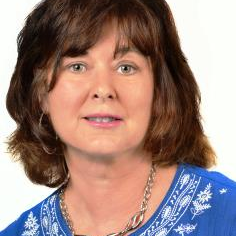
Maureen Downey has written editorials and opinion pieces about local, state and federal education policy since the 1990s.
More Stories
The Latest


