King biographer adds a personal touch
Godfrey Hodgson, a British journalist and author of a dozen books about U.S. politics and history, recently took on a major journalistic challenge: writing a biography of Dr. Martin Luther King, Jr.
It’s a crowded arena, with several thousand entries, but Hodgson offers a personal touch having met and traveled with King numerous times between 1956 and 1967. Hodgson, currently visiting journalism professor at City University in London, took some time to chat with the AJC about Dr. King and his legacy.
Q: How does the British perspective on King and his legacy differ from the U.S. perspective, if at all?
A: It may, but my perspective is not particularly a British perspective. I knew Dr. King in Alabama and followed him around the South and interviewed him in Chicago. I feel my perspective was the same as northern liberals. Sometimes I write something in a U.S. paper and they put a tag line at the top saying "a British view" which I think is a slight put down actually.
Q: In your book, you discuss things the general public may not know about King . Why do you think some information about him is not widely known?
A: King was always accused of being a communist by his enemies. He was a political radical. One of his growing understandings and beliefs was that African Americans would not be fully equal in the U.S. until white folks freed themselves of their prejudices and that was a pretty radical idea. It wasn’t really until the last couple of years of his life when he began to talk that way.
I mention in the book when he is talking to folks at the Ford Foundation in New York...and he says just that, but before he says this, he asks them to turn off the tape recorder. Not that he the lacked moral courage...but he wasn’t ready to come out with some of his radical political beliefs because he saw them as dangerous to his current project. And then there was his opposition to the Vietnam War. He was very reluctant to come out on that not because he didn’t have the guts to say it, but because he thought.... that would damage his campaign for African Americans.
Q: Do we now have a tendency to deify Dr. King?
A: I think there is that danger. King himself would not want to be deified. His naughty young friends used to call him “The Lawd.” They did think he deified himself, but he was quite down to earth. He was 5’7″ and I am 6’4″, but I always felt myself in the presence of a stronger man.
Q. Having studied his work, what was Dr. King's greatest disappointment in his life?
A: Probably that he did not live to create a non-racial black and white coalition – his so- called Poor People's Campaign. The establishment liberals including the Kennedy administration were very nervous about the March on Washington. Maybe if the Poor People's Campaign had been surprising in establishing a peaceful and multiracial demonstration, that would have been more successful than people predicted.
Q. What should we see as Dr. King's greatest contribution to society?
A: He made it so that no serious and fair-minded person could continue to defend racialism and segregation. Not that there isn't a good deal of continuing prejudice and glass ceilings, but Martin Luther King, Jr. made it no longer respectable to defend racial prejudice.
About the Author
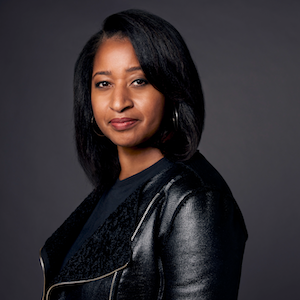
Nedra Rhone is a lifestyle columnist for the Atlanta Journal-Constitution where she has been a reporter since 2006. A graduate of Columbia University School of Journalism, she enjoys writing about the people, places and events that define metro Atlanta. Sign up to have her column sent to your inbox: ajc.com/newsletters/nedra-rhone-columnist.