He built Paste Magazine. Now he’s walking away to pursue another passion.


Last year, Josh Jackson had a moment of déjà vu as he was flipping through old journal entries.
The Atlanta-based co-founder of Paste Magazine started regularly journaling in 2020, looking for a way to process the stress of the pandemic.
He also felt energized by a new hobby he had picked up and wanted to write down what he was finding: going out in nature and birding.
During this time, a thought struck Jackson: with all of the changes happening in the business and in his own interests, was it time to step away from the music and culture publication? He still loved music, but he didn’t keep up with bands with the same verve that he once did. The thought went away, but over the next several years, the thought would occasionally resurface.
“I went back and read those journals,” Jackson said. “I said within five years, I want to sort of transition to doing something else.”
After more than two decades at Paste, Jackson has stepped away from the media company he built, looking to pursue a different creative path: writing his first novel and piecing together a coffee-table book with essays about birds native to Georgia.
Both are projects he didn’t have the capacity to pursue when leading a media organization.
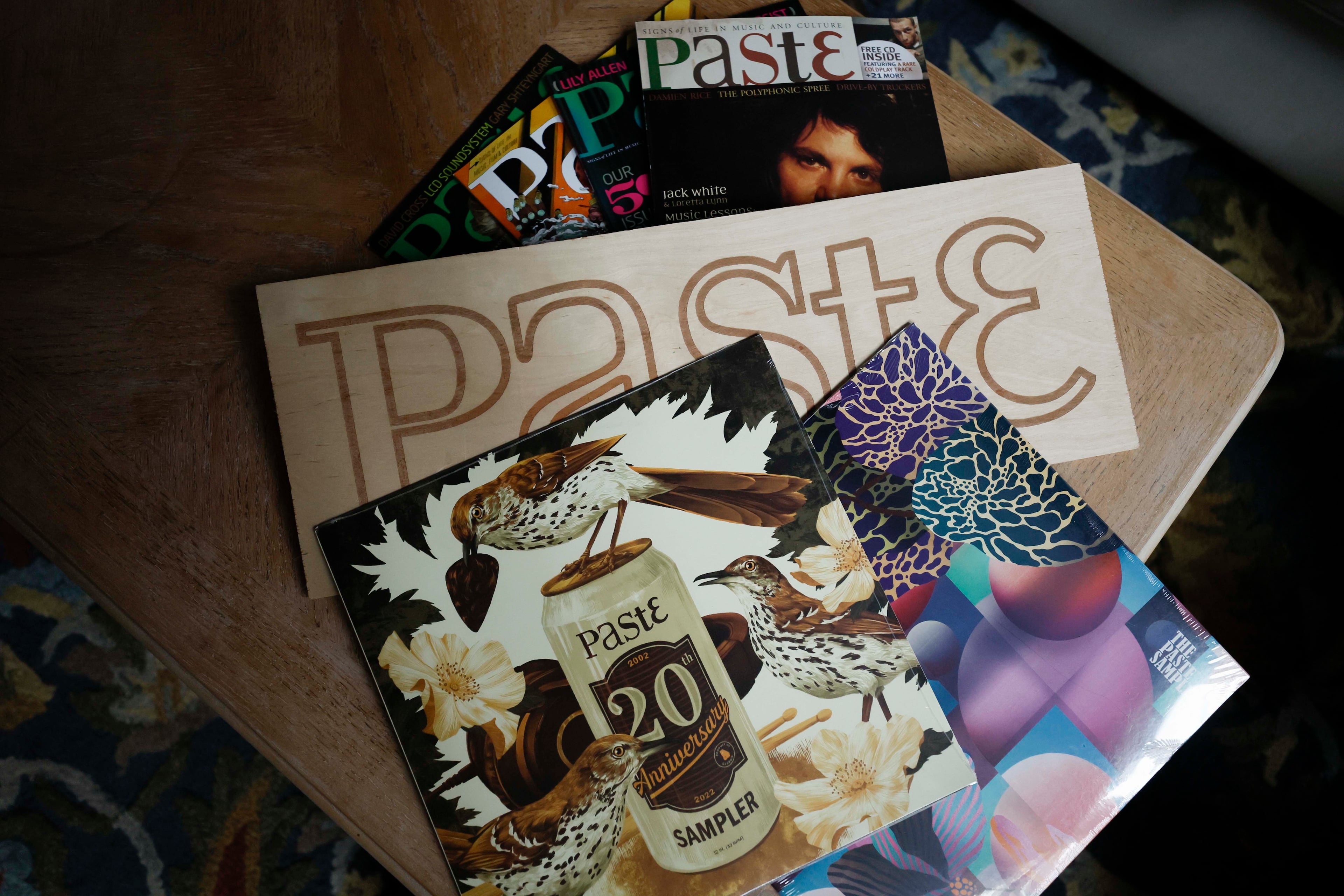
Jackson’s departure severs the publication’s final remaining tie to Atlanta, the city where it was founded nearly two decades ago and drew staff writers, editors and interns from all over the country during its life span.
The severing is more symbolic than anything. Paste became an entirely remote operation after shuttering its physical offices during the pandemic, with its staffers and freelancers stretching across the globe. It’s not an uncommon direction for both new and legacy digital publishing operations.
Paste is not going away. Jackson appointed a new editor-in-chief in Los Angeles-based Matt Mitchell, the publication’s former music editor, who has hired additional staff and helped to narrow Paste’s focus to just music.
“I feel like Paste is in really good hands, and that legacy is in really good hands,” Jackson said. “And it just felt like, ‘OK, it’s the time to try something else.’”
‘The Wild West’
Jackson and two friends Nick Purdy and Tim Regan-Porter founded the magazine in Atlanta in 2002, when print magazines still had considerable influence over how audiences discovered music, film and other forms of media.
There were dozens of titles to consume, including NME, Blender, Spin, Q, Rolling Stone. Few were based in Atlanta, which allowed Paste to stand out in the saturated market.
“I loved getting to do this in Atlanta,” Jackson said. “I loved when people would ask if they could courier something over to our offices and I’d be like, ‘Oh, that’s gonna be a long bike ride from New York.’”
Paste initially began as a web store in 1998, when Jackson’s friends had the itch to do something with their love for music. They settled on selling CDs from independent artists with the conviction that “the big corporate music machine tends to pass over some of the best art for the sake of commercialism and ‘risk management,’” to borrow their wording from their website at the time. They wanted to find life among the radio wasteland.

The first release: the first official live album for Athens rock band Vigilantes of Love. They kept their stock at Jackson’s friend’s house, before contracting with a warehouse to handle fulfillment.
By early 2001, the site offered over 150 CDs by 80 artists. Every order would receive a free sampler CD with a compilation of the other artists.
Then they wanted to try something bigger: launching a print quarterly where they discussed the music and other types of media they liked, regardless of how commercial it was. The sampler CD that came with every online order would be a key part of each issue.
“At the time, Rolling Stone and Blender would fight over Christina Aguilera and Britney Spears covers,” Jackson said. “We’re like, well, they’ve sort of lost what we loved about them.”
Jackson insists they had no idea what they were doing. But they devoted their full attention to the effort, with Jackson and Purdy leaving their full-time jobs and Regan-Porter coming on board, who had experience with launching a music magazine.
They mostly pieced together the first issue themselves: the writing, interviewing and layout, as well as finding the printer and distributor. They caught the eye of Borders, the now-defunct book retailer, which committed to putting issues in stores.
“One thing led to another, and we’re like, I guess this is going to be a real magazine,” Jackson said. “It was the Wild West.”
Paste opened a one-room office in Decatur in the spring of 2002. If the staff played music too loud, the neighboring tenants would bang on the wall.

One issue became two, four and then eight, featuring profiles of Lucinda Williams, Pavement frontman Stephen Malkmus and Sister Rosetta Tharpe, as well as pieces spotlighting Japanese cinematic history, music from Zimbabwe and this new thing called the iPod. Paste’s staff wrote about beer and politics and travel, too, and filed articles either from or about Iceland, London and Atlanta itself.
The publication experimented with their coverage and the art that filled their pages. Joni Mitchell illustrated one cover. A photo spread chronicling the “evolution of the hipster” ended up becoming their website’s first story to reach a million visits.
In 2007, Paste added a live studio to its office for filmed performances by artists and bands, and added another when it opened an office in New York in 2015. At its peak, Paste was filming up to eight artists a day between the two locales.
Making it work
Over the years, Paste has endured all of the disruptions that have plagued arts and culture publications: the decline of print advertising, the rise of blogs and social media, the ubiquity and sudden irrelevance of search engine optimization as a strategy to land viewers, the changing relationships between artists and journalists. Its staff grew and shrunk over and over again.
Around the time of the Great Recession, Paste began to struggle financially as advertising spending in the U.S. declined.
Paste, which by then had about 200,000 subscribers, printed its final edition in 2010, and threw its energy into bolstering its website. The following year, it was acquired by live music retailer Wolfgang’s Vault, which still owns the publication today.
In November 2023, Paste took a leap toward expanding: it acquired and resurrected pioneer feminist website Jezebel, which its parent company shuttered earlier that month, and politics outlet Splinter. The following year, it added longtime entertainment publication The AV Club. Now, Jackson was at the helm of a full-fledged media business.
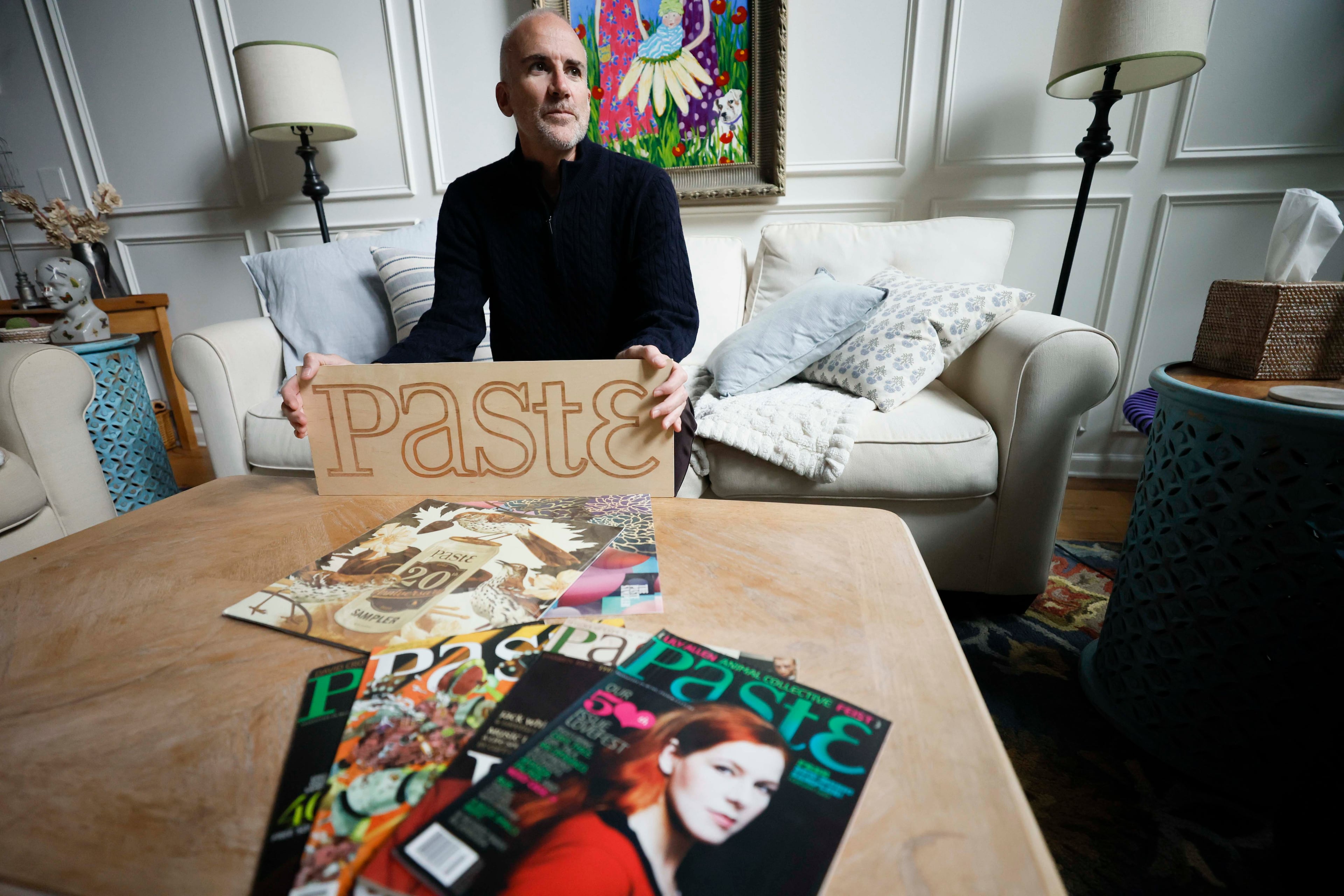
“We had a good model at Paste for being able to make this work, to be able to stay in business for 22 years,” Jackson said. “We knew that there were a lot of websites out there that were struggling, and thought, ‘How do we do this with other properties out there, to keep these great websites going?’”
Now, the latest challenge to confront is artificial intelligence.
AI-powered chatbots and summary features on search engines have siphoned traffic away from news and other digital media websites, upending many of their established business models.
Between October 2021 and 2026, desktop and mobile visits to Rolling Stone and Pitchfork declined by 51% and 48%, respectively, according to digital market intelligence company Similarweb.
As traffic goes down, so does ad revenue, prompting publications to reassess how they generate income. Some are leaning into live events and becoming more stringent on paywalls. Others are laying off staff, such as BrooklynVegan and Alternative Press, whose parent company gutted almost all of its staff earlier this year, or shuttering entirely.
At the end of 2025, Matt Mitchell, Paste’s then-music editor, published a piece that announced the website was returning back to its roots: music coverage. The other areas of coverage they’ve been publishing for decades — film and television, books, games — would move to Paste’s other publications. The move came with layoffs.
At the time of the change, Mitchell said they didn’t fully grasp the scope of the “true perils of internet journalism, in terms of what’s killing us every day,” and has watched Google search die more each day.
Mitchell is hopeful audiences still recognize the value of in-depth music journalism. Since January, Mitchell has brought in 10 full and part-time staffers across different capacities, and has added more queer and woman voices to its roster.
“It really is navigating a future that is getting decimated by AI, so we’re fighting AI while also trying to grow,” Mitchell said.
‘A treasure’
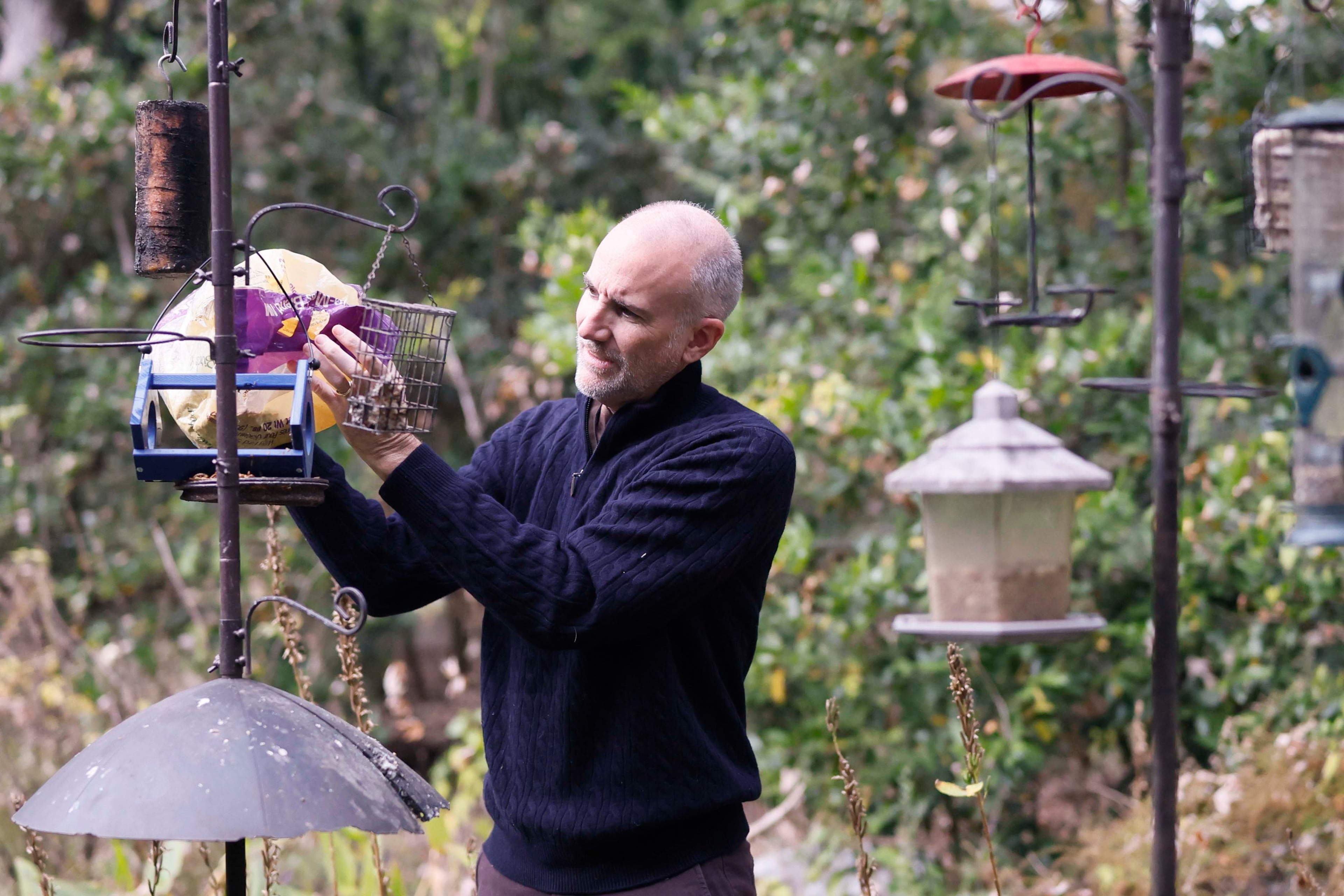
Jackson, for his part, is not walking away from media and communications entirely: he launched a communications strategy company to take on freelance projects while he’s working on his two books. He wants to focus on nature nonprofits and help media startups.
In a cosmic way, Jackson’s interest in birding was a return to form. He initially enrolled at the University of Georgia as a biology major before pursuing magazine journalism. Whether he’s working on his book or volunteering with Birds Georgia, Atlanta’s largest association of birding enthusiasts, he’s yet again following a passion to see where it leads.
It’s hard to boil down what the success of Paste has meant for Jackson.
There’s the moment of pride he felt when he walked into a Barnes and Noble and held the first issue in his hands, realizing that his pipe dream had become a reality.
There’s the ‘Save Paste’ crowdfunding campaign, which was launched to try to keep the print edition afloat in 2009, and received an outpouring of support from readers and artists previously covered in the magazine.
There’s the joy of seeing past staffers launch their own ventures, including Kate Kiefer Lee, who recently opened Long Story Books in Inman Park, and Jason Killingsworth, who was one of Paste’s first staffers and launched a magazine called Chisel earlier this year — keeping the dream of print alive.
“Being part of a publication that so many people have gotten to enjoy for so many years has just been a treasure,” Jackson said.