Trilith wants college students to spend a semester on set
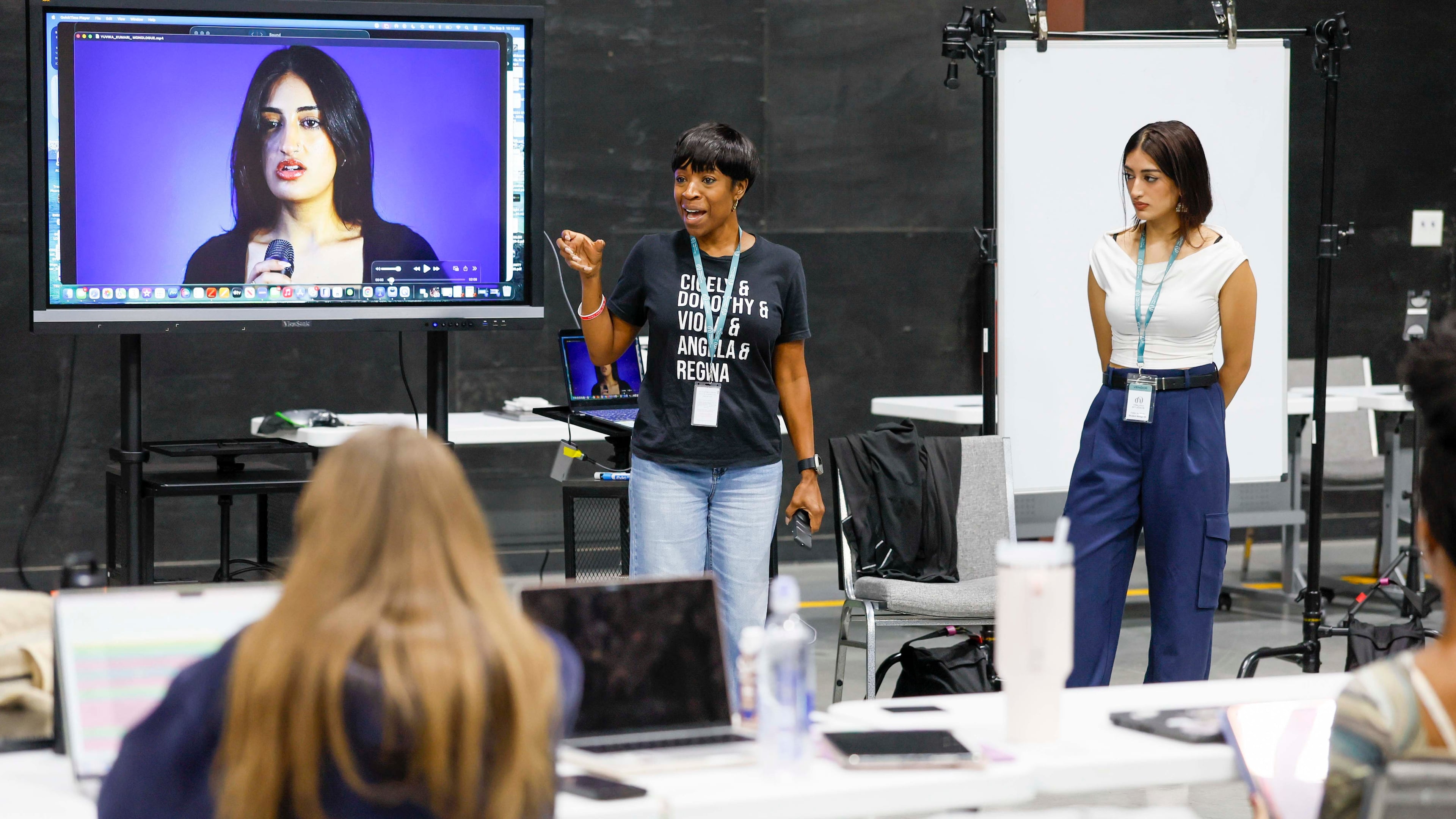

The Trilith Institute doesn’t want to be a film school. Rather, it wants to be like a teaching hospital, training the next generation of writers, directors and actors.
The nonprofit arm of the studio campus has launched a 15-week program that places college students from universities across the country inside of a working production lot.
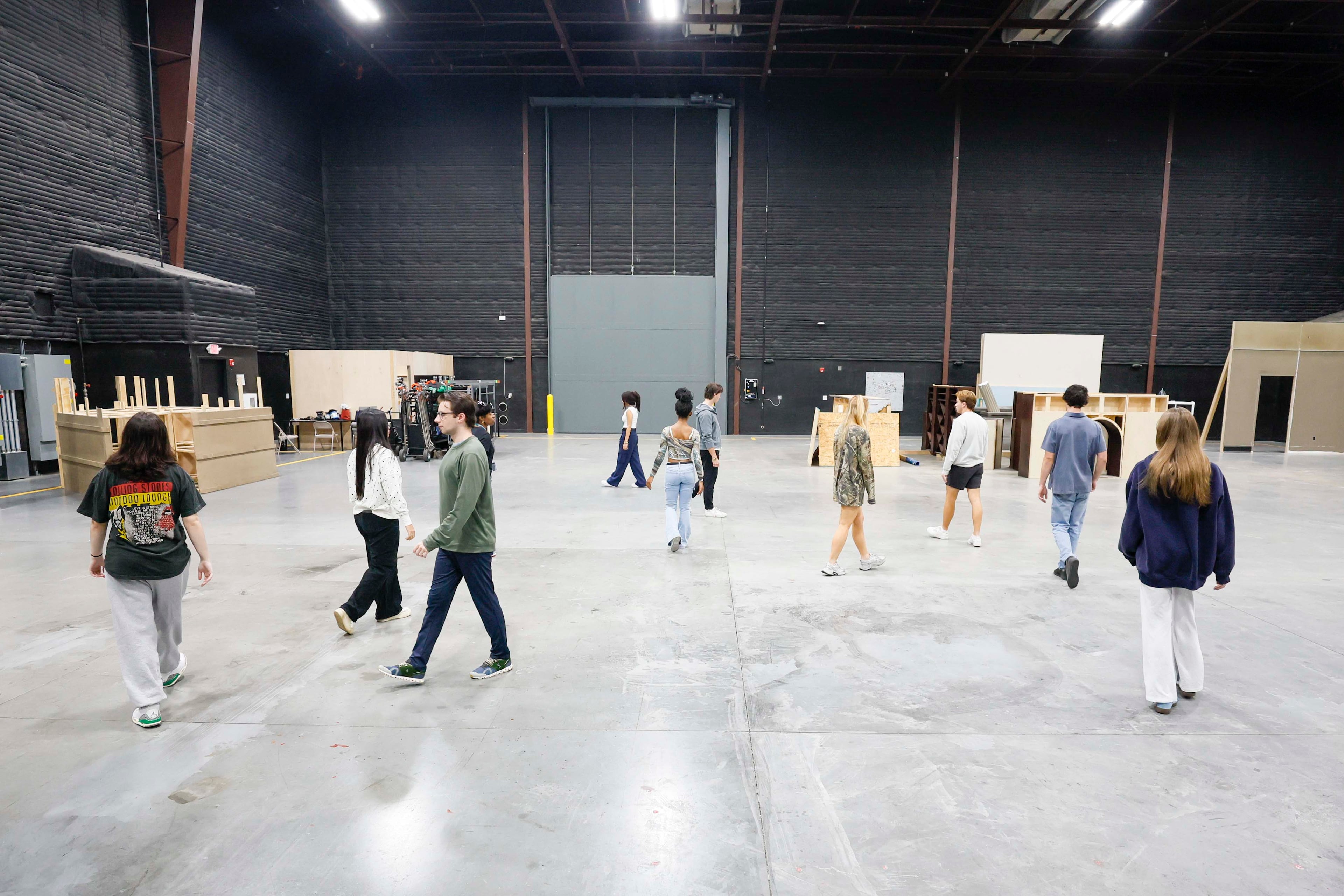
It’s called Semester at Trilith, and it’s a lot like studying abroad. But instead of taking classes in thermodynamics in Paris, students are on a soundstage at the Fayetteville studio, receiving hands-on experience and credit hours in the fundamentals of filmmaking. They eat, sleep and play at the sprawling development — that is, when they’re not on field trips to other studios, equipment rental houses and other filmmaking facilities in the Atlanta area.
For the first eight weeks, students learn mechanics of screenwriting, editing and acting for the camera, among other areas, in courses taught by working professionals. In the following weeks, they divide into teams to write, produce and complete a three-episode series. It’s a rapid turnaround, yes, but it acclimates students to the realities of a harried production schedule.
The purpose is to provide students real world experience in a field that doesn’t have a predefined path to “breaking in.” It’s learning on the job, versus learning by the book, and putting a film education into practice. Students are getting to network and grow their careers, said Josh Lee, the chief operating officer of the Trilith Institute.
Georgia has a number of education programs focused on filmmaking. There’s the Georgia Film Academy, a workforce training program for below-the-line roles, such as lighting and electric or production accounting. The state’s largest universities have film majors and master’s programs in filmmaking and screenwriting.
The Trilith Institute fills in the lines within these programs, aiming to bolster Georgia’s entertainment industry to be self-sustaining by creating programs that serve as alternatives to the typical Hollywood system.
“We’ve been a manufacturing hub for so long, and now the work we’re doing is to become a solution to the problem,” Lee said.
This is the first so-called “semester on set” program at one of Georgia’s studios. The University of Georgia’s Grady College of Journalism and Mass Communication offers a domestic field study opportunity focused on media and entertainment, which places students at internships in Los Angeles, but it is not a one-to-one equivalent.
The Trilith Institute has been working on the logistics of the program for years, Lee said. It was initially trialed as a two-week Maymester program in 2025, in which the inaugural cohort of 10 students created a short film. Two of the students from the first Maymester were hired on productions after completing the program.
“That doesn’t happen in a classroom setting,” Lee said.
The first group of Semester at Trilith students began in August, all of whom are enrolled at Clemson University, which is the program’s accrediting partner. There are 15 in the program, some of whom are majoring in Clemson’s world cinema program, which is heavy on theory. The major prepares students to enter not only careers in filmmaking, but teaching, criticism, audio-visual archives, advertising and tourism. Other majors in the first cohort include theater, English, management and math.
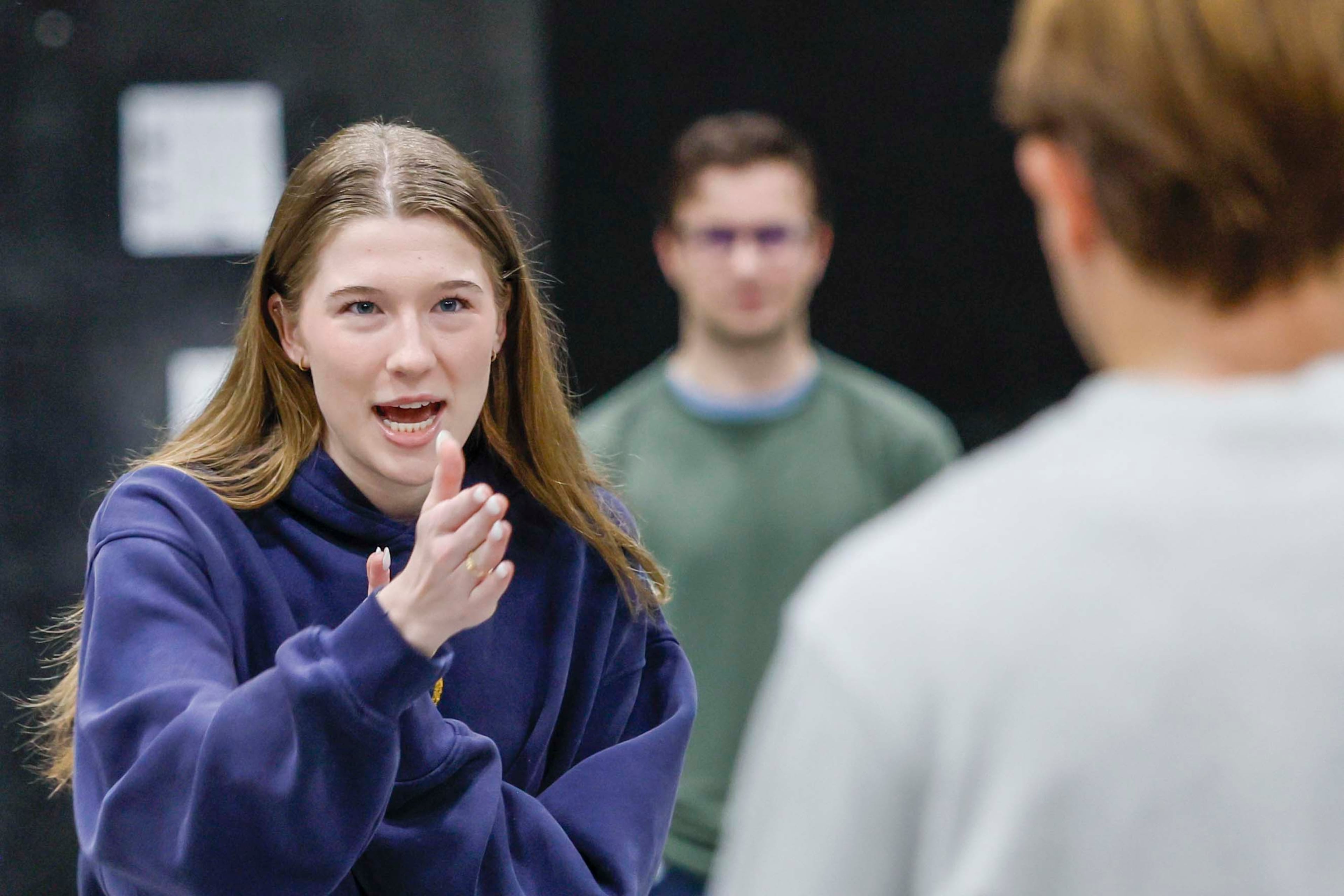
Senior Emma Hamrick was drawn to the Trilith program because the courses are taught by working professionals, and provide training in areas that her world cinema major doesn’t teach. Atlanta also has a much larger film community and more resources than Clemson itself.
“When you’re at college, you’re taking math classes and science classes to fill credits,” said Hamrick, who wants to pursue voice acting when she graduates. “In here, it’s all film all the time.”
There’s opportunity to grow the scope of the program. Lee sees a world where Semester at Trilith has multiple pathways, including one for live production, which could center around Trilith Live, sports media or game development.
In an age where anyone can create and self-publish content, whether it’s by their own fingertips or with the help of artificial intelligence, the meaning of an education in film and television production is evolving. Jeffrey Stepakoff, the president and co-founder of The Trilith Institute, said the real currency in this world is authentic voices — determining what’s worth making and how to create it.
“Being and living in an environment where you’re not only learning a trade through experiential education, but you’re also learning what it is that you have to say, and asking: What is your perspective? What is your voice? How do you see the world?” Stepakoff said. “We think that’s ultimately going to be the real currency moving forward in a world where the cost to make and create is almost nothing now.”
How to apply: College students currently enrolled at an accredited university with a minimum 2.5 GPA that have completed at least their first year of study are eligible for the program. For more information and a link to the application, contact trilith@clemson.edu or join the waitlist on the Trilith Institute’s website.