Coming soon to rural Georgia: Thousands more acres of new solar projects
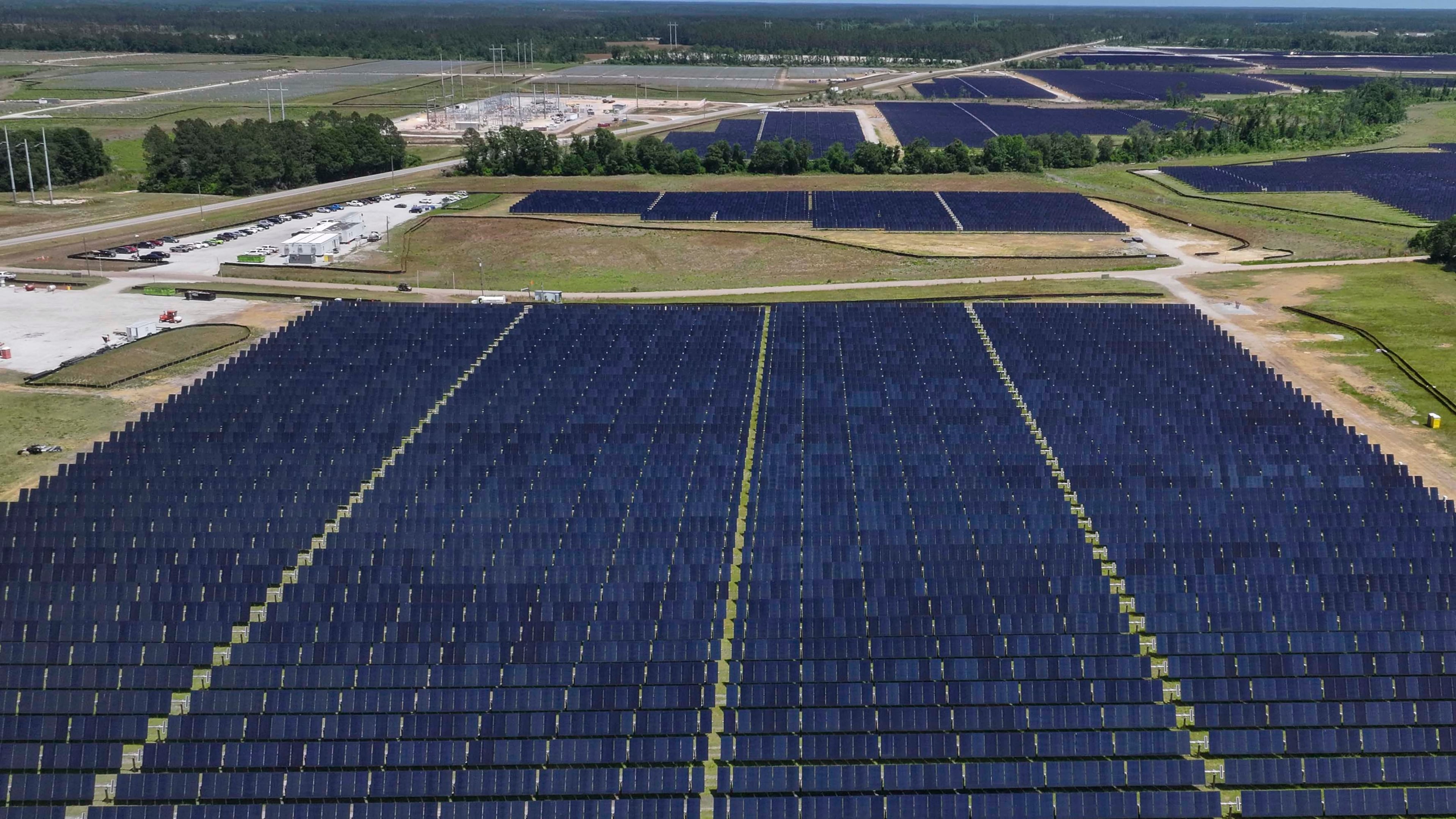


A trio of new renewable energy projects could soon cover thousands more acres of rural Georgia in solar panels, according to filings submitted in recent days to state regional planning authorities.
The proposals come as Georgia seeks to keep up with the growing demand for electricity driven by data centers.
The solar additions were revealed in filings submitted in recent days through the Georgia Department of Community Affairs “Developments of Regional Impact” portal. Projects expected to have significant regional impacts are required to go through the DRI process to help local governments with infrastructure planning, but the agency only began requiring that large solar projects participate last year.
The proposed projects are in varying stages of development but if completed, they would add 660 megawatts of clean energy combined to the power grid, enough to power more than 114,000 homes, according to the Solar Energy Industries Association. It’s unclear whether the installations will also include battery storage.
They include:
- The 200-megawatt Amber Meadow Solar project planned for south-central Georgia’s Irwin County. The project is being developed by a subsidiary of energy and electricity giant NextEra Energy and is slated to come online in late 2028.
- The 261-megawatt Peach Wood solar project planned for southwest Georgia’s Mitchell County. Peach Wood solar is a project of OCI Energy and is expected to be completed in 2029.
- The 199-megawatt Project Lightyear solar installation slated for southwest Georgia’s Miller County. Developer EDF Renewables is behind the project that’s expected to come online in 2029.
According to the state filings, the projects will span thousands of acres in South Georgia, though it’s likely not all of that land will be covered in solar panels.
The Amber Meadow project will encompass roughly 1,500 acres, with about 900 of those under solar panels, a NextEra Energy Resources spokesperson said in a statement.
The Peach Wood and Project Lightyear developments are expected to spread across 2,500 and 1,600 acres respectively, but it was not immediately clear how much of that land would be covered by solar panels.
The projects continue a trend of large, “utility-scale” solar projects choosing sites in the southern half of the state. An analysis by The Atlanta Journal-Constitution earlier this year found nearly 90% of Georgia’s largest solar facilities in development or operation are clustered below the “Fall Line,” the geologic boundary that runs from Columbus to Augusta and separates North Georgia’s Piedmont region from the south’s coastal plain.

The area’s relatively cheap, flat land has been a major draw for developers.
But solar expansion in South Georgia has rankled residents in some areas. Their frustrations have ranged from anger over the tax incentives offered to certain projects to NIMBY-esque aesthetic concerns about acres upon acres of solar panels. In some cases where solar has been installed on farm land, residents have expressed fears that it could permanently damage the soil.
A NextEra spokesperson said the Amber Meadow project will create up to 270 construction jobs and contribute $49.2 million Irwin County’s coffers through payments in lieu of taxes. It was not immediately clear what tax breaks, if any, the company is receiving from local governments.
“As development continues, we are working through the applicable permitting and review processes and remain committed to bringing reliable energy infrastructure and economic investment to Irwin County,” the spokesperson added.
A spokesperson for EDF Renewables said in a statement that many details of Project Lightyear in Miller County are still being refined.
“Currently, we don’t have any additional project information to share,” the EDF spokesperson added.
OCI Energy declined to comment, citing the project’s early stages of development.
It was not immediately clear who would be using the power generated by the Project Lightyear and Peach Wood solar, but Georgia Power has agreed to buy electricity from the Amber Meadow installation.
Georgia Power has moved to dramatically expand its power generation fleet lately, mostly to meet the needs of data centers.
The state’s largest electric utility is planning to add an unprecedented amount of new electricity capacity by 2030 to meet the power needs of the massive warehouses filled with computer servers. The unprecedented expansion will boost its fleet by 42%.
While some of that electricity will come from solar and batteries, most of it will come from planet-warming gas-fired power plants.
Environmentalists have taken aim at Georgia Power for doubling down on fossil fuel power plants, especially as the cost of battery storage has fallen. They argue that solar coupled with battery systems can deliver electricity in the same manner as a traditional power plant but without the emissions that are driving climate change.
Georgia has emerged as a top destination for data centers, and the backlash against them has risen just as quickly. Local residents, elected officials and others have raised concerns about the environmental impacts, which include noise and light pollution and the amount of power and water it takes to operate them.
Editor’s note: This story has been updated to include a response from OCI Energy.
A note of disclosure
This coverage is supported by a partnership with Green South Foundation and Journalism Funding Partners. You can learn more and support our climate reporting by donating at AJC.com/donate/climate.