She helped ‘Black Panther’ and ‘Spider-Man’ film in Georgia. Now she’s retiring.
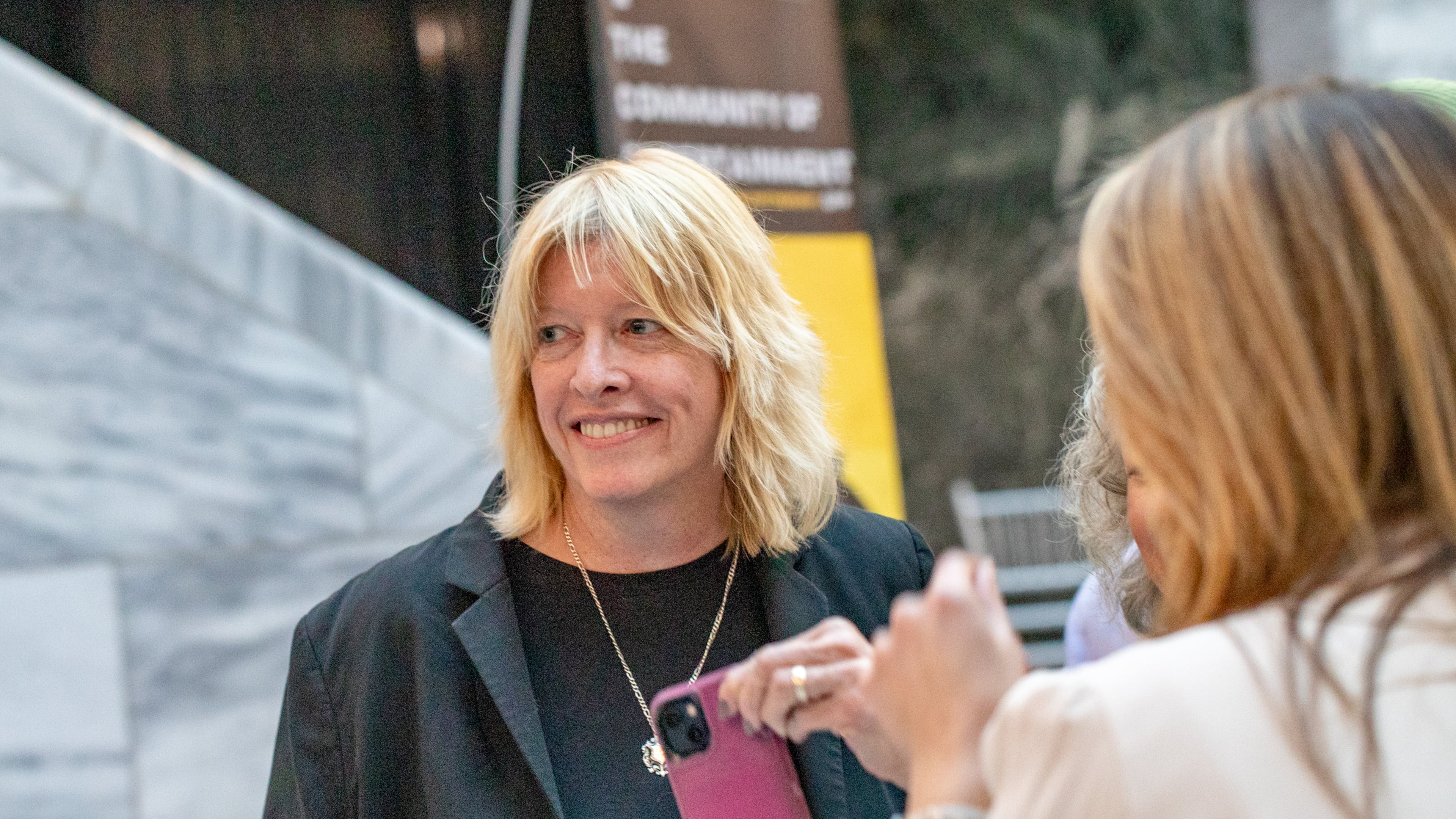

After more than a decade of running the Georgia Film Office, its leader is retiring.
Lee Thomas, a Georgia native, has long served as the state’s front-facing representative for all matters related to the film industry, marketing the state to thousands of entertainment businesses. She oversaw the Film Office as production skyrocketed in the years following the state upgrading its tax incentive in 2008, which turned Georgia’s then-small film scene into a well-oiled machine.
In her state bio, Thomas said she worked to support hundreds of film and TV projects, including “Black Panther: Wakanda Forever,” “Ozark” and “Spider-Man: No Way Home.”
Thomas’ retirement was announced by Pat Wilson, the commissioner of the Georgia Department of Economic Development, in a LinkedIn post. Thomas was not immediately available for an interview to discuss her retirement or plans for the future.
In a statement, Wilson said Thomas has helped turn Georgia into a trusted partner to filmmakers around the world.
“Lee has always understood that every production is about more than what’s on screen,” Wilson said in his statement. “It’s about creating opportunities for Georgians, supporting small businesses, and strengthening communities.”
An immediate successor was not named. But in his statement, Wilson said Thomas will “continue supporting Georgia’s film industry on a contract basis for the time being.”

In 1996, Thomas joined what was then known as the Georgia Film and Videotape Office as a project manager during a period before the state introduced its incentives. Georgia had a movie business then — after “Deliverance” hit theaters in 1972, major pictures such as “Smokey and the Bandit,” “Driving Miss Daisy” and “Forrest Gump,” as well as TV shows like “In the Heat of the Night,” made Georgia one of the top production states outside of California and New York.
The state’s appeal waned after Canada launched incentives in the 1990s and other states in the U.S. got into the game in the early 2000s. A fateful moment was when a 2004 biopic of Ray Charles relocated its shoot from Georgia after Louisiana approved its tax credit.
“We knew we were in trouble if we couldn’t get the story of Ray Charles,” Thomas told the AJC in 2013.
Georgia passed its first round of tax-incentive legislation in 2005 and then supersized it in 2008. Two years later, Lee was appointed director of the Georgia Film Office.
Throughout the 2010s, Georgia emerged as a top global production locale, reaching $4.4 billion in direct spending in fiscal year 2022. During the pandemic, many producers moved their projects to Georgia amid a boom in production propelled by major streaming services.

But a pair of Hollywood strikes and budget cuts by streaming services and studios have hit Georgia hard, with many productions moving overseas for cheaper labor and richer incentives.
Thomas is retiring as production has returned to the pace it was before the post-pandemic streaming boom.
Though production hasn’t left Georgia, the decline has left many film professionals without steady work. Of the 5,400 members of Georgia-based film crew union IATSE Local 479, 2,000 are in arrears on their dues because they haven’t been able to find work. Business representative Jamie Rosengren detailed this during her remarks at a roundtable discussion about the proposed Warner Bros. Discovery-Paramount merger in June.
In his LinkedIn post, Wilson said no two days with Thomas were the same.
“One Columbus Day found us sitting in the middle of a gutted Days Inn with Francis Ford Coppola watching early clips of Megalopolis,” Wilson wrote. “Another day, we were helping Adam Sandler’s English bulldog, Baboo, find a first-class seat on a Delta Air Lines flight out of Los Angeles. We shared an elevator with Baxter, Ron Burgundy’s famous canine sidekick from Anchorman, watched Kevin Hart and Ice Cube turn the Georgia State Capitol into a nightclub for Ride Along 2, and somehow found ourselves navigating the earlier than planned near-demolition of the old Georgia Archives building for Ant-Man. Through it all, Lee somehow made the extraordinary feel perfectly ordinary.”
Brennen Dicker, the chair of the Georgia Screen Entertainment Coalition, a lobbying group representing stakeholders in Georgia’s film industry, said Thomas has been a driving force behind the industry for more than three decades.
“I’ve had the privilege of knowing Lee for more than 20 years, and she has always been a trusted resource, a great colleague and an even better friend,” said Dicker, who also serves as the executive director of the Creative Media Industries Institute at Georgia State University. “I’ll miss seeing her at our GSEC meetings, but her impact on Georgia’s film industry will be felt for many years to come.”