Warner-Paramount merger threatens more CNN and Turner jobs in Atlanta
When Millie de Chirico graduated from Georgia State University, she stepped right into what was then the gold standard of working in television in Atlanta: Turner Broadcasting System.
It was 2004, and de Chirico was hired as the assistant to the programming department at Turner Classic Movies. It was the perfect job for her, she said, and she immersed her in a culture that encouraged creativity and experimentation.
For nearly two decades, de Chirico had the same boss and the same co-workers as she worked her way to becoming the chief programmer and host of TCM Underground, the network’s late-night movie franchise. But Turner itself was changing, a casualty of structural shifts occurring across the entertainment industry. The networks were swept into mergers with two other companies during de Chirico’s tenure to handle the economic pressures.
In 2022, de Chirico was laid off in the months following the merger between TCM’s parent company Warner Bros. and Discovery. Now, four years later, the combined company is headed toward yet another combination, with painful Atlanta job cuts likely, in a $111 billion deal with Paramount Skydance, which the Justice Department cleared on June 12.
The deal will combine two major streaming services and studios, as well as uniting two major news organizations in CNN and CBS News, under media executive David Ellison, the scion of tech billionaire Larry Ellison. It will also carry a hefty debt load: more than $40 billion.
Paramount has said the new deal reflects the realities of today’s entertainment industry, which is beleaguered by declining traditional TV revenues and reduced output. The combined company, Ellison has said, will be able to better compete in a marketplace dominated by streaming services.
But industry workers, analysts and other experts have cautioned against the merger. They warn it will threaten competition across the media industry, shrink the number of studios that would buy film and television projects from writers, reduce the number of films released theatrically and result in fewer choices and higher prices for consumers. The DOJ, in its statement announcing it cleared the deal, said it is not likely to result in harm to competition or American consumers.

The exact impact of the merger on Atlanta’s workforce is unclear. Neither company has confirmed workforce reductions or operational changes in Atlanta, which still remains a nerve center for Warner Bros. Discovery. But Paramount has said it expects to save about $6 billion in corporatewide efficiencies, optimizing its combined real estate footprint and streamlining other operations.
But past mergers have shown that it could bring another round of job cuts to a workforce already battered by years of industry contraction, shrinking entry-level jobs and other positions that have helped Atlanta cultivate a pipeline of homegrown talent for decades, including de Chirico. It could also impact Georgia’s film industry, deepening the economic strain workers are already facing from a production slowdown.
“As more of this consolidation happens, I feel like it pulls the creative industry here in Atlanta, and it makes it harder for these people to stay employed,” de Chirico said. “There’s just going to be more unemployed creative entertainment people here.”
Stay nimble
Housing networks such as CNN, Cartoon Network and TNT, Turner Broadcasting has long been one of the city’s most prominent employers.
Turner, founded by media mogul Ted Turner, who died in May, gave the city cultural cache long before the Georgia film tax incentive lured major film and television productions to the state.
Turner itself ceased being a purely hometown company when Time Warner bought it in 1996. At its height, Turner’s employee base in Atlanta totaled about 8,000, according to data compiled by Ethan Tussey, an associate professor and associate dean of Georgia State’s College of the Arts. That was in 1995, ahead of the company’s merger with Time Warner.

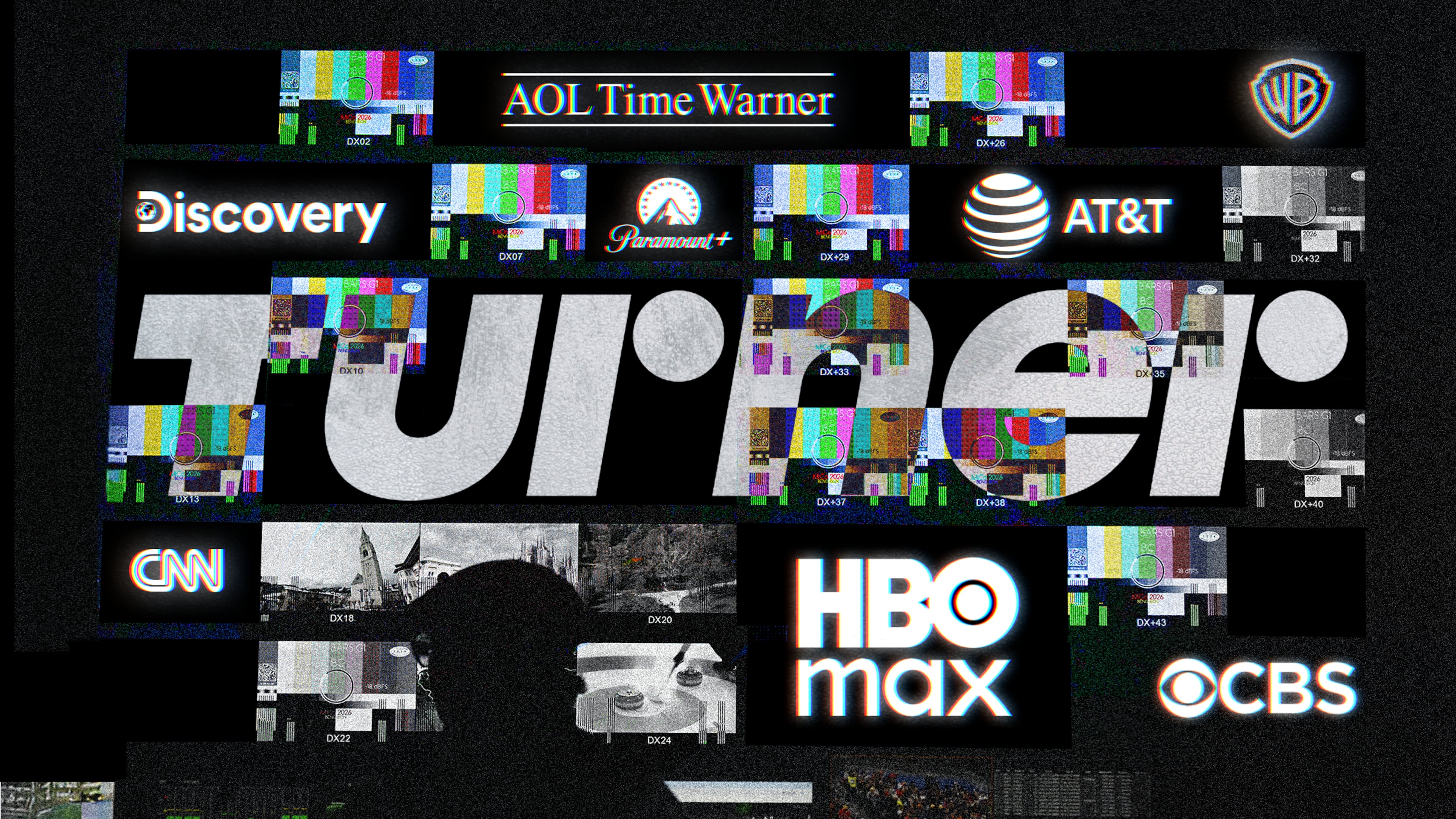
The Turner properties have been passed along in a carousel of deals for more than a quarter of a century. After Time Warner, there was AOL in 2001, AT&T in 2018 and Discovery in 2022. Historically, about 1,000 Turner employees were laid off either ahead or shortly after each merger, according to Tussey’s numbers.
From media and entertainment to food and pharmaceuticals, mergers almost always result in job losses to cut costs and reduce overlapping corporate departments and positions. The same goes for the companies’ real estate footprints.
A report from the Los Angeles County’s Department of Economic Opportunity found the merger could place about 6,000 jobs globally at potential risk because of duplicative roles, with about 2,495 in Los Angeles.
De Chirico remembers bracing herself for layoffs once every ownership change was announced. A usual pattern would follow: talented people would lose their jobs, budgets would tighten, someone would come into their offices and refresh the space and then the company would hire new employees, as if they were overcorrecting.
It was easy to feel cynical about it all, particularly at TCM, which felt very different from the rest of the other more commercially-driven Turner networks.
“It would be like, ‘Oh, I forgot we work in a corporate capitalist environment where the bottom line is going to always matter, even though you’re really knowledgeable about film and an incredible asset to this network, film culture and the film community,” de Chirico said. “It’s like, you gotta go when they tell you to go.”
Now, Turner’s employee base sits at about 3,000, according to Tussey’s figures. This will likely go down again.
“I think that’s a lot of people’s fears,” Tussey said. “You’re taking two very similar companies in terms of film studios and television studios, and there’s going to be redundancies there.”
After she was laid off, de Chirico found it hard to figure out what she was going to do. She applied her skills to all sorts of places: adjunct film teaching, running a Substack, leading a film podcast and doing commentaries for small DVD companies. She finished a master’s program at Georgia State. She also started doing contract work for TCM, making half what she had at her salaried job with no benefits, because the company needed help after laying off so many employees.
De Chirico now works in programming at another company in Atlanta. Many of her former Turner colleagues have found work in different fields, such as hospitality, started freelancing or retired early.
Where do these skilled workers go? Those remaining with the company could be sent to New York or Los Angeles, Tussey said. It’s tough to find new work after being at the same company for a long time. Many will leave the field entirely, or reenter a job market saturated by grads fresh from film schools.
“These used to be significant jobs that created a baseline for media employment in the city that led to all kinds of other things, or led to staying here,” Tussey said. “If the whole point of the [film] tax incentive is longevity, Tyler Perry and Turner are the backbone, and we’re about to lose many parts of the spinal column.”
Concerns mount
There is mounting pushback against the merger. Some state attorneys general are preparing a lawsuit to block the acquisition, Reuters reported. California AG Rob Bonta said in a post on X earlier this month that the merger between WBD and Paramount “is not a done deal and remains under investigation by my office.”
Last week, a roundtable discussion to discuss the acquisition was held at the Plaza Theatre with U.S. Rep. Hank Johnson, D-Lithonia, and former Federal Trade Commissioner Alvaro Bedoya. It was the last stop on a three-city tour to give entertainment workers and small businesses a chance to voice their concerns.
In a call ahead of the discussion, Bedoya told The Atlanta Journal-Constitution that he doesn’t think most people have any idea about the degree to which the merger will impact Georgia, which not only houses Turner’s flagship operations, but also supports a major film industry and a network of Black writers, producers and talent.
“There’s every reason to think that this stuff is going to be on the chopping block,” said Bedoya, who was an appointee of President Joe Biden.
Many of the comments during the discussion centered around the pain that could result from a potential decline in production. Ellison, the Paramount leader, has committed to 30 theatrical film releases a year.
But there’s an expectation that fewer buyers for content will equal fewer projects, and, thus, fewer production jobs. Georgia has already experienced a pullback in major productions because of the end of the streaming boom and improved incentives in other states and countries, among other reasons.
Jamie Rosengren, a business representative of crew union IATSE Local 479, said she believes the merger will make matters worse. Of the 5,400 members of Local 479, which represents crew members in Georgia, 2,000 are in arrears on their dues because they haven’t been able to find work, she said.

But fewer buyers could also mean fewer viewpoints, perspectives and risks taken, and the pressure for creators to satisfy what the people in the deal making room want to see.
Atlanta filmmaker Christalyn Hampton said during the discussion that there is no place for the stories she wants to tell.
“My documentaries are about social justice,” said Hampton, who produced and co-directed the 2026 Oscar-nominated documentary “The Devil is Busy,” which was distributed by HBO Films. “The mandates at a lot of these [streamers] are true crime, cults and celebrities.”
Bedoya urged the crowd to call Georgia Attorney General Chris Carr and encourage him to challenge the merger. A spokesperson for Carr declined to comment.