Stone Mountain’s ‘truth’ telling gets closer. But still no cigar.
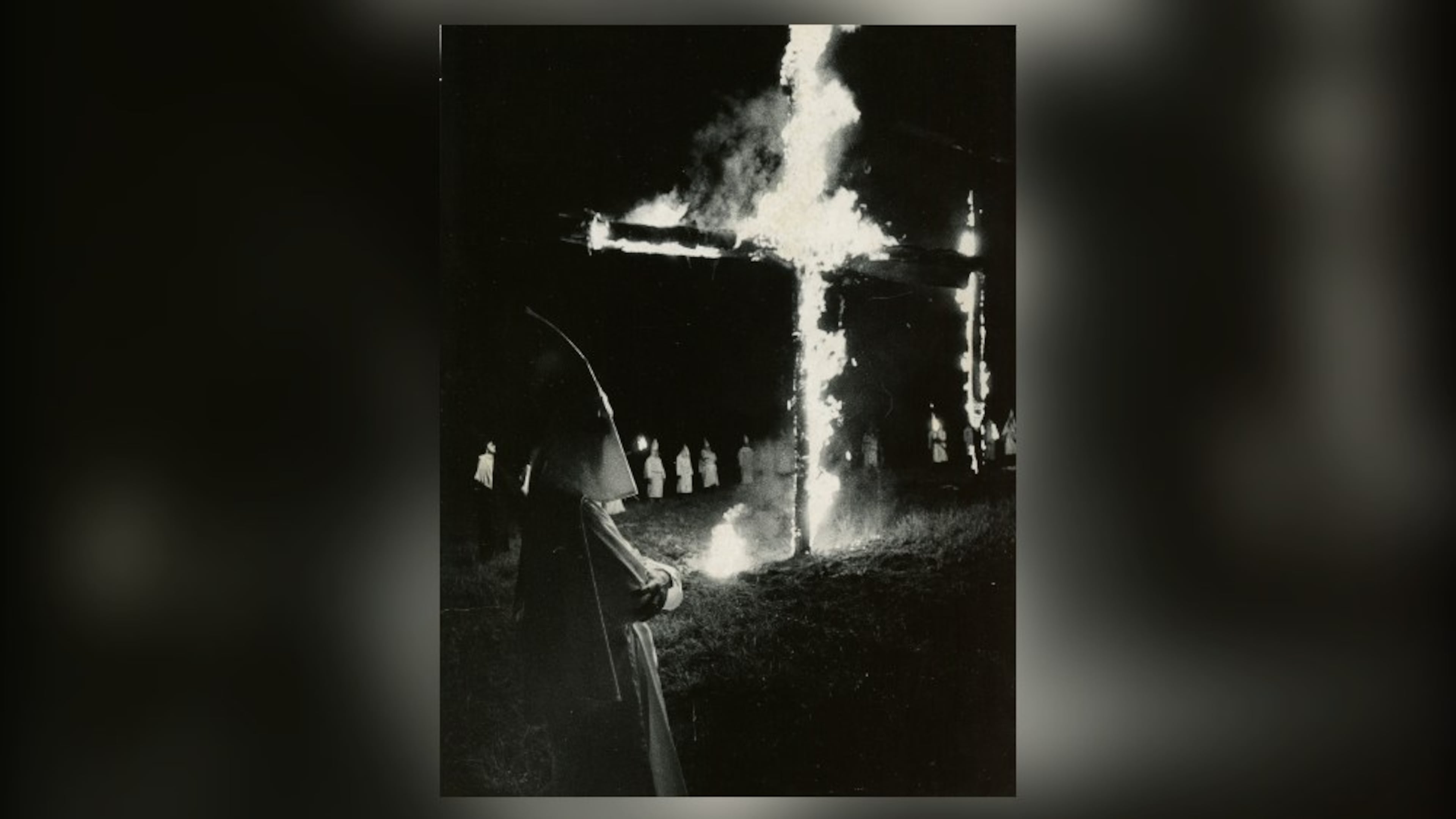

The Klan is back again at Stone Mountain. At least in old pictures and grainy black-and-white film.
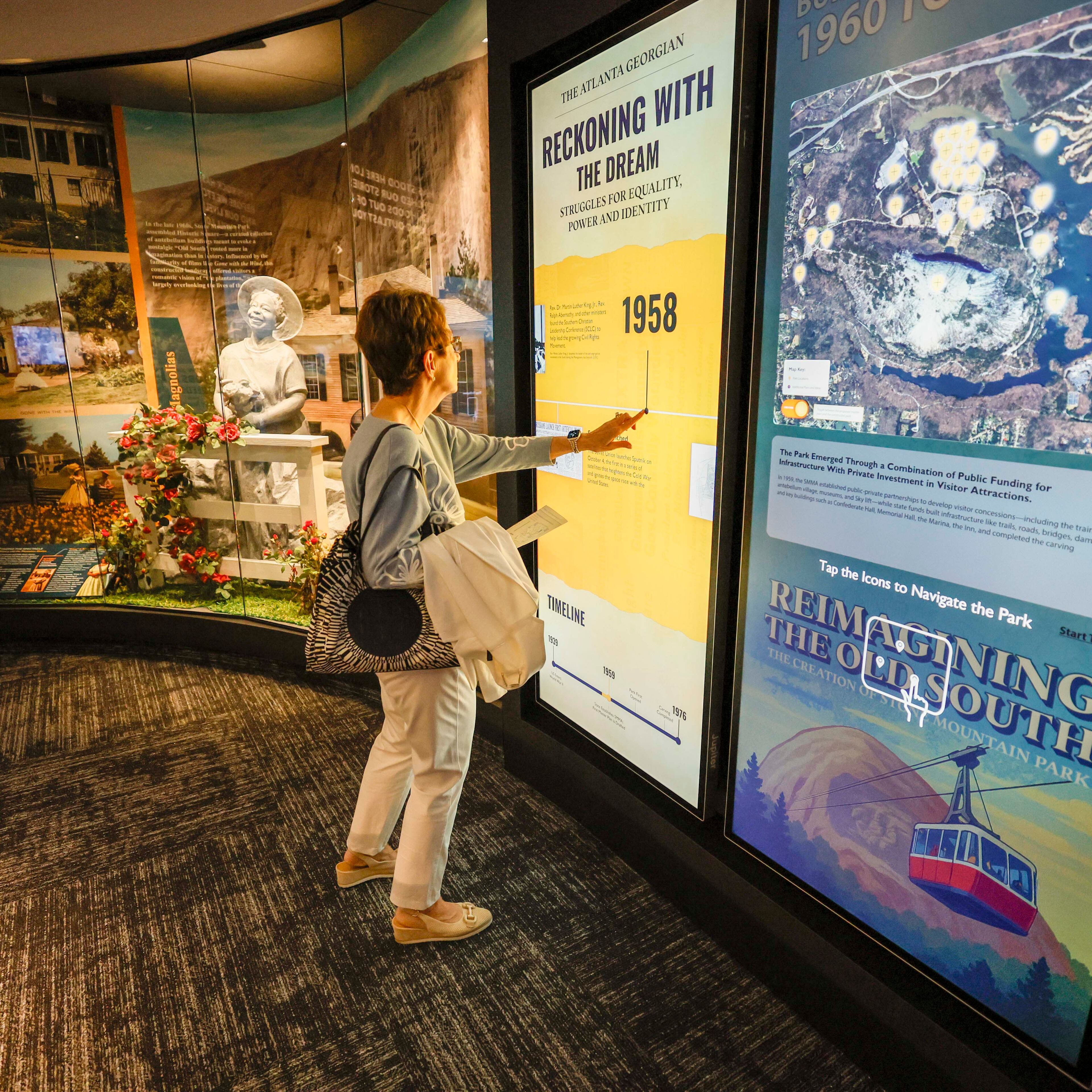
The park’s long awaited “truth telling” museum, the revamped interpretive center at Memorial Hall in view of the iconic carving of Rebels on horseback, was unveiled Monday.
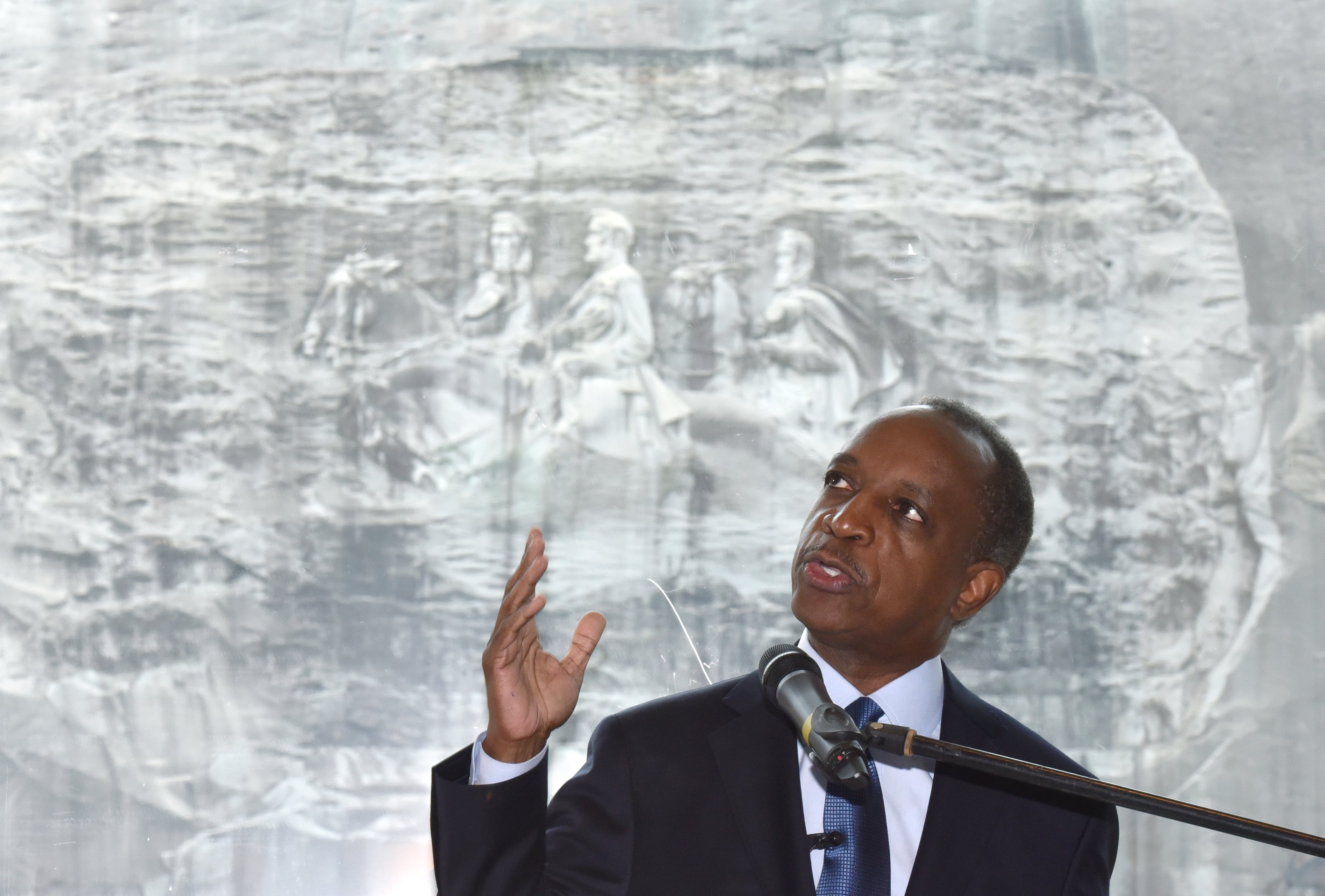
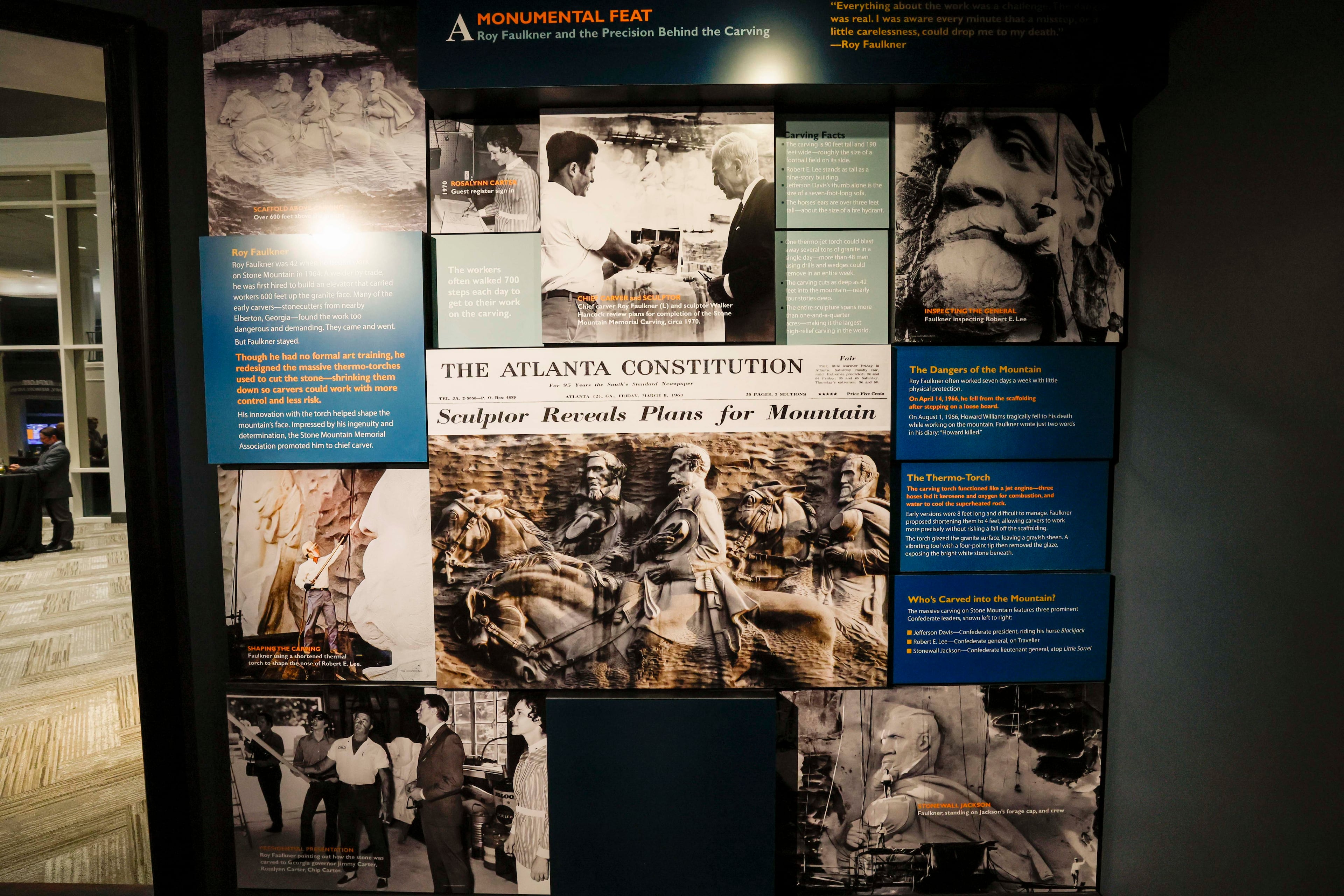
The museum was created to tell the story about the park’s racist past, about how — and more importantly why — carvings of Thomas “Stonewall” Jackson, Jefferson Davis and Robert E. Lee cover 3 acres of the massive granite monadnock.
The Ku Klux Klan was reborn at Stone Mountain early in 1915 as the campaign to create the carving was born. The carving was abandoned a decade later until the state started it up again in the 1950s as a grand “Up yours!” to integrationists.
The new museum is evocative and professionally done. It is entertaining, educational and flows well with photos, illustrations, video and even holograms.
But to some, it still doesn’t quite get there.

During a lull in Monday’s ceremony, I spoke in a hallway with a couple of history-minded fellows — former DeKalb CEO Michael Thurmond and Jim Galloway, AJC political columnist emeritus.
“It shows how quickly things have changed,” Galloway said of the project. “What was designed in 2026 will be obsolete in 2027.”
Said Thurmond: “You have to understand the environment in which they drew this up. Things changed Nov. 3.”
Meaning: Republican legislators have been wary of changes to Confederate monuments, so historians hired for this project had to tiptoe around how they curated the exhibits. They had to watch just how far they could push back against the enduring myth of the Confederacy’s gallant Lost Cause, a tale based on and undergirded by virulent racial superiority.
Political careers have been made and ruined on this issue. And the Sons of Confederate Veterans sued — unsuccessfully — to halt this project, saying it bastardized the mission of Stone Mountain Park.
Now, with the Democratic landslides, one question remains: Will more “truth” will be added to the story?
Thurmond, who is Black and a Dem, sat on the Stone Mountain Memorial Association board in 2017 when the museum effort was hatched.
At the time, Stacey Abrams, the Democratic candidate for governor, had fired a cannon shot saying she wanted to scrub the carving from the mountain.
In prepared remarks to guests at the unveiling Monday, Thurmond was diplomatic, lauding the museum but adding: “This is a day of mixed emotions and still unrealized hopes and aspirations.”
Later, he told me the exhibit “is a major step to acknowledge the racial implications of the origin of this carving.”
But, Thurmond said, the mountain’s carving and the Klan were one and the same. They were a joint effort to broadly advertise white supremacy and intimidate Black people. But that is not specifically spelled out in the museum, he said.

The carving “was conceived in racism,” he said. “The people who gave birth to the idea (of the carving) were the ones who gave birth to the modern KKK. They used those symbols, the battle flag and the Confederate heroes to bolster the KKK.”
Thurmond added: “This was strategic. They made themselves more palatable, more powerful.”
A walk through the gallery has numerous exhibits discussing how the Civil War was rebranded as a righteous fight for states’ rights, not a secession because of slavery. The dead were heroes, not traitors.
Numerous photos and exhibits display stern-faced Southern women as the force behind the effort to sanitize the war. It became the Lost Cause. The exhibits then focus on the rebirth of the Klan at Stone Mountain, with many photos of the white-sheeted cross burners.
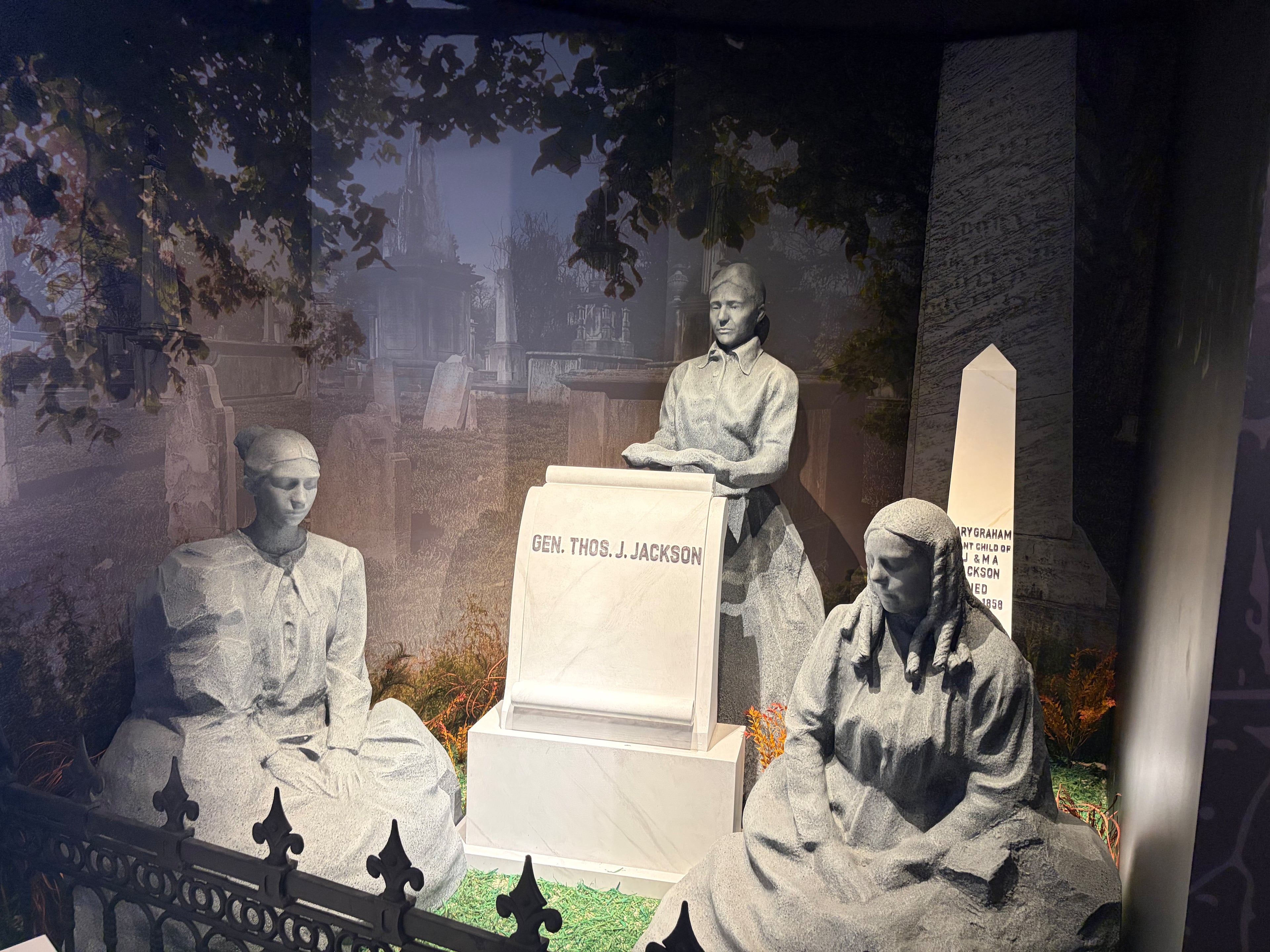
But the exhibit doesn’t emphasize that the carving, and other Confederate monuments born in that era, were created out of a sense of white supremacy and to intimidate Black people.
In 2017, the Atlanta History Center sent the Stone Mountain board materials and research to help their effort to modernize the telling of how the carving came to be.
“In the early years of the project to create the carving, the memorial symbolized the legitimacy of white supremacy and Jim Crow,” the history center’s summary states.
(The history center was not part of the effort to redo Stone Mountain’s exhibit.)
History Center CEO and President Sheffield Hale liked what he saw during a walk-through this week.

“It was light years ahead of where I thought it would be,” he said. “From what I saw, they were dealing with the issues of racism. … It gets you maybe 90% of the way there. Is it clear enough that racism was the base of it? I don’t know.”
“But one thing is to give people perspective without hitting them over the head,” Hale added. “You can accomplish more.”
Contextualizing the Confederate monuments that remain is important for people to understand history. “These statues are the last remnants of Jim Crow,” he said. “People today just don’t know.”
He calls them historical “artifacts,” not “monuments.” Artifacts, Hale said, “are not objects of veneration.”
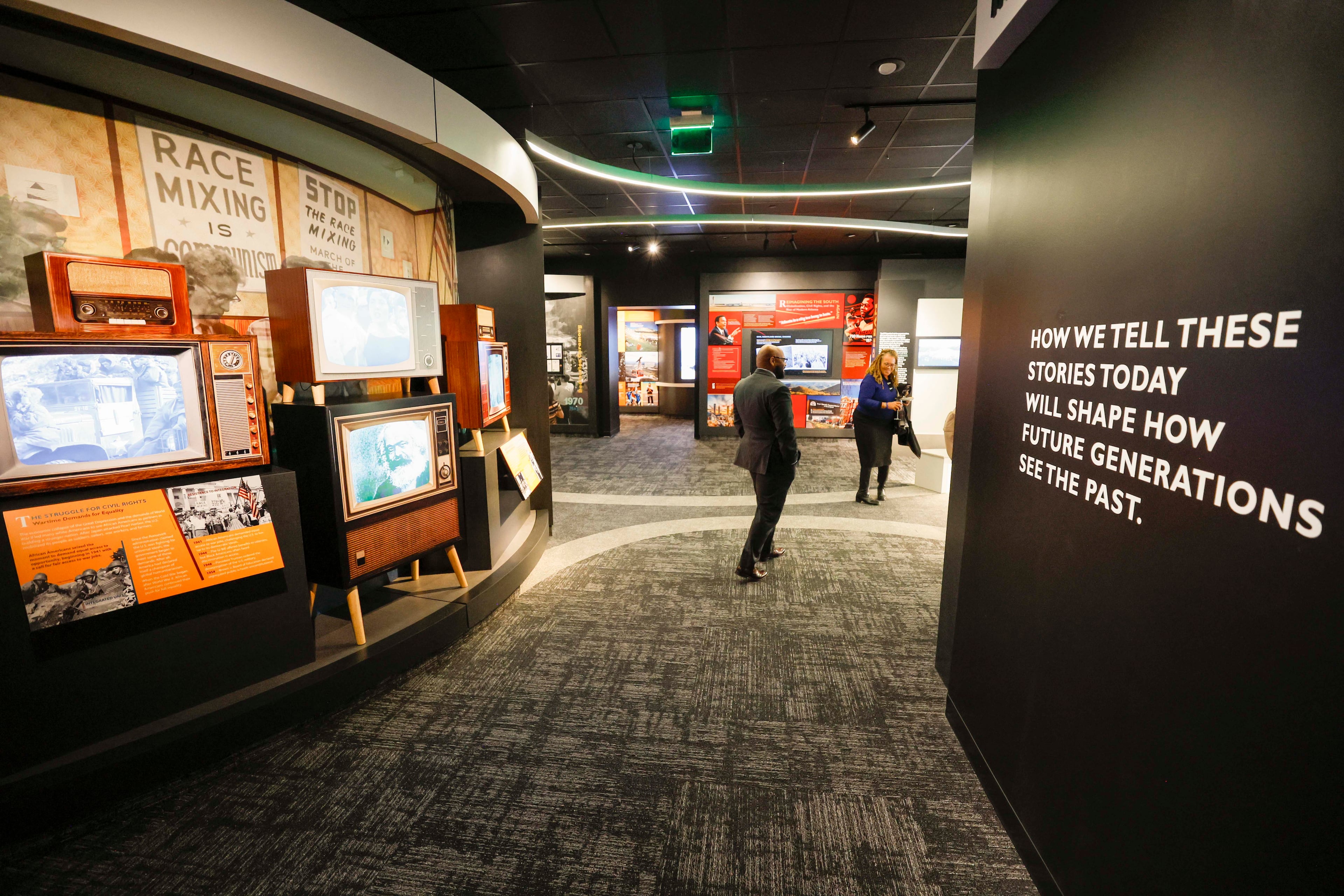
Bill Stephens, the outgoing CEO of the Stone Mountain association, noted the social and political climate have made the effort more difficult.
“I think the (governor-appointed) board did walk a very fine line,” he told me. “They have had a difficult job during trying times.”
Right around the time the $15 million museum (there was also lots of work on the building, including a flood) was set to open, the park’s board announced a $1.5 million deep cleaning for Jeff, Stonewall and Bobby Lee. The pressure washing has been roundly viewed as a bone thrown to the Team Reb.
As to Thurmond’s reservations, Stephens noted that many other Georgians have been critical of the sanitation campaign for Stone Mountain’s image.
(The park earlier has moved Confederate flags from the mountain’s walk-up path and removed the carving from its logo.)
“If you tick off both sides, you’re probably doing the right thing,” he said.
An old timey conservative Democrat who became a Republican legislator, Stephens has led the association for 15 years, guiding it through some tumultuous times.
He’ll step away at year’s end. Outgoing Gov. Brian Kemp recently appointed an association board member, Christopher Sanders, as Stephen’s successor.
Sanders is a Black man.
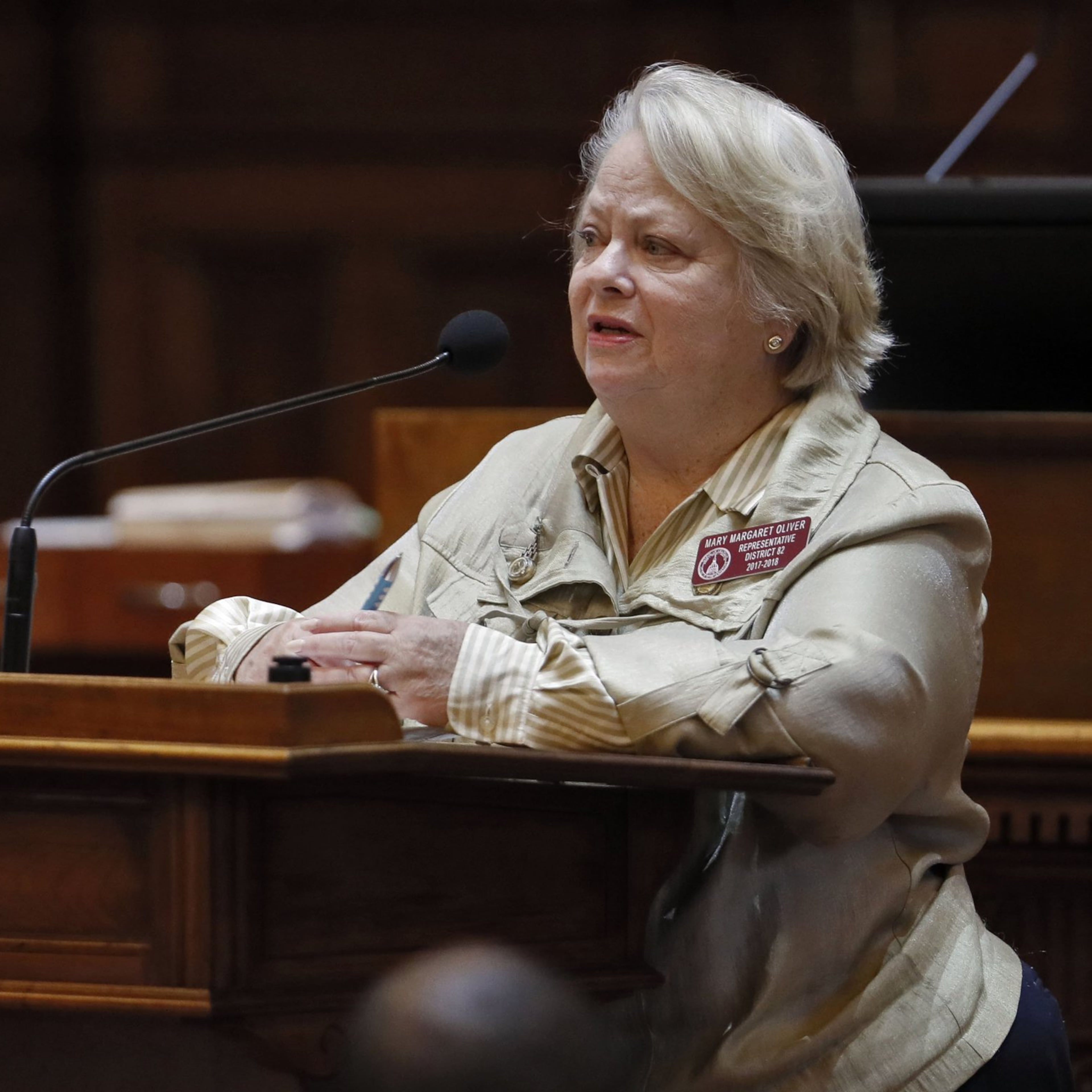
Longtime Democratic state Rep. Mary Margaret Oliver has introduced legislation to change the park’s mission from maintaining a Confederate memorial to educating “the public about the natural history of the mountain and its environment.”

She does not seek to blast the carving from the mountain, but did say the aura of Confederacy has made it difficult for the park to attract conventions and other business functions.
In a quick response to Oliver’s proposal, Josh McKoon, the state GOP’s chief, went to Facebook to stoke the fires, saying: “Who knew sandblasting Stone Mountain would make everything cheaper?”
The Battle of Stone Mountain continues.