Georgia should have one standard for electing judges: A case for Amendment 2

“Requiring any of us to publicly and formally align ourselves with a political party can only undermine the public’s perception of the judiciary.”
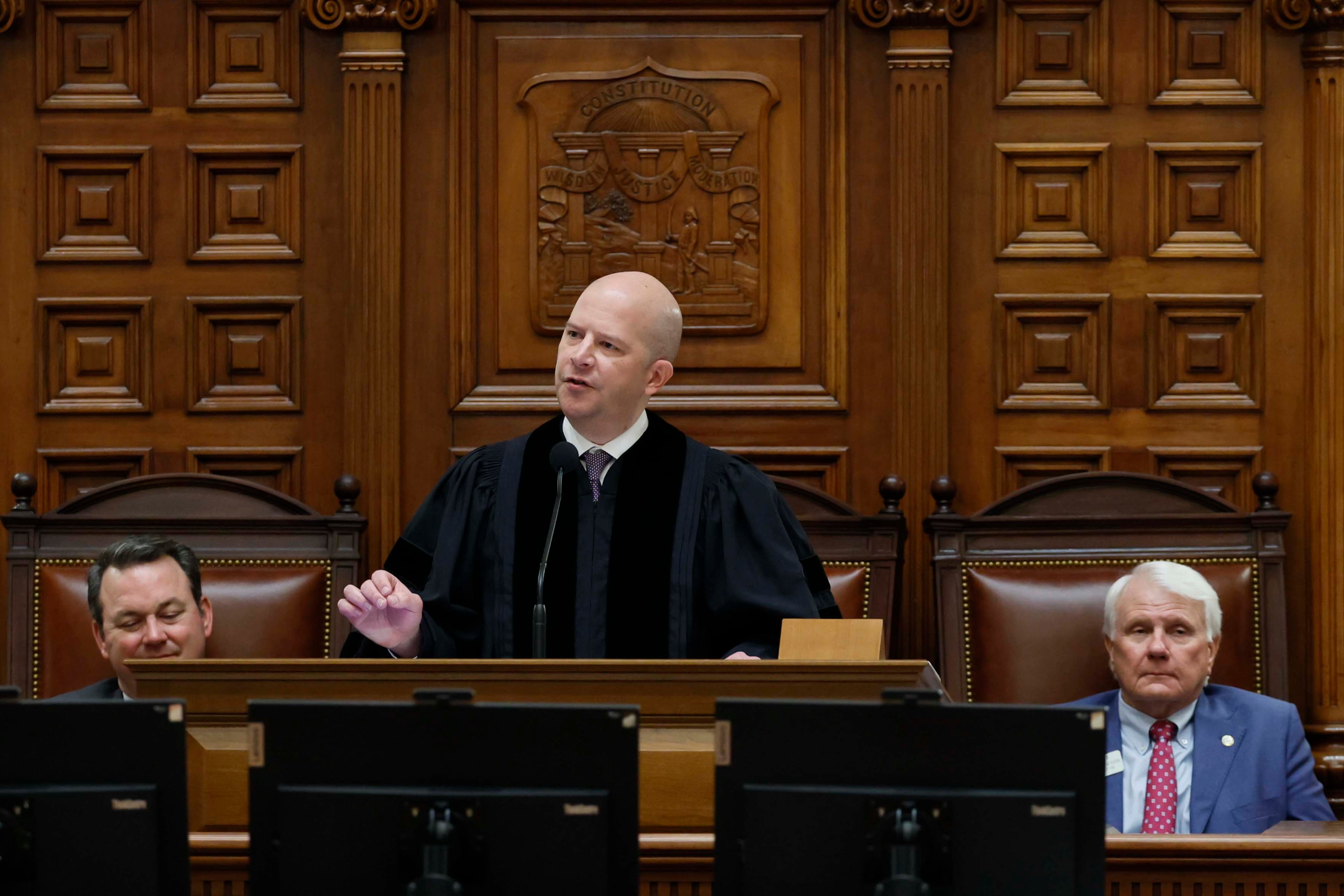
Those words were stated by Chief Justice Nels S.D. Peterson of the Supreme Court of Georgia in his State of the Judiciary address earlier this year.
Chief Justice Peterson highlighted the opportunity that was available to the Georgia General Assembly in passing House Resolution 251, which would offer a ballot initiative to amend the Georgia Constitution to provide for the nonpartisan election of probate judges.
In short, the response of the Georgia General Assembly was overwhelming, as HR 251 achieved final passage in a bipartisan way, including passing unanimously out of the Georgia State Senate by a margin of 46-0.
This November, Georgia voters will have an opportunity to eliminate the last vestige of partisan judicial elections in our state by approving Amendment 2, which would require probate judges to be elected on a nonpartisan basis.
Principles of our judiciary: fairness and impartiality


The concept of electing judges in nonpartisan elections is neither novel nor new. Currently, Georgia’s Supreme Court justices, Court of Appeals judges, superior court judges and state court judges are elected in nonpartisan elections. Because of legislation that was passed recently, magistrate judges will also be elected on a nonpartisan basis beginning in 2027.
Essentially, the question that remains for Georgia voters is: why should probate judges be treated differently?
The issues that are the jurisdiction of probate judges are administrative and legal in nature, but they are not political ones. There is no Democratic or Republican way to address wills, estates, guardianships, conservatorships, orders to apprehend, marriage licenses or weapons carry licenses.
There is a case that can be made for why some elected officials are elected in partisan elections, but you would be hard-pressed to make a sensible argument for why a judge should be required to align themselves with a political party.
The foundational principles of our judiciary are fairness and impartiality. Forcing any judge to align with a political party runs contrary to those principles. This is why Georgia should not have different standards for judicial elections simply because a judge serves in a different class of court.
Some have argued that removing party labels takes away an important indicator for voters. Quite frankly, a “D” or an “R” next to the name of a judge does not give you any indication that they will discharge their duties ethically, competently, in accordance with the law or exercise the appropriate temperament.
By removing party labels, candidates are required to focus on articulating their qualifications, experience, temperament, character, judgment, understanding of the law and a vision of how they will fulfill the responsibilities of the judicial position that they seek.
Partisan judicial elections allow voters to focus on one question: Which party does the candidate align with?
Conversely, nonpartisan judicial elections allow voters to focus on more relevant questions such as: What experience does this candidate bring to the bench? How have they handled difficult decisions? Do they understand the responsibilities of the office? Do they have a track record of demonstrating independence and good judgment? Most importantly, will they treat everyone who comes before them fairly?
Those questions matter because answers to those questions speak better to the level of public confidence that is necessary for those who serve in the judiciary. The legitimacy of our courts depends not only on judges being impartial but Georgians believing that they are impartial.
A rare occasion to remove politics from public life

Recently, we led a bipartisan group of Georgia leaders who came out publicly in support of Amendment 2.
Given our current political climate, a bipartisan group of political and civic leaders agreeing on anything seems significant — and in this case, it is.
As omnipresent as the breadth and scope of politics has become in our daily lives, Georgia voters have a rare occasion to remove politics from an area of public life, as Amendment 2 transcends political lines.
Over the next few weeks, you will walk into a ballot box and near the bottom of your ballot, you will find Amendment 2, which asks simply:
“Shall the Constitution of Georgia be amended so as to require that all probate judges be elected in nonpartisan elections?
Politics are a normal and expected feature of our democracy, but politics should stop at the entrance of every courthouse.
This November, in responding to that question with a “YES” vote on your ballot, you will ensure that politics no longer breach the courthouse doors.
Roy Barnes is an attorney and former Georgia governor, serving from 1999 to 2003. Previously, he served as a longtime member of the Georgia General Assembly, where he served in both the state Senate and House of Representatives.
Nathan Deal is the former governor of Georgia, serving from 2011 to 2019. He previously served as a Georgia state senator, a member of the U.S. House of Representatives, and as a prosecutor and judge.
Kevin D. Holder is the executive director of the Council of Probate Court Judges of Georgia, where he supports Georgia’s probate courts and works on judicial administration, legislative affairs and court policy.
Send letters to the editor of 250 words or fewer with your name, city or town and contact information to letters@ajc.com.