Blowing up the Georgia Guidestones was a crime. That’s why I care who did it.

I moved to metro Atlanta nearly three years after someone blew up the Georgia Guidestones.
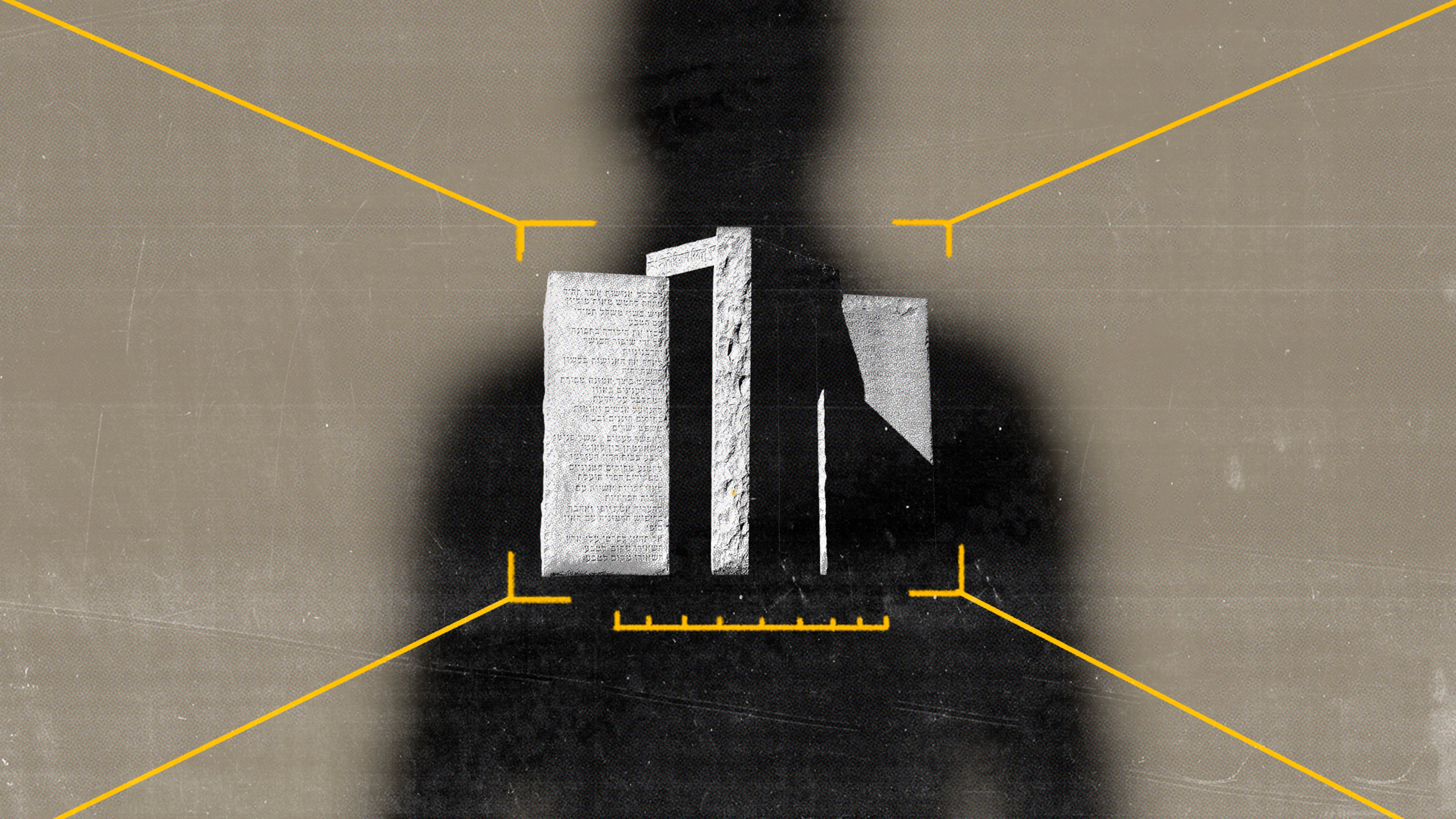
The controversial structure — made from six slabs of solid granite weighing about 200,000 pounds, measuring more than 19 feet tall and etched with 10 commandments for humanity — never made it on my radar in past trips to the Peach State to visit friends and relatives.
In March, The Atlanta Journal-Constitution resurrected the mystery around the July 6, 2022, destruction of this 42-year-old granite monument in Elberton with the seven-episode podcast, “Who Blew Up the Guidestones?”
The morning of the explosion, before my tenure at the AJC, I was invited to a youth summer camp in Nashville, Tennessee, as a guest reader, narrating the children’s book “A Mango in the Hand,” by Antonio Sacre. I don’t recall ever hearing about the Guidestones.
But after listening to the seven-episode series, I wish I had made the time to visit Elberton.
As a fan of history and oddities, I would have loved to have seen them. I like to visit local landmarks even on what are supposed to be relaxing vacations, such as when I went to the Ernest Hemingway Home and Museum and the Mel Fisher Maritime Museum in sunny Key West, Florida, a few years back.
I listened to every “Guidestones” episode the moment a new one dropped and attended an audience event hosted by the AJC and media partner Goat Rodeo at the recently closed Illuminarium Atlanta event space off the Eastside Beltline.
Now, a spoiler alert if you haven’t listened to the show. Although the team behind the podcast, hosted by Tyler McBrien, probed deeper into the story, found the Guidestones remnants and identified leads for the authorities, to date, no one has been charged for what authorities have called an act of terror.
It matters because the silence from law enforcement and the lack of investigative progress over the years have fueled conspiracy theories that are corrosive to a healthy civil society and one that believes in lawful behavior.
On this four-year anniversary of this crime, the public must demand answers and call for a resolution to put this issue to bed.
We deserve truth and transparency
“Who Blew Up the Guidestones?” made new discoveries, interviewed key figures who say the Georgia Bureau of Investigation never approached them, and put pressure on authorities to provide answers to the public.
The podcast team determined the type of getaway car that was at the scene based on never-before-seen surveillance video and a Reddit discussion. Explosives experts and a law enforcement source helped them confirm that easily accessible Tannerite was the cause of the explosion. They found through extensive social media research the location of a quarry that now holds the Guidestones’ remains.
Although there was no body, and no one was injured, this was, in fact, an act of terror and an affront to a local community where no one has had to face any consequences for the crime.
Georgians deserve truth and transparency. Elbertonians want answers.
The GBI continues to look into the matter, but the agency’s silence — because it happens to be an open investigation — has muddled public perceptions.
Maybe it’s simply not a priority for the GBI. Maybe not enough people care. Unsolved cases go cold. Life goes on. People move on.
But people should care the same way when a mural gets defaced or a park gets vandalized. It’s both illegal and disrespectful.
Murals can be repainted and damage at a park can be repaired, but the Guidestones — for all their problematic history — were a modern monument in Elberton, the granite capital of the world, that drew tourists, curiosity and scorn. They are gone for good. A crime was committed, and it’s important to solve it.

Problematic Guidestones earned curiosity and scorn
In 1980, a mysterious man who went by the pseudonym R.C. Christian commissioned the monument.
Inscribed on the Guidestones were 10 dictates for humanity written in eight languages.
The most controversial was the first of these commandments: “Maintain humanity under 500,000,000 in perpetual balance with nature.”
That would have wiped away 90% of the world’s population at the time.
The Guidestones became known as “America’s Stonehenge” because of their design, but detractors described them as satanic or as a “new world order” conspiracy to dominate humankind.
R.C. Christian held eugenicist beliefs, and the Guidestones called on guiding reproduction and adopting one language — feeding into the conspiracy theories about one world government control.
In 2022, Republican gubernatorial candidate Kandiss Taylor made a campaign promise to destroy the Guidestones if elected. She lost, but she also denies having anything to do with their destruction and said authorities never contacted her for their investigation.

In the world of fiction, mysteries get solved at the end.
The appeal of one of my favorite television shows, “Only Murders in the Building” on Hulu, lies in that an unlikely trio haphazardly solves crimes through a combination of curiosity, a podcast and some old-fashioned sleuthing.
If only real life were so simple. The “Guidestones” podcast has that mix of elements, but what’s missing still is the answer to the question posed by the show’s title.
For all their controversy and disturbing message, no one should have blown them up. Like all complicated history — from pyramids to time capsules — they held a place in history that deserved to be studied and passionately debated without violence.
David Plazas is the AJC’s opinion editor. Email him at david.plazas@ajc.com.