I drove across North Georgia for a year. I learned about people’s job needs.

Last March, I climbed behind the wheel of Goodwill of North Georgia’s brand new 36-foot mobile career center.
I knew I would be helping people find jobs. I didn’t realize I would also be driving through the fault lines of opportunity across North Georgia — from the heart of Atlanta to the foothills of Calhoun and Dawsonville — seeing firsthand how geography, poverty, age and access can determine whether someone gets a fair shot at economic stability.
Over the past year, I have met thousands of Georgians where they are — in church parking lots, outside halfway houses, at rural community festivals and major job fairs. What I have learned is simple: Talent is everywhere. Opportunity is not.
Georgia’s unemployment rate is low — 3.5% as of January, nearly a full percentage point below the national average.
On paper, that sounds like a success story. But that headline number does not tell the full story. Nearly half of Georgians are either living in poverty or are one emergency away from it.
About 47% of households fall into what researchers call ALICE, or Asset Limited, Income Constrained, Employed, meaning they are working but still struggling to afford housing, child care, transportation, and groceries. Hunger affects nearly 15% of Georgians, including almost 1 in 5 children and 1 in 10 seniors.
Job seekers can get discouraged for many reasons

As reported by the United Way in a comprehensive 2023 report, nearly 1 in 5 residents in rural Georgia lives below the poverty line, and many lack reliable broadband access.
In today’s economy, that means limited access to online job applications, virtual interviews, training programs, and even basic résumé creation. At the same time, job openings per unemployed Georgian have dropped to fewer than 1.5 positions per job seeker, making competition tighter than many realize. Wages in some service sectors still do not cover the cost of a modest one-bedroom apartment.
Then, there is age discrimination. More than 60% of workers over 50 report experiencing it, and most believe their age is an obstacle to being hired. I see that reality in the eyes of people who walk into the mobile career center every week.
Isaiah was 21 when he first stepped aboard at a job fair. He was living with his mother and wanted independence. We helped him build a résumé, coached him through interviews and connected him with an employer. He got the job.
A few months later, he texted me to say he had bought a car. Then he signed a lease on his own apartment. Recently, he reached out again, this time asking for help preparing for a promotion interview. That is what workforce development looks like when it works. Not a handout, but a hand up that leads to forward momentum.
On the other end of the spectrum, I met a woman in her 60s who had been repeatedly turned away because of her age. She boarded the bus in tears, convinced no one would hire her. After we worked together on her résumé and interview skills, she connected with a recruiter who saw her experience as an asset.
She secured a job that fit her abilities and restored her confidence. I have worked with returning citizens trying to rebuild their lives, veterans transitioning to civilian careers and rural residents who drove an hour just to access Wi-Fi. Every story reinforces the same truth: When barriers are removed, people rise.
Workforce development is economic development and anti-poverty work
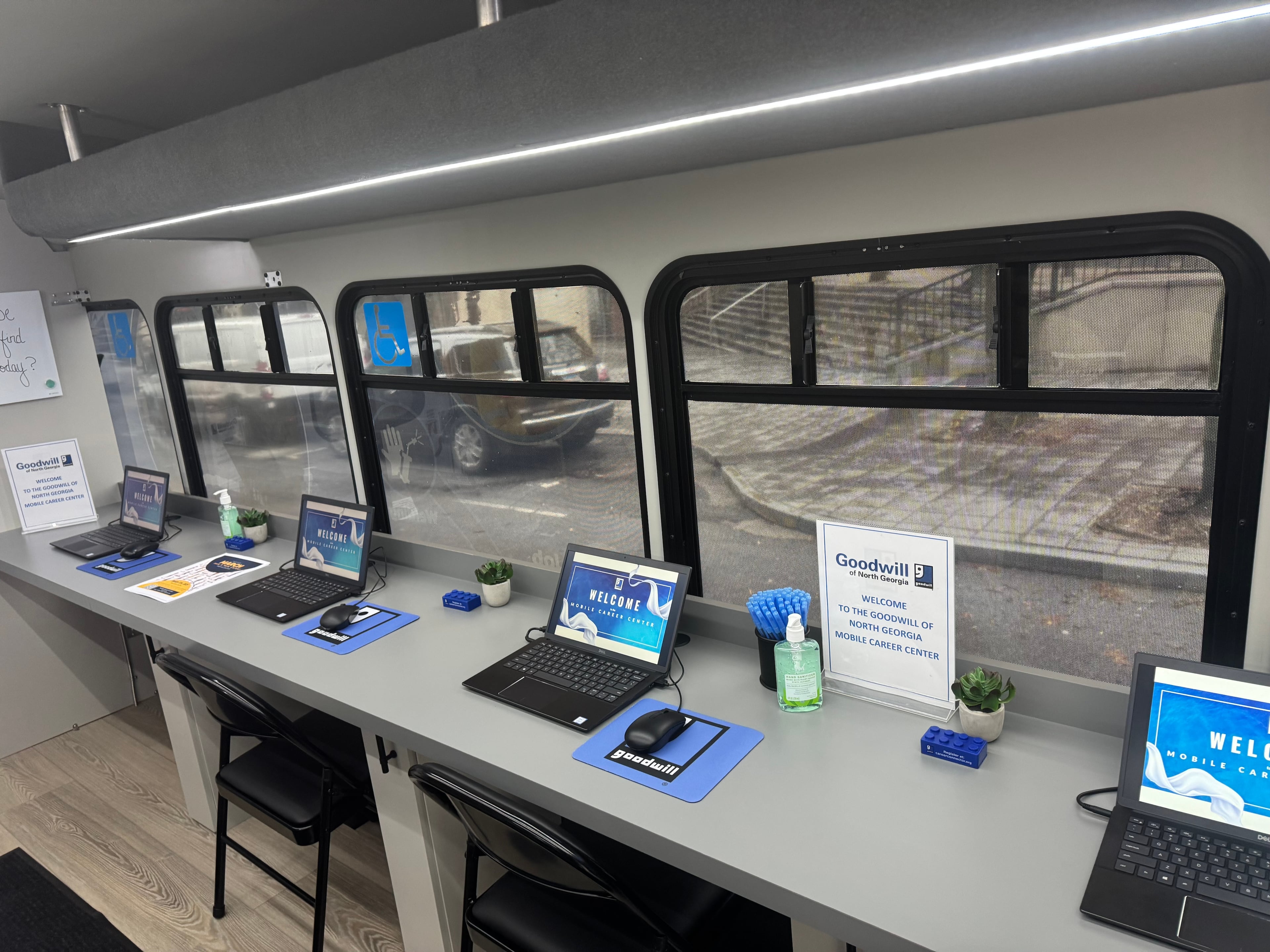
Goodwill of North Georgia operates career centers throughout the region, but transportation, child care, work schedules and geography can prevent people from walking through those doors. That is why the Mobile Career Center exists. It is a fully equipped classroom on wheels, with computers, internet access, and trained career coaches, designed to bring services directly into communities that might otherwise be left out. For many job seekers, stepping onto the Mobile Career Center is also the first step toward Goodwill’s upskilling programs, which lead to industry-recognized credentials in nearly two dozen high-demand careers.
In its first fiscal year, the mobile unit served over 1,600 people and placed 461 people into jobs. We engaged thousands more across 15 to 20 counties. We show up at no cost to the communities we visit because access should not depend on the ability to pay.
At the end of the day, this bus is about meeting people where they are, literally and figuratively. It represents recognizing that low unemployment does not automatically mean equitable access to opportunity. It represents understanding that workforce development is not just about filling open positions; it is about stabilizing families, strengthening local economies and building pathways to long-term independence.
Georgia continues to attract major industries in manufacturing, logistics, automotive, and health care. Between 2020 and 2025, nearly 165,000 new jobs were announced across the state. Yet many adults still lack the credentials or digital skills needed to move into those higher-paying roles.
Postsecondary enrollment among high school graduates has declined over the past decade, even as technical colleges expand opportunities. If we want economic growth to benefit everyone, we must invest in job training, digital access, credentialing programs and policies that confront age discrimination and rural inequities head-on.
As I drive across North Georgia, I see skyscrapers rising in Atlanta and farmland stretching toward the mountains. I see growth, innovation, and promise. I also see families who are one unexpected setback away from instability. If we want a strong region — urban and rural alike — opportunity cannot be determined by ZIP code, age, or broadband access.
Workforce development is economic development. It is anti-poverty work. It is work rooted in dignity.
For the past year, I have had the privilege of watching what happens when opportunity shows up in someone’s neighborhood instead of asking them to find it. I will keep driving.
Kenneth Wright is a field employment specialist at Goodwill of North Georgia