Atlanta sickle cell disease treatment model could transform US medical system
Millions of Americans have seen their health insurance premiums skyrocket since the Affordable Care Act subsidies expired at the end of December. Congress has worked to try and extend the COVID-19 era benefit, but so far has not succeeded.
The premium increases are an unfolding disaster. The rising costs are just too much for many middle- and low-income families to afford, forcing them to choose between keeping their health care and basic necessities such as food and housing.
It’s not only a no-win situation, but also extremely stressful for families facing these challenges.
After the passage of the 2025 Budget Reconciliation Act, or the One big beautiful bill last summer, up to 15 million Americans are projected to lose their health insurance by 2034, according to the Center on Budget and Policy Priorities. The legislation cuts more than $1 trillion from U.S. social safety net programs. Health experts say it’s the largest reduction in these essential programs in history.
An analysis conducted late last year by the Georgia Health Initiative revealed the serious impact of this legislation. Among the conclusions, 492,000 Georgians are projected to lose their health coverage by 2034.
Georgia health care providers are projected to lose $51.1 billion in revenue between 2025 and 2034, including $10.5 billion in uncompensated care costs.
The loss of the Affordable Care Act subsidies alone will eliminate 33,600 jobs and $237 million in state tax revenue in 2026.
Health care system gaps harm the most vulnerable
I faced a life-altering event 10 years ago and in a flash, everything changed. I had a heart attack and then open-heart surgery.
Just as my recovery was well underway, I suffered a stroke.
I had to relearn many things, but I made a full recovery. The key is I had medical coverage and I did get better.
But when I talk about recovery, I know the majority of sickle cell disease (SCD) patients, known as warriors, will never recover.
This is true for other chronic diseases such as cancer, diabetes, obesity and the list goes on.
Those battling these diseases need affordable health care.
I have witnessed the yawning gaps in our medical system for SCD patients — in training, in empathy, and in access.

I have watched patients navigate a health care system that often feels unprepared to meet their needs, especially in moments of crisis.
A sickle cell patient experiences a crisis when their red blood cells become sickle or crescent-shaped, making it difficult for blood to flow through small blood vessels, triggering what’s called a pain crisis.
Some 100,000 Americans and as many as 8 million people worldwide live with sickle cell disease.
It became painfully clear to me through my work at the Sickle Cell Foundation of Georgia that warriors needed something different. Something built from the experiences of patients and tailored to their specific needs.
This is why I founded the Sickle Cell Sanctuary Holistic Wellness Center.
Treatment provides sanctuary type experience
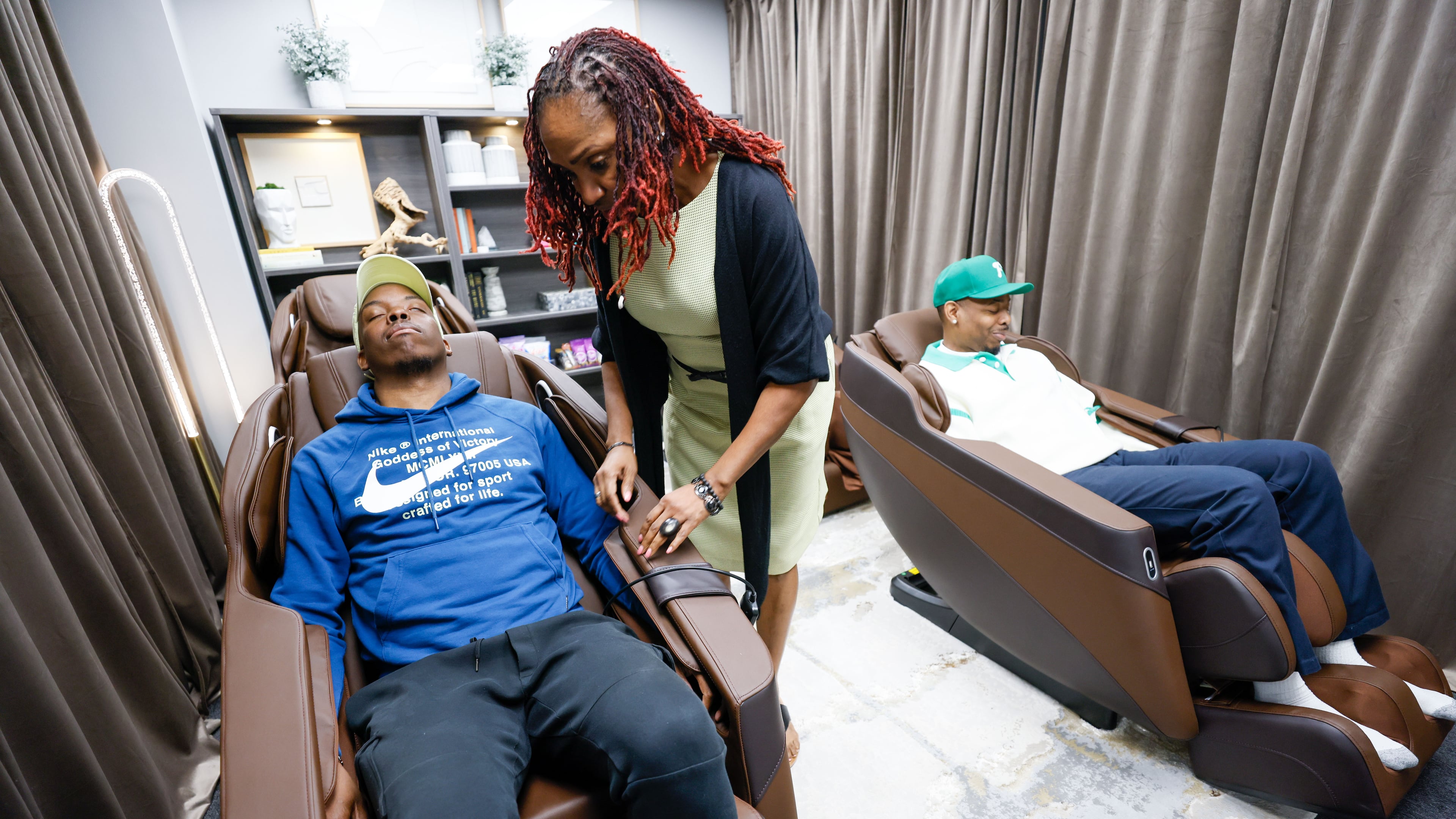
When we opened our doors in Atlanta on June 18, 2024, we became the first center in the United States to truly blend Western medical expertise with holistic, mind-body wellness tailored to the unique needs of sickle cell warriors.
Our patients can access their full medical care at the wellness center, and we are opening our doors now to the broader population in Atlanta to access treatments and therapies that help create full body wellness.
What has happened since our opening day is nothing short of transformational.
We have watched warriors who once feared medical care step into our serene, spa-like center and relax. We have seen biometric monitoring, acupuncture, reflexology, massage therapy, nutrition coaching and mental health counseling work together with licensed medical care, including hematology testing, oncology, and intravenous (IV) hydration/infusion.
In just 18 months, our client list has more than doubled. We’re conducting a new study into the numbers to see how the sanctuary has helped reduce hospitalizations and emergency rooms visits.
Although the sanctuary was created with sickle cell warriors in mind, everyone can benefit from a model of care that addresses the whole person, encompassing both physical healing and mental health services all in one building.
This model addresses what modern medicine sometimes overlooks: the emotional burden of chronic illness and the need for coordinated support.
The sanctuary is a blueprint for a health care system that treats chronic illness with humanity and that integrates science with whole-person wellness. It’s a model of care that could and should be replicated nationwide — not just for sickle cell disease, but for every community that has ever felt overlooked or underserved.
Dr. Tabatha McGee is a visionary, a leader and a public speaker who as the chief executive officer of the Sickle Cell Foundation of Georgia, Inc. seeks to inspire in her tireless mission of ensuring the highest quality of life, medical care and hope for sickle cell warriors and others with life-threatening blood disorders.