Which powerful Georgians are supporting the Norfolk Southern merger


The comments are in on the proposed acquisition of Atlanta-based Norfolk Southern by Union Pacific that would merge the two into one company based in Omaha.
Those with opinions on the deal had to make their stances known last week if they wanted to influence federal regulators’ decision expected later this year.
And the docket shows a very mixed bag, including within Georgia — which has a unique stake in the proposal.
In the companies’ merger application, they laid out plans to gut Norfolk Southern’s headquarters by more than half through job cuts and relocations to Omaha, though leaders have promised to retain a prominent Atlanta presence.
Across the country, support and opposition does not break neatly along political or other lines.
Some shippers are for — others against. Even the railroads’ many labor unions are split over it. Nearly all of the railroads’ Class 1 competitors, however, are firmly opposed.
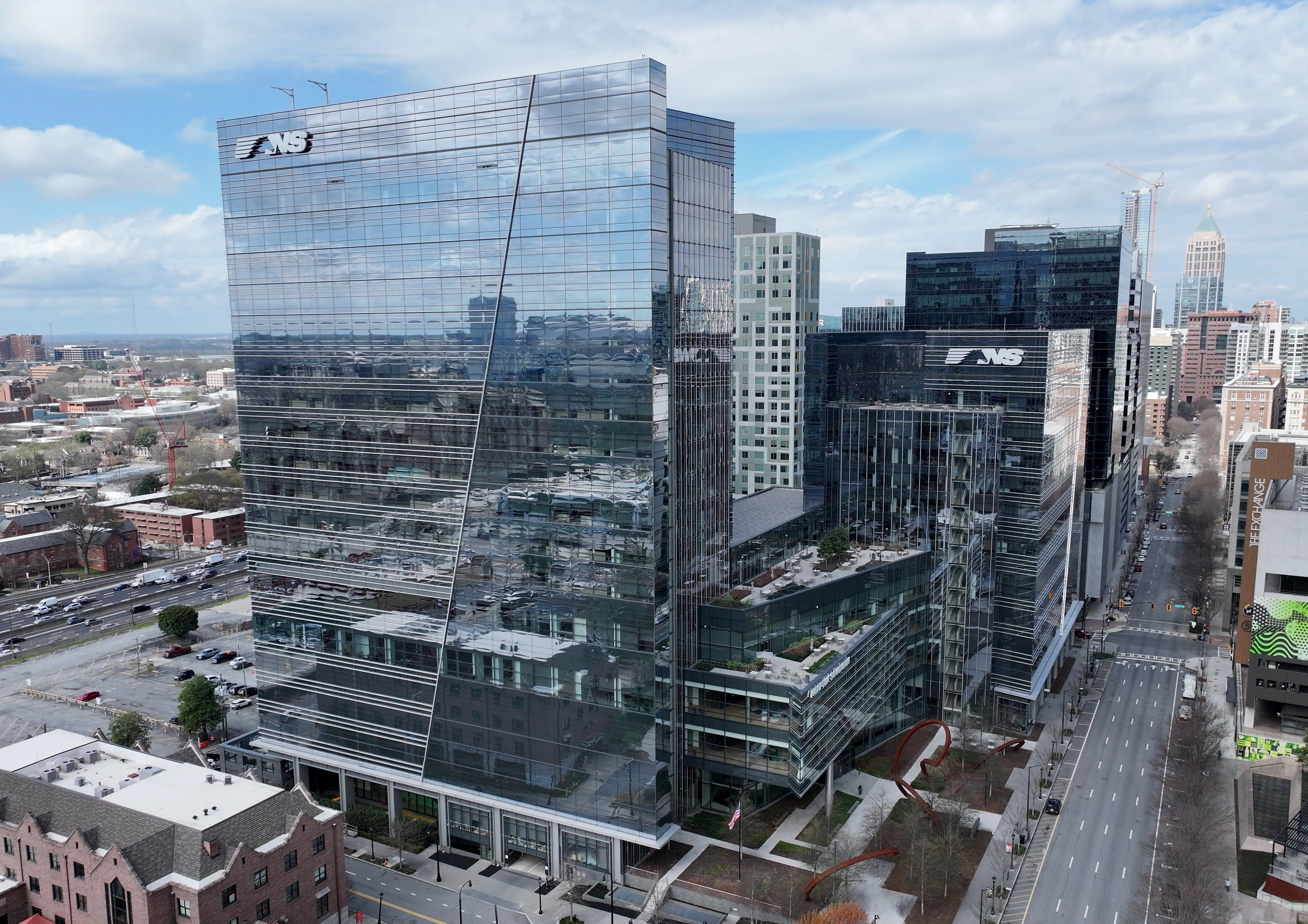
The mega rail deal requires the approval of the Surface Transportation Board and comments were due to that body late last week.
The U.S. Departments of Transportation and Justice are set to weigh in soon as well, and all comments will comprise the record the STB will use to consider what some have dubbed the most consequential rail industry decision in a century.
While Georgia Attorney General Chris Carr and the Georgia Ports Authority filed their stances in support, two Republican state lawmakers lodged opposition.
Atlanta Mayor Andre Dickens filed his own comments neither for nor against the deal — but flagged concerns about the impact to headquarters jobs, as well as the impact of more freight rail traffic to Atlanta communities and future passenger rail.
Two major Georgia rail customers — UPS and Southern Co.— also threaded their own needles by remaining neutral while raising some concerns.
Georgia Senators Raphael Warnock and Jon Ossoff and Gov. Brian Kemp, meanwhile, have of late stayed largely silent on the issue.
The comment deadline comes in the wake of recently-surfaced comments from Union Pacific CEO Jim Vena that sent shock waves through the industry.
At a conference in March, Vena told an audience: “If I stick around, which I probably will, I’ll probably increase everybody’s rates that said they didn’t want a seamless railroad by three or four extra percent to teach you a lesson.”

The Surface Transportation Board said it has “serious concerns” about whether Vena’s comments “may be influencing” stakeholders and offered a confidential filing option.
A bipartisan group of U.S. senators opposed to the deal also noted their concern about whether the remarks could mute criticism of the merger. A bipartisan coalition of nearly two dozen state attorneys general from Florida to Washington state also called out the specter of the threat of retaliation in their opposition.
Vena apologized for the comment last week: “I know what I said and regret the inference. The speech was over 50 minutes long, and I made an attempt at humor at the end of that presentation. I apologize to anyone who misunderstood my statement.”
The Atlanta Journal-Constitution has reviewed comments from Georgia entities and officials filed to the STB by deadline last week.
Here’s what some key players said:
Pro
Georgia Attorney General Chris Carr: Carr joined peers from Nebraska and West Virginia in support of the deal, saying it would “strengthen America’s freight rail system by creating, for the first time, an end-to-end single-line network spanning the country from west to east.”
The deal would “likely lower supply-chain costs” and consumer prices, and create more jobs, they predicted.
When the AJC asked Carr’s office whether Vena’s comments were concerning from a retaliation perspective — as they were to many of his peers — he declined to comment.
Georgia Ports Authority: The authority that operates Georgia’s deep water ports and inland rail terminals is entwined with the nation’s rail network and came out in support of the deal. It wrote the merger would give Georgia “more direct access” to destinations across the country and create “new opportunities for shippers and cargo growth.”
When asked by the AJC whether the authority felt Vena’s comments amounted to a threat of retaliation, it did not answer, but sent another statement from GPA President Kevin Price: “Our gateway port business model relies on competitive rail service to inland markets. We support the merger and look forward to expanded service offerings in the combined company.”
Con:
Republican State Reps. James Burchett and Bruce Williamson were the lone Georgia elected officials in the STB’s docket opposing the deal identified by the AJC.
In separate letters, both pointed to the negative effects rail consolidation could have on the state’s economy and pricing for shippers and ultimately consumers.
Burchett, the outgoing House Majority Whip wrote in July: “reducing competition could limit routing options, weaken negotiating leverage for shippers, and ultimately increase costs that ripple throughout the supply chain and are passed on to consumers.”
The Republican from Waycross added the proposal “raises concerns about Georgia’s economy beyond freight service” including the loss of Atlanta jobs after a consolidated headquarters.
Williamson, the outgoing House Majority Caucus Chair, told the AJC in an interview the issue seemed quite clear to him: “When you reduce competition, which is exactly what’s going to happen, it creates more monopolistic behavior. It’s going to hurt consumers.”
He filed his own letter and signed another alongside dozens of other GOP state lawmakers across the country in opposition last year.
“We’re in an affordability crisis and we’re talking about driving up costs, in my opinion,” Williamson said.
He called Vena’s remark “a very concerning comment,” and added he’s been personally thanked by Norfolk Southern employees for speaking out against the deal.
Neutral?
Atlanta Mayor Andre Dickens: While other Georgia mayors, including those of Gainesville and Augusta have supported the merger, Dickens had said little publicly — until now.
In comments filed last week, Dickens and City Attorney Marquetta Bryan said the city “does not presently take a position on ultimate approval or denial” of the deal.
But the letter raises several concerns the deal might present for Atlanta, including projected increases in train activity, which they wrote could affect noise, air quality and extend durations of blocked crossings. They also asked the STB to consider the impact the deal could have on future passenger rail expansion.
But crucially, their comments highlight the incentive package Norfolk Southern secured from Atlanta when it moved its headquarters to Georgia. That nearly $24 million property tax break was contingent upon “creating 850 new jobs and retaining 2,025 existing jobs in Atlanta,” they wrote.
In its merger application, Norfolk Southern and Union Pacific propose keeping just 980 of its more than 2,000 Atlanta headquarters positions in Georgia.
That reduction of headcount “could materially affect the anticipated long-term public benefits of this investment, including employment, commercial office occupancy, local tax revenues, and Atlanta’s position as a nationally recognized transportation and logistics center,” Dickens and Bryan warned.

Southern Co.: The Atlanta-based parent company of Southeastern utilities, including Georgia Power, filed extensive comments to the STB expressing concerns about the potential impact — but stopped short of staking a position.
The utility, which relies on its ability to ship coal mined from the Western U.S. to plants in the Southeast, warned that Norfolk Southern and Union Pacific’s application does “not address the reliability risks created by combining nearly half the nation’s rail service under a single carrier.”
It also warned that in the long-term, a combined Union Pacific/Norfolk Southern could unilaterally raise rates and retain control of traffic for entities only served by current Norfolk Southern lines — including some of its power plants.
“If the Board approves the Transaction, a robust oversight and enforcement mechanism needs to be in place to provide timely resolution of all merger-related disputes in a manner that minimizes the burden on shippers,” Southern wrote.
UPS: The Sandy Springs-based global shipping giant called itself the largest intermodal shipper in the U.S., in short comments filed to the board.
The company warned its filing “should not be viewed as either supporting or opposing the Application” … but it did note that “access to multiple rail networks gives UPS routing flexibility and options to bypass network upsets caused by adverse weather conditions, natural disasters, accidents, etc.”
Georgia Sens. Jon Ossoff and Raphael Warnock: Warnock signed onto a letter with bipartisan colleagues in 2025 urging the STB to scrutinize the deal.
However, he did not sign onto formal opposition comments with some of those same senators in the docket this fall. When asked for further comment, his office said that position has not changed.
Ossoff has made no public comments on the deal, and his office did not respond to a request for comment on his stance by deadline.
Gov. Brian Kemp: While other governors have staked positions for (in South Carolina) and against (in Louisiana), Kemp has stayed largely silent on the issue.
His only comment, back in 2025, said the state would “continue to value this partnership and the benefits it brings to our logistics network throughout the state and in our capital city.”
When asked by the AJC for an update on his position last week, his office pointed back to that statement.
What’s Next
Dec. 3: Comments from the Department of Justice and Transportation are due
February: Responses from Union Pacific and Norfolk Southern to all comments are due
Spring 2027: Public hearing on the proposal
Summer 2027: Board decision possible
Source: Surface Transportation Board