What Trump’s sheriff of Wall Street said in his address to top Atlanta execs
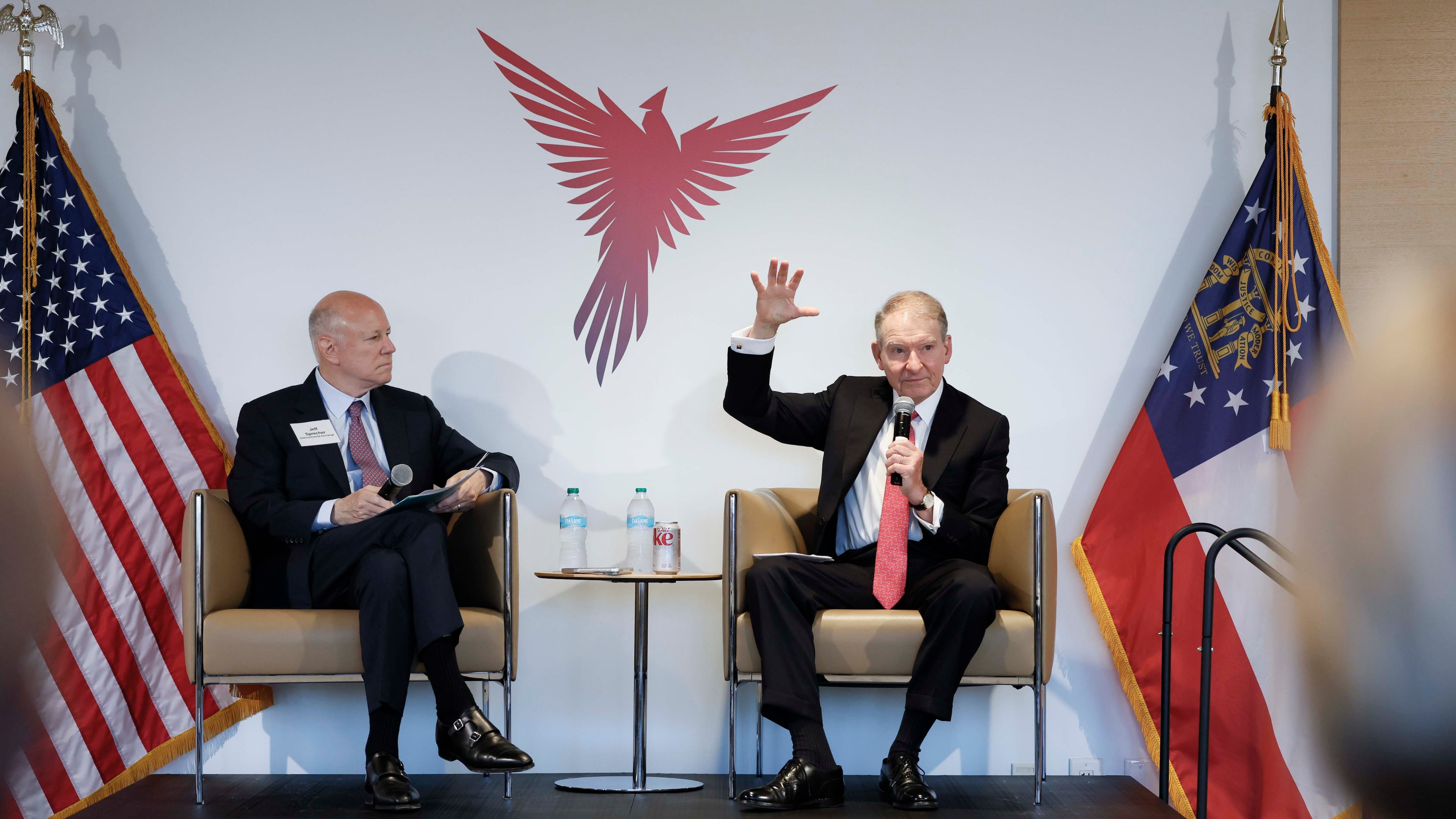

There are relatively few things that bring together the top leaders of Georgia’s biggest companies.
A visit by the sheriff of Wall Street is one of them.
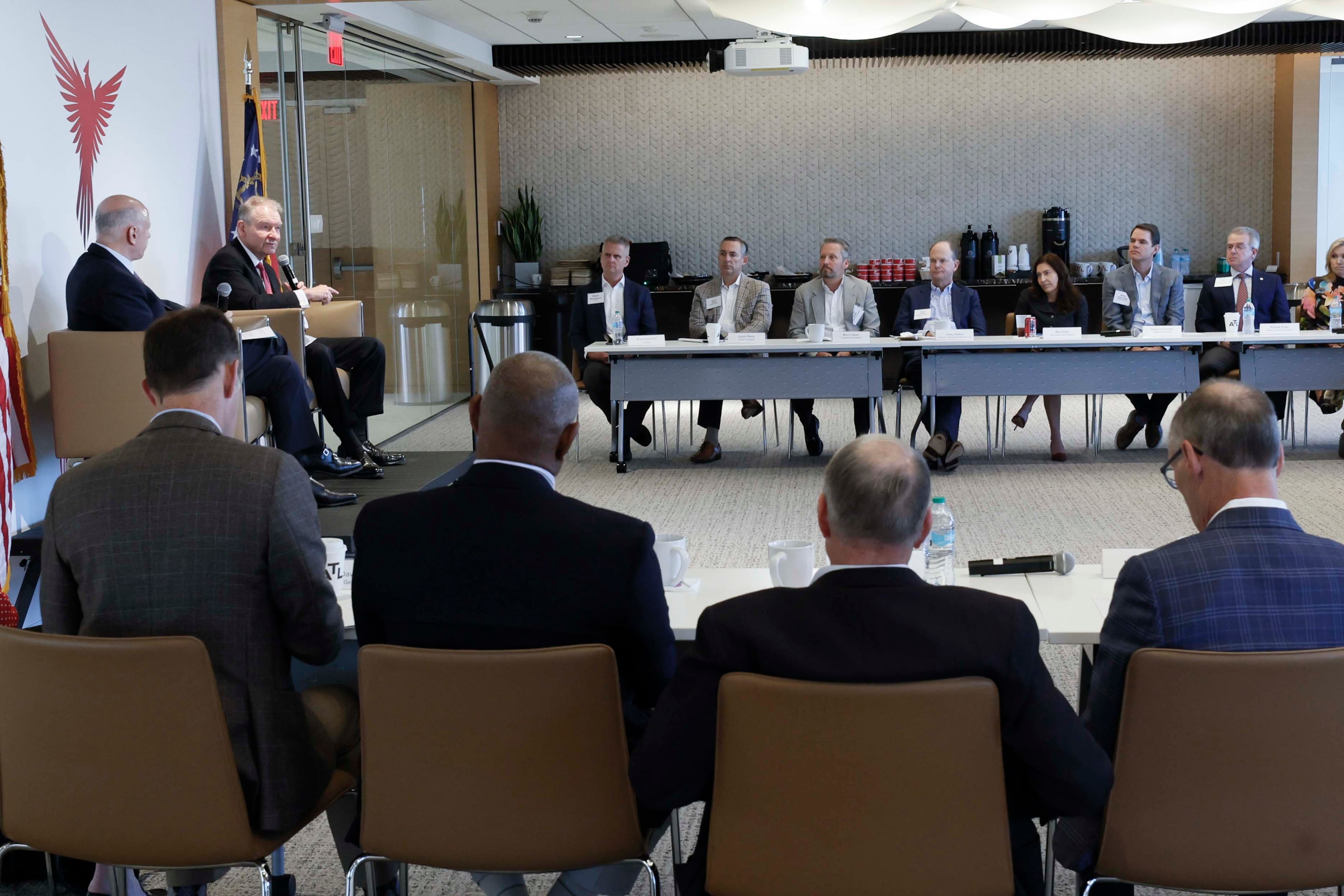
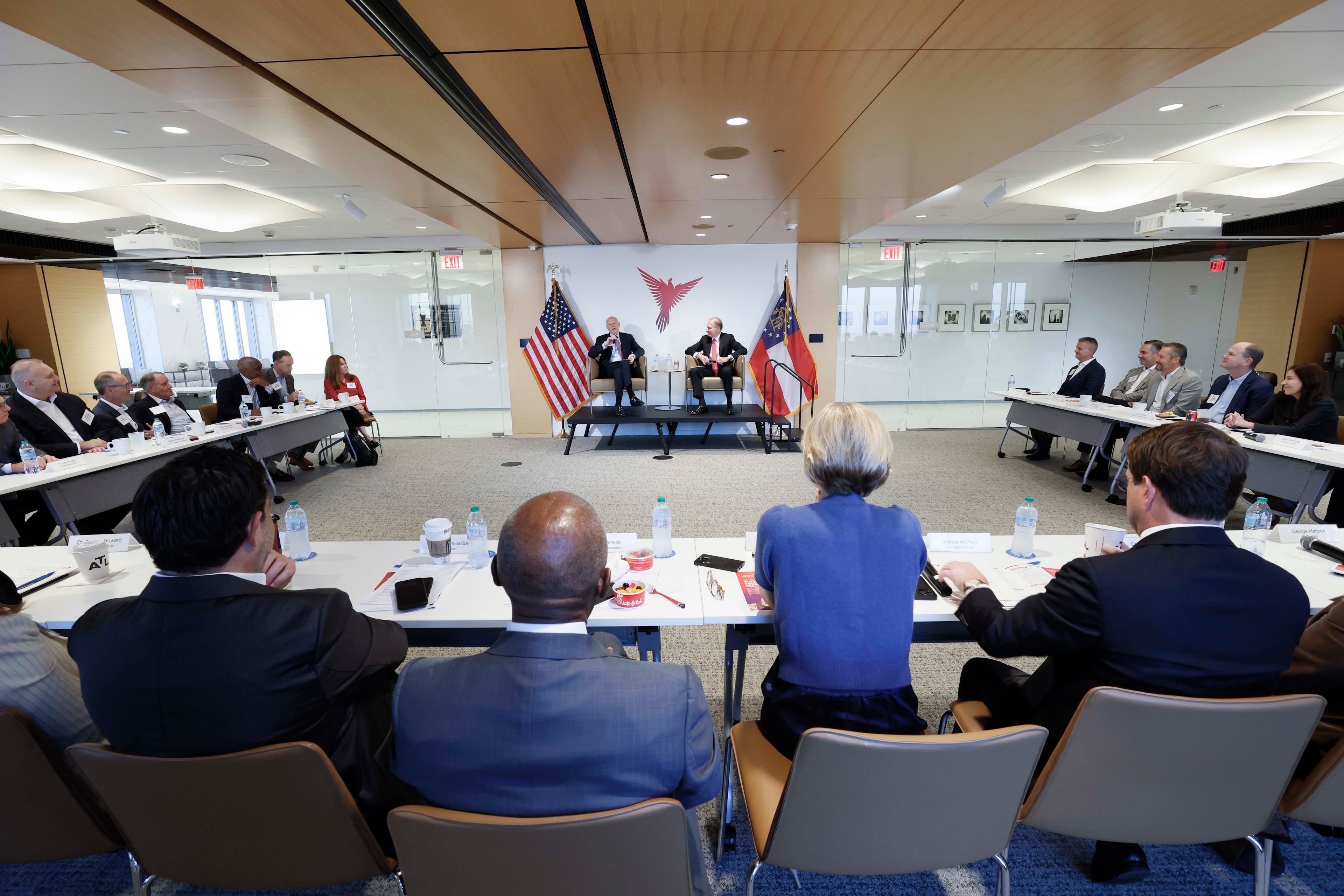
The chairman of the U.S. Securities and Exchange Commission visited the Metro Atlanta Chamber on Thursday to share his views in a wide-ranging conversation on the future of capital markets.
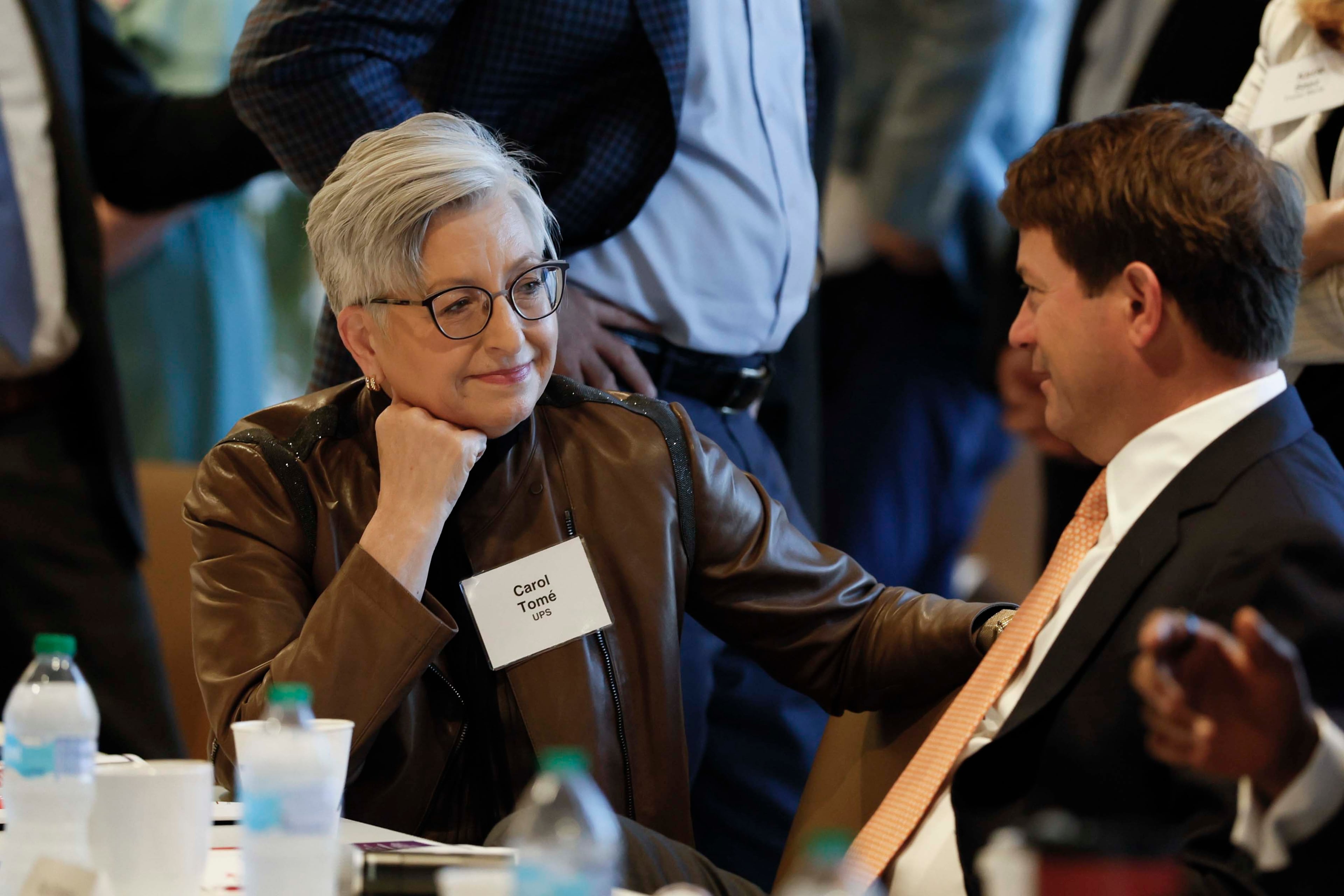
Paul Atkins addressed a room of powerhouse Atlanta executives including Carol Tomé of UPS, Richard McPhail of Home Depot and Bea Perez of Coca-Cola.
Jeffrey Sprecher, founder and CEO of Intercontinental Exchange and chairman of the New York Stock Exchange, moderated the discussion.
Atkins discussed the streamlining of regulations, the rise in newly formed public companies and a proposal that would dramatically change how companies report to their shareholders. Here are takeaways from the conversation:
Clearing out the ‘kudzu’ at the SEC
Nominated by President Donald Trump and sworn into office in April 2025, Atkins described coming into an SEC that he said “kind of went astray.” He has taken heat, however, from investor protection advocate groups, such as Better Markets, for a reduction in enforcement actions compared to his predecessor.
Atkins is no stranger to the SEC, having previously served as a commissioner under former President George W. Bush and in prior staff roles. Under President Joe Biden, the SEC stiffened enforcement and added priorities, such as proposals to require companies to report business risks from climate change.
Atkins said he wants the SEC to return to “financial materiality,” or providing information that could reasonably influence an investor decision. He said the regulatory structure has grown out of control, likening the complexity to an invasive vine.
“Things have grown like kudzu down here,” he said. “You have to go in and like really clear it out in order to try to let the sunlight in and then have real things grow rather than just that weed.”
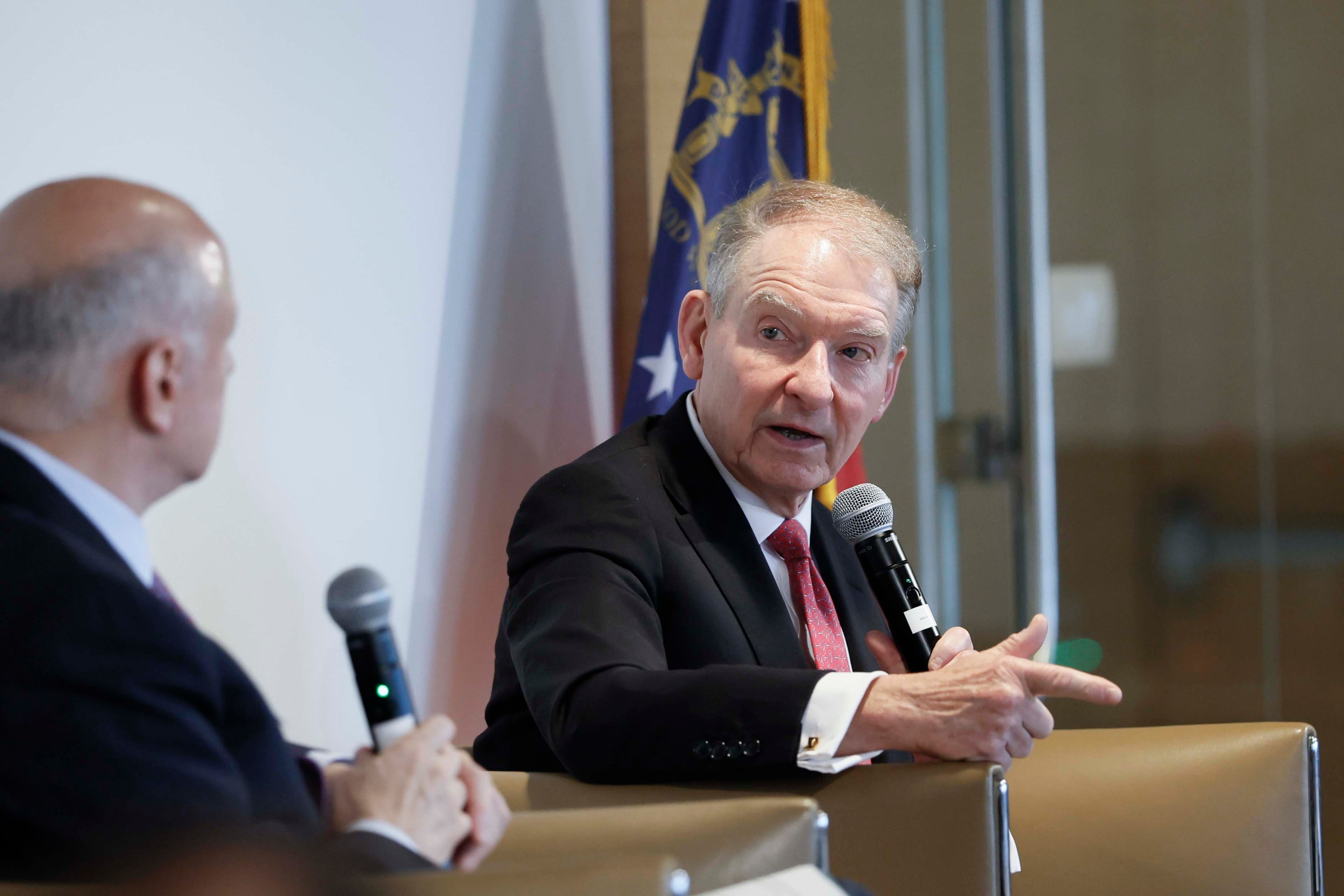
He referenced the SEC’s climate disclosure rules, which were put in place during the Biden administration. The rules, adopted in 2024, faced legal challenges and never took effect.
In May, under Atkins, the SEC proposed to rescind them.
“The average 10K (annual report) would have been twice as long for all this immaterial information. We’re not the Securities and Environmental Commission,” Atkins said.
“We need to keep focused on what is the goal, and that’s keep the markets going, rather than drown them in useless information that may be politically expedient for one very vocal group,” he said.
Proponents of the climate rules, including many institutional investors, argued the risk of climate change to companies’ operations are critical to investors’ understanding of the threats businesses face.
Atkins discussed other efforts to “simplify and streamline the regulatory structure.”
This includes a proposal that the SEC says would simplify public company reporting and “better calibrate disclosure obligations with a company’s size and maturity.” Another proposal would make quarterly financial reporting optional.
During his talk Thursday, Atkins was critical of lengthy risk factor statements, included in regulatory filings to protect companies from legal liabilities.
When asked by The Atlanta Journal-Constitution following the event how he would balance simplified regulations with transparency for investors, Atkins said: “Transparency is important, but you can obfuscate so much by too much disclosure.”
“Eighty pages long for a risk factor section is crazy, and so what we have to do is get back to basics so that people actually get something out of the disclosure,” he said.
New IPOs are on the rise
The number of companies going public through initial public offerings in the U.S. has been on a steady decline since a peak in the mid-1990s.
But Atkins said since he took office, the SEC has adopted what he called a more open attitude toward companies’ concerns and innovation. The agency also has worked more closely with the Commodity Futures Trading Commission, such as clarifying which products fall under each agency’s jurisdiction.
“We have had a 75% increase in the number of IPOs in the first 18 months of this administration compared to the last 18 months of the previous administration,” Atkins said. That translates into almost 600 companies going public, raising $208 billion, he said.
“That’s just a real tangible example of how just a little bit of a change in attitude will then free up the animal spirits in the marketplace,” he said.

Divided opinions about quarterly reporting
The SEC in May proposed amendments that would give public companies the option to switch from quarterly financial reporting to semiannually, in what could be a seismic shift if approved.
Proponents say the move could reduce compliance costs for businesses and spur more long-term operational thinking. But critics say less reporting could lead to transparency issues and market volatility.
It’s been a hot topic. Atkins said Thursday that the SEC received about 240,000 comments about the proposal.
In an interview following the event, Atkins said public comments floated both ways.
He reiterated that the quarterly reporting would be optional, and companies would still be encouraged to talk to investors and have earnings calls.
But Atkins told the AJC that “a one-size-fits-all regime doesn’t work.”
He gave a hypothetical example of a biotech company that goes public to raise money for developing a product, which may take years to get U.S. Food and Drug Administration approval. That company would have to spend money on auditors and lawyers to put together a quarterly report that “basically says nothing,” he said.
It’s not yet clear when the SEC could make a decision on the proposal.
“We don’t have anything to share on timing,” a spokesperson for the agency said.
SEC is ‘pivoting’ on enforcement
The AJC also asked Atkins his philosophy on enforcement. He said the SEC is “pivoting” its approach.
Critics have slammed the commission for pulling back on enforcement. During fiscal year 2025, new enforcement actions fell to the lowest level in a decade, according to a private analysis cited by the Harvard Law School Forum on Corporate Governance.
“We are refocusing our enforcement division on real issues that harm investors: fraud, mismanagement, breach of fiduciary duty by money managers, Ponzi schemes, and that sort of thing, elder fraud,” Atkins told the AJC, rather than the “books and records” cases or technical issues the SEC previously prioritized.
“I want to get back to basics,” he said.
The mood in the room was ‘receptive’
Atkins touched on many other topics Thursday, such as how the SEC is proposing to give retail investors more access to private-market investments.
He discussed efforts related to cryptocurrency, such issuing an interpretation that clarifies what crypto assets are under the SEC’s jurisdiction and a recent five-year “innovation exemption” that paves a path for trading tokenized securities.
“Americans are going abroad to do what they can’t do here, so we have to attract innovators back to the United States,” he said.
Katie Kirkpatrick, president and CEO of the Metro Atlanta Chamber, told the AJC following the event that it was the first time she could recall in her 19-year tenure that an SEC chairman visited the chamber.
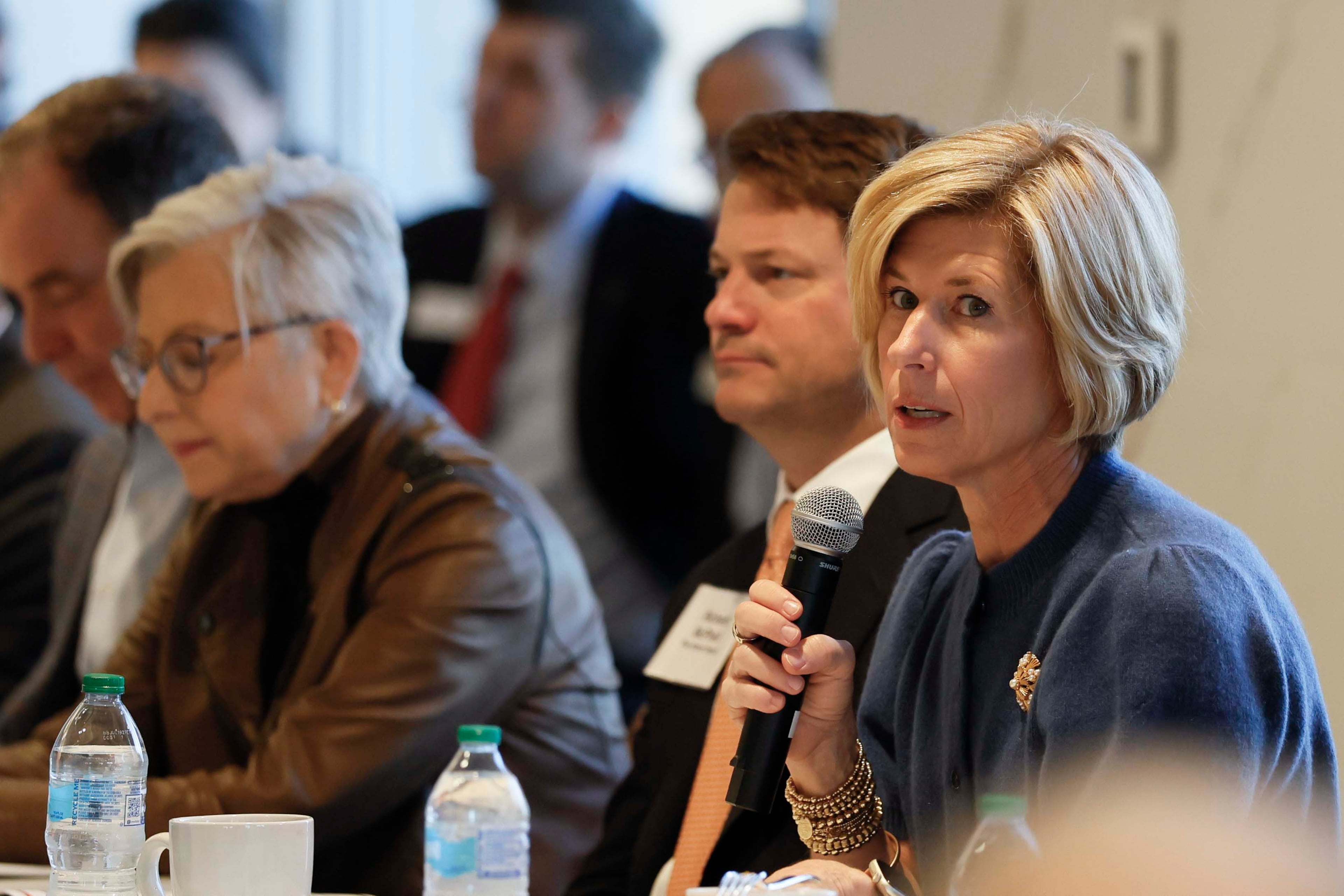
Executives in the room “seemed to lean in and embrace the innovation piece and the openness and the transparency that Chairman Atkins is bringing to the SEC,” Kirkpatrick said.
“Just the ability to have a conversation with a regulator and be heard, I think is a fundamental change, and so the mood in the room was very receptive to everything he was talking about,” she said.