We answer questions about the Okefenokee, Georgia’s first World Heritage site
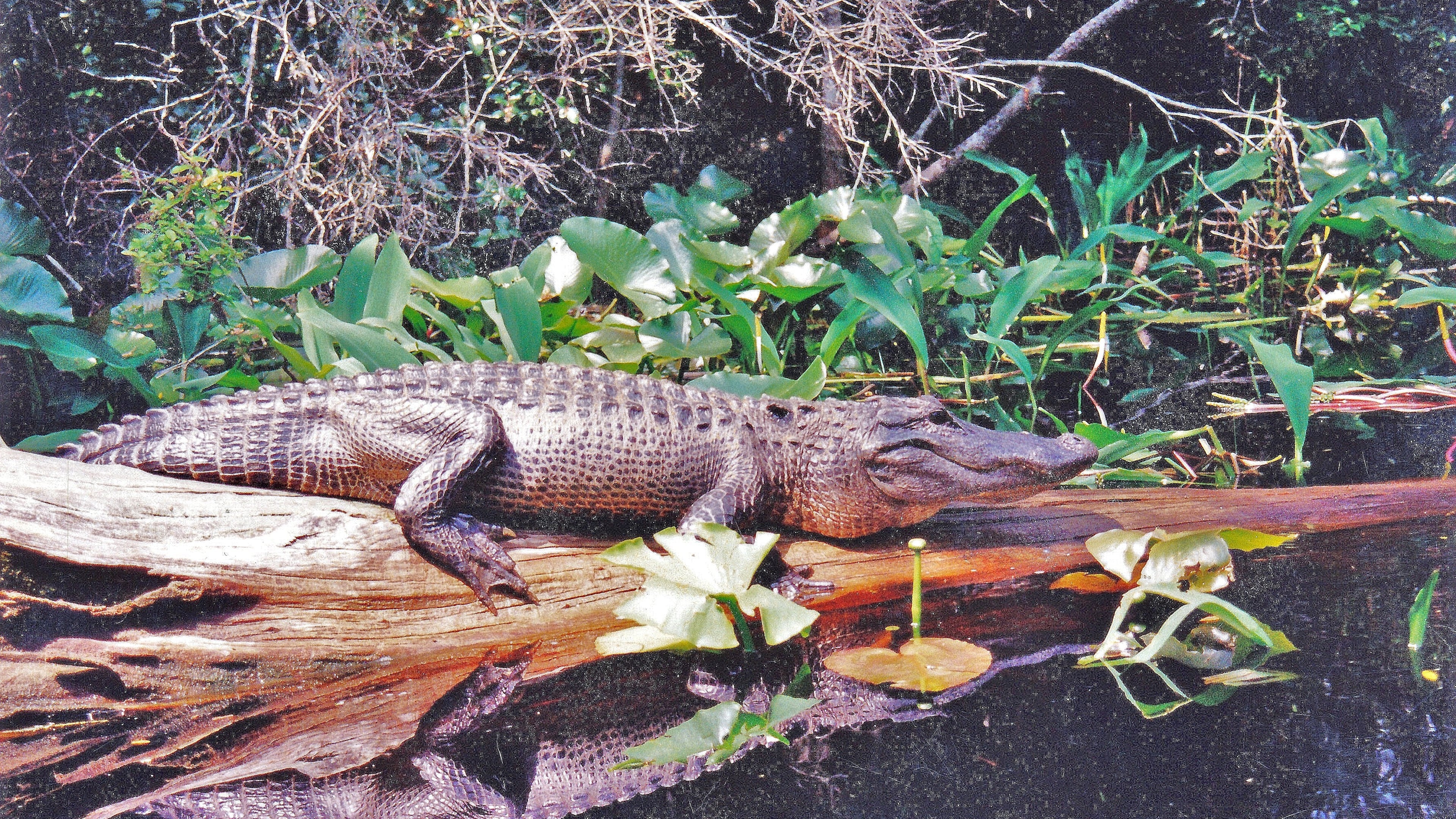
Late last month in South Korea, after more than four decades, Georgia’s Okefenokee National Wildlife Refuge was inscribed on the UNESCO World Heritage List, joining the likes of Yellowstone, Machu Picchu and the Great Barrier Reef.
“After 44 years, the Okefenokee National Wildlife Refuge is where it belongs,” Kim Bednarek, the driving force behind the nomination, told a room of swamp lovers, scientists and board members of the nonprofit she leads, Okefenokee Swamp Park.
In joining the list, the Okefenokee enters the rarified air of iconic places like the Galápagos Islands and the pyramids of Giza. The designation also gives Georgia its first World Heritage site and the U.S. its first natural site added in more than 30 years.
The journey to protect the refuge and deliver on supporters’ vision of the swamp as a regional economic driver is only just beginning.
On Thursday, Aug. 20, The Atlanta Journal-Constitution hosted an AMA on r/OkefenokeeSwamp, with reporter Drew Kann, to talk about the swamp and its journey to become a World Heritage site. AMAs (Ask Me Anything) are an hourlong live chat where Redditors can get answers to their questions on specific topics or stories in real-time. These have been edited for length and clarity.
Q. What made the Okefenokee Swamp qualify for World Heritage site designation?
A. There’s sort of a choose-your-own-adventure element for prospective World Heritage sites.
Sites can choose from a list of 10 criteria to prove their “outstanding universal value.” The Okefenokee honed in on these two:
- Be outstanding examples representing significant on-going ecological and biological processes in the evolution and development of terrestrial, fresh water, coastal and marine ecosystems and communities of plants and animals
- Contain the most important and significant natural habitats for in-situ conservation of biological diversity, including those containing threatened species of outstanding universal value from the point of view of science or conservation.
In short, they argued that the interplay between wildfire and water that’s a key feature of the swamp’s ecosystem — and the fact that it’s so pristine — met that first criteria.
For the second, the bid played up the swamp’s biodiversity and its role as a home for threatened and endangered species.
Q. What was your first visit to the swamp like? Are there any must-do things while you visit?
A. I’m a Georgia native — grew up near Decatur — and I went to the Okefenokee with my family for the first time when I was 9 or so.
We went in through the Waycross entrance, which is probably the most family-friendly of the three main entrances. We camped at one of the camp sites there and had an amazing time … though my most memorable experience from that trip was almost stepping on an alligator while backing a canoe into the water. Luckily, my dad saw what was about to happen and yelled in time for me to drop the canoe and get out of harm’s way.
As far as must-do activities … I love getting out on the water in the swamp, either in a canoe or a jon boat. I most often go in from the Folkston entrance and love cruising through the flooded “prairies.” In spring, they’re dotted with purple and yellow wildflowers … it’s pretty spectacular.
If you’re worried going out on a boat or canoe, the Chesser Island Boardwalk is really nice and a good way to get your feet wet (not literally) exploring the swamp: https://www.fws.gov/refuge/okefenokee/visit-us/activities/hiking
Q. Can you tell us more about your experience in Busan as an ATL-based journalist? Is the voting process normally there?
Bonus question — best thing you ate while in South Korea?
A. It was my first time anywhere in Asia but I really liked Busan! It was about as HOT there as Atlanta has been lately … but it’s a beautiful city with really impressive architecture. I loved how there were incredible beaches right in the middle of the city backed by skyscrapers. I’d love to go back and see more of it because I only got to see a tiny slice, mostly on my nightly hunts for food.
To answer your question about the voting process … the World Heritage Committee doesn’t always meet in Busan. But they do meet once a year in different cities/countries around the globe to debate new nominations and check in on the conservation status of existing sites.
Next year, the committee will meet in Turkey: https://whc.unesco.org/en/sessions/49COM
Best thing I ate: They eat a LOT of octopus in Korea and I loved this spicy traditional octopus stir fry called nakji-bokkeum. You’ve gotta like spicy food to enjoy it though … it had a kick, for sure.
Q: What’s been your most memorable swamp experience so far?
A: Probably almost stepping on an alligator backing a canoe into the water on my first trip there when I was about 9 years old. (I got out of the way … quickly. Shout out to my dad for spotting him/her!!)
Q: Have the issues with the corporations that impacted the preserve been resolved?
A: If you’re referring to the Alabama company’s plan to mine next to the swamp, yes — that project is no more. The nonprofit The Conservation Fund acquired all of their land last year and plans to permanently protect all of it.
There could still be future proposals to mine. World Heritage doesn’t offer any legal protection against it — but so far, no new ones have emerged.
Q: Now that it’s a World Heritage site, is it projected to meaningfully increase tourism? I visited last year and was struck by how empty and serene it was compared to say, many National Parks.
A: It is projected to increase visitation to the swamp. The folks behind the World Heritage bid have projected the designation could double the number of annual visitors from around 800,000 today to as much as 1.6 million by the mid-2030s.
It sees way fewer visitors than places like the Grand Canyon or Great Smoky Mountains National Park. That’s mostly because it’s so remote, so we’ll have to see how much of a boost World Heritage gives tourism. Experts I’ve spoken to say it could drive tourism but that it’s not a guarantee.
Q: What surprised you the most when you visited the Okefenokee?
A: The incredible amount of wildlife that calls it home and the diversity of the ecosystems that are inside the swamp.
Depending on which entrance you use, you can go from exploring flooded prairies dotted with floating peat islands to winding through mazes of cypress trees or even walking through upland pine forests. Each one has different sights, smells, sounds and critters.
Q: Some in my family are worried about the UN taking over. I have tried to assuage their fears about that and let them know USFWS maintains management. I have also talked up the opportunities this designation provides. Do you know of any community plans for further developing the tourism industry in sustainable ways?
A: I’ve heard this concern from others, too. What I’d say is that World Heritage does not forfeit local land control or subject the refuge or areas near it to new laws or regulations.
What it does do is offer other countries a say in how the site is managed, but that’s it — just a say. All existing regulations that would apply to development near the swamp still apply.
There are plans to boost tourism and do it in a sustainable way, but it’s still very early days.
Kim Bednarek, the executive director of both Okefenokee Swamp Park and Okefenokee Adventures, told me last month in South Korea that she and her partners are working to develop a cohesive regional brand for the counties that surround the swamp to use to try to boost visitation and capitalize on World Heritage.
They’re also working to expand visitor capacity and educational offerings around the swamp. Her team is raising funds to build a new nature center in Waycross on the swamp’s north end, and exploring other renovations and expansions near the refuge’s eastern and western entrances.
Q: What led you to become an environmental journalist? What about the topic keeps you interested and energized?
A: I have no formal scientific training but have always just been very interested in the natural world. Since I was a kid, I’ve been drawn to reading environmental stories, so environmental journalism is a good fit that I really just stumbled into.
It’s been a good place to be, especially covering things here in Georgia … Pretty much every major climate, environmental or energy issue we face is all converging here in one way or another.
Q: Is there any momentum behind a state law banning mining in counties that could harm the Okefenokee water levels?
Who are the GA politicians working hardest for and against Okefenokee protections?
A: There have been several bills floated in recent years that would permanently or temporarily block mining on the critical eastern flank of the swamp known as Trail Ridge, but none have reached the finish line.
If environmentalists make another push to protect the swamp in the Georgia General Assembly next year, they’re going to have to start from scratch. The legislature runs on a two-year cycle and the most recent one ended in April. That means all bills that were proposed but didn’t pass during the last run are dead and have to go back to start.
The bill that in the past has gotten the most attention is the Okefenokee Protection Act, which would block the Georgia Environmental Protection Division from issuing new mining permits on Trail Ridge. It’s had a lot of bipartisan support but has continually gotten trapped in the House Natural Resources and Environment committee. I’m not sure if there will be another push to pass the legislation in 2027 but if I were a betting man, I’d say yes.
In terms of key legislators that are pushing for/blocking Okefenokee bills …
There’s a lot in flux on that front, too. The House Natural Resources and Environment committee where the Okefenokee Protection Act has gotten stuck in the last few years will have a new leader in 2027. The committee’s longtime chairman, Rep. Lynn Smith, retired earlier this year. We won’t know who will take her place until the legislature reconvenes in January.
In terms of Okefenokee protection proponents, Rep. Darlene Taylor has sponsored the Okefenokee Protection Act in recent sessions and been outspoken about the need to block new mines.
Q: Does this include the “dark sky” designation?
A: Yes, the refuge’s “dark sky” designation is still in place!