Georgia’s biggest companies seek more than $1.5 billion in tariff refunds

Some of Georgia’s biggest companies are collectively reporting more than $1.5 billion in tariff refunds after the U.S. Supreme Court struck down certain import taxes wielded by President Donald Trump, according to an Atlanta Journal-Constitution analysis.
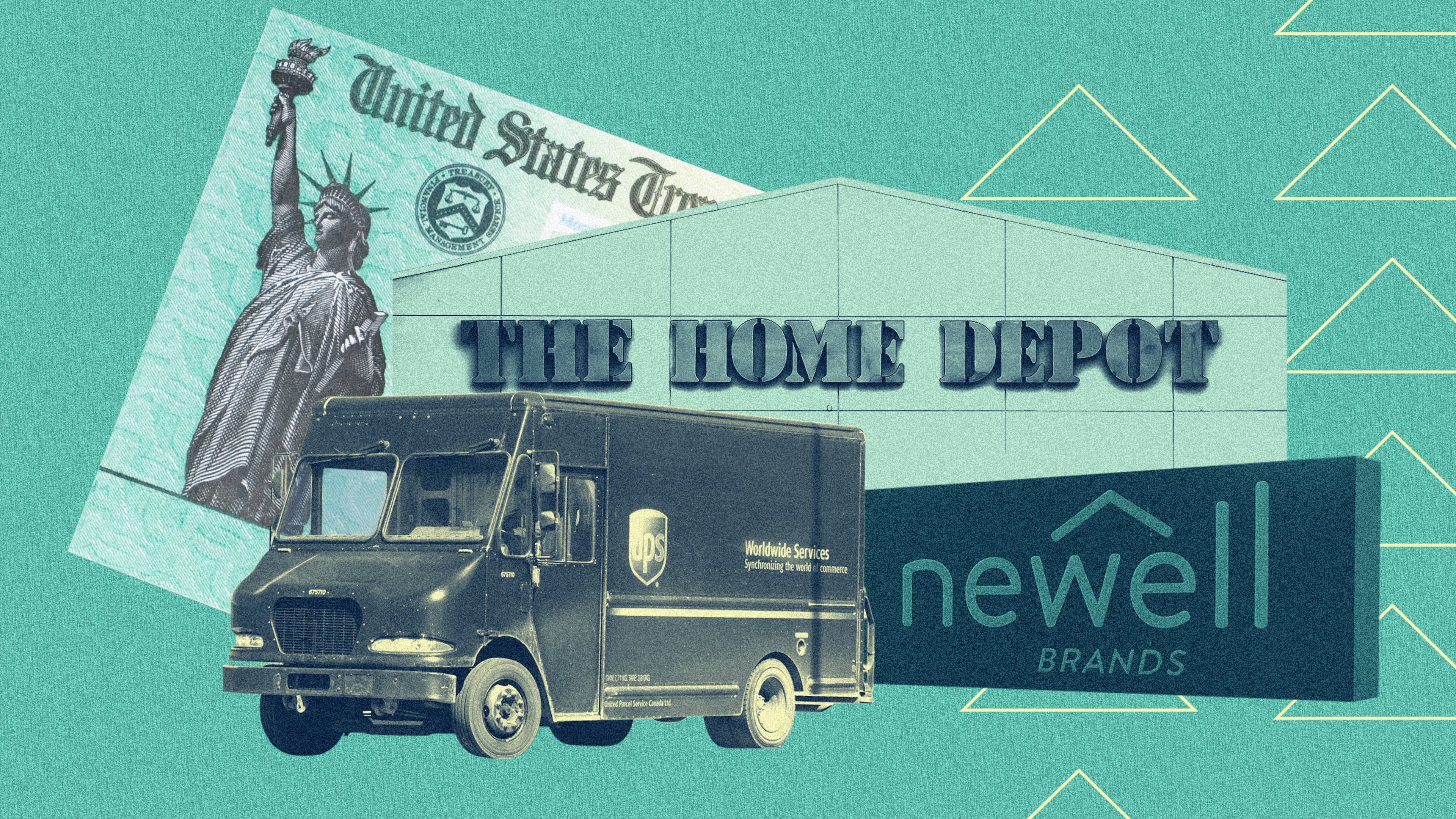
Home Depot and UPS account for the bulk of that total, with millions in tariff refunds also flowing to children’s clothing maker Carter’s, Sharpie and Rubbermaid parent company Newell Brands and flooring retailer Floor & Decor.
But consumers, who often paid higher prices because of tariffs, have no mechanism to request money back from the federal government, and some Georgia small businesses are complaining the refund process has been cumbersome and complicated.
“It seems to have gone smoothly for big businesses,” said John Mercer, head of global research for data firm Coresight Research. “But of course, those are the ones that have the resources to pour into claiming these refunds.”
The AJC reviewed financial disclosures and conference calls of top Georgia public companies. Private firms that do not have to disclose their finances have likely sought or recouped refunds of their own that would push the $1.5 billion figure far higher.
The effort to seek refunds on certain federal tariffs is the latest twist in a turbulent era of global trade.
U.S. tariff policy has changed more than 50 times since January 2025, according to the Tax Foundation, as Trump has levied taxes on imported goods against dozens of countries to remake American trade deals, generate tax revenue and encourage foreign investment into the U.S.
Tariffs are import taxes levied on goods that cross a border. They are often used to protect domestic industries from foreign competitors and are typically paid by the entity importing the product, meaning it’s typically businesses in the U.S. and residents footing the bill.
Trump made tariffs and taming high prices the core of his economic policies as he campaigned to return to the White House. But job growth has been weak while inflation has remained stubbornly high since Trump returned to office.
From March 2025 to June 2026, Georgia importers have paid about $20 billion in tariffs, according to small business activist coalition We Pay the Tariffs.
Many companies chose to eat some or all the tariffs to avoid raising prices, which may have forced them to cut expenses or not invest the money elsewhere, like creating jobs.
“It’s not clear that companies are going to see this as a windfall,” said Stephen Craft, dean of Oglethorpe University’s Hammack School of Business, referring to tariff refunds.
Craft said that amid continued uncertainty around trade policy, firms could choose to hold on to the refunds.
“Is it something that ends up creating more jobs, more opportunities, more business lines, or does it simply just get banked and saved for the next unpredictable policy change?”
Public companies are receiving millions back
As of July 31, the federal government has refunded about $100 billion to corporate importers across the U.S., according to a court filing.
This follows the Supreme Court’s ruling in February that it was illegal for Trump to impose tariffs under the International Emergency Economic Powers Act without Congressional approval.
The U.S. Court of International Trade ordered the administration to refund all the IEEPA tariffs, estimated at about $166 billion from more than 330,000 importers, plus interest. The U.S. Customs and Border Protection in April launched an online tariff refund portal to take applications.
Of course, other tariffs remain in place, with the average tariff rate on all imports at 9.3%, according to the Tax Policy Center. In recent days, after trade talks broke down with Canada, the U.S. implemented 50% tariffs on a bundle of goods and Trump threatened 50% levies on Canadian-made vehicles, auto parts, steel and other products starting Jan. 1.
But details about the IEEPA tariff refunds are now spilling out in second-quarter earnings reports, providing some insight into how companies plan to use the funds.
Buckhead-based Carter’s, known for baby bodysuits and kids’ pajamas, reported it received $132 million back in tariff refunds. The company last year had slashed 300 office jobs and said it would close 150 stores amid cost increases from new tariffs.
But a Carter’s executive said it’s too early to decide how to use the tariff refunds, especially as the threat of more tariffs looms.
“The senior administration officials multiple times have said that their intention is to return the tariff rates to that IEEPA level, if not higher,” Richard Westenberger, chief financial officer and chief operating officer of Carter’s, said on a July 31 conference call.
“So we’re cautious that we’re out of the woods as it relates to tariffs,” he said. “It’s a very uncertain market. And I think to maintain more liquidity in this environment is absolutely the prudent thing to do.”

Vinings-based Home Depot received $730 million in tariff refunds in the second quarter, which Chief Financial Officer Richard McPhail said was the “vast majority” of what the company expects to receive back.
The company said the money will offset rising costs.
“While we received those refunds in the second quarter, we’ve also experienced unplanned pressure from fuel, energy and other product input costs that we expect will fully offset the benefit from tariff refunds over the year,” McPhail said during a conference call.
Sandy Springs-based Newell Brands, which reported $126 million in tariff refunds in the second quarter, said the money will “offset the significant inflationary pressures we have been experiencing,” which the company estimates at around $200 million for the year, Mark Erceg, chief financial officer, said on a July 31 conference call.
“We believe this negates the need for broad-based pricing actions,” Erceg said. Newell Brands had raised prices last year in response to tariffs, which “did cause us to lose some positive sales momentum,” he said.
Floor & Decor, which said it received $87 million in tariff refunds, plans to use the money in three ways, CEO Bradley Paulsen said on a July 30 conference call.
“We’ll continue to use those funds to offset the inflationary impacts from both oil and supply chain,” he said, as well as to “invest in price to drive market share gains” and execute some capital allocations, such as investing in stores and other growth initiatives.
What consumers can expect
Consumers have absorbed up to 43% of the tariff burden in the form of higher prices, according to an analysis from Harvard Business School.
Under current law, the estimated costs of tariffs to U.S. households is about $1,100 a year, according to Yale University’s Budget Lab.
But unlike businesses importing products, which might be aware of what they paid, for consumers, there has seldom been a line item on a receipt showing the import tax, as the costs are often embedded in sales prices.
Mercer with Coresight Research said the best that consumers can hope for is that tariff refunds flow down in part from companies in the form of more competitive prices.
“Retailers know the consumer is pressured,” he said. “Tail winds like higher tax refunds are going to peter out through the year. Companies will be conscious of driving holiday growth and competing for those consumers. So we think there probably will be some investment in price.”
For example, Arkansas-based Walmart, which has stores across Georgia, plans to use its $2.9 billion in tariff refunds to lower prices on groceries and general merchandise.
“We’re investing heavily in price because customers need us to and because we believe it drives market share gains over time,” Walmart President and CEO John Furner said last week on a conference call.

Sandy Springs-based UPS is an exception. The shipping giant acts as a customs broker for imported packages and has committed to passing along all eligible tariff refunds to its customers who paid them.
UPS applied for $500 million in a first phase of tariff refunds and had received $200 million back as of the second quarter, according to a financial filing.
UPS said it has already started refunding customers, and the company has launched a refund lookup tool “to help shippers identify which shipments may be eligible for an IEEPA tariff refund and which refund phase applies.”
Small businesses report issues
Some Georgia small businesses said they’ve struggled with tariff refunds as they lack the teams of accountants, lawyers and other experts of bigger companies.
“The deck is stacked against small firms that lack the resources to fight for and obtain what the government owes them,” said a July report from the Cato Institute, a libertarian think tank based in Washington, D.C.
“You don’t just say, ‘Give me my money back.’ You have to document every time you paid an IEEPA tariff on every import line,” said Sonny Jelinek, director of the U.S. division of Jelinek Cork Group, a fifth-generation family business that specializes in cork products and has its domestic operations in Savannah.
“That was very complicated and time consuming,” he said. “It’s added hundreds of hours of work to a small business who is already stretched very thin with workloads.”
Jelinek Cork imports most of its cork from Portugal because there is no domestic source of the raw material, he said. The company makes products such as cork stoppers, flooring and industrial materials.
Jelinek said the company paid about $110,000 in IEEPA tariffs before an exemption for cork was passed in September 2025 as part of a framework trade agreement between the U.S. and the European Union. So far, he said he’s received about 60% of that back in tariff refunds.
But after the Supreme Court struck down the IEEPA tariffs, Jelinek said he ended up paying more in another 10% temporary levy known as Section 122 tariffs that were put in place but expired in late July.
“So the back and forth of trying to figure out our cash flow and bouncing back between tariffs — sometimes very high, sometimes no tariffs — is very stressful and very difficult,” he said. “We don’t even know what to tell the customer.”
Jeremy Rose, owner of Aris GET, a wholesale distributor of heavy equipment parts in Jasper, said he applied for nearly $100,000 in IEEPA tariff refunds about three months ago.
“I haven’t gotten a penny back yet,” Rose said. “They’re just trying to make it as difficult as possible for people.”
Rose started Aris GET in early 2024 on his own after his family sold a similar business. But a series of tariffs have been detrimental to his young business and are approaching nearly $1 million in total costs, he said.
Rose took out a $350,000 line of credit specifically to pay the import taxes, he added.
“I always wanted to do this on my own, and it’s completely wrecked me emotionally,” he said. “It’s just been way too stressful. … Business wise, I’m doing really well. But I can’t grow because the tariffs destroy your cash flow.”
Correction
August 26, 2026This story has been updated to remove an incorrect figure about expected UPS tariff refunds.