As a description of Georgia’s transportation crisis, the report issued earlier this month by a legislative study committee was notable for its candor, if not for its courage:
It notes that state spending on upkeep for existing roads and bridges is unsustainably low. In 2012, for example, Georgia spent $13,982 per mile on upkeep, compared to $122,699 per mile in Florida. Instead of resurfacing roads every 14 to 16 years, we’re on a schedule to do so every 50 years. That’s a slow, bumpy road to ruin.
In addition:
- It acknowledges the need for transit, calling it "critical that the state of Georgia increase its commitment" to public transportation. Going still further, it advocates a "separate, permanent funding stream" for transit.
- Overall, the lack of transportation investment "places Georgia at a significant competitive disadvantage," the committee warns, concluding that "Georgia must take immediate and significant steps to increase its investment in transportation infrastructure."
- And by "significant", the committee says we need another $1.5 billion a year to "merely preserve the current transportation system." Addressing just the most critical expansion needs would "require an additional investment each year of between $2.1 billion and $2.9 billion." If you want to make a real impact with passenger rail and other options already being pursued in North Carolina, Tennessee, Florida and Texas, we'll need between $3.9 billion and $5.4 billion in additional annual spending.
It’s important to note the historic nature of such admissions. This crisis has been building for decades, and for decades state leaders have refused to acknowledge its magnitude. The fact that the chairs of both the House and Senate transportation committees have signed onto such statements suggests that the ice is breaking and minds are opening.
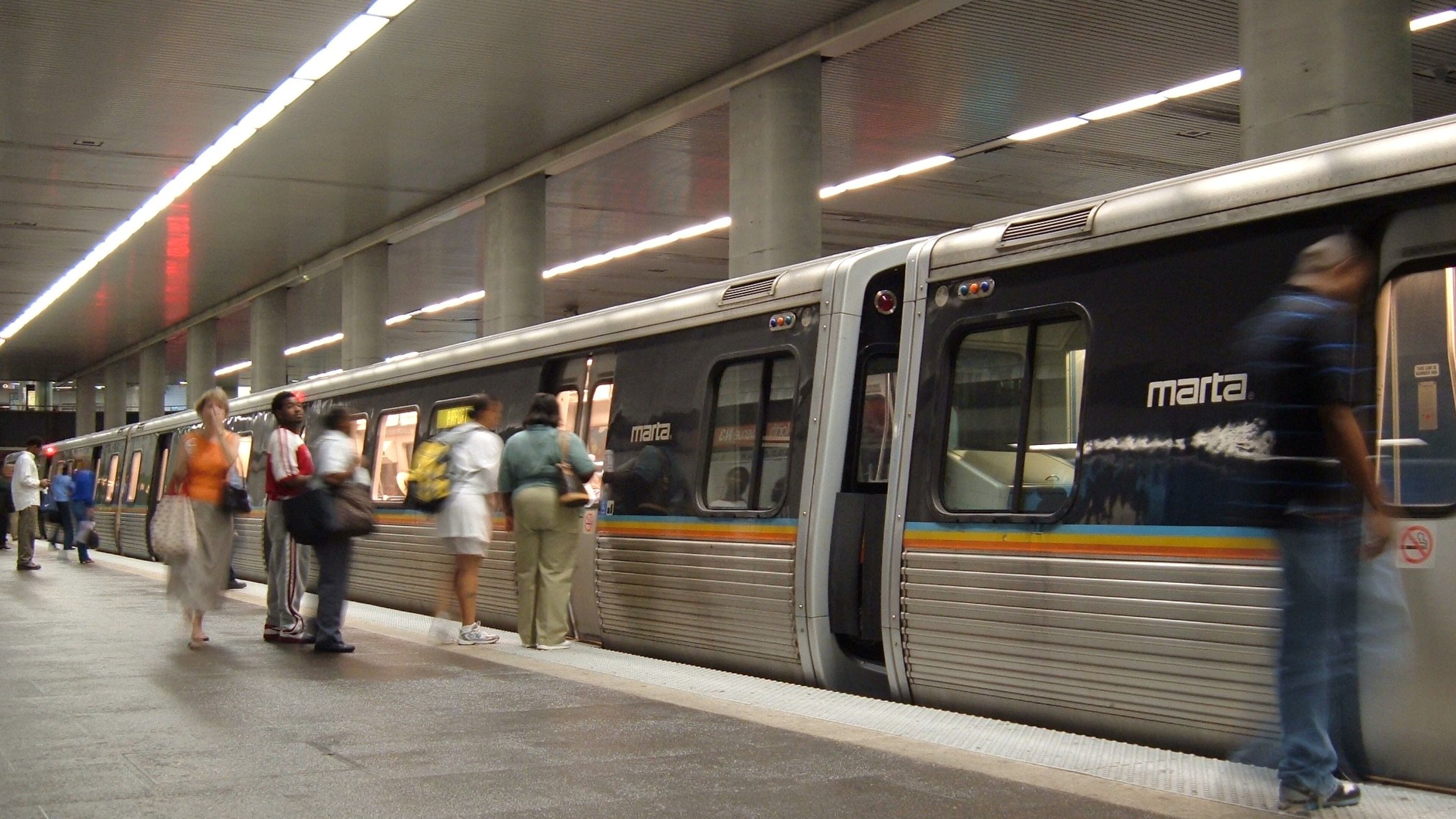
The support — even if merely rhetorical — for state aid to transit is also noteworthy, given that MARTA has long been the only major transit agency in the country forced to operate without financial backing from its state government.
However, acknowledging a problem is not the same thing as having the guts to fix it. It doesn’t bode well that the 16-member study panel chose not to commit to a specific action plan, instead listing a series of possible revenue options that the governor and Legislature could choose among, such as raising the gasoline tax or sales tax. It’s also troubling that even though the report advocates a permanent funding stream for transit, it makes no effort to suggest such a stream. In fact, some of the revenue options might preclude support for transit, given an archaic constitutional provision that limits gas-tax revenue to roads and bridges.
And although the numbers are vague, it appears that if state leaders were to embrace every major revenue increase listed in the report — a political impossibility — we would raise enough to “merely preserve the current transportation system,” but not much more. We’d still be well beneath the spending totals that the committee itself says are required to keep Georgia economically competitive.
In another words, with courageous political leadership, we might — MIGHT — succeed in pulling off the bare minimum to keep things from getting much worse. That’s how big a hole we’re in.