The First Amendment should protect worshippers the same as protesters
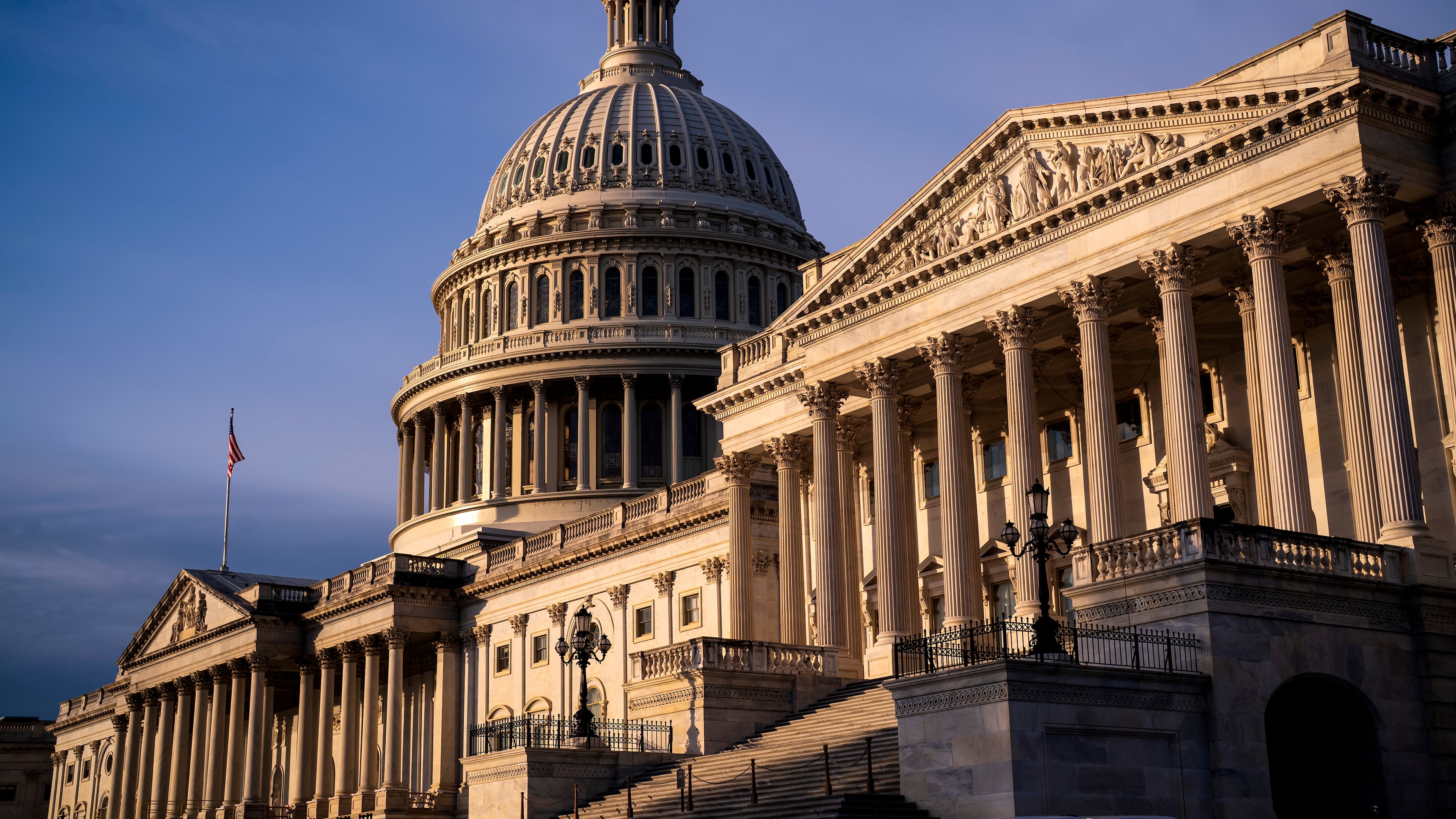
U.S. Sens. Ted Cruz, R-Texas, and Elissa Slotkin, D-Michigan, don’t often find themselves introducing legislation together. Nor do Republican Rep. Brad Knott of North Carolina and Democratic Rep. Tom Suozzi of New York.
But this bipartisan, bicameral group has found something that ought to transcend party lines: Americans should be able to walk into a house of worship without being intimidated, obstructed or shouted out of exercising their religion.
Their newly introduced Right to Worship Act deserves to become law.
The principle behind the bill is simple. The First Amendment protects the right to protest against a religion or its political orientation. It also protects the right to practice one’s faith. Those rights must coexist; one cannot be allowed to swallow the other.
That means protesters are free to condemn the Catholic Church’s stance on abortion, denounce Jews for supporting Israel outside a synagogue, criticize Islam’s tendency to violence outside a mosque or attack any religious doctrine they please. The government has no business deciding whether those messages — those of a faith and those opposed — are admirable, offensive or hateful.
But protesters don’t have a constitutional right to hinder people’s access to worship.
Existing law does not solve the problem

The Right to Worship Act draws that distinction carefully. During scheduled religious services, it prohibits, within 100 feet of a house of worship, conduct that knowingly and substantially disrupts the service or unreasonably impedes people from attending it. The bill expressly protects peaceful First Amendment expression that doesn’t interfere with worship.
In other words: Speak, protest, carry signs, make your argument. Just don’t commandeer the sanctuary door.
That distinction has deep roots in the balance found in First Amendment law. Free speech has never meant a right to speak whenever, wherever and however one wishes. Government can impose reasonable, content-neutral rules governing the time, place and manner of expression when necessary to protect important competing interests, particularly other First Amendment rights. We accept such protections around homes, schools, funerals and other sensitive places. Religious worship deserves no less.
Existing federal law doesn’t fully solve the problem. The Freedom of Access to Clinic Entrances Act already protects houses of worship against force, threats of force and physical obstruction. But there is considerable territory between peaceful disagreement and physical violence. Organized groups can surround an entrance, intimidate worshippers or create enough disruption to deter attendance while remaining just short of the conduct existing federal law clearly reaches.
The Constitution shouldn’t require government to wait for a punch to be thrown. Indeed, the government should not let people crowd out worshippers at the sanctuary door, even if no punch is threatened.
This matters especially in the religious context because a worshipper isn’t simply a passerby who can cross the street. Religious exercise is often tied to a particular place and time. Catholics must attend Mass to receive Communion. Jewish worship often requires a congregation physically assembled together. Other faiths likewise depend on communal worship. That is why there are houses of worship, rather than just protecting the right to worship in one’s heart in one’s home.
Supporters represent a diverse religious coalition
Telling such people to avoid protesters by staying home is therefore no answer. It asks them to surrender one constitutional right to accommodate someone else’s exercise of another.
That is a kind of heckler’s veto. We normally use that phrase when a hostile audience succeeds in silencing a speaker. The same principle should apply when a hostile crowd succeeds in preventing religious exercise by dominating the entranceway. The First Amendment shouldn’t reward whichever side can make the most noise.
The politics surrounding this bill are encouraging precisely because they recognize that principle. Cruz, a Texas Republican, and Slotkin, a Michigan Democrat, are leading it in the Senate; Knott, a Republican, and Suozzi, a Democrat, are doing so in the House of Representatives. Its supporters also cross religious lines, including Jewish organizations, the Islamic Society of North America, Hindu organizations and UNITED SIKHS.
That breadth matters. A law protecting synagogues today must protect mosques tomorrow, and churches, temples, mandirs and gurdwaras the day after that. Its application cannot depend on whether public officials sympathize with the worshippers or the protesters.
There are legitimate reasons to scrutinize any new restriction on protest. The answer is not to abandon the protection of worship but to insist that the law remain narrow, content-neutral and focused on actual interference. The Right to Worship Act largely gets that balance right.
America need not choose between the freedom to protest and the freedom to pray. Protesters should remain free to criticize religion vigorously — even offensively. Worshippers should remain free to enter their sanctuaries and worship.
The First Amendment protects both. Congress should too.
Michael J. Broyde is a professor of law at Emory University School of Law.
Send letters to the editor of 250 words or fewer with your name, city or town and contact information to letters@ajc.com.
The opinions expressed are those of the writer and do not necessarily reflect the views of The Atlanta Journal-Constitution.