What the Flock? Surveillance cameras causing citizens to fret

For years, I received frequent PR pitches concerning Flock cameras, about how terrific they are at fighting crime.
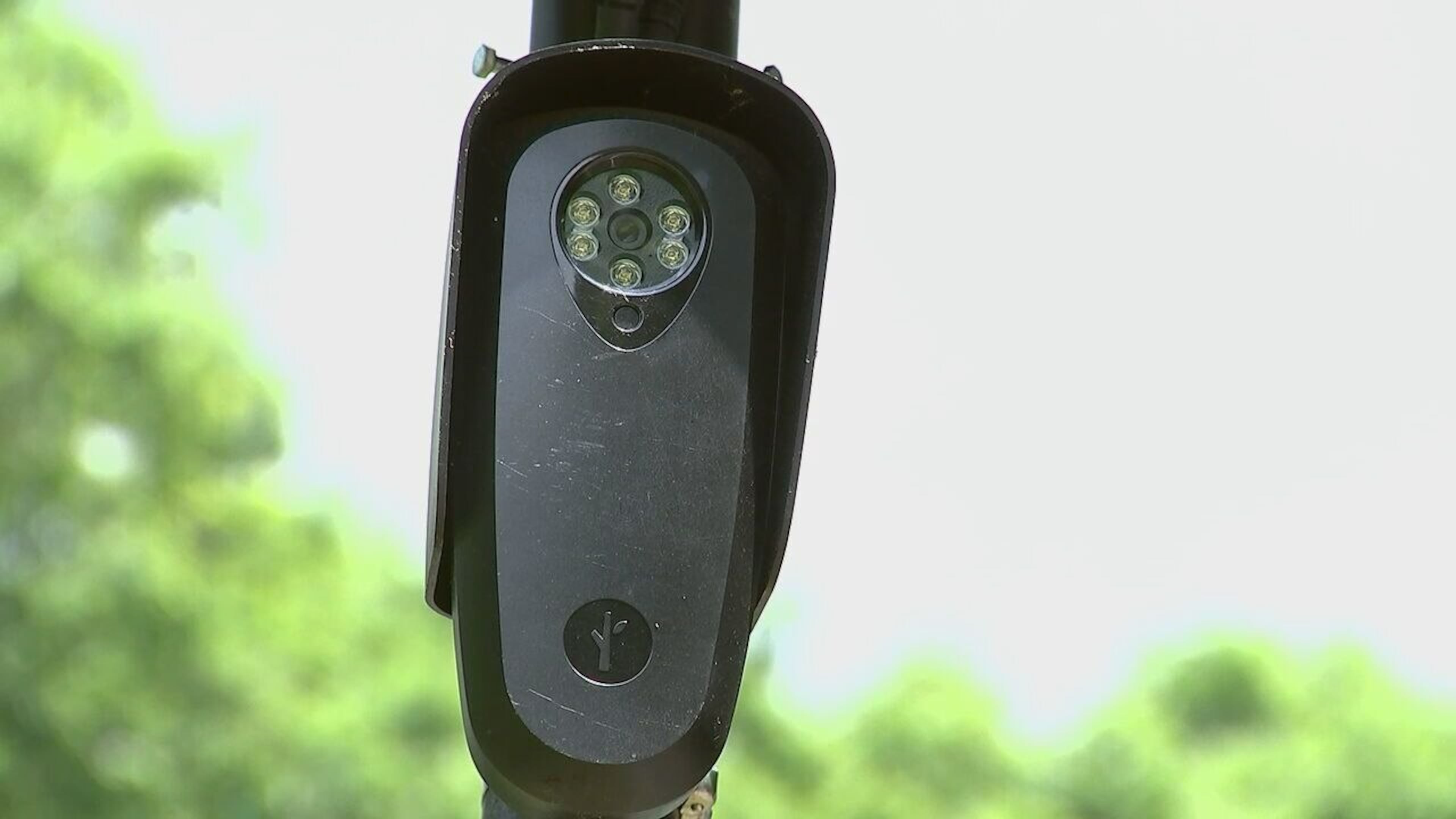
The silent sentinels, ubiquitous on utility poles throughout metro Atlanta, are 24/7 “force multipliers,” police say. They’re there, rain or shine, watching over you, snapping photos of your license plate, along with a time stamp.
Not only that, they capture identifying details about your vehicle: the make, model, color, dents, bumper stickers, etc. They’re called “vehicle fingerprints” and are sent to a computer to be collated by artificial intelligence for possible investigation.
Agencies can share information over a vast network and create “heat maps” to determine where a certain vehicle has traversed in the past month.
Police love the technology. And so do many citizens. The company providing this service is called Flock Safety. And most everyone wants to be safe. Right?

Sure, safety is desirable but “mass surveillance is unpopular,” said Matthew Guariglia, surveillance expert at the Electronic Frontier Foundation. “These companies were able to expand very quickly in virtual secrecy.”
And now people are catching on.
In recent months, lots of folks are having second thoughts about the computerized Eyes in the Sky, worrying that 1984 has finally arrived, albeit a few decades late.
Each week it seems Flock cameras are in the news. There are stories about people asking elected officials to curb the cameras. Or cops getting in trouble by stalking ex-girlfriends. Or rogue anti-surveillance-state activists damaging the devices.
Now, I can imagine some of you muttering: “Hey, you should expect no privacy out in public.” Or, “If you’ve done nothing wrong, then why worry?”
The most recent public pushback was in Gwinnett County, where numerous county residents last month urged officials to dump Flock.
“Which do you value more, your security and safety, or your privacy and freedom?” asked Ryan Clark, a Norcross resident, according to a WSB-TV story.
The commissioners took no action, choosing the former and staying the course with the program.
In late 2018, Gwinnett inked a pilot program with Flock Safety, then a year-old Atlanta tech company, to install 10 “wireless-license plate readers.” An AJC story noted the cameras had identified an illegal trash dumper.
The county now has 1,100 such cameras. And Flock has become an industry leader, boasting that 5,000 agencies use its products. The company is valued at $8 billion.
Gwinnett is not atypical. DeKalb recently unveiled its $21 million “Real Time Crime Center” with Flock cameras, drones and an AI-enhanced integration of data.
And Atlanta is the master of all oversight with a network of an estimated 60,000 cameras making it “the most surveilled city in America.”
Not all them are the city’s devices — more than 45,000 private cameras are connected to police, or have signed up to be connected in an emergency.
It’s called “Operation Shield.” The ACLU says a records request discovered the department shares its data with nearly 2,000 other departments through the Flock network.
Atlanta Police Chief Darin Schierbaum calls it the “neighborhood watch of the 21st Century.”
It’s like having Gladys Kravitz go viral. (Those of a certain age should recall the nosey neighbor on “Bewitched.”)
But the data gathered by agencies is not just targeted at robbers, killers and car thieves.
Guariglia, the surveillance watchdog guy, said the Buford school district employed Flock images to investigate potential non-residents attending the city’s schools. His organization, in a blog, noted school officers ran 375 searches under the notation “residency verification.”
The district told Appen media that “Flock Safety is one of the tools we use to verify residency and protect the integrity” of the system.

Jason Hunyar, a 30-year-old resident, attended several Dunwoody City Council meetings this year trying, unsuccessfully, to get the city to dial back on the cameras.
He told me he finds them “Orwellian.”
This year, he discovered through an open records request that Flock employees had accessed private cameras at the Marcus Jewish Community Center, including an area where children practice gymnastics.
Flock told the city that company employees were performing a sales demonstration.
Another records request by Hunyar discovered that Flock had brought in a team of veteran crisis management PR flacks to a meeting with Dunwoody police this year.
Another outlet, 404 Media, discovered a Flock tutorial that guides police in how to talk encouragingly about the technology. One section is titled, “Own the narrative before someone else does.”
I called and messaged Flock several times but never reached a human. The public relations strategy seems to have shifted.
Perhaps fittingly, I did “speak” over the phone with an AI bot who parroted company talking points: Flock does not do mass surveillance, does not use facial recognition and has a limited period of time when data is stored.
Hunyar noted that a video camera caught a Colorado cop stating what has become a troubling truth. In that case, police wrongly accused a woman of being a thief, noting her car was spotted in the vicinity of some porch piracy.
“You know we have cameras in that town,” the cop told the woman after ringing her door bell. “You can’t get a breath of fresh air in or out of that place without us knowing. Correct?”
Now, that’s a PR pitch.