Intown living boom is hurting Atlanta’s leafy image
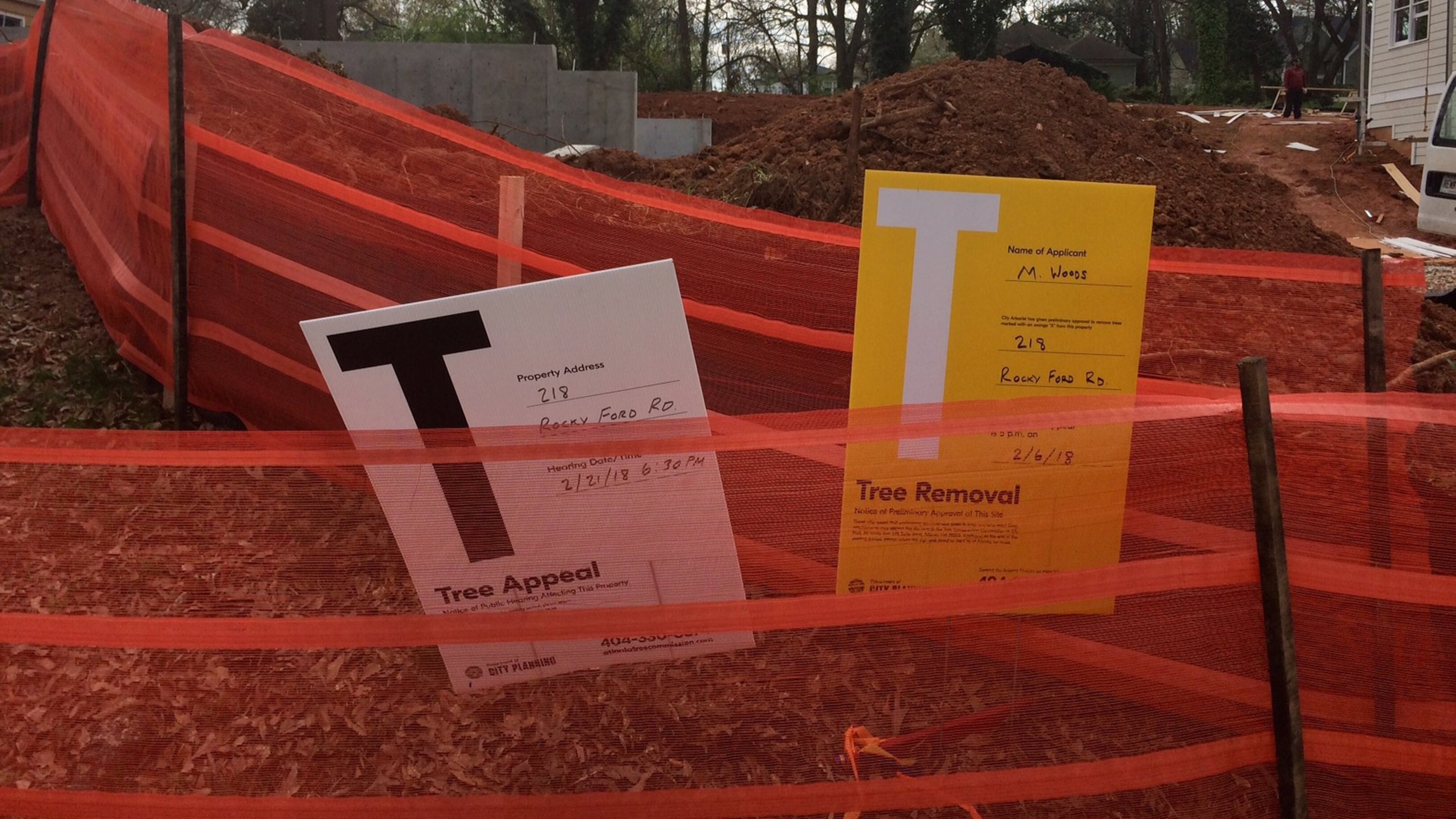

The city of Atlanta wants its tree canopy to one day be 50%. That means on a hot afternoon in the future you could duck into a tree-shaded area in half of the city’s 135 square miles.
That 50% figure is both random and aspirational. You have to aim for a target if you’re going to achieve it.
In 2008, a study of satellite imagery determined that 47.9% of the city was covered by tree canopy. Ten years later it had dropped to 46.5%, according to an ongoing study conducted by a Georgia Tech professor.
The latest study shows the tree loss is accelerating, down to 45.7%.
City in a forest indeed.
Atlanta has also become an increasingly popular destination. Its population is greater than ever, with about 530,000 residents. That’s more than the 1970 peak of 497,000 residents, and 35% more than 1990, when the city had just 394,000 residents.
That’s great news — except for the trees. They’re taking it right in their cambium.

Accommodating the new residents and businesses with more space means the sound of chain saws has become the unofficial bird call of Atlanta.
Georgia Tech professor Tony Giarrusso, in a presentation of his work to Atlanta City Council members this week, noted the city lost an average of 150 acres of trees each year between 2008 and 2023. That’s more than 2,200 acres, or 11 Piedmont Parks.
For years, single family home construction drove the tree loss. Smaller homes were scraped, trees were chopped, properties graded and McMansions erected in their place. This time around, much of the canopy loss was because of multifamily housing construction.
Both Giarrusso and Councilman Matt Westmoreland said that trend can be seen as a positive: you’re squeezing in more living space per downed tree.
Giarrusso said the biggest losses are in the city’s west, east and southwest sides, where more new construction is occurring.
The professor noted there are also some “false gains” — areas where mature trees were cut, projects stalled and scrub trees popped up over the years. Land like that qualifies as “canopy,” but those trees will soon enough get splintered when the bulldozers rev up.
Giarrusso also pointed to locations where public housing projects were torn down and trees have temporarily grown.
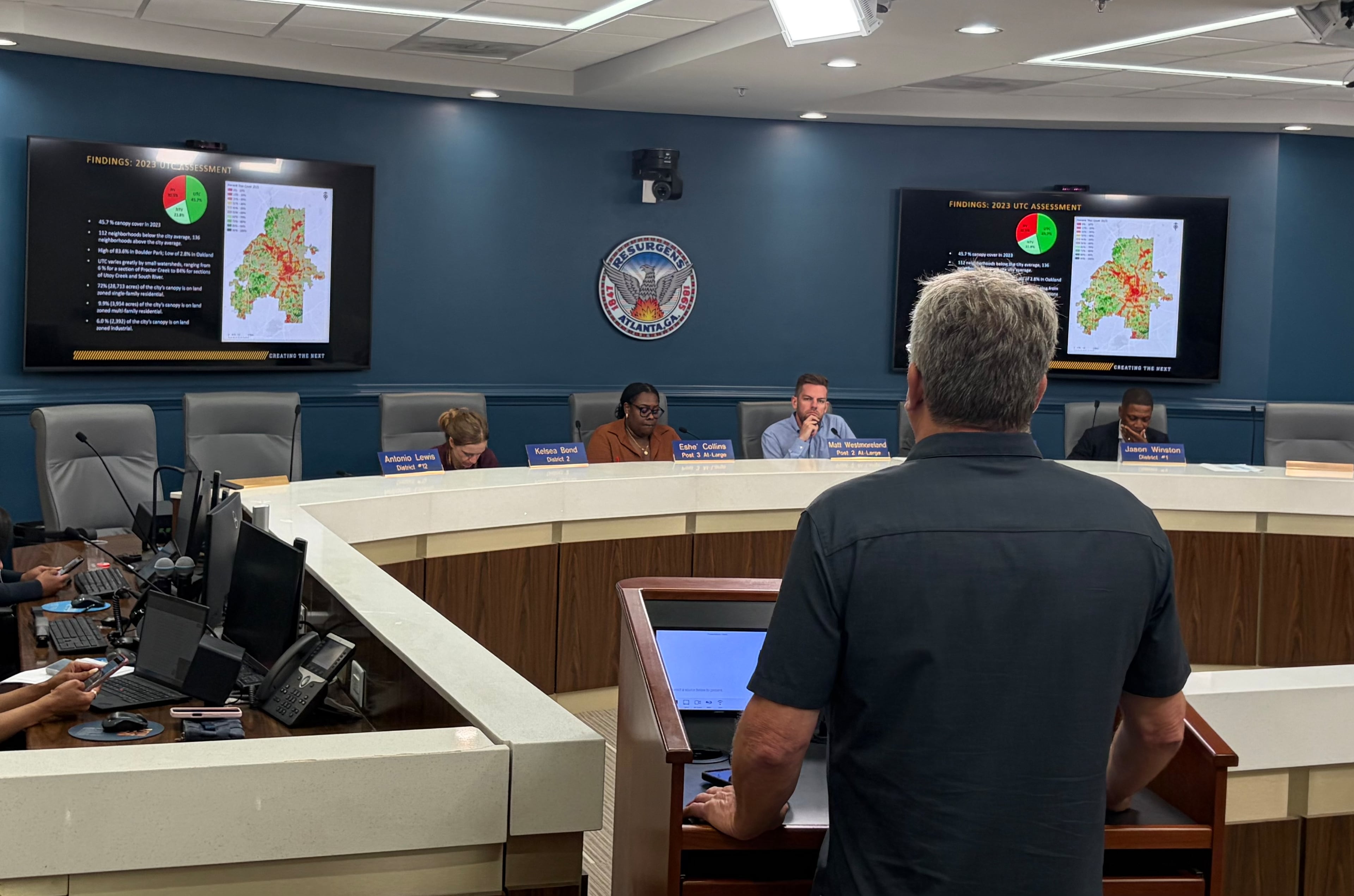
I’d wager that the 45.7% canopy noted in the 2023 snapshot is almost certainly a point or two lower now. Giarrusso does not disagree.
To reach that magic 50% goal (it kind of reminds me of the city’s Holy Grail of having 2,000 cops), Atlanta needs an additional 3,700 acres of trees, he said.
And each year that deficit number grows.
“It’s really in private hands to get that canopy number up,” Giarrusso noted, referring to the fact that the overwhelming number of trees are rooted on private property.
At the meeting, Chet Tisdale, a retired silk-stocking lawyer who once represented large developers and is now one of the city’s most fervent tree huggers, criticized the city’s new tree protection ordinance.
“We might as well call it the tree-killing ordinance,” he said about the law passed last year that took more than seven years to enact. “It’s doing permanent damage to Atlanta.”
The recompense fee, or the cost of cutting down a tree and not replacing it, has jumped significantly. Before, cutting down, say, an old tree with a 30-inch diameter was $100 to cut the tree plus $30 per diameter inch — about $1,000 total.
Now, at $140 per diameter inch, it would be $4,200.
But that doesn’t account for credits builders can get by planting new trees, saving others or building affordable units. Also, there are caps on the maximum a developer can be charged per acre.

An earlier, tougher version of the ordinance proposed to save “valued” trees, but Tisdale said last-minute lobbying for developers killed those preservation provisions.
Both Tisdale and Greg Levine, who heads Trees Atlanta, said cutting down a tree is still too cheap.
But it’s not just a question of trees getting cut down, Levine said. It’s a matter of the number being replanted, where they are sited and their quality.
I visited Trees Atlanta’s new office in Southwest Atlanta and noted a series of new townhomes being built directly across the street. The new structures are built right up to the sidewalk, with no easement by the street for trees.
He winced when looking across the road. The project was permitted before the new ordinance went into effect.
“We need to do a better job of planting and replanting,” Levine said, adding: “We have to make sure we’re planting trees for more than just five to seven years.”
He was referring to the vast number of trees, badly planted and poorly maintained, that die after just a couple years.
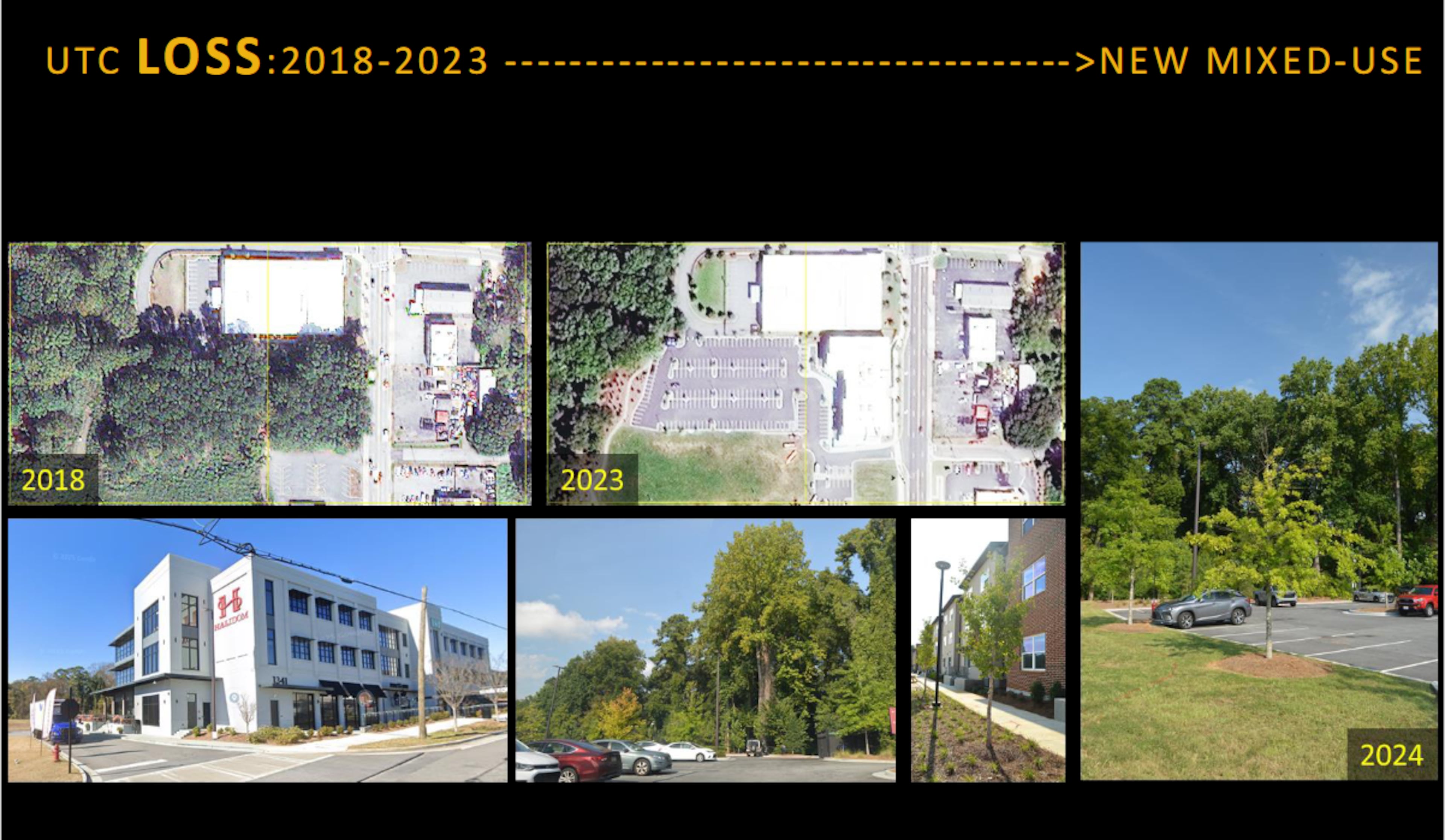
City figures show the same number of trees have been replanted this year compared to the same time period last year — about 1,700. That does not seem like a lot.
Jim Cheeks, a longtime developer who builds affordable and middle-income homes, said the new ordinance is onerous for those in his price category.
He said the middle-range houses — $400,000 to $500,000 — “just aren’t going to get built in an area with a lot of trees.”
Cheeks said wavers and credits for building affordable housing works for those building apartments but not for those constructing single family homes.
“Nobody is happy with it,” he said of the new ordinance.
That sure sounds like life in 2026 on many fronts.