Dispel myths about Cumberland Island with some facts about the community
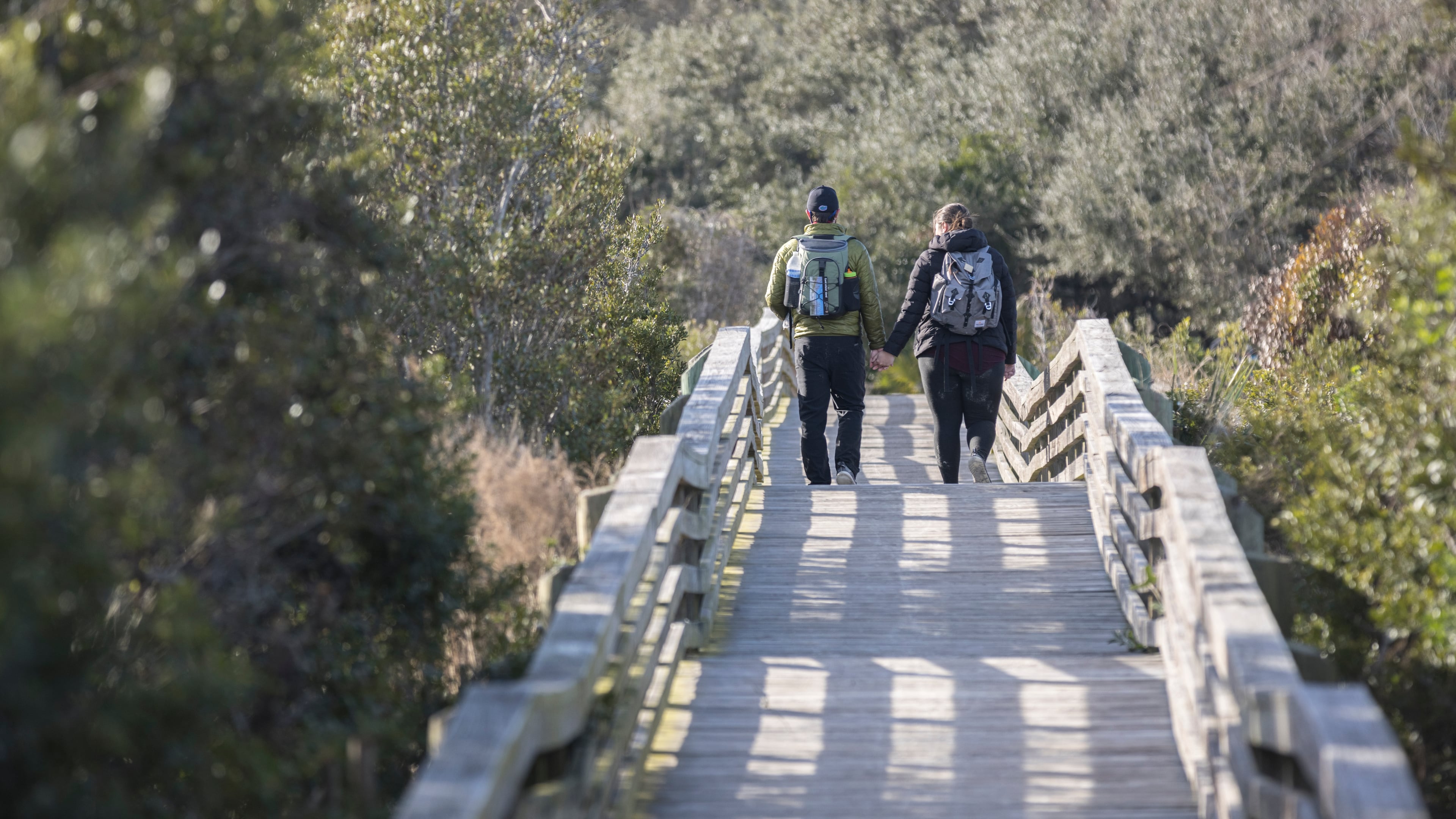
News about proposed land swaps on Cumberland Island may have muddled the issue, and I hope to provide a firsthand account that could help.
As a priest who has served parishes for over 40 years (Blessings to you!), and as a person who has had deep and loving interests on Cumberland, I write against the fear and anxiety. I write for broad and generous community.
Cumberland Island is more than an island. It is a community, and its spirit is generous. One might sense that it is a spiritual community, where different individuals live with each other: flora and fauna, people and animals, even the holy and humanity.
Some people love the myth of Cumberland. Some people love the reality of Cumberland. The myth and the reality can both be wonderful and fun, but they are different. The myth is an assembly of images and fantasies about a place that supposedly has never been touched by human hands. Some people enjoy the myth, and thrive on the myth, without ever needing to actually visit the island.
The reality of Cumberland is full of bugs, sand, heat and cold. Despite those challenges, people have long been part of Cumberland, and are still a part of Cumberland; that, too, is the reality of Cumberland. People have owned land there in all sorts of ways. Most of those people live as good neighbors with the government.
In fact, Cumberland is big enough to welcome both the public visitor and the private property holder to enjoy its beauty.
Contesting the notion of the island as ‘primitive’
Cumberland is a community large enough to allow both natural wonder and cultural history.
I am a priest, someone who loves to bless people. Blessing is part of my spirituality. I believe that blessing nurtures the world far more than cursing does. From my experience serving churches and religious communities, I also know that their worst enemies are often the fundamentalists. Fundamentalism has harmed healthy religion in many a denomination, fundamentalists who cling to only one text or one dogma and refuse to be open to wider truths. Fundamentalists create cults, cults of credulous people. Fundamentalists damage community.
The environmentalist community is subject to the same threat as religious communities. On Cumberland, environmental fundamentalists cling to a notion of “primitive” that is not accurate. Cumberland Island has nurtured humanity and culture for centuries — through prosperous times and oppressive times, positive times and negative times. And Cumberland has endured.
One of its several turning points was when private landowners turned to the National Park Service to buy most of the island, as a way to keep a major developer from creating another overdeveloped island.
The Park Service did not buy all of the island. Later, some parcels of Cumberland Island were offered for sale, and the National Park Service did not arrange to buy them. Some private citizens did buy the land, with the full intention of continuing a careful and loving stewardship of the island.
Little Cumberland Island, too, is part of the national seashore, but it is mostly privately owned. Greater Cumberland is big enough to do that, too; it is able to be a national seashore, and yet contain private land — just like many other national parks have private inholdings.
Cumberland is big enough to nurture diversity
Land swaps between national parks and private landowners are also not unusual across the country; they are for the public good. In fact, the Park Service has completed other land swaps on Cumberland Island itself since its creation as a national seashore.
It is my understanding that the swaps under present consideration will be overwhelmingly in the public interest, resulting in a net gain of public land, directing residences away from areas enjoyed by the public. I know of no plans for “Gilded Age” mansions.

The families who continue to own private land on Cumberland have been there for a long time. Those who have remained have a solid history of respect and care for the island. We have taken care of turtles and tended terns.
We have cared for tortoises and oystercatchers. We are proud of how we have worked with the Park Service toward allowing Cumberland to be a big and generous community. Cumberland is big enough to nurture many different people and many different interests at the same time.
Public and private have a history of working together on Cumberland. Private landowners and park staff have a history of working together. We are neighbors. We know each other. We respect each other. We have blessed each other. That is the reality of Cumberland Island; it is not a myth.
Sam Candler is an Episcopal priest who blesses the Peachtree Road Race, and has had a long love and interest in Cumberland Island.
Send letters to the editor of 250 words or fewer with your name, city or town and contact information to letters@ajc.com.