Reading romance novels is an act of resistance
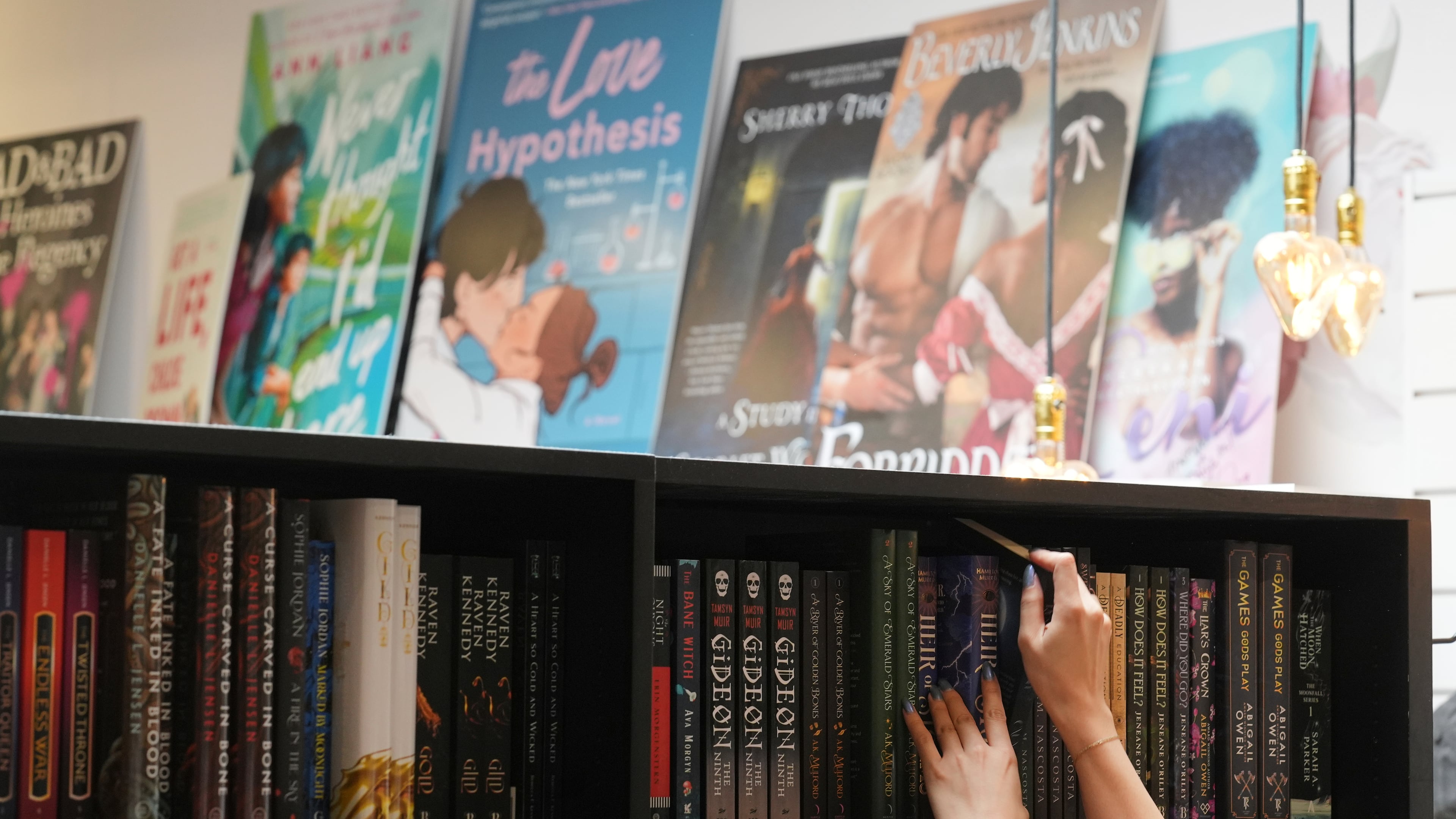
There is something special about entering a space where women are celebrating and exuding joy. In a cozy cocoon of 3,000 women gathered during the last weekend in May, there was an abundance of laughter, geeking out over favorite books and connecting with strangers as if they were old friends.
The Black Romance Book Fest returned to downtown Atlanta for a second year, and even though the event had doubled in size, it still felt intimate, bringing authors, fans and other creators together to celebrate Black romance.
Last year, I attended the event out of curiosity.
This year, I attended with purpose.
Reading romance novels — a genre created almost entirely for women by women — has become my small, pleasurable act of resistance at a time when response to the global backlash against feminism has fallen short.
Even though it has been the top-selling and highest-grossing genre of fiction in the United States since the 1980s, many book industry insiders still consider anything labeled romance to be trivial and unserious.
Like some readers, I had fallen into the trap of devaluing stories that center women’s desires and guarantee the requisite happily ever after.
But in 2020, with everyone locked down and looking for a mood boost during a period of grief and uncertainty, print sales of romance books hit 18 million copies. By 2025, that number had grown to 44 million.
So much of what I believed about romance novels was solidified in the days when images of women falling into the arms of a bare-chested Fabio defined the genre.
It was a world that may have featured interesting women, but not women who looked like me. The genre’s glaring lack of diversity has been a persistent pain point.
Only recently did I learn the depth of Black women’s erasure from the romance genre, both on and off the page.
I had never heard of Black women writers like Frances Harper, Pauline Hopkins and Zara Wright, who pioneered historical Black romance beginning in 1892 through 1920, with stories featuring Black protagonists that highlighted the sociopolitical issues of Black people in the nineteenth century.
These women used romance to write themselves into a broader narrative of the country and show they were worthy of love and respect.
“Love, historically, was not allowed for us,” said Angela Banks, a licensed professional clinical counselor and founder of the Clarity Couch in Ohio.
“It is inspirational for Black women to be able to see themselves in a space where we are normally kept out of that space.”
In the world of contemporary romance, Vivian Stephens, a Black woman, was nearing age 50 in 1978 when she was hired as an associate editor at Dell and assigned to Candlelight books, a competitor of Harlequin, which then dominated the romance market.
Stephens knew American women wanted stories that reflected their everyday lives, and she searched for writers who could deliver. Her success earned a quick promotion to editor-in-chief, and she expanded the imprint by launching a steamier line and contracting Black, Latina, Asian and Native American women to write romance novels that told more diverse stories.
In 1980, Stephens used her influence in the publishing world to corral the money and sponsors needed to establish the Romance Writers of America. Rita Clay, a white author who sought camaraderie with other romance writers, relied on Stephens to help make RWA a reality.
Things started off well enough, but by 1983, differences in the vision for the group led to Stephens’ departure, which she felt was forced. The Houston-based group was functioning more like a sorority with mean girls at the helm than a supportive environment for all romance writers and enthusiasts, according to a 2020 article in Texas Monthly.
In 2019, a series of events upended the organization. That was the first year in the organization’s 40-year history that a Black romance writer, Kennedy Ryan, won its highest honor, the Rita Award. It was also the year Courtney Milan, a Chinese American author, was banned from the RWA board for calling out fellow romance writers’ use of racist tropes in their work.
After public outcry and internal turmoil, the board reversed the decision against Milan, but RWA never recovered. In 2020, yet another racist trope appeared on the cover of the in-house magazine, and in 2021, the group awarded and subsequently rescinded a prize to the author of a novel in which the main character upheld Native American genocide.
RWA filed for bankruptcy in May 2024. Membership had dropped from a high of 10,000 to a low of 2,000 despite the ongoing boom in the romance industry.
As the elders might say, God don’t like ugly … or racism … or prejudice.
This is the landscape in which an event like the Black Romance Book Fest, organized by Atlanta-based author Lauren Lacey, has found its footing. The mission, Lacey said, is to amplify the voices of Black authors, creators, readers and illustrators across the literary community.
It feels like the antithesis of what I imagine RWA must have been.
So, when I listened to authors like Chassilyn Hamilton describe how she processed her experience with pregnancy through the female protagonist of her novel “Spontaneous Soulmates” or Evelyn Latrice express how our immersion in patriarchy leads us to hold a narrow view of female main characters in Black romance novels, I listened with intention.
Kicking off my summer with the Black Romance Book Fest, discovering and supporting new authors and being in the company of fellow readers, allows me to remain steeped in joy while pushing back against a painful past.
Read more on the Real Life blog (www.ajc.com/opinion/real-life-blog/) and find Nedra on Facebook (www.facebook.com/AJCRealLifeColumn) and X (@nrhoneajc) or email her at nedra.rhone@ajc.com.