New Black roller derby team won the gold, but its bigger victory is inclusion
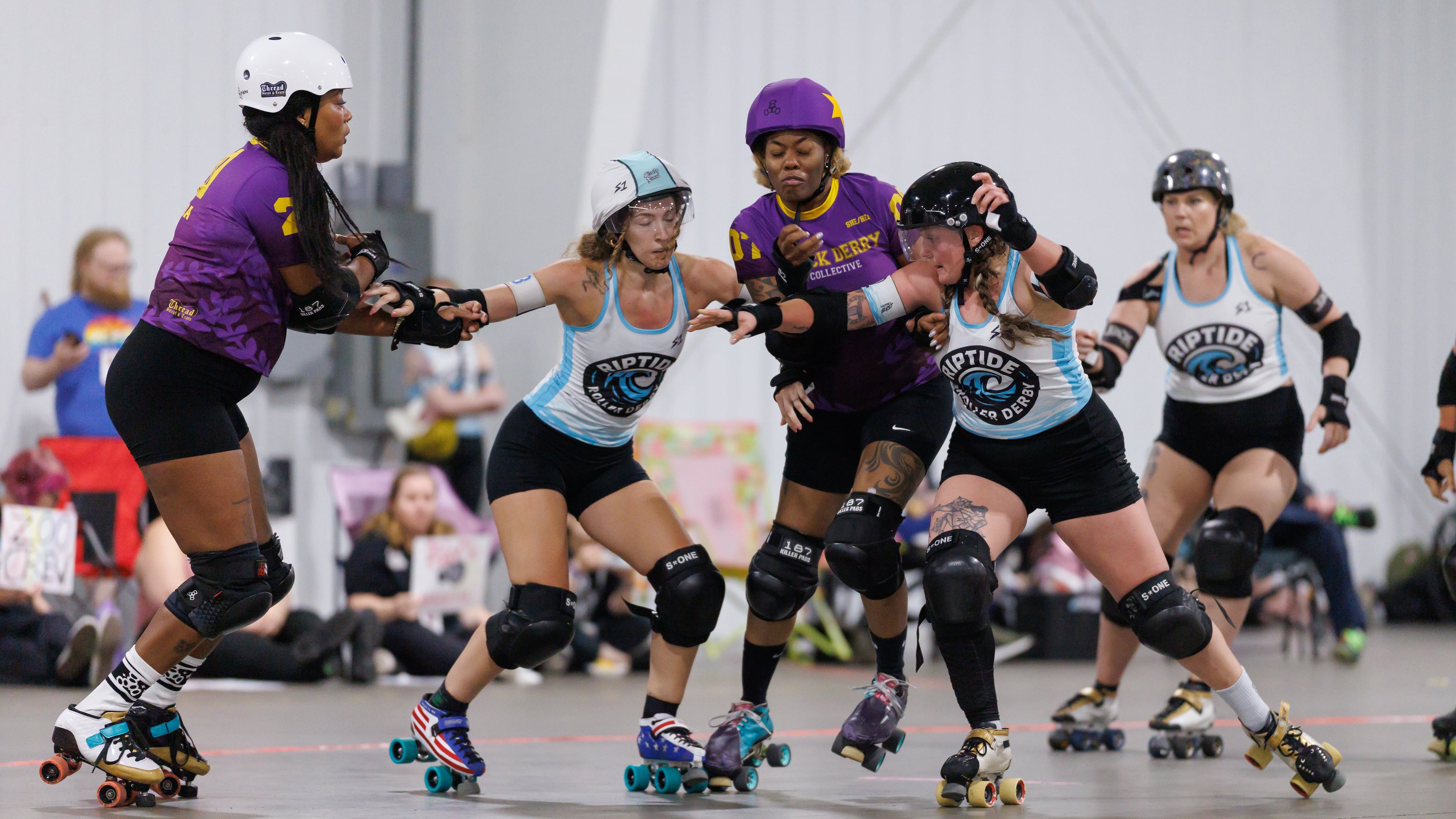
There is a ritual for Black skaters in the world of women’s roller derby. If they see more than three Black skaters at a bout, they take a picture and post it to social media.
In late May, when the Black Derby Collective competed in Columbia, South Carolina, at regional playoffs, they didn’t need a photo to document their presence. Their skill, talent and determination as the only all-Black roller derby team sanctioned by the Women’s Flat Track Derby Association earned them a first-place win and a trip to the global championships in Sweden this fall.
For many Black derby skaters, the moment was much-needed validation and affirmation of their existence in a sport where inclusion is part of the historical narrative but not always the practice. It could also be a moment that helps change the sport for the better.
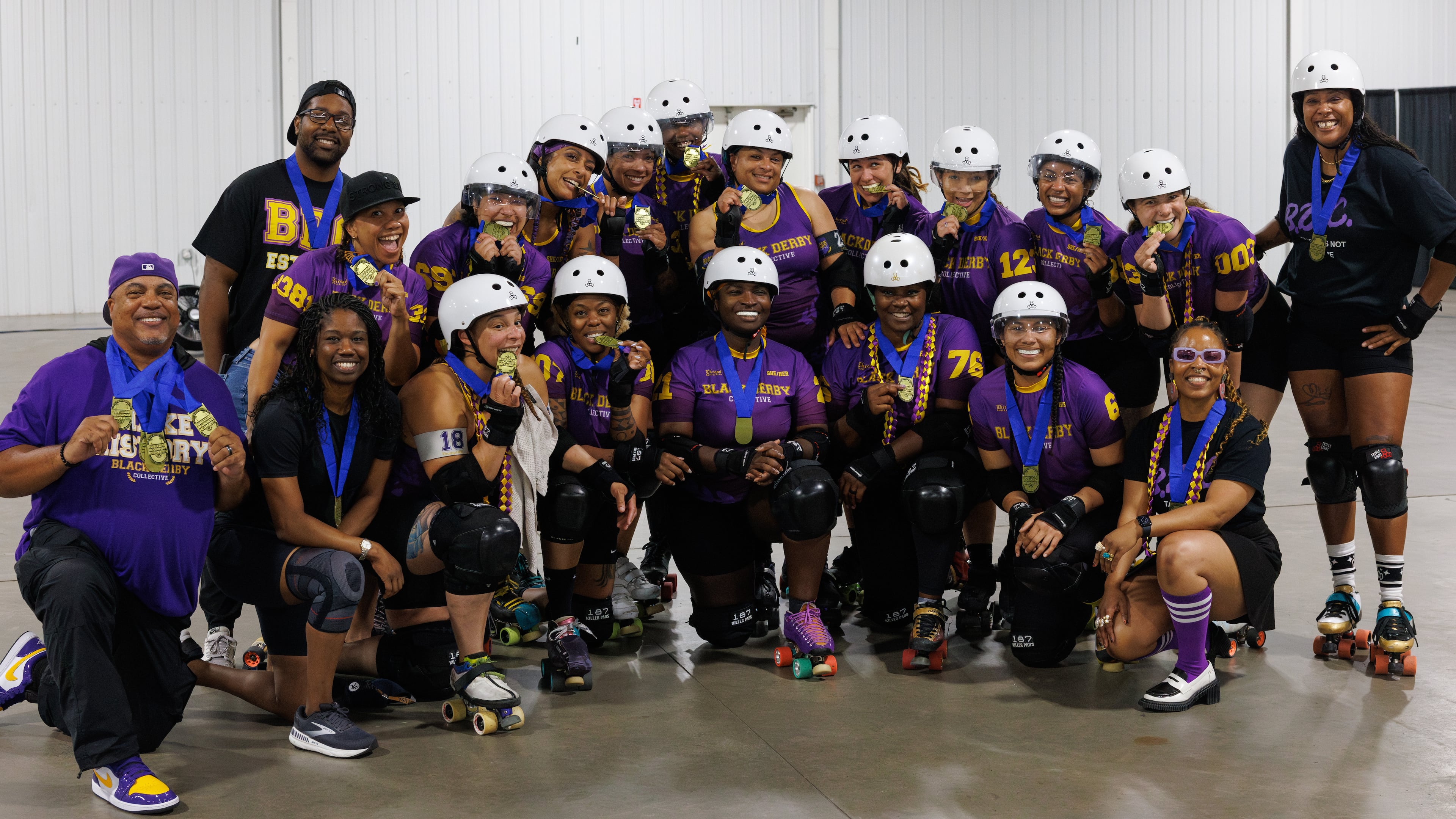
Five members of the Black Derby Collective are affiliated with Atlanta Roller Derby, and as team coach Marquishia Winters and skater, Jacqueline Thermitus, aka Blaque Jac, tearfully recounted in a postgame interview, establishing the league and getting to the first-place win was a hard-won battle.
“I have another baby, and it’s this team,” said Thermitus, who is a new mom. “We set a goal, and we didn’t even expect to be here … this is like the cherry on top.”
While Roller Derby roots date back to the late 1800s as multiday, endurance events, the modern version of a contact sport evolved in the 1930s as a speed race on a banked track.
Popularity peaked in the 1970s when televised derby bouts prioritized drama over athleticism and gained millions of viewers. During this “golden era,” I recall watching on Saturday afternoons and maybe seeing a single Black skater on the track. To my eyes, roller derby was a sport where Black women were the exception.
After a decline, efforts to revive roller derby culture struggled until 2001, when a group of women from Texas reimagined it as an athlete-owned, flat-track sport with new rules, a return to athleticism and a foundation that prioritized intersectional feminism.
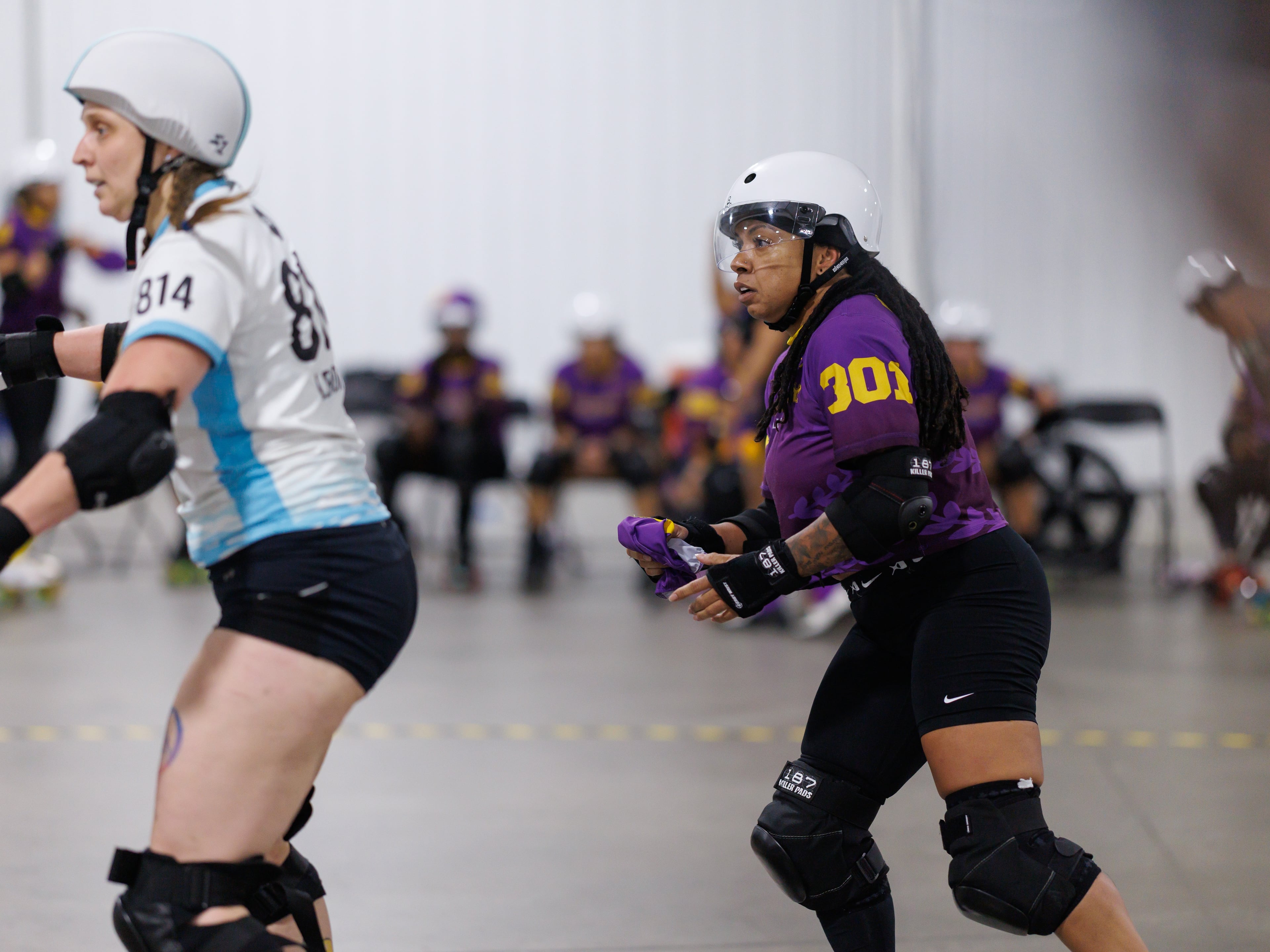
That approach held strong appeal for athletes like Donita Green, aka Blaxyl Rose, who first learned about roller derby in 2017 when the Columbus gym where they worked sponsored a team.
“I didn’t even know there was a full-contact sport I could play as an adult,” said Green, who uses they/them pronouns. “To be in a full-contact sport where I was not surrounded by cis men was where I wanted to be.”
Despite derby’s inclusive foundations, skaters from Black, Latina and Indigenous backgrounds have documented many forms of discrimination during bouts and in the derby community. Officiating biases are reflected in disproportionate penalty calls on Black skaters for hard hits or when officials identify Black skaters by their skin color instead of their jersey color.
Skaters of color have also challenged the expectation that non-white players should adhere to standards of white feminist culture. They have battled tokenism as the only person of color on the team.
Team Black Diaspora, Team Indigenous, Jewish Roller Derby and Fuego Latino Roller Derby — borderless teams created as empowering spaces for identifying members from around the world — have been excluded from tournaments.
As one of two Black skaters in a small town where Confederate flags and Jell-O shots were part of game day fun, Green knew they needed to find a team with more diversity.
Atlanta Roller Derby had more Black skaters than they had ever seen in one place, and by 2019, they made the roster of the Atlanta Rumble Bs, the b-level travel team. At playoffs that year, witnessing an all-Black lineup from ARD take the track, Green was inspired to continue reaching for the highest level of play.
But then Green was in a car accident and suffered a broken neck. “I didn’t know if I would walk again,” they said. They suffered nerve damage on their right arm, and their neck is fused. With the help of family, friends, a new fitness regimen and a trainer who helped them get faster on their feet, in 2023, they were ready for tryouts in Los Angeles, where they had moved in the later years of the pandemic. In 2024, they made it to playoffs but were relegated to cheering from the bleachers. They soon returned to Atlanta and ARD.
“I knew I was a better player and better on the track when there are other Black skaters, as a person who struggles with confidence and feeling valued, especially on competitive teams,” Green said.
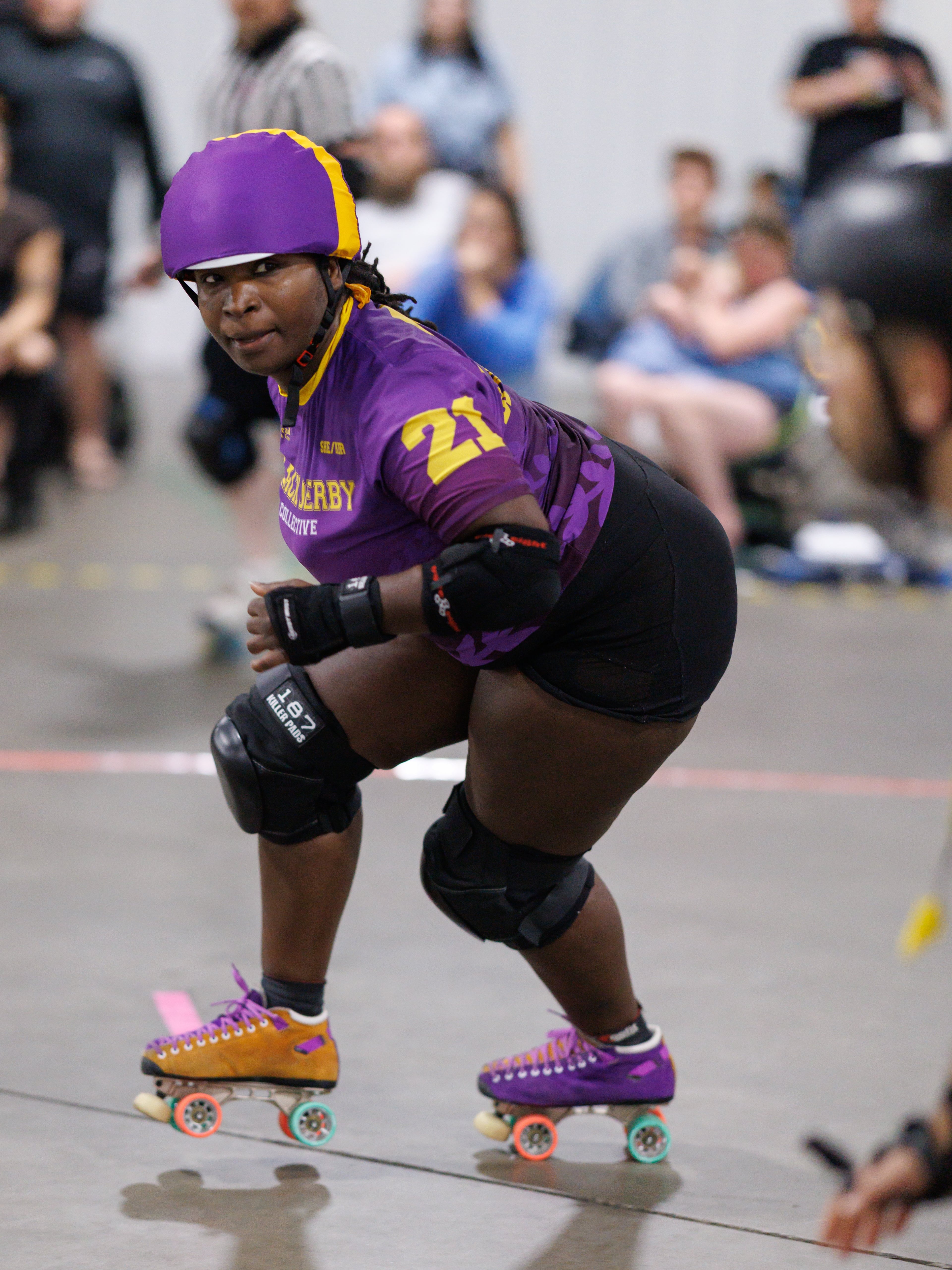
Last fall, they were invited to try out for Black Derby Collective, which was sanctioned by WFTDA in September 2025. Initially, the team struggled to book the required 5 matches needed to qualify for playoffs. Other teams didn’t want to play them because, as a new team with no ranking and some of the most legendary skaters in the roller derby, potential competitors feared they had an unfair advantage over smaller regional teams.
The Collective was only able to practice together once, but the team managed to win four of their five games, most of which were played across two weekends.
At playoffs, they took the gold, but it wasn’t light work. “We were down in some games, and we struggled. We didn’t blow anyone out at playoffs,” said Green. During a tough moment, Green said their teammate, Maisha Cerqueda, aka Queen Loseyateefa, turned to them and said, “We need you.”
“That was all I needed,” Green said. “On this team, you are not treated differently. You are allowed to be you.”
Roller derby still has a long way to go toward inclusion, but skaters of the Black Derby Collective have become the newest ambassadors of change, forcing the sport to uphold what it says it values.
“Black Skaters are being seen and heard in ways they never have before,” Green said. “We are empowering people in a sport where it is hard to feel that way.”
Read more on the Real Life blog. Find Nedra on Facebook, X, Instagram, or email her at nedra.rhone@ajc.com.