Sly, sneaky or annoying, Rick Jackson has taken the lead in Guv race
You can’t help but almost feel a twinge of empathy for poor ole Burt Jones, the Trump-endorsed lieutenant governor who once saw it as inevitable that he’d be governor.
But these days, the pfffffft sound you might hear at the state Capitol is the air going out of his campaign.
The one-time front-runner in the Republican primary has been relegated to No. 2, the result of a $100 million Mack truck running him over.
Rick Jackson, a billionaire health care tycoon, a man with sly smile and reptilian gaze, is the guy driving that truck.
His campaign estimates he’ll spend $70 million on the GOP primary — of his own money, that is. He’s the latest Daddy Warbucks digging into his own pockets to fulfill political ambition.
The intriguing part of this campaign — other than Jackson emerging from nowhere in February to quickly become the leader — is the shadowy group that for months has been beating the tar out of Jones.
Starting in late November, a group named Georgians for Integrity started bombarding TV viewers with ads framing Jones as a self-serving schlemiel, a rich kid who cooks up deals to benefit the family corporation and his own greedy self.
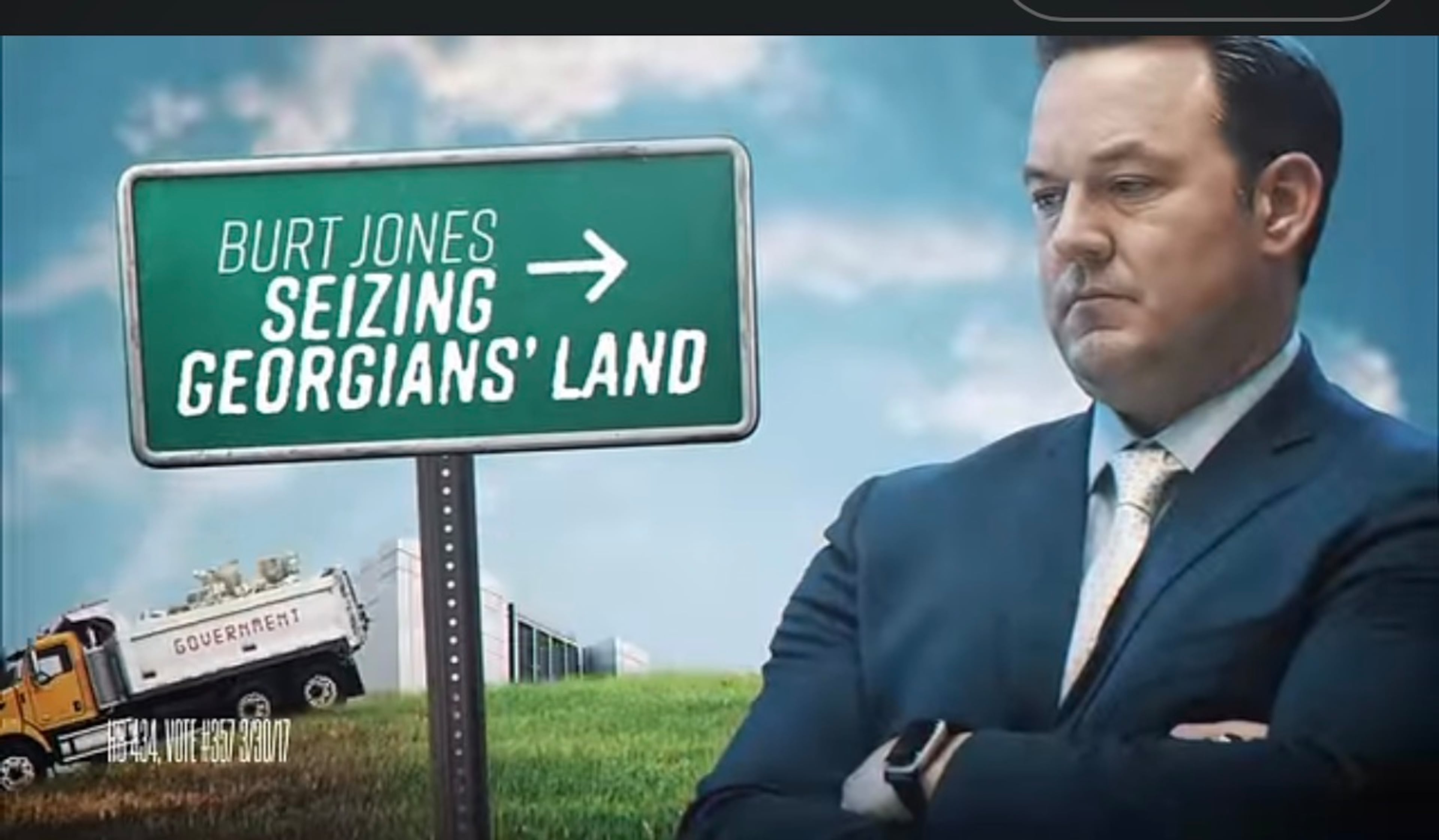
These ads, mind you, started more than two months before Georgians knew about Rick Jackson’s rags-to-riches story of an orphan becoming the billionaire health care czar. It’s a tale now well known to anyone who owns a TV.
At first, the thought was the ads might be the work of the other GOP candidates, Secretary of State Brad Raffensperger or Attorney General Chris Carr.
Nope, they said. Besides, they don’t have that kind of cash.
The ads, costing more than $20 million so far, were funded by dark money from a faceless company set up in Delaware. (This is in addition to Jackson’s $70 million-plus blitz.)
It’s made possible by the 2010 U.S. Supreme Court decision in Citizens United v. Federal Election Commission, which opened the floodgates to corporations and special interest groups spending money in elections. This kind of thing makes Americans hate politics even more.
In early February, Jackson descended in a glass elevator at his company’s opulent headquarters to announce himself as a candidate for governor.
He immediately picked up on the theme of those anonymous ads, calling Jones “a so-called front-runner who was weak as can be and as lazy as the day is long.”
Then he said all the predictable GOP stuff: He’s tough on crime, wants tough immigration enforcement and has no use for the wokes.
His sudden entry into the race seemed to solve some of the mystery of who was behind the anti-Jones ads.

The strategy reminds me of World War I trench warfare. Before sending soldiers over the top, each army would soften up their opponents with heavy artillery barrages.
This seemed like that, but Jackson and his hired Hessians insisted he had nothing to do with those cannons.
I mean, it seems like it had to be him. Who else has an extra $20 million lying around to beat up on some hapless politician? The ads from (Sneaky) Georgians for Integrity benefited him, right?
But, again, they say it wasn’t him.
Perhaps it’s some shy rich guy who Burt Jones pushed around in middle school.
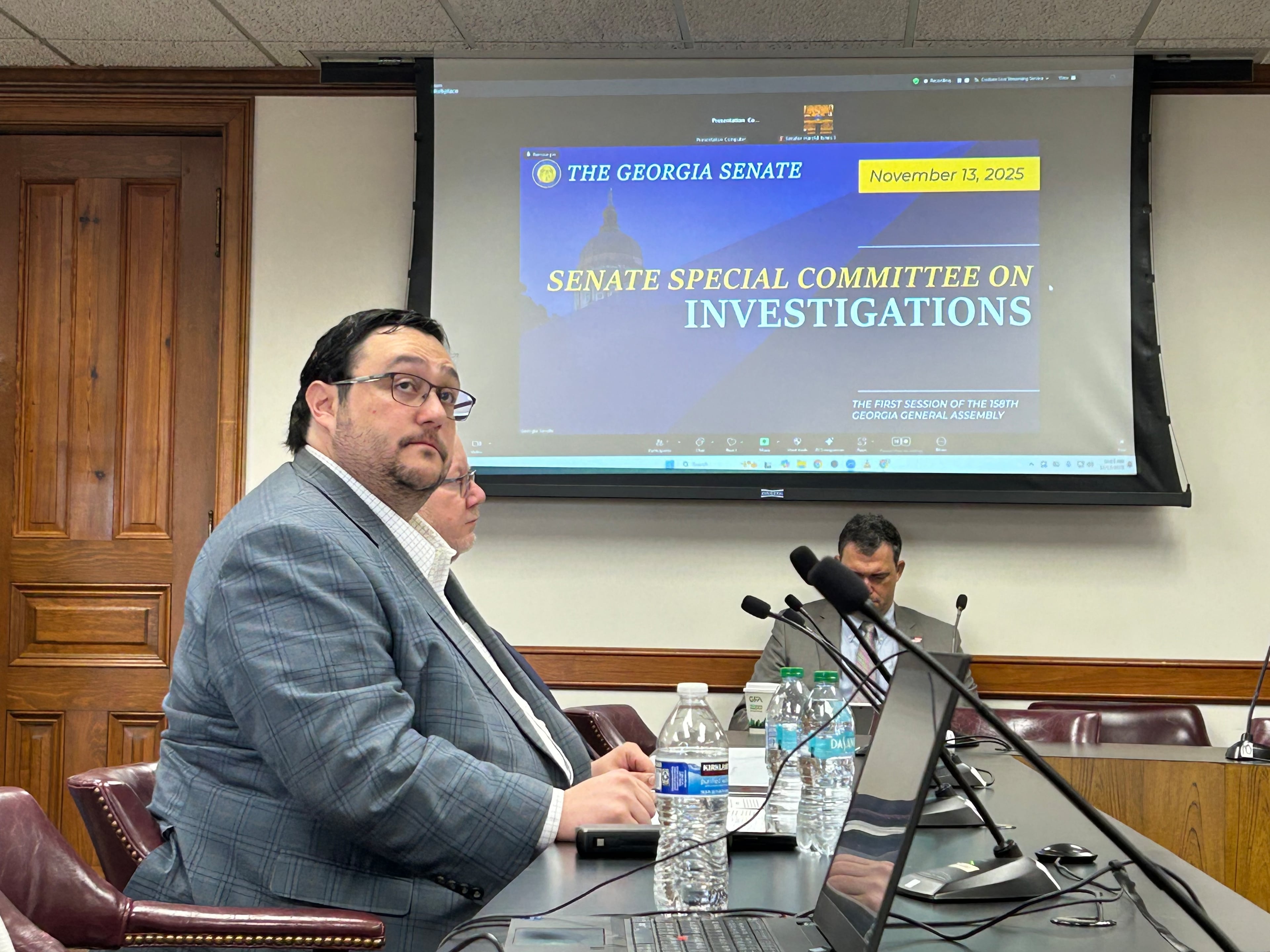
There have been efforts to unearth who’s behind all this Integrity. The State Ethics Commission filed charges against the group, accusing it (whoever it is) of violating Georgia lobbying and campaign finance laws.
Ethics Commission chief David Emadi explained to his board the fruitlessness of the investigation so far: “We’ve gotten nowhere in trying to find out who Georgians for Integrity are. We know it’s a Delaware corporation making ad buys out of Utah with a Florida man ... using a charge card from Montana.”
Add to that it was incorporated by an Ohio attorney and its local address is a mail slot at a Staples on Ponce de Leon Avenue in Atlanta, purchased by a man who may well not even exist.
It’s a shell company wrapped in an enigma protected by high-paid lawyers.
Jackson, who had previously donated to Jones’ campaign, has insisted the mysterious ads in December and January got him wondering about candidate Jones.
One might even suppose what spurred Jackson into the race was the lackluster GOP field. In several polls last fall, Jones led his two opponents with about 24% of potential voters — and with 55% favoring a candidate named “undecided.”
One cagey touch came last fall when a Jackson aide approached Jones and asked him to record a testimonial in support of Jackson and his work for foster kids. The aide, who was not a campaign staffer, even gave Jones a script to read saying what a big-hearted fellow Jackson is.
Months later, when Jones started firing back with his own ads, Team Jackson trotted out the tape of Jones praising him. They then cut ads to call the hapless Jones a hypocrite.
One could call this masterful. Or dastardly. It just depends which side of the ad buy you’re on.
“It was for foster kids,” Jones told me this week. “Who’s going to say no?”
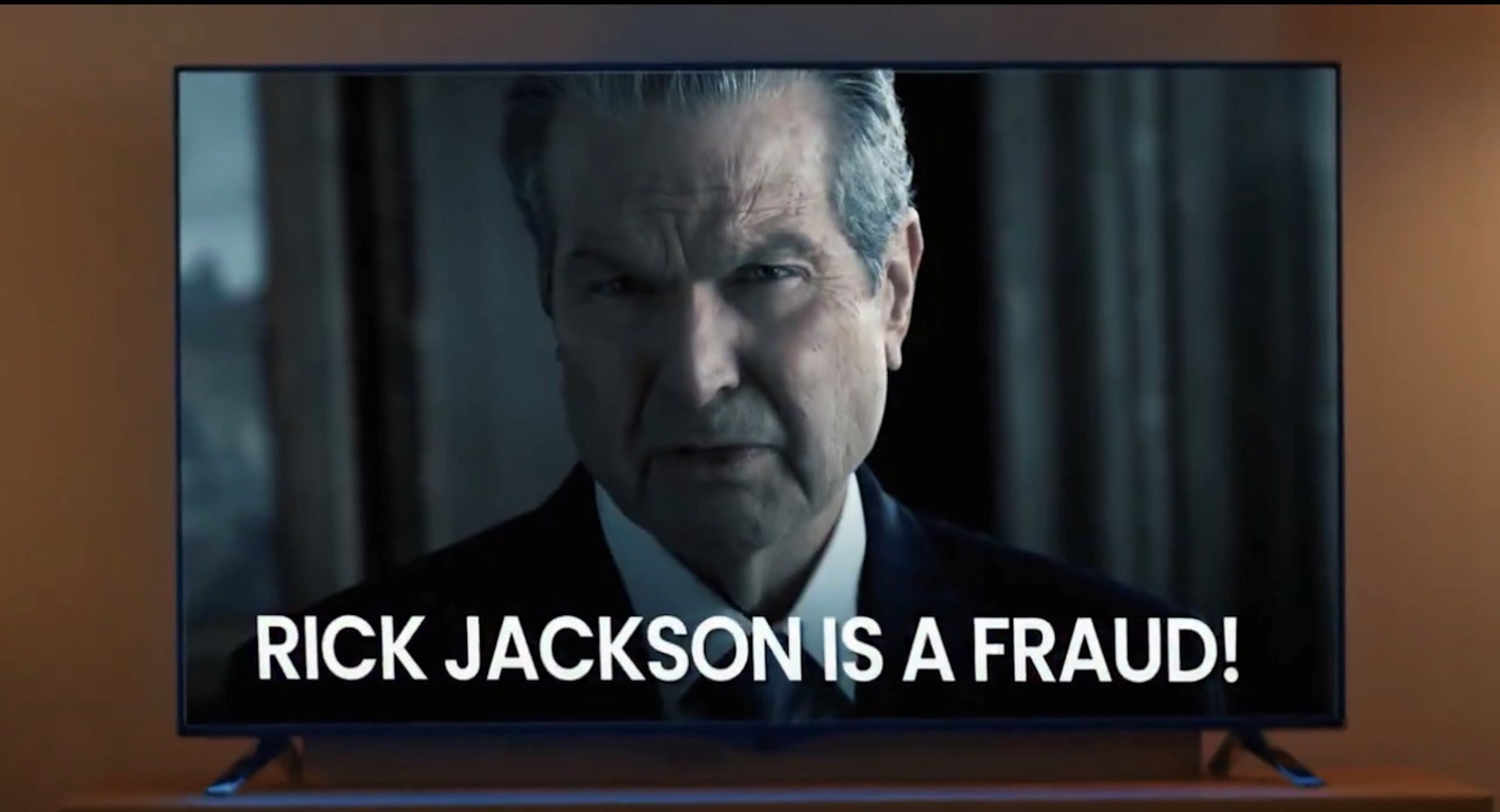
Jones is sure Jackson is behind the shadowy ads. The constant barrage between the anonymous ads and the tens of millions of Jackson’s dollars have put him in the lead. Jackson has been polling with over 30%, with Jones still hovering in the low 20% range.
“Well, $100 million can make a pig look like a prom queen,” Jones told me.
A few days ago, my colleague Greg Bluestein noted that the same Ohio lawyer who set up Georgians for Integrity signed the paperwork for another Delaware dark money group to wage an attack-ad war against Blue Cross and Blue Shield of Alabama. It turns out Jackson’s health care company is in a legal battle with the insurance giant concerning a hospital in Montgomery.
Another cowinkydink? Yep. Team Jackson is sticking to the story they had nothing to do with the Georgia group.
In this age of Trump, candidates have learned to stick to their “truths,” no matter what the facts really are.