Debate over South Atlanta mural is an opportunity to rebuild trust

A week after the mural commemorating the 1906 Atlanta Race Massacre was unveiled in South Atlanta, murmurs of concern rose among residents.
Some of them were troubled by the mural’s depiction of violence. And some residents, even those unbothered by violent images, wondered why the community had not been involved in the process.
The mural, commissioned by the National Center for Civil and Human Rights and created by Atlanta artist Fabian Williams, was meant to offer reflection on the events of September 1906, when at least 25 Black men, women and children were killed by white mobs during a four-day reign of racial terror that was stymied when it reached the historically Black neighborhood then known as Brownsville.

Response to the mural has highlighted the delicate dance between neighborhood residents, artists and other stakeholders in the creation of community art, particularly when that art depicts people and events rooted in the community’s history.
On the side of a building managed by Focused Community Strategies, the mural features images of Black citizens reconstructing a home, looking proudly toward the future, and in a smaller panel, aiming a knife and gun at an unseen assailant.
A central feature, inspired by an illustration in a French newspaper that reported on the massacre, is a white man choking a Black man. Some residents believed this image minimized the resilience of Brownsville residents who stockpiled weapons and forced the mob out of their neighborhood.

At a meeting last month, designed to address community concerns, Marvin Nesbitt, president of FCS, acknowledged they had “dropped the ball” on engaging the community in conversations about the mural.
“FCS has been working in this neighborhood, in this community, for 25 years, and you all have become used to a process where you know before we act on behalf of the neighborhood,” Nesbitt said in an interview with Capital B.
A small blue sign in the window of FCS Owned Community Grounds offered a public apology and noted that, based on community feedback, the mural remains a work in progress.
R. Candy Tate, an art historian and chair of the Coalition to Remember the 1906 Atlanta Race Massacre, referenced the history of community engagement in murals, specifically the 1967 Wall of Respect in Chicago. As Tate suggested to the Capital B reporter, if the community isn’t proud of a mural, then rejection is more likely.
But there is more that residents and stakeholders in South Atlanta can take from the story of Chicago’s Wall of Respect: insight into a process that has always been imperfect.
The late 1960s brought renewed interest in community art, a term that surfaced as early as the 1930s. For a long time, the idea of community was centered around consensus, but in 1965, during Chicago’s Black Arts Movement, the moment that birthed the Wall of Respect, a new notion of community evolved, one that centered negotiation instead of the erasure of differences.
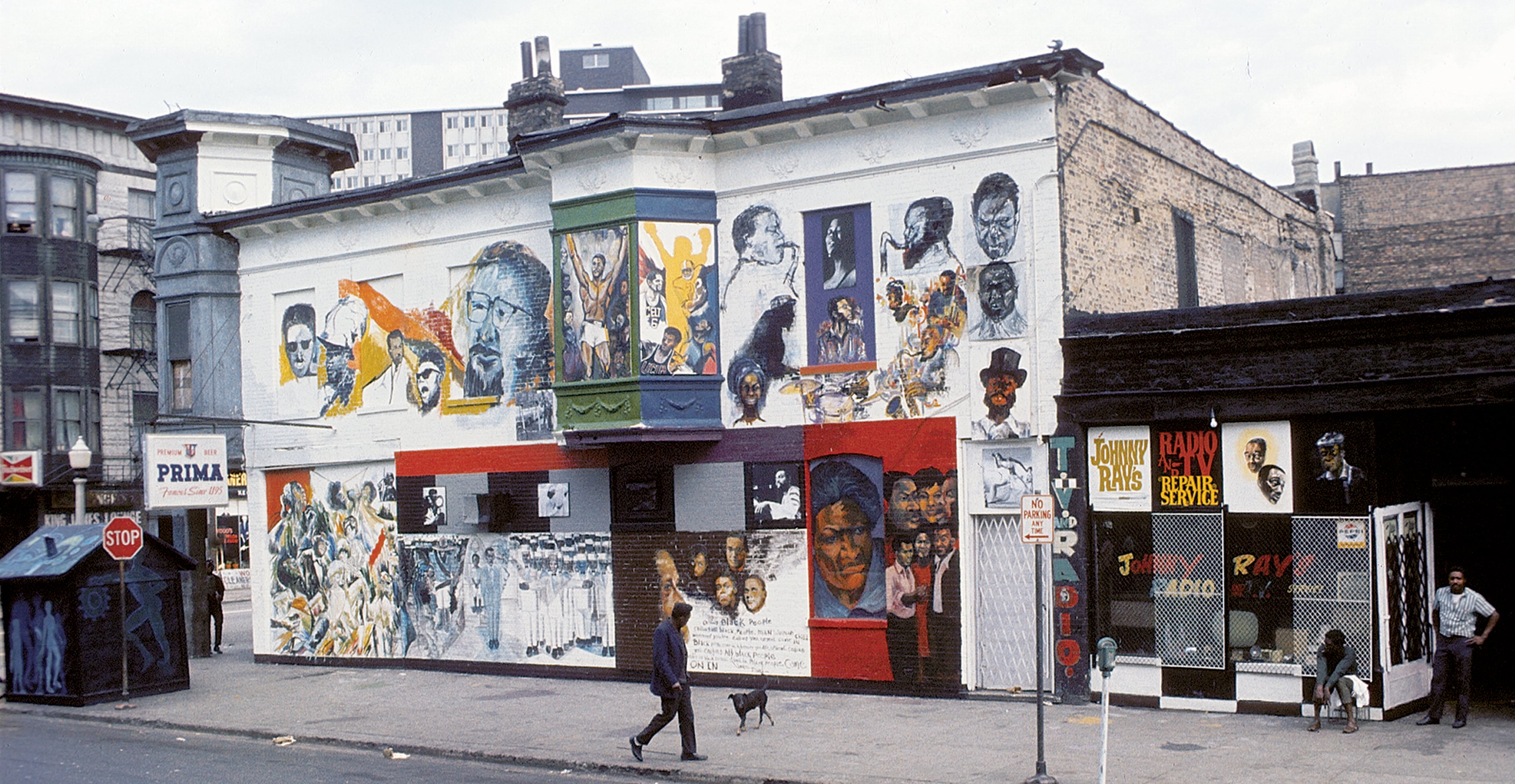
As Rebecca Zorach described in her 2019 book, “Art for the People’s Sake: Artists and Community in Black Chicago, 1965-1975,″ Chicago BAM artists made a point of developing relationships with the community. They recognized that children, parents, business owners, social workers and artists all had a unique point of view.
“Community was not simple, and it wasn’t presumed to be so,” Zorach wrote. But even this awareness didn’t always help artists integrate their artistic work with the concerns of the community.
The Wall of Respect was first unveiled in August 1967. It featured images of notable Black people in the fields of art, music, politics and more. By October, the mural had already undergone small changes because of dialogue between residents and the artists.
A portrait of Nina Simone was revised because one resident thought it was “ugly.” In the political mood of the time, residents felt more aligned with Malcolm X than Rev. Martin Luther King Jr., whose image was not included on the wall.
Reflecting on the process, one artist said, “the mural was conceived through the response and criticism of the community.”
But things went left when William Walker, an artist who had experience with large murals, made a unilateral decision to whitewash and repaint a section of the wall. A process that had once been collaborative shifted, leaving feelings of broken trust.
Though community members would rally to preserve it during its five-year life span, by 1972, the Wall of Respect was demolished.
While the process of creating community art must involve community, the Wall of Respect shows us that community engagement doesn’t ensure there won’t be dissension.
Disagreement should not be viewed as a failure but as an opportunity for negotiation and building trust.
This month, South Atlanta residents were invited to vote on design changes that would replace the choking scene on the mural. The images include variations of the news headlines and people who sparked the violence.
But the process should go beyond voting on updates that address only one aspect of community concerns.
Just as the artists in Chicago’s Black Arts Movement adjusted their artistic vision according to responses from the community, this must also be the moment to embrace discord, negotiate, repair trust and work together to secure the legacy of the neighborhood for years to come.
Sign up to get my column sent straight to your inbox: AJC.com/newsletters/nedra-rhone-columnist
About the Author

Nedra Rhone is a lifestyle columnist for the Atlanta Journal-Constitution where she has been a reporter since 2006. A graduate of Columbia University School of Journalism, she enjoys writing about the people, places and events that define metro Atlanta. Sign up to have her column sent to your inbox: ajc.com/newsletters/nedra-rhone-columnist.


