No ‘endgame’ in sight for high fuel prices in Georgia

Cotton harvesting season is about to begin on Lee Nunn’s 1,600-acre family farm near Madison, but what’s normally a highlight of the year couldn’t come at a worse time.
Diesel fuel prices have hit record highs practically every day in recent weeks, and Nunn is about to run two cotton harvesters up to eight hours per day.
“That’s almost $2,000 per day in diesel fuel expense running these pieces of equipment,” Nunn said. A year ago, he paid about half that cost. The extra expense is cutting into already “razor-thin” profit margins on the farm, he said.
“It’s depressing,” said Nunn, estimating he’ll pay $100,000 more this year in fuel costs compared to last year. “This is an expense that we don’t have any control over, and we can’t do anything about. I just have to suck it up and pay it.”
Higher fuel prices have persisted for months since the start of the war in Iran, driving up costs for households and businesses, with no clear end in sight.
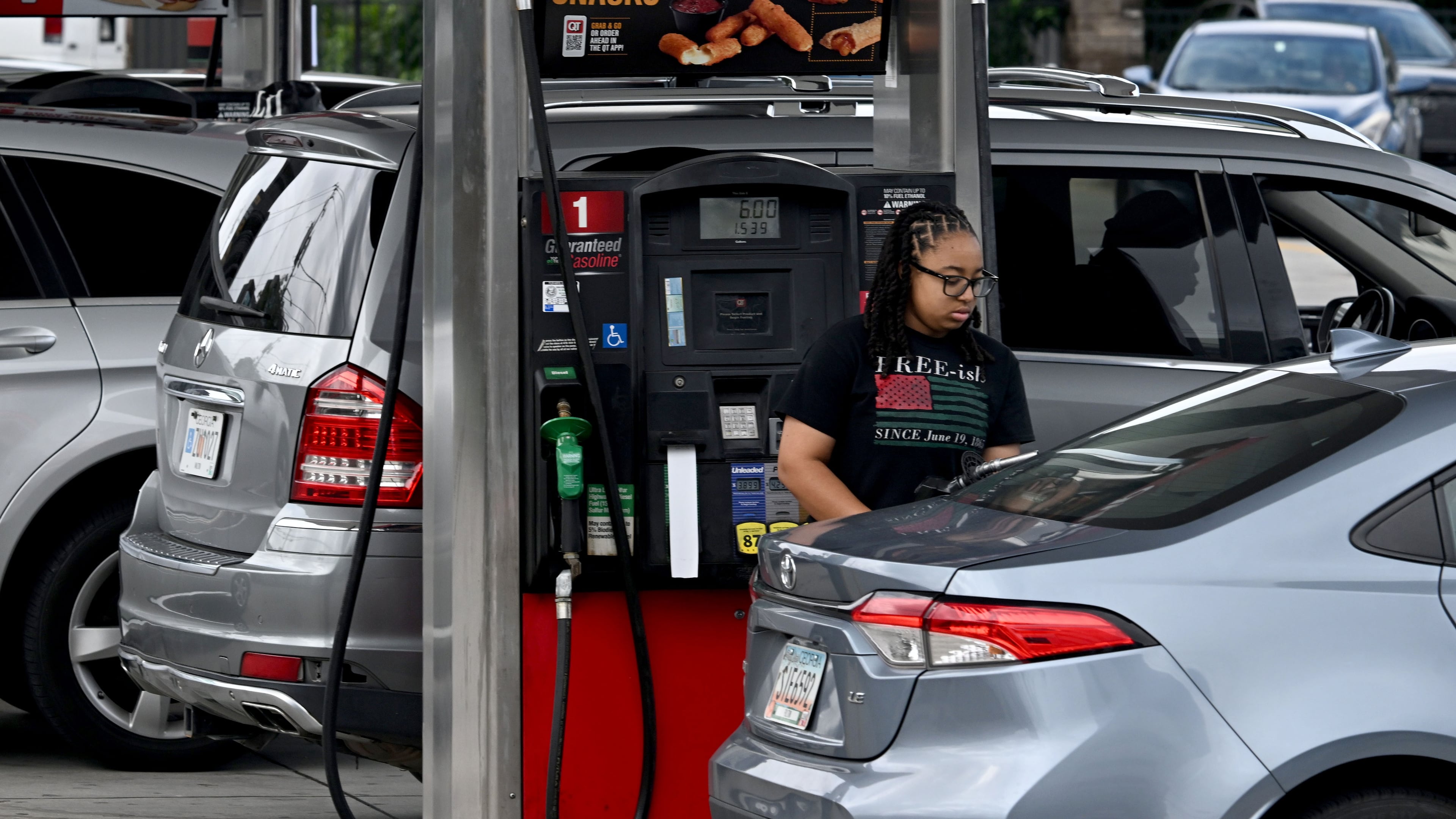
Friday morning, the average price of regular unleaded gasoline in metro Atlanta was $4.09 per gallon, up more than $1 a gallon from a year ago, according to AAA.
And the average price of diesel was $6.35 per gallon, not only a record nominally but also on an inflation-adjusted basis.
U.S. consumers and businesses faced a post-pandemic surge in inflation during the Biden administration, a period when gas prices spiked following the Russian invasion of Ukraine.
President Donald Trump campaigned to return to the White House promising to tame inflation and lower fuel prices. But Trump’s trade policies, the Iran war and other global conflicts have kept inflation elevated, with fuel prices being a major contributor.
The ongoing war in Iran has disrupted the global flow of energy through a narrow waterway, the Strait of Hormuz.
After Iran strangled the strait, and the U.S. responded with a blockade of Iranian vessels, Saudi Arabia started moving crude oil through pipelines to the Red Sea. But Iran-backed fighters have been disrupting those exports, including a recent drone attack on the East-West pipeline.
Russia’s war in Ukraine is another factor. Ukrainian drone strikes have damaged refineries in Russia, one of the world’s largest producers of refined oil products, according to the International Energy Agency.
“We’re in the Thunderdome, so to speak,” Tom Kloza, chief energy adviser for Gulf Oil, said of the geopolitical situation. “The theater of war expanded from Russia and the Persian Gulf to the Red Sea.”
Kloza said the most concerning issue is how much refining capacity has been knocked out, especially for diesel.
While the U.S. is not facing a fuel shortage — and is in fact a net exporter of oil — gasoline and diesel prices are tied to global oil markets and it’s hard to predict when they might retreat, he added.
“For the first time since the start of the Iran conflict, we don’t have a baseline view,” J.P. Morgan analysts wrote in a weekly oil markets report that was released Thursday. “We simply don’t know how to model the endgame.”
Some members of Congress are exploring the idea of a U.S. fuel-export ban, especially on diesel, according to the Wall Street Journal, which also reported a ban could have unintended consequences, such as raising prices.
Earlier this month, U.S. Secretary of Energy Chris Wright addressed a potential export ban in an interview with CBS News.
“We consider all options of how you can move prices that are favorable for American consumers, but right now we’re leaning in on maximum production, energy addition,” Wright said, according to a transcript of the interview. “Again, in gasoline, in diesel, in the electricity sector, the way to solve a supply shortage is to grow supply.”
Consumer prices in metro Atlanta were up 2.9% from a year earlier in August, with the cost of motor fuel soaring 31% over that period.
On Wednesday, the Federal Reserve raised its benchmark interest rate to help curtail inflation. Raising the rate will impact other costs, such as interest rates charged on loans and credit cards.
“The only rates Americans care about coming down right now is the rate they’re shoving money into their tank,” Patrick De Haan, a petroleum analyst with GasBuddy, said Wednesday on social media platform X.
For example, Georgians have spent an extra $1.67 billion on gasoline since the start of the Iran war in late February, or more than $400 per household, according to an analysis from Brown University.
Record diesel prices ultimately could ripple through the economy as it’s the primary fuel used in freight transportation and agriculture.
“I don’t have an economics degree. I just got a common sense degree,” said Nunn, the farmer near Madison.
“No one is going to be shielded or sheltered from this expense,” he said. “You name a product, and I can guarantee you diesel was in it, either making it, supplying it, hauling it, delivering it some way.”