Marietta company’s innovative space armor to be part of upcoming SpaceX launch


When a SpaceX rocket blasts off from Cape Canaveral into orbit this fall, a tile affixed to a satellite on the craft will mark a major first for a metro Atlanta startup.
Space Armor is a new type of debris shield to protect critical infrastructure on spacecraft invented by Marietta-based Atomic-6. It will have its first operational deployment on a mission slated to launch in late October.
“We’ve done everything we can do from a testing perspective terrestrially,” Trevor Smith, CEO of Atomic-6, told The Atlanta Journal-Constitution.
The next step is now space itself.
The company’s tile of armor will be affixed on what is essentially the front bumper of a satellite made by Washington-based Portal Space Systems. It will travel in Earth’s orbit for at least a year. Smith said they hope to also attach a camera to the tile to capture any debris impacts.
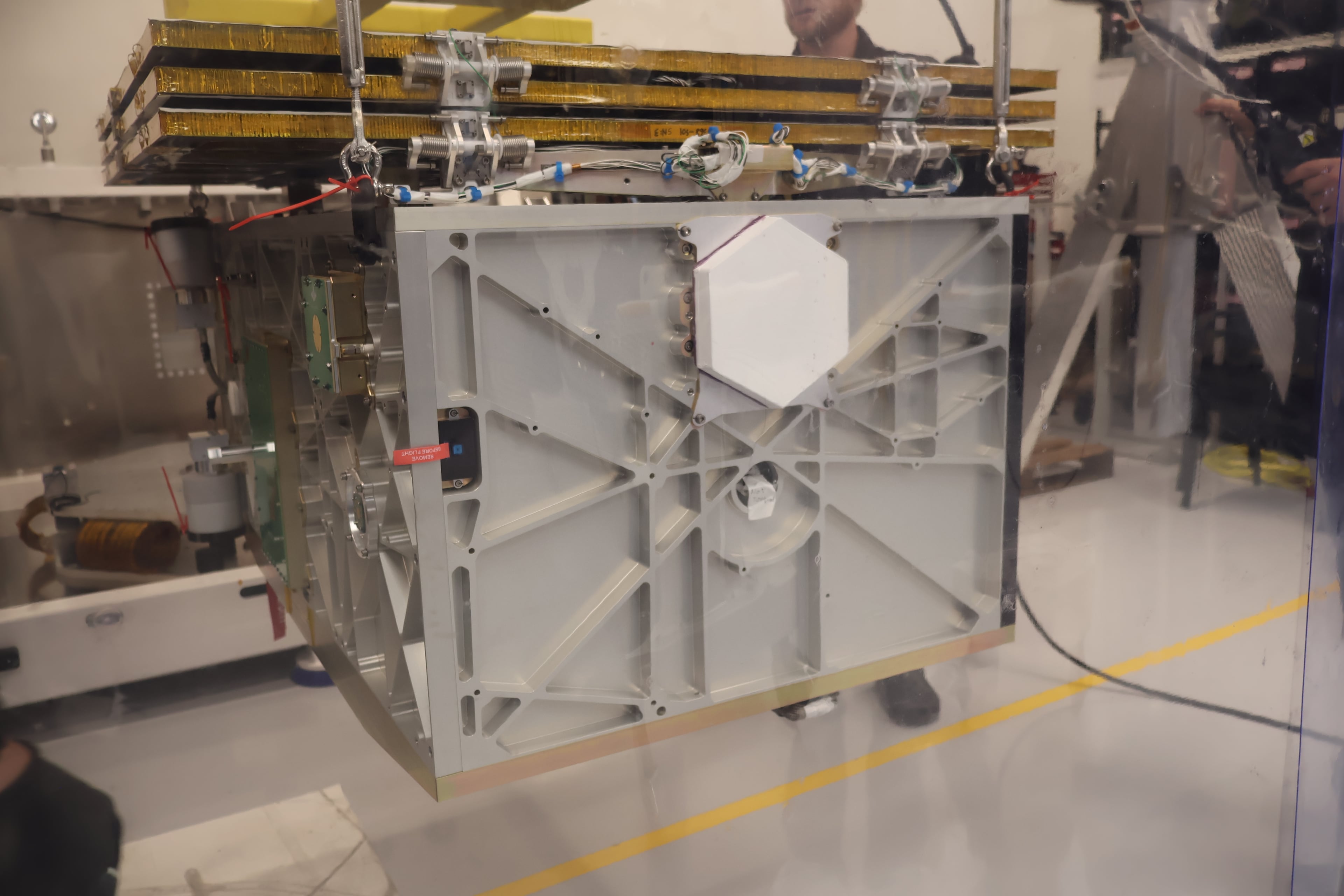
The tile is less than an inch thick, weighs about as much as a smartphone, but can potentially protect spacecraft from small debris traveling around Earth at speeds up to Mach 21 — that’s 21 times the speed of sound, or the speed to get from Atlanta to Los Angeles in under 10 minutes. The tile is manufactured at the Atomic-6 office in Marietta.
NASA says low Earth orbit is a “space junk yard,” where millions of pieces of debris are floating around, much of it human-made, such as pieces of spacecraft, flecks of paint, inoperative satellites and parts of rockets.
For decades, the traditional armor against space debris was a Whipple Shield, a structure made of multiple layers of thin metal that was invented in 1946 by pioneering astronomer Fred Whipple.
High-velocity small space debris hits the initial layer of metal and breaks up from the impact, creating smaller, less damaging debris around the craft. Improved versions of the Whipple Shield are still in use today.
But Space Armor is made of composite material with no metal at all. It absorbs the shock of a piece of debris rather than breaking it into a multitude of smaller pieces that can go and hit other satellites, which creates a snowball effect.
“The more mass, the more satellites, the more spacecraft that we put into orbit, the more we need to be cognizant of the debris creation that can happen. And so one, we want to protect assets from those debris. And then second, we also want to make sure that we’re not adding to the problem,” Smith said.
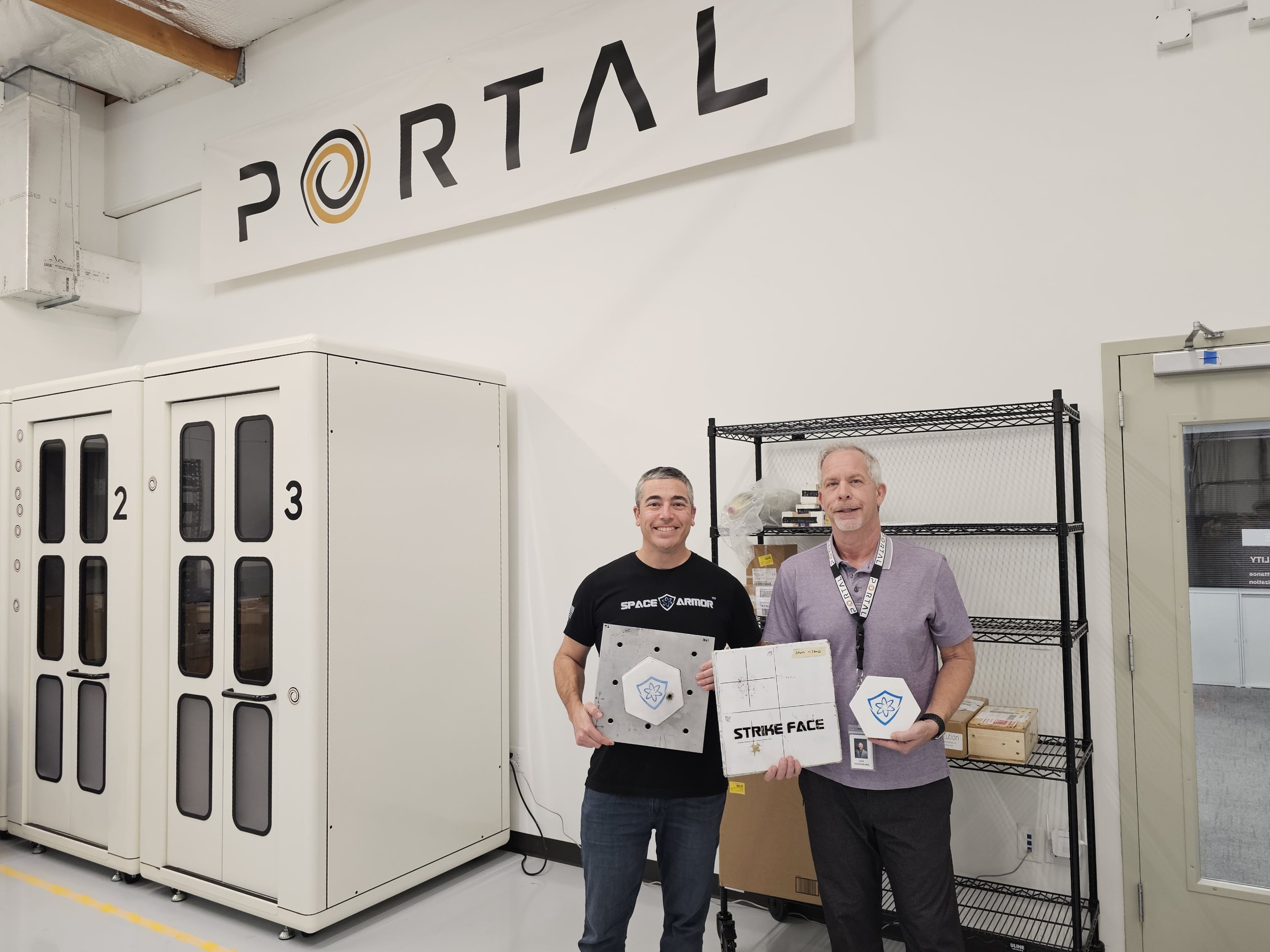
Smith said the armor has been impact tested using a 3-millimeter aluminum ball traveling about 17,000 miles per hour, which is similar to the size and velocity of many pieces of debris in low Earth orbit. More than 90% of space debris is three millimeters or less in size and virtually undetectable, according to Smith.
“You don’t know to move because we can’t track particles that small. And so the idea is, hey, if we don’t know to move, we should probably protect ourselves from things that we can’t see,” he said.
But he’s hoping debris will actually hit the Space Armor tile during this upcoming mission because it would provide helpful data about whether the product performs like it is meant to.
Ultimately, Smith’s goal is to make Space Armor a critical part of spacecraft protection, as necessary and ubiquitous as an air bag in a car.