In 1976, Jimmy Carter got heat for his Playboy interview. That made him cool.

I’m looking at the November 1976 issue of Playboy, though with less furtive excitement than if I’d somehow acquired it during my teenage years. It’s got a fetching cover photo of Patti McGuire, coy and glamorous, but truly, I’m here for an article: its lengthy interview with then-presidential candidate Jimmy Carter, which hit newsstands 50 years ago.
If you were an adult back then, you probably recall it.
Carter said, “I’ve looked upon a lot of women with lust. I’ve committed adultery in my heart many times.”
He also said he wouldn’t sit in final judgment of the man who “shacks up with somebody out of wedlock,” or “screws a whole bunch of women.”
Are you astonished, shocked or appalled? Playboy wired the transcript to roughly a thousand newsrooms, and within days it was the nation’s biggest topic.
Saturday Night Live parodied it within the week. Billy Graham and Jerry Falwell denounced him from their pulpits. Some feared it would cost Carter the election. “If I should ever decide in the future to discuss my Christian beliefs,” he said in the next debate, “I’ll use another forum besides Playboy.”
This said something true and relatable
This all should have seemed silly at the time. Recall, Carter was among the most steadfastly devout politicians in modern history — literally a Sunday School teacher. Theodore White, the legendary campaign reporter, surmised that of all the presidential candidates he’d covered, he was “reasonably sure” that only three had never stepped out on their marriage: Harry Truman, George Romney and Carter.
Today, the episode seems quaint. The current occupant of the White House has certainly prospered after countless revelations that — putting it mildly — would have been unimaginably disqualifying in 1976.
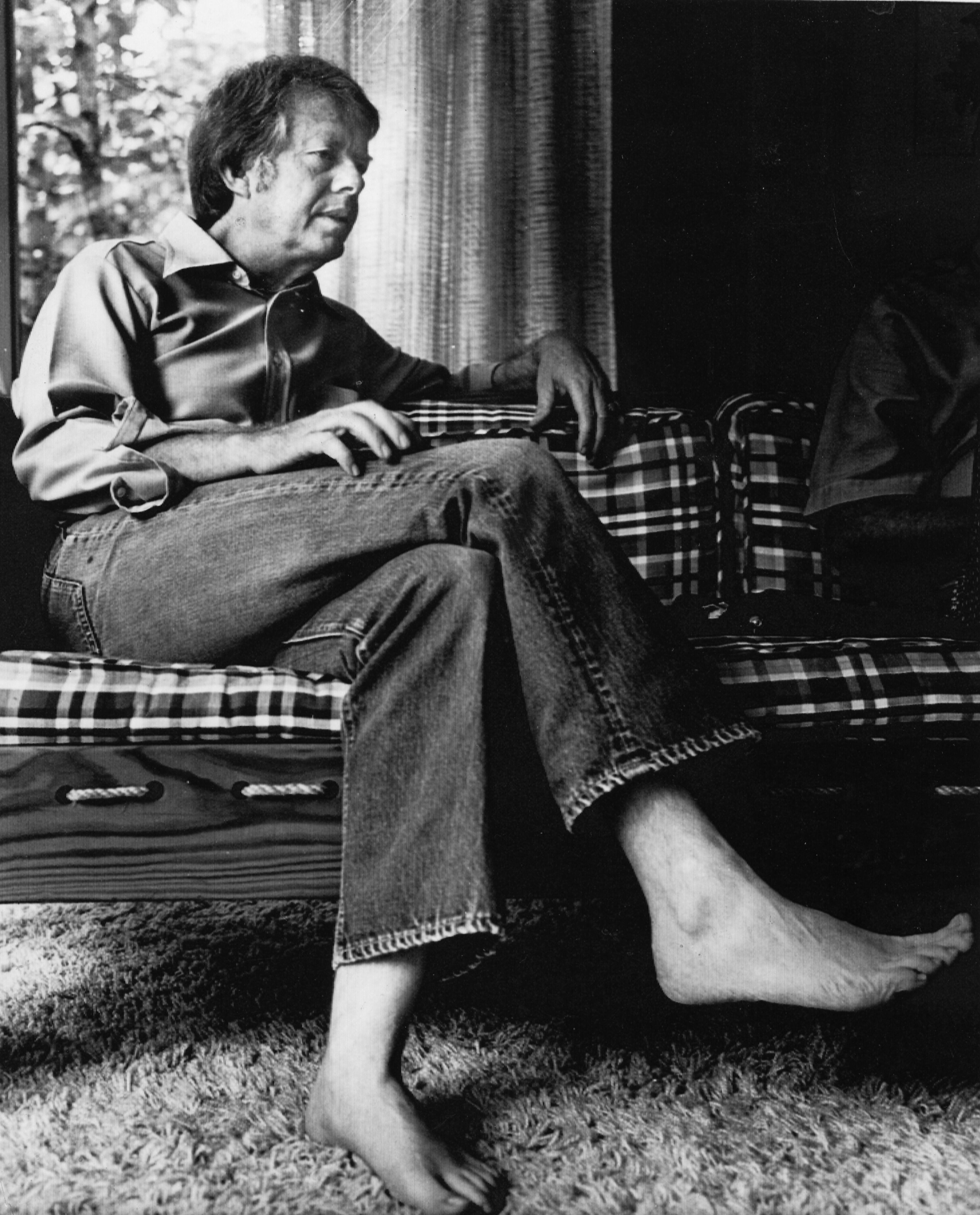
There’s a better way to read the controversy: It reveals Jimmy Carter as one of our coolest former presidents.
An adolescent theory of being cool (though adults share it too) hinges on style, taste and performativity. But real cool isn’t about posturing or fitting in; it’s about being sufficiently at ease with yourself — and settled enough in your convictions — that embarrassment doesn’t frighten you into pretending to be someone you’re not.

Carter said something true and relatable. (Raise your hand if you’ve never lusted after someone.) He was sharing his lifelong belief that Jesus knows we’ll sin and loves us anyway.
That’s not my faith. But Carter’s answer was cool because it wasn’t calibrated to any audience. He said what he thought, took the hit and let people react however they reacted.
He spoke his heart and said what he believed
Nowadays, lots of politicians, journalists, and academics are in a pickle. Not too long ago, they said things they now appear embarrassed to defend. One the left, some advanced arguments that voters rejected as culturally extreme, and now they wish to wave them away. “Woke 1 was crazy!” On the right, some who claimed that 2020 election was stolen have learned to quickly change the subject when asked about it. Of course, one can think of many more examples.
Being wrong isn’t necessarily uncool. Everyone is wrong sometimes. When people change their minds, even abruptly, that can be a healthy sign of intellectual humility — but only if they’re willing to explain it. Otherwise, it’s an evasion, a maneuver, a dodge.
What’s very uncool is saying things you don’t believe — or, if you have a stake in something, refusing to say what you do believe — because you’re so afraid of what others might think.
Carter was many things: earnest, awkward, occasionally self-righteous. He wore cardigans and smiled goofily. He saw a UFO. He was, as his campaign manager feared, vulnerable to “the weirdo factor.” Shortly after Carter’s Playboy interview, his good-natured wife, Rosalynn, allowed that perhaps he’d embarrassed himself: “Jimmy talks too much,” she quipped.
He would suffer a much greater humiliation in 1980, when Ronald Reagan defeated him 489 electoral votes to 49. But again, Carter didn’t hide from it. “I promised you four years ago that I would never lie to you,” he told his supporters. “So, I can’t stand here tonight and say it doesn’t hurt.”
When Carter opened his mouth to Playboy, he wasn’t smooth. But no one wondered if he’d been swept up in some fad or was just saying what everyone else was saying. Today, Carter is admired for many things — his humility, his seriousness of purpose, and his post-presidential dedication to humanitarian work. But at times during his career, he also showed another special quality — an unusual tolerance for embarrassment.
Fifty years later, that may have been the coolest thing about him.
John McMillian is an associate professor of history at Georgia State University.
Send letters to the editor of 250 words or fewer with your name, city or town and contact information to letters@ajc.com.