Nikole Hannah-Jones and the difficult school choices Black parents have faced for 150 years
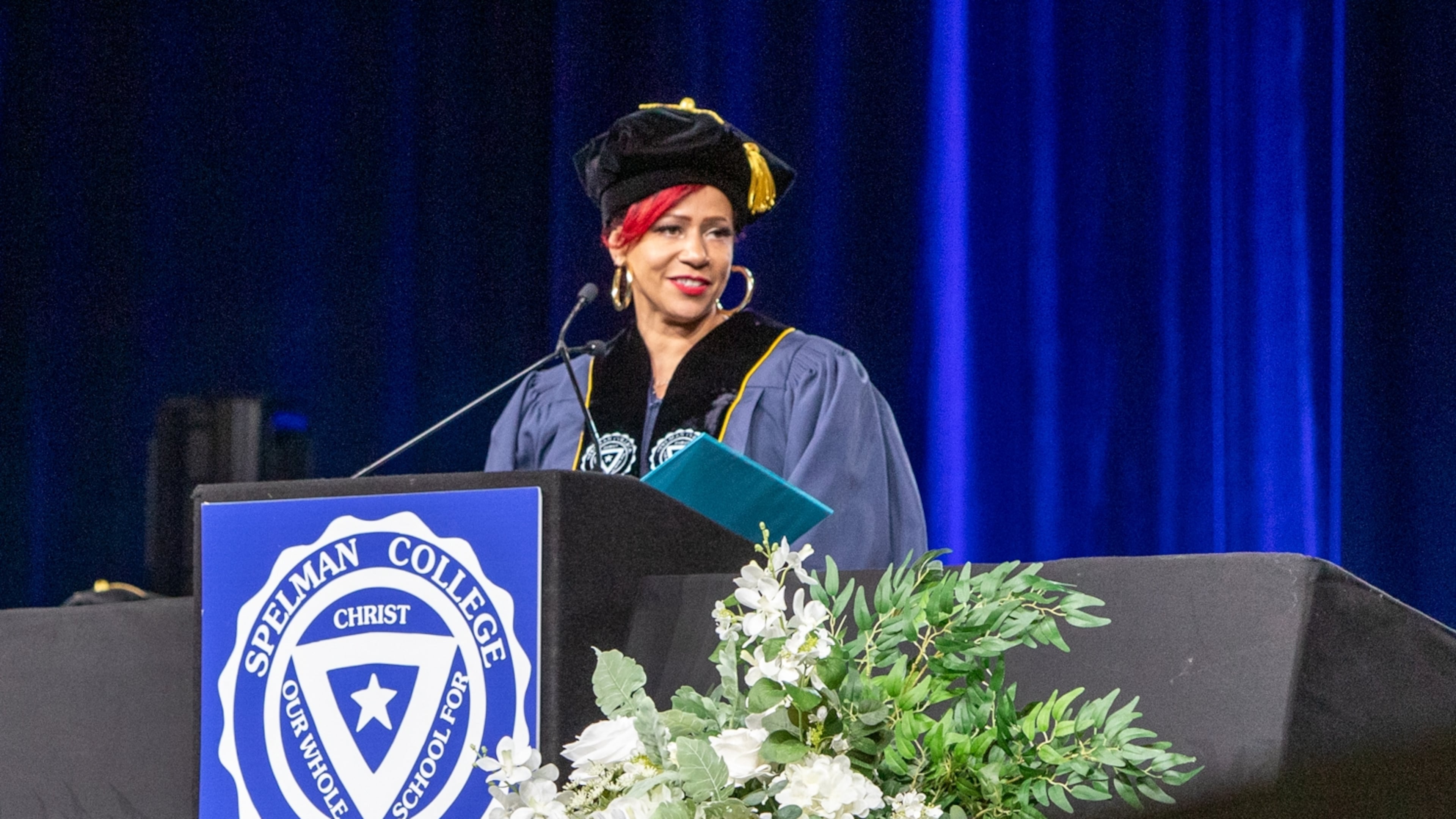
The moment I read Nikole Hannah-Jones’ essay in the Sunday New York Times Magazine, I braced myself for what I knew was coming: a harsh critique of one Black family’s attempt to effect systemic change in public education.
Everyone seemed to have an opinion on whether Hannah-Jones’ choices, politics and ideology were right or wrong, real or performative.
But those arguments miss the more difficult question she raises in her essay: How much can we expect individual Black families, and particularly Black children, to sacrifice to repair systems they didn’t break?

Ten years ago, Hannah-Jones wrote about the decision she and her husband made to send their daughter, Najya, to a predominantly Black, high poverty, low-performing school in Brooklyn.
As a staff writer for The New York Times and author of “The 1619 Project,” Hannah-Jones lives an upper middle-class existence with her husband and their only child. They had the knowledge and means to send their daughter to any school but chose to live their values by investing in local public education and building a framework for parent engagement that would uplift all students.
They believed families with resources could strengthen neighborhood public schools by investing their money, time and influence in them rather than leaving them. They hoped their presence might encourage other middle-class families to do the same.
In a reflective update, Hannah-Jones writes with searing honesty (her daughter insisted she be more self-critical) that her efforts failed.
Najya, now 16, eventually realized that despite being an honors student, she had not received the academic preparation available to students at more selective schools. At one point in elementary school, her parents discovered that assignments were going ungraded and that she had significant gaps in her learning.
Later, after earning A’s in middle-school algebra, she arrived at a selective high school and discovered that she lacked some of the fundamental math skills her classmates had already mastered. Her parents got her tutoring. Her teachers helped her catch up.
But Najya believed her parents had sacrificed her education, something that should have belonged to her, in service of a larger principle.
“Sometimes I wish instead of always thinking about other kids, you would have thought about me,” she told her mother. “I never really got the education I wanted.”
That exchange is what makes the essay both difficult to read and valuable for self-reflection. Hannah-Jones does not simply blame the system. She does not excuse herself because her intentions were good. She acknowledges that her daughter bore the cost for choices adults made on her behalf.
But why are these the choices that Black families are routinely confronted with?
Much of the criticism in the days since the essay appeared has come from Hannah-Jones’ usual detractors who seized the moment to blast her views on school choice or give oversimplified rebuttals to her argument that public schools are underfunded.
Some critics made provocative assertions calling her actions performative, designed only to buttress her career, or suggested that the desire to uplift the Black community reeks of white saviorism.
“I was fully prepared for a lot of white folks to attack the piece,” said Hannah-Jones in a recent interview with Michael Harriot, a columnist for the Grio. “I was not prepared for the gleeful way … Black folks have piled on.”
These tangents, no matter their source, are distractions, or perhaps deflections, from a truth that is painful to absorb.
For generations, many Black parents have confronted educational choices in which access, resources, proximity, safety, cultural belonging and academic excellence do not exist in the same school.
The U.S. Constitution does not establish education as a fundamental right, but states can and do create constitutional obligations. Georgia’s Constitution, for example, says providing an adequate public education is a “primary obligation” of the state.
It’s worth remembering that Black activists were central figures in the fight to establish a public school system in the South during Reconstruction, lobbying for universal education on behalf of all students; rich or poor, white or Black.
Black people in the South engaged in collective action to create these public schools, yet their efforts didn’t bring equal benefits for Black children.
In the North, where the fight for equal school rights began in the 1840s, Black families also struggled with limited options, writes Zoë Burkholder, author of “An African American Dilemma: A History of School Integration and Civil Rights in the North.”
“Most Americans do not realize that even in the supposedly liberal North, whites discriminated against Black students by excluding them from early public schools, or when they were finally admitted, segregating them into separate and unequal facilities,” Burkholder wrote in 2021.
When Georgia instituted a tax supported public school system in 1870, the greatest beneficiaries were poor and working-class white students who had no access to formal education before the Civil War.
In 1871, the city of Atlanta built two public high schools and five elementary schools for 1,200 white students. The following year, Black students were assigned to two Black private schools that were converted into public schools with a combined capacity of 700 students, according to research from the Georgia Budget & Policy Institute.
By 1891, 74% of white children were being educated in Georgia public schools compared to 53% of Black children, as stated by Richard R. Wright in a “Brief Historical Sketch of Negro Education in Georgia,” written in 1894.
Poverty, a shortage of facilities and limited numbers of qualified teachers restricted Black children’s access to education.
Black parents in the South, years after Reconstruction, faced similar choices that Hannah-Jones described in her essay: send their children to the overcrowded, predominantly Black public school close to home with less funding, fewer resources and inexperienced educators or scrounge up tuition to send them to one of the few private schools that would educate Black students.
That’s 150 years of the same choices. That legacy should make all of us uncomfortable. And it should clarify why Hannah-Jones’ experience cannot be reduced to one parent’s decisions.
On Thursday evening, Ryan Wilson, co-founder of the Gathering Spot, the Atlanta-based hub for conversations about issues of the day, convened a small group of Black parents to discuss Hannah-Jones’ article.
As a parent of young children, Wilson said education is a hot topic among his peers. “The article does a brilliant job of bringing up a complex issue and that is what I want to explore,” said Wilson. “What I hope people will take away is that there is not a perfect decision we can make as parents … but how do we support one another in making the best decision for your family?”
Wilson also wants to push back against reducing Hannah-Jones’ essay to an opportunity to judge.
Hannah-Jones told us she was wrong about some of the choices she made for her daughter. We should take that admission to heart rather than using it to support criticism of her politics and parenting.
For other Black families, the story might have a different ending. Hannah-Jones and her daughter changed course when they recognized the situation had become dire.
But what happens to all the children who can’t?
Read more on the Real Life blog (www.ajc.com/opinion/real-life-blog/) and find Nedra on Facebook (www.facebook.com/AJCRealLifeColumn) and X (@nrhoneajc) or email her at nedra.rhone@ajc.com.