Michelle Obama Park offers lessons about land swaps and the price of promises
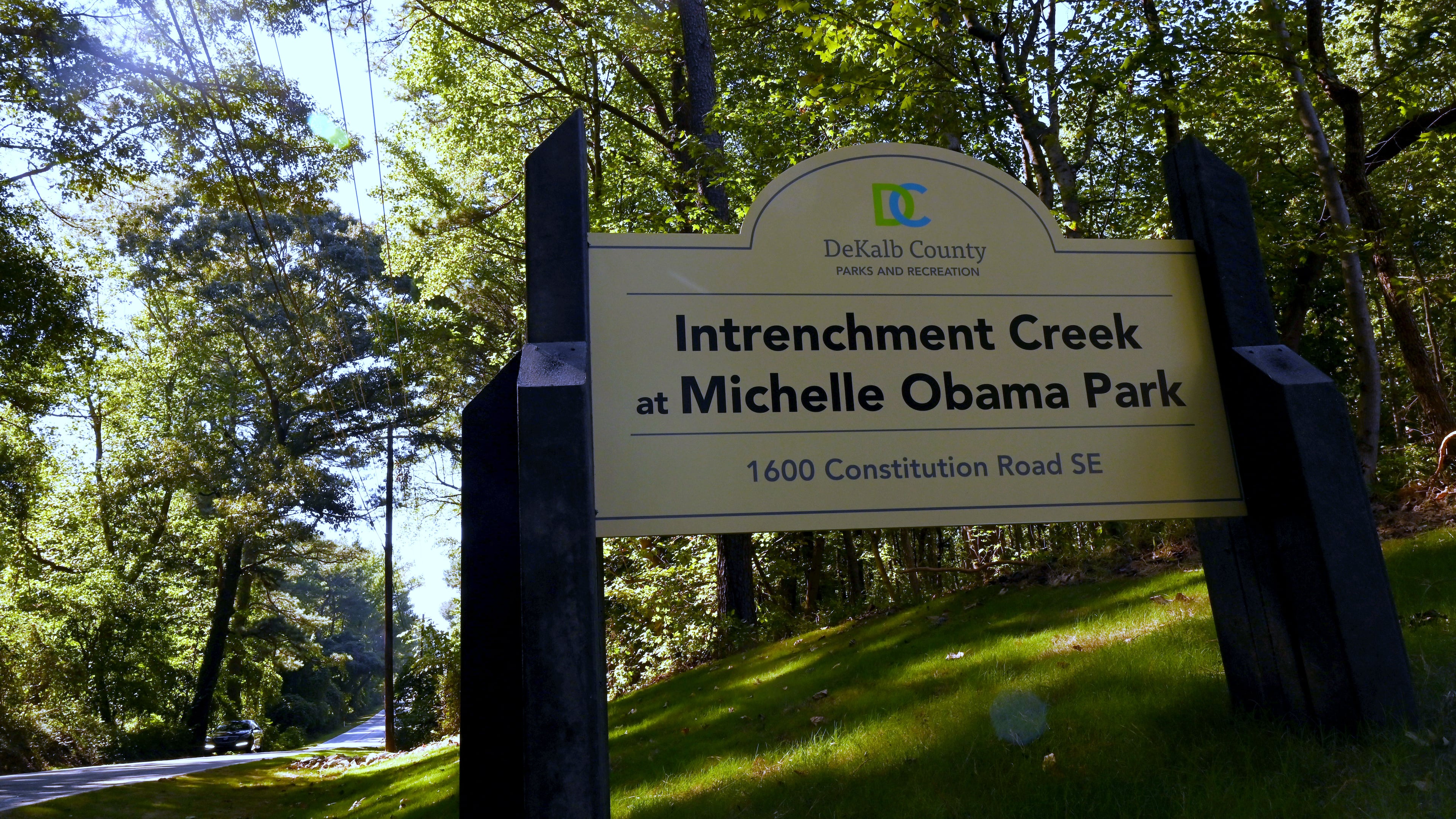
On Saturday morning, a DeKalb County shuttle dropped me at the entrance of what used to be Intrenchment Creek Park. The park is relatively close to my neighborhood, and for years, my family enjoyed biking, walking and chatting with neighbors at the former trailhead.
But four years ago, after a land swap with DeKalb County, the new owner, real estate developer Ryan Millsap, erected barricades cutting off public access to 80 acres of the South River Forest.
Then in 2023 after environmental activist Manuel Esteban Paez Teran was shot and killed during protests over an adjacent police training center, DeKalb County officials closed the park citing concerns for public safety.
The opening of Intrenchment Creek at Michelle Obama Park, as it is now called, is a cause for celebration. A park is generally a positive addition to any community, especially one that waited almost a decade for its arrival.
But in celebrating what has been gained, we can’t forget what has been lost. The saga holds important lessons for local governments in swapping, developing or reimagining public lands.
As I walked from the dramatically sloping entrance to Bouldercrest Road, I wondered how we would hold the trail’s history in our collective memory.
Days before the park opening, I watched the new documentary, “A City in the Forest,” which recounts the yearslong battle that placed policing, public spaces and political power at the heart of a national debate.
The film documents the efforts of forest defenders to prevent the opening of the city’s public safety training center on land that includes part of the South River Forest.
“Ultimately, we hope people can see themselves and the land where they are as deeply interconnected and worth fighting for,” said filmmakers Lev Omelchenko and Nolan Huber in an emailed statement.
“We hope that people see that Cop City was only the latest iteration of violence done to this land and the people who live here, but more importantly, we hope they recognize that the violence wasn’t inevitable.”
The documentary preserves the struggle of the South River Forest but the physical landscape is forever changed.
The training center controversy brought widespread attention but what remains offers a lesson on the cumulative impact that individual decisions made by government agencies can have on public spaces.
County officials have referred to Michelle Obama Park as a restoration, but the public isn’t getting back everything it lost.
A land swap, proposed by real estate developer Ryan Millsap in 2018 and approved by county commissioners in 2021, left 40 acres of what was once prime and popular woodland under Millsap’s control and at risk for development.
Though the county retained more than 80 acres of the South River Forest, critics of the trade said the 53 acres of land it acquired from Millsap was not comparable to the acres it gave away. The new parcels, now slated to become an athletic and recreational space, had already been clear cut and were paved with sand and gravel rather than verdant forest.
The county may have gained acreage but the public lost five years of access to the trail, a prime location, and land with higher perceived ecological value.
Back in 2017, the vision for South River Forest was to create an ambitious green space in the middle of the city that connected 3,500-acres forests, parks, trails and waterways of the South River.
It would have dramatically improved the quality of life for residents in neighborhoods surrounded by an assortment of parks, landfills, and the abandoned Old Atlanta Prison Farm.
That vision died when different transactions in different jurisdictions led to profound environmental and community impacts to the South River Forest.
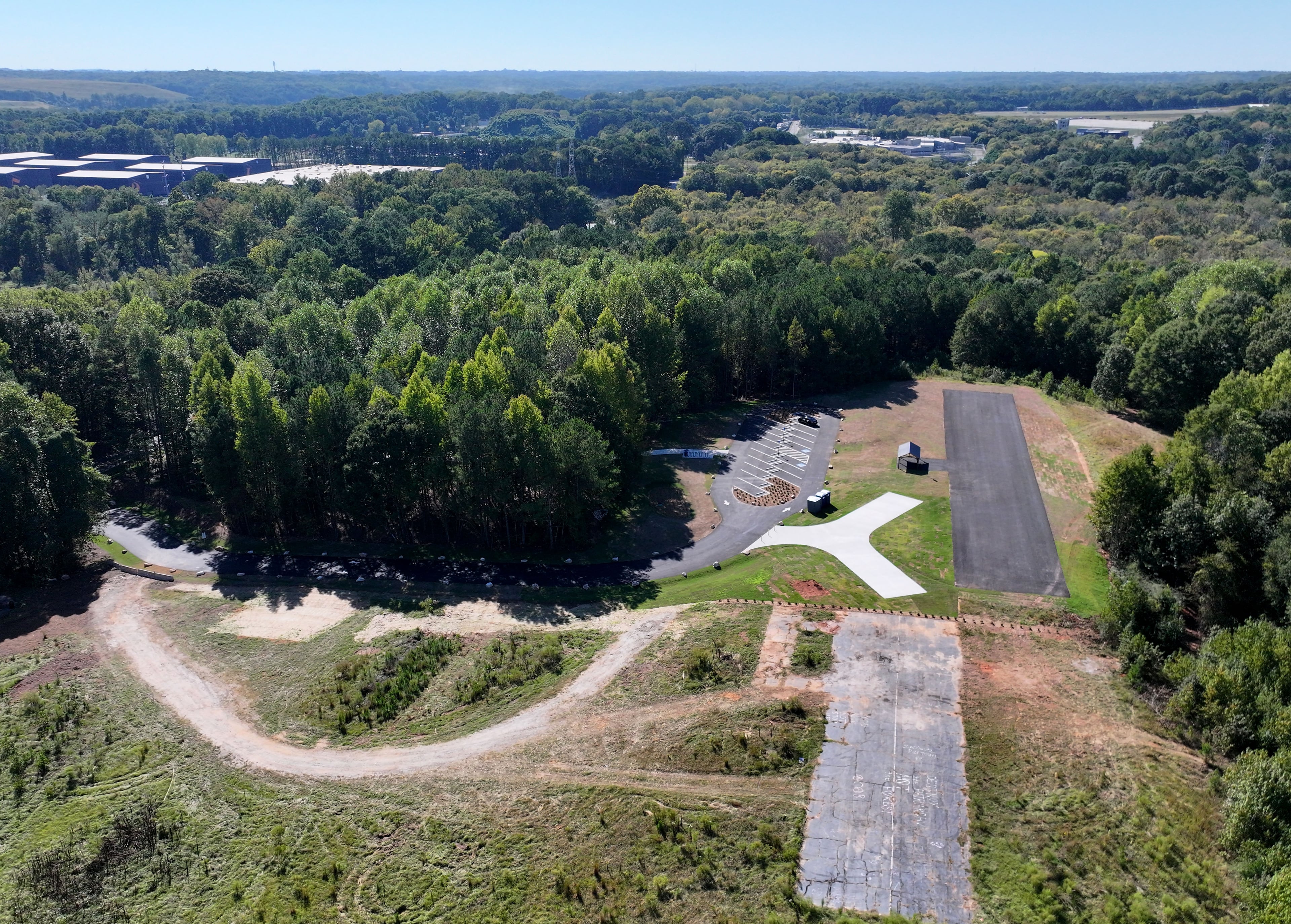
The city of Atlanta approved the police training facility. DeKalb County approved the land swap. To government officials and private landowners, the South River Forest was a set of adjacent parcels to be managed separately, not a landscape worthy of preservation.
Earlier this year, City of Atlanta officials began holding public meetings to plan the Restoration Memorial & Preserve on 100 acres of land with waterfront access to Intrenchment Creek. The project would bring green space and historical preservation to the site of the former Atlanta Prison Farm adjacent to the Atlanta Public Safety Training Center.
One of the primary concerns from the public was that there be continuity with the South River Trail and connection to adjacent green spaces in DeKalb County. One of the primary frustrations was the lack of coordination between government entities.
That frustration is understandable when it seems that so many promises made were not promises kept.
DeKalb County officials had expected Millsap to use the swapped land to expand Blackhall Studios, potentially bringing economic benefits to the surrounding community. They also anticipated $1.5 million in donations from Millsap to help the county build the new park.
Instead, Millsap sold the studio months later and retained ownership of the 40 acres. The county never received any funds. Millsap has been seeking a buyer for the land which has significantly increased in value.
DeKalb County CEO Lorraine Cochran-Johnson said the county is willing to reacquire the land but it is important to ask what did the county do from the start to adequately protect a public asset before trading it for future promised benefits?
The sun came out in full force during my visit to Michelle Obama Park as visitors milled around enjoying popsicles, lunch and demonstrations from Atlanta Radio Control Club.
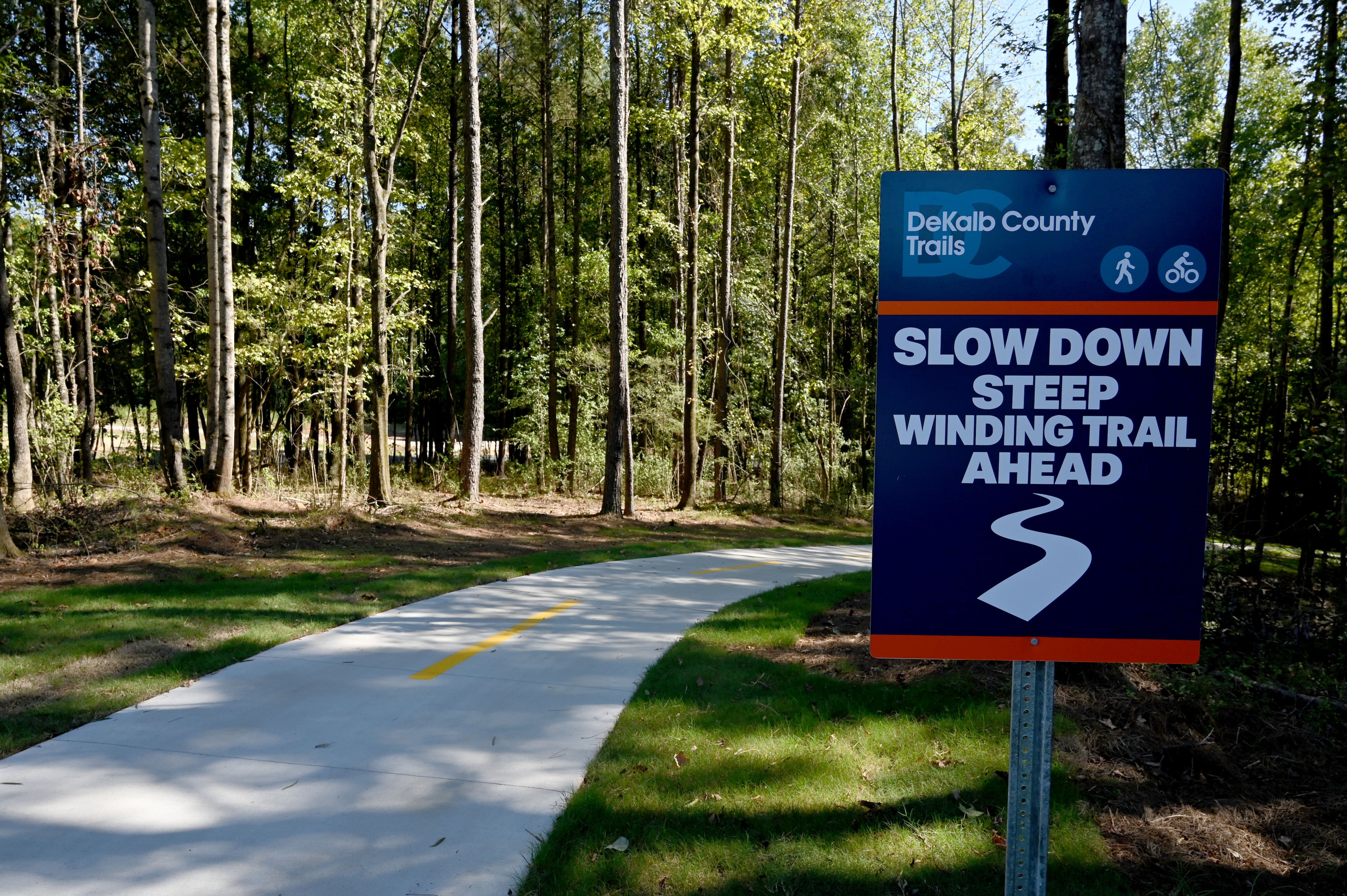
Of the half-dozen people I spoke with during my visit, most had never been to the former Intrenchment Creek Park and were unaware of its history. They were excited to have new trails and green space.
There is no question that Michelle Obama Park is a good thing for the community, but the opening shouldn’t allow us to forget the promises that were made, everything that was lost and the impact that has had on the land and the people.
Read more on the Real Life blog (www.ajc.com/opinion/real-life-blog/) and find Nedra on Facebook (www.facebook.com/AJCRealLifeColumn) and X (@nrhoneajc) or email her at nedra.rhone@ajc.com.