We failed accused Atlanta Beltline killer Johnathan Hamby by keeping him free
I am from Jackson, Louisiana, a poor town in a poor parish where most kids graduate high school and go work for the state.
Jackson is home to one of the state prisons, the state prison for the criminally insane, the state retirement home for veterans, the state retirement home for state employees and the state’s most notorious mental hospital.
I can still remember, as child, hearing the howls of the prisoners at night as if the moon was exceptionally bright.
My house, built just after the Civil War, stood up a hill across the hollow from the gates. The hospital’s dome had a steam whistle and clock that announced the time to the whole town. You could set your watch by it.
That state hospital, like the one here in Milledgeville, is mostly now a ghost town — a shell of its former glory. As a lawyer in Middle Georgia, more than once I had to go to the mental hospital in Milledgeville, called Central State Hospital.
My law firm represented the state. Over five years as a lawyer at the turn of this century, I saw the hospital’s decline. In the 1960s it was the largest mental hospital in the world. Built on almost 2,000 acres, it contained 200 buildings and housed over 12,000 patients. Few patients remain.
Family statement shows tragedy could have been prevented

I thought of these facilities when I read the sad public statement from Johnathan Hamby’s family.
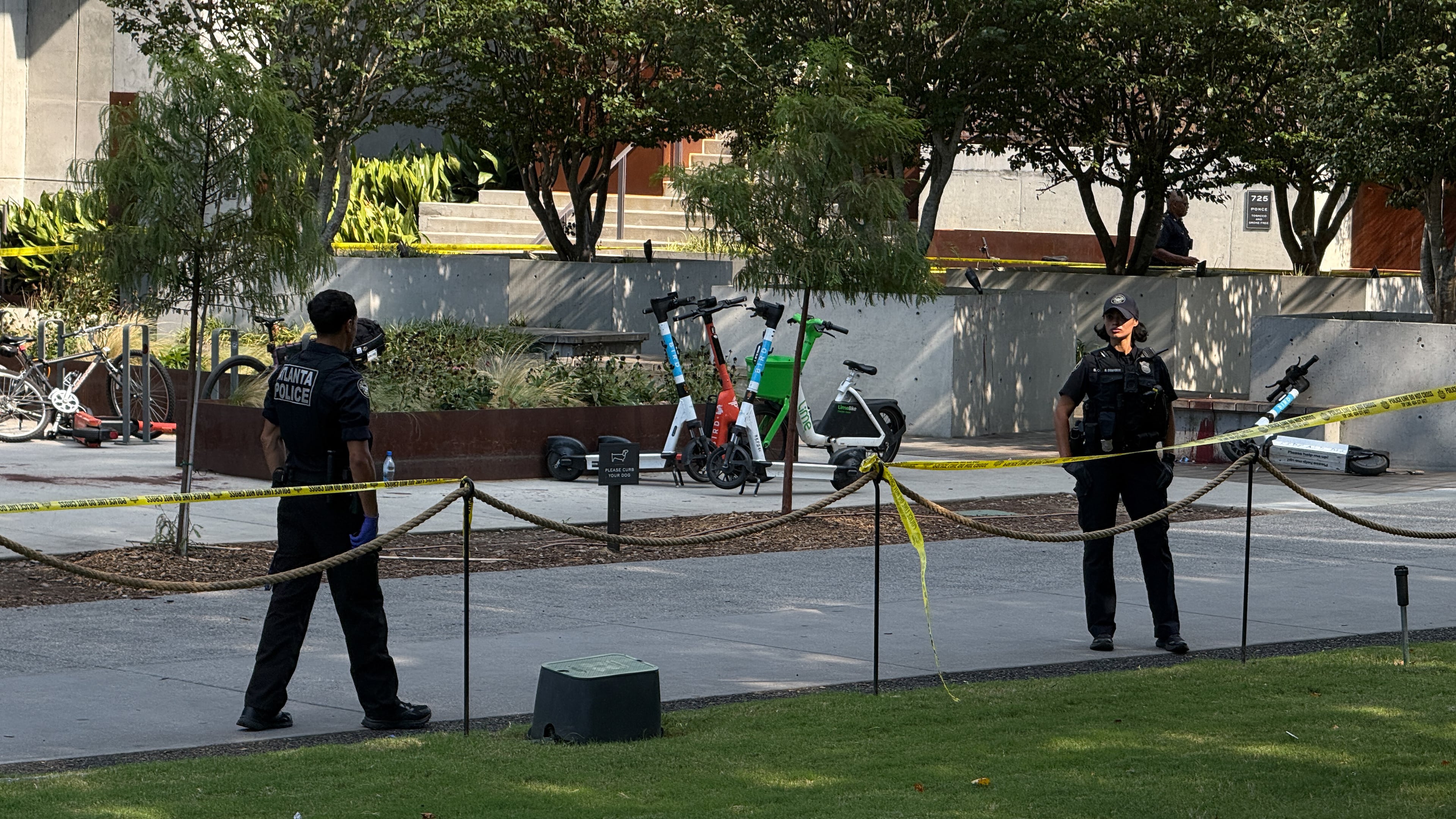
Police accuse Hamby of killing Ramon Harris on the Atlanta Beltline by stabbing him in the neck.
Hamby has been arrested over 30 times and been in and out of jail. His family’s statement noted that Hamby “lives with a severe mental illness (SMI) that causes active psychosis. In his reality, he is under constant, terrifying attack from bystanders who are simply walking near him. He cannot rationally process the world, nor can he recognize his own illness — a clinical reality known as anosognosia, which affects up to 50% of individuals with severe schizophrenia or bipolar disorders. Because of this, court orders instructing him to simply take his medication or follow rules are impossible for his compromised brain to execute.”
They wrote, “He was on the street because our current legal system relies on a revolving door of short-term incarceration rather than long-term structural intervention. Johnathan has a history of over 30 prior arrests, and a majority of these as individual acts should have served as a high-risk warning to officials. For example, he recently took a three-foot samurai saber into a Chamblee elementary school under the delusional premise that this act was required because he simply needed to charge his cellular phone. The system treated this clear, high-risk warning sign as a standard misdemeanor. He was briefly jailed, released, and put back on the street without stabilized care.”
We failed Johnathan Hamby because our society decided it was better to shut down our mental hospitals and allow people like Hamby to roam the city than to place him somewhere where he had a roof, a bed, three meals a day and could do no harm to himself or others.
Society has masqueraded inhumane treatment as humane

Scripture says to love your neighbor as yourself and, in the 1960s and 1970s, our public policymakers decided that meant ending institutionalize in favor of community rehabilitation. We put mentally challenged students into the classroom, where they disrupted other students, and we put mentally ill adults on the streets, where they could harm themselves and others.
The truth is that Atlanta does not have a homeless problem. Progressives along with most major media outlet stylebooks now call it “unhousedness,” as if putting a roof over a homeless person’s head solves the problem. But it does not because we do not have a homelessness problem.
Homelessness is the byproduct of the real problem — drug addiction and mental illness. If we loved our neighbors as ourselves, we would get these people real help.
Many of them, like Hamby, cannot help themselves. Perhaps his family could not even fully help him. But had he been placed in Central State Hospital, he would have been helped, with meals and treatment.
Had Hamby been institutionalized, Ramon Harris would be alive and Hamby would be in far better shape than he is now. Our society has masqueraded inhumane treatment as humane, letting those incapable of settlement in society settle there, nonetheless.
We have limited their families’ abilities to intervene and help until the horror happens. Our Legislature and the bureaucrats who shape public policy need to shift away from socialization and move back toward institutionalization.
Hamby showed up at an elementary school with a 3-foot long samurai saber. He thought he needed the saber to charge his cell phone. He was out of jail within a day.
A society that truly loved Hamby as it is supposed to love him would have never let him back on the street with the condition he has. Our social failure led to Harris’ death. How many more tragedies must happen before we change course?
Erick Erickson is host of the nationally syndicated “Erick Erickson Show,” heard weekdays from noon to 3 p.m. on WSB Radio. He is also a contributor to the AJC.
Send letters to the editor of 250 words or fewer with your name, city or town and contact information to letters@ajc.com.