Black Atlanta must decide its own political future before someone else does

As someone who calls Atlanta home, I know there is no place in America quite like it.
Atlanta did not become the capital of Black America by accident. It became that because generations of Black families, clergy, entrepreneurs, educators, business leaders and elected officials made deliberate decisions to build institutions instead of merely winning elections.
They understood that lasting political power is built on economic strength, educational excellence, homeownership, entrepreneurship and organizations capable of serving generations yet unborn.
Black Atlanta inherited very little. It built almost everything. Out of segregation and exclusion came Historically Black Colleges and Universities (HBCUs) that educated generations of professionals, Black-owned banks that financed opportunity, churches that anchored communities, businesses that created wealth and public servants whose leadership reshaped American politics.
Atlanta became the nation’s center of Black political influence because previous generations chose institution-building over ideological fashion.
Who we elect matters because leadership either compounds that legacy or slowly dismantles it. Every generation decides whether it will build upon what it inherited or begin consuming what previous generations sacrificed to create.
That is why this moment deserves our attention.
Political vacuums create opportunities for change
Across the country, cities long associated with Black political leadership are undergoing profound political change.
Organized ideological movements are steadily expanding their influence in places once considered politically untouchable. Atlanta would be making a profound mistake if it assumed what has happened elsewhere cannot happen here.
Some have pointed to Georgia House District 42 — which elected Rep. Gabriel Sanchez, D-Smyrna — as evidence that democratic socialism is already taking hold in metro Atlanta. I believe that conclusion misses the larger lesson.
That race reflected a disconnect between an incumbent and constituents who no longer felt heard. It created an opening that allowed a candidate whose platform did not directly address many of the priorities of Black voters to prevail.
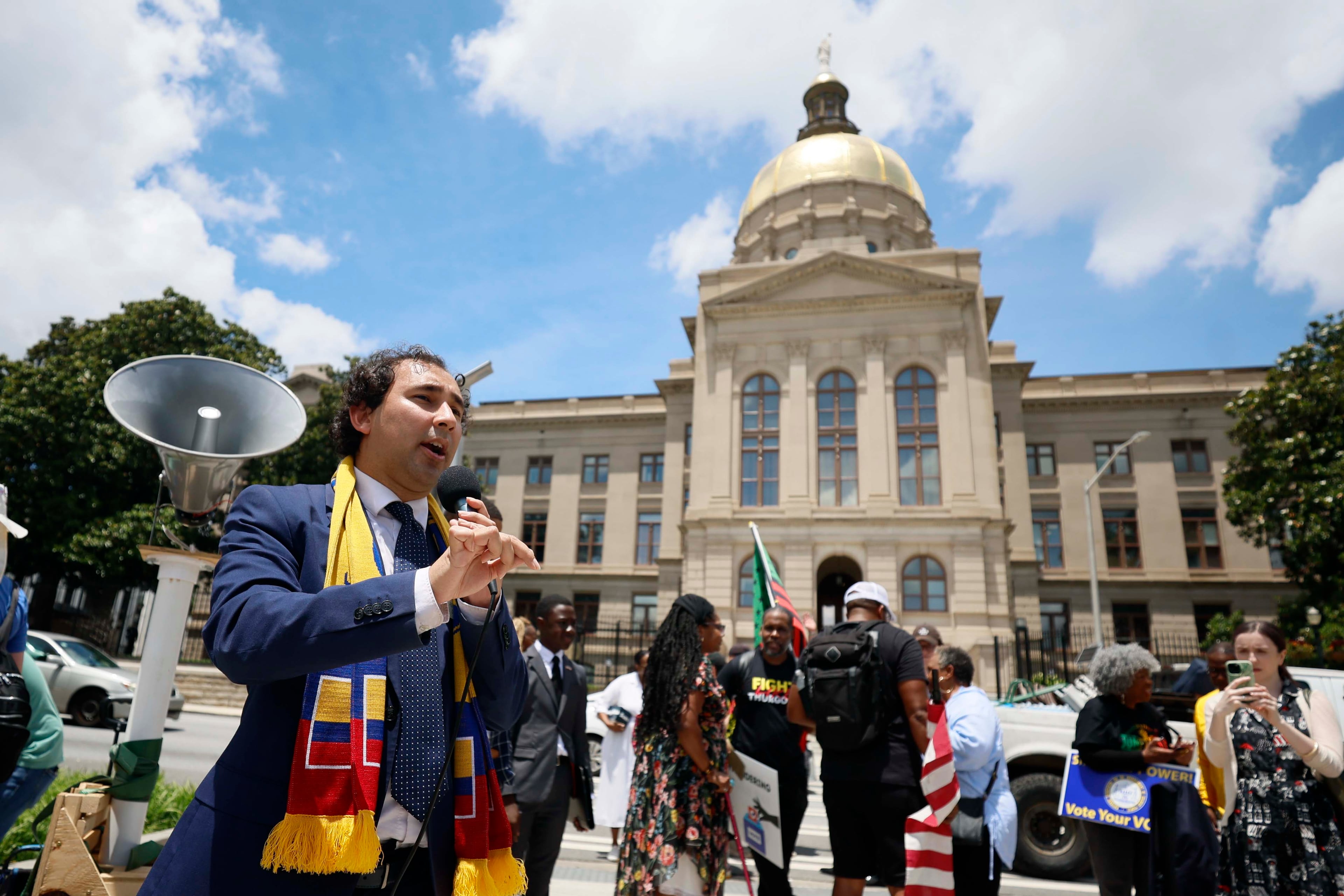
That should not be mistaken for a broad embrace of democratic socialism. It should be understood as a warning about what happens when political vacuums are left unfilled.
History teaches the same lesson over and over again. Political power is rarely lost all at once. It is lost one election at a time while those who built it convince themselves there is nothing to worry about.
That distinction matters because Atlanta is not simply another Democratic city. Georgia is home to one of the largest Black voting populations in America.
What Atlanta chooses next will shape Black political leadership far beyond our state. When the capital of Black America moves, the rest of Black political America pays attention.
Polling consistently shows Black Democrats are less enthusiastic about democratic socialism than Democrats overall. That should not surprise anyone. Black communities have historically judged leadership by results, not ideological labels. We have always asked a practical question: Does this strengthen our families, our institutions and our communities?
Atlanta thrived because of disciplined leadership

Atlanta itself provides the answer.
This city became one of America’s greatest Black success stories because previous generations prioritized economic empowerment, educational excellence, entrepreneurship, homeownership and public safety.
Those choices produced Black professionals, thriving businesses, stable neighborhoods and one of the strongest ecosystems of Black opportunity anywhere in the nation.
The Democratic Socialists of America offer Atlanta a fundamentally different governing philosophy. The question is not whether that philosophy is fashionable. The question is whether it strengthens or weakens the institutions that have historically expanded Black prosperity and political influence.
Atlanta did not become a national model through ideological experimentation. It became one through disciplined leadership that produced measurable results.
No political coalition remains successful simply because it once was. Institutions survive only when each generation has the discipline to protect, strengthen and modernize them. Organized movements fill vacuums. If Black Atlanta becomes complacent, others will define our future for us.
The generations before us built something extraordinary. Our responsibility is not simply to celebrate it. It is to protect it, strengthen it and leave it more prosperous, more influential and more empowering than we found it.
Every generation is tested. This is ours. Atlanta should decide its own future before someone else decides it for us.
Darius Jones is the founder and president of the National Black Empowerment Council, a nonprofit dedicated to empowering Black leaders to close systemic wealth, influence and achievement gaps between African Americans and more structurally advantaged groups.
Send letters to the editor of 250 words or fewer with your name, city or town and contact information to letters@ajc.com.