Don’t expand broken farmworker program enabling human trafficking in Georgia
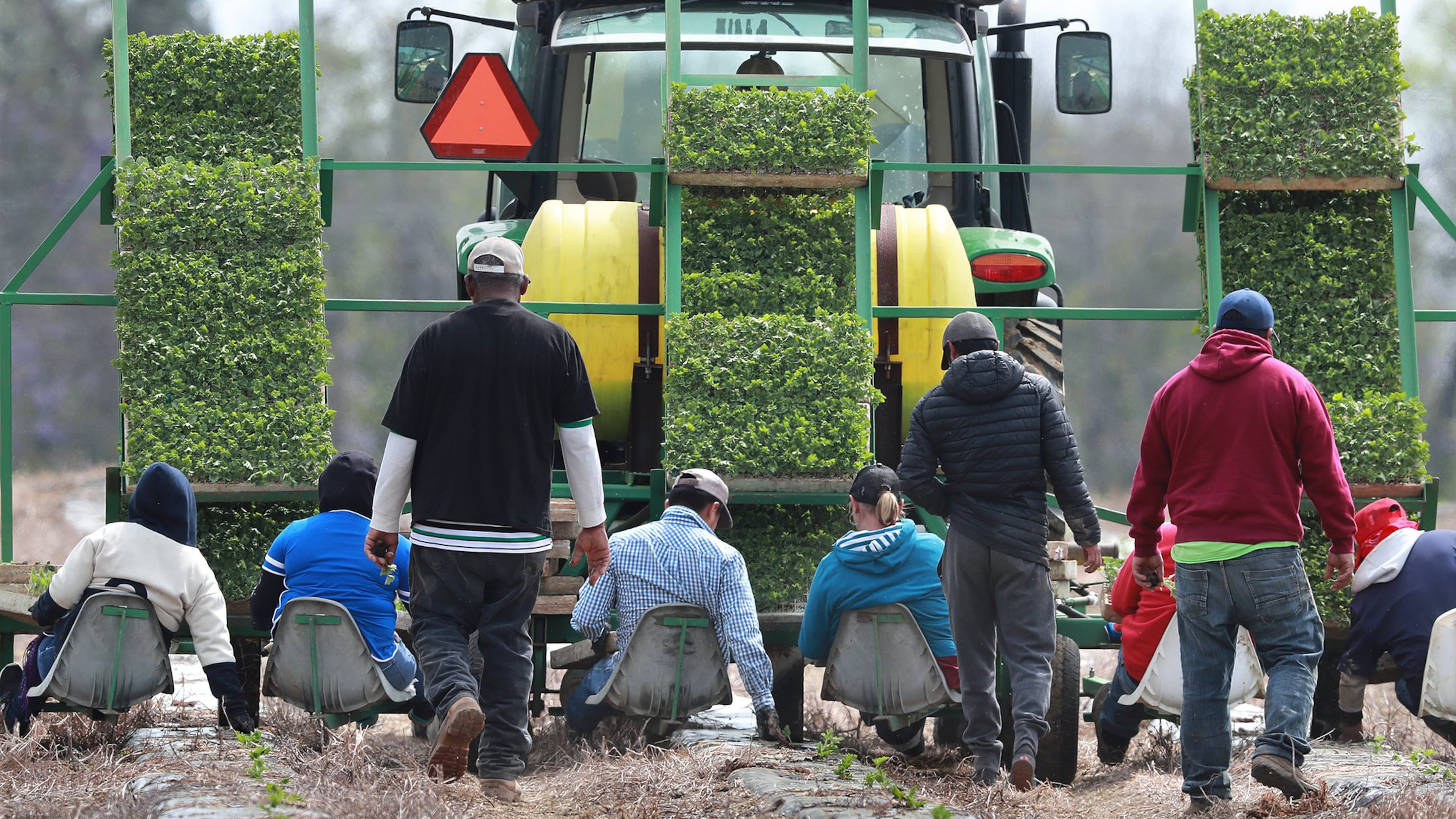
Three people involved in a massive human smuggling and labor trafficking operation that illegally transported Mexican and Central American workers into brutal conditions on South Georgia farms were formally sentenced in June to 51, 40 and 10 months in federal prison, respectively.
While these sentences bring a small amount of comfort and justice to the migrant workers whose abuse was unveiled by Operation Blooming Onion — one of the largest federal agricultural trafficking investigations in U.S. history — the outcome leaves a bitter taste in the mouths of workers and advocates.
Because while this case may be over, hundreds of thousands of migrant workers in the H-2A farmworker visa program remain at risk of facing the same kind of abuse and exploitation.
And if lobbyists and legislators are able to expand these broken programs without fixing their structural flaws, even more workers will be put at risk.
Federal H-2A program creates a power imbalance


Both our organizations — Sur Legal Collaborative and Centro de los Derechos del Migrante — have spent years on the ground providing legal services and advocating for migrant worker rights, in Georgia and across the United States.
From our experience working closely with migrant and immigrant worker communities, we know that Operation Blooming Onion is not an isolated “bad apple” story.
It is the predictable result of a guest worker framework that strips workers of their freedom and their agency.
Designed to address domestic farm labor shortages, the federal H-2A guest worker program allows agricultural employers to recruit foreign nationals for temporary and seasonal work.
But at the heart of it, the H-2A visa program creates an inherent power imbalance that bad actors easily weaponize.
Because a guest worker’s legal status — not to mention their housing, transportation, and employment — is tied strictly to a single employer, complaining about wage theft, squalid housing, sexual harassment, gender-based violence or lack of workplace safety means risking immediate termination, deportation, and blacklisting.
In the Blooming Onion case, recruiters and farm labor contractors exploited this exact vulnerability.
They withheld travel documents, charged illegal recruitment fees that trapped workers in debt, and forced them to perform backbreaking labor under the threat of retaliation and violence.
Despite these glaring dangers, there is a coordinated push to dramatically expand the H-2A program while simultaneously tearing down existing guardrails.
On June 17, the Trump administration opened the doors of the H-2A program to dairy operations, a move long opposed by workers, activists and unions.
Meanwhile in Congress, various legislative efforts, such as the recently introduced Securing Agriculture’s Workforce Act (SAWA), aim to make the H-2A visa available to other year-round industries, such as poultry, seafood and meat processing — sectors which already face higher rates of workplace injury alongside lower rates of abuse reporting.
New model must focus on agency and freedom

At the exact same time, vital administrative protections are under relentless attack. Recent federal rules designed to guarantee access to safe transportation and recruitment transparency were rolled back early last year.
The administration also significantly reduced farmworker wages through its new Adverse Effect Wage Rate (AEWR) methodology aimed at preventing wage suppression. Right here in Georgia, migrant farmworker wages were slashed by more than $5 an hour.
There is no denying that the agricultural sector across the country faces real labor shortages. Farmers need workers, and our food supply chain requires stability. But expanding fundamentally flawed, dangerous programs is not the answer. We cannot secure our food supply by sacrificing the basic human rights of farmworkers.
We need an alternative model for labor migration that prioritizes those rights. A model based on worker agency and freedom. A model that protects all workers and holds employers and recruiters accountable.
Until we build a model that respects the human dignity of workers, cases like Operation Blooming Onion will continue to happen in Georgia and across the United States. It’s time to stop enabling abuses and finally build a system that protects workers.
Alessandra Stevens is a staff attorney at Sur Legal Collaborative, a legal nonprofit in Atlanta working at the intersection of labor and immigrant rights. Julia Solórzano is the legal and policy director at Centro de los Derechos del Migrante, a binational migrant rights organization.