In a post-Voting Rights Act world, here’s how Americans can find our voice
On Wednesday, Georgia lawmakers will convene a special session to redraw the state’s district maps — and my parents, who were born Black in this state in 1949 and 1950, will watch as politicians carve up and shred their vote.
They were born into a Georgia that denied them full citizenship. They may now die in one that denies it still.
They were among the first generations of Black Americans to cast a ballot after having their fundamental rights buried beneath administrative burdens and obstructive, blatantly racist policies for centuries.
They spoke of the daily harms, large and small, inflicted on them by a racist society, and the profound, life-altering relief they felt when the Civil Rights Act of 1964 and the Voting Rights Act of 1965 were signed into law. For the first time in their lives, they could finally contemplate living as fully realized citizens of the United States.
Their stories also always came with a stern, sometimes urgent warning: Rights are fragile. Once you lose them, they can be nearly impossible to regain.
As aggressive redistricting ensues, our system needs to change
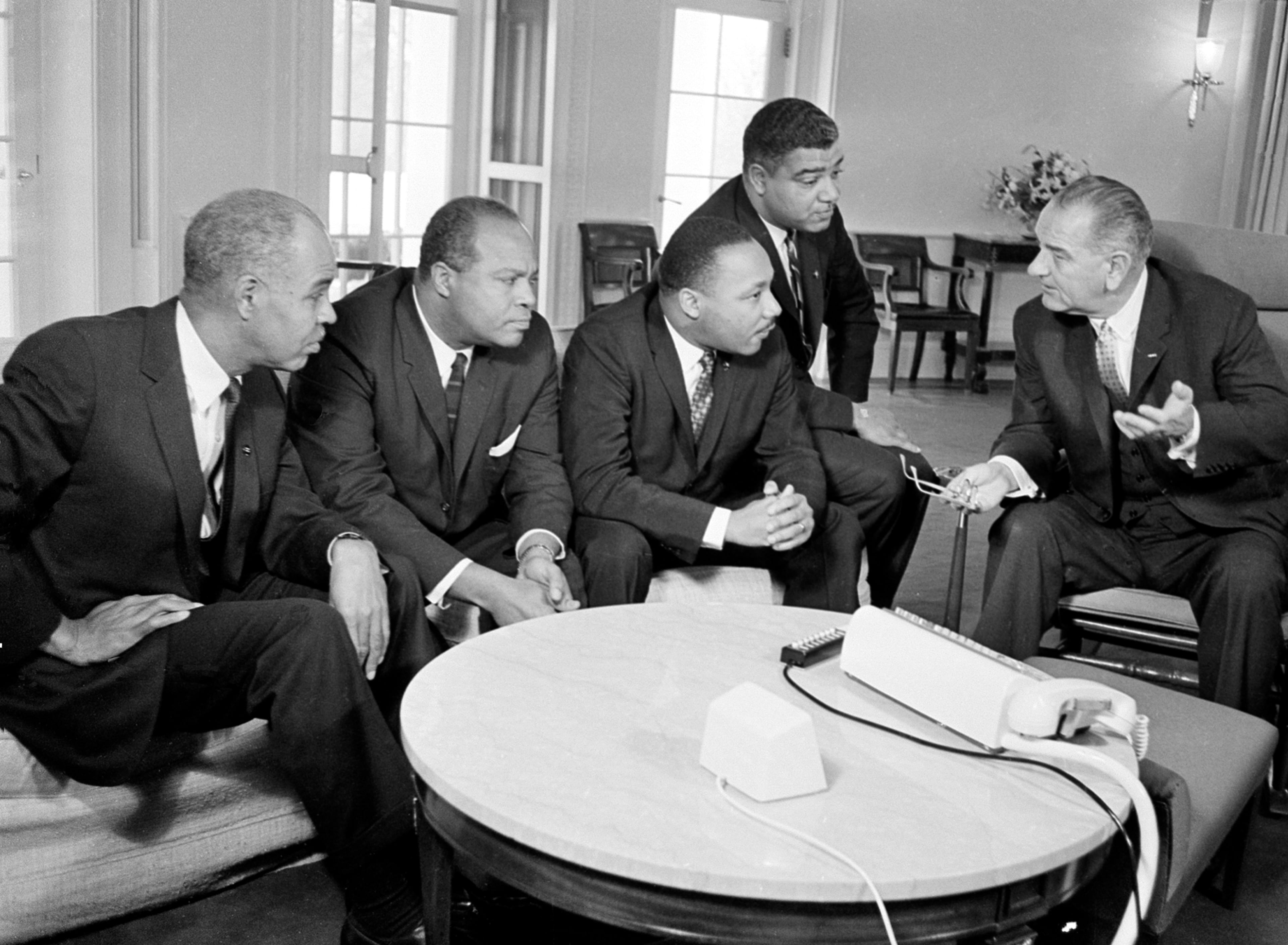
In April, the Supreme Court issued its ruling in Louisiana v. Callais, dealing a perhaps fatal blow to the Voting Rights Act. While previous rulings like Shelby County gutted the Voting Rights Act’s preclearance system, and Brnovich rendered its protections against disenfranchising barriers unusable, Callais struck the final blow — effectively dismantling protections against the vote-diluting effects of gerrymandering.
The Voting Rights Act granted my parents and a generation of Black citizens a say in our democracy; it brought America closer to delivering on its promise of equality. The Supreme Court’s decisions have obliterated the act’s framework, leaving my community exposed to the voter suppression and gerrymandering that defined the Jim Crow world my parents thought they had escaped.
The consequences have been immediate. Across the South, mapmakers have aggressively sought to racially gerrymander districts ahead of the November midterms.
For my parents — who lived through Jim Crow and stood in line to cast their ballots — watching this swift dismantling of what they bled to achieve is not merely a political disappointment. It is a source of profound personal grief.
Gerrymandering — both racial and political — must stop if our nation is ever to progress. The court has made clear it will not enforce our right to fair representation.
Instead, we must think bigger and embrace one of the most effective antidotes to gerrymandering: proportional representation.
In our current winner-take-all system, if a voting group holds 51% of the vote in a district, they win 100% of the power, leaving the remaining 49% voiceless.
Proportional representation fixes this by replacing single-member districts with larger regional ones, allocating seats in proportion to each voting group’s share of the electorate. In a five-seat district, a group with a majority of votes still elects a majority of seats, but not all of them. Any group with about 20% could still elect a candidate, too.
Because seats reflect votes, gerrymandering becomes largely pointless and every community earns its fair share of representation.
Fight battles with 21st-century tools, not those from 1965
This means Black voters anywhere could not be shut out through gerrymandering. In a state like Georgia, Black voters statewide would have the power to help elect a preferred candidate, not just those who live in Black-majority districts.
With that new voter power, we could see surges in organizing and voter turnout among Black voters in the South and other communities of color nationwide.
This is not a pipe dream. We are among the last major democracies on Earth not to use proportional representation.
In New Zealand, Chile and South Africa, it has ensured meaningful power sharing and far greater representation for minority and indigenous communities, serving as a source of stability for societies with deep racial divisions. Where attempts to stop gerrymandering have failed, proportional representation can help us out of this spiral.
My parents taught me that the work they began was never meant to end with their generation. They stressed that the humiliation, constant injustice and herculean sacrifices they and others endured to create a true representative democracy could not be in vain.
Callais proves that fighting the battles of 1965 with the tools of 1965 simply won’t be enough. If we want to move our nation closer to delivering on the promise of America for all, honor the legacy of the Civil Rights Movement and build a better democracy for the next 250 years, we must evolve.
It is time to demand proportional representation. Our democracy depends on it.
Peter Simmons is a Georgia-based policy strategist at Protect Democracy, a cross-ideological nonprofit group dedicated to defeating authoritarianism.