America’s oldest city tells lesser known chapters of American history
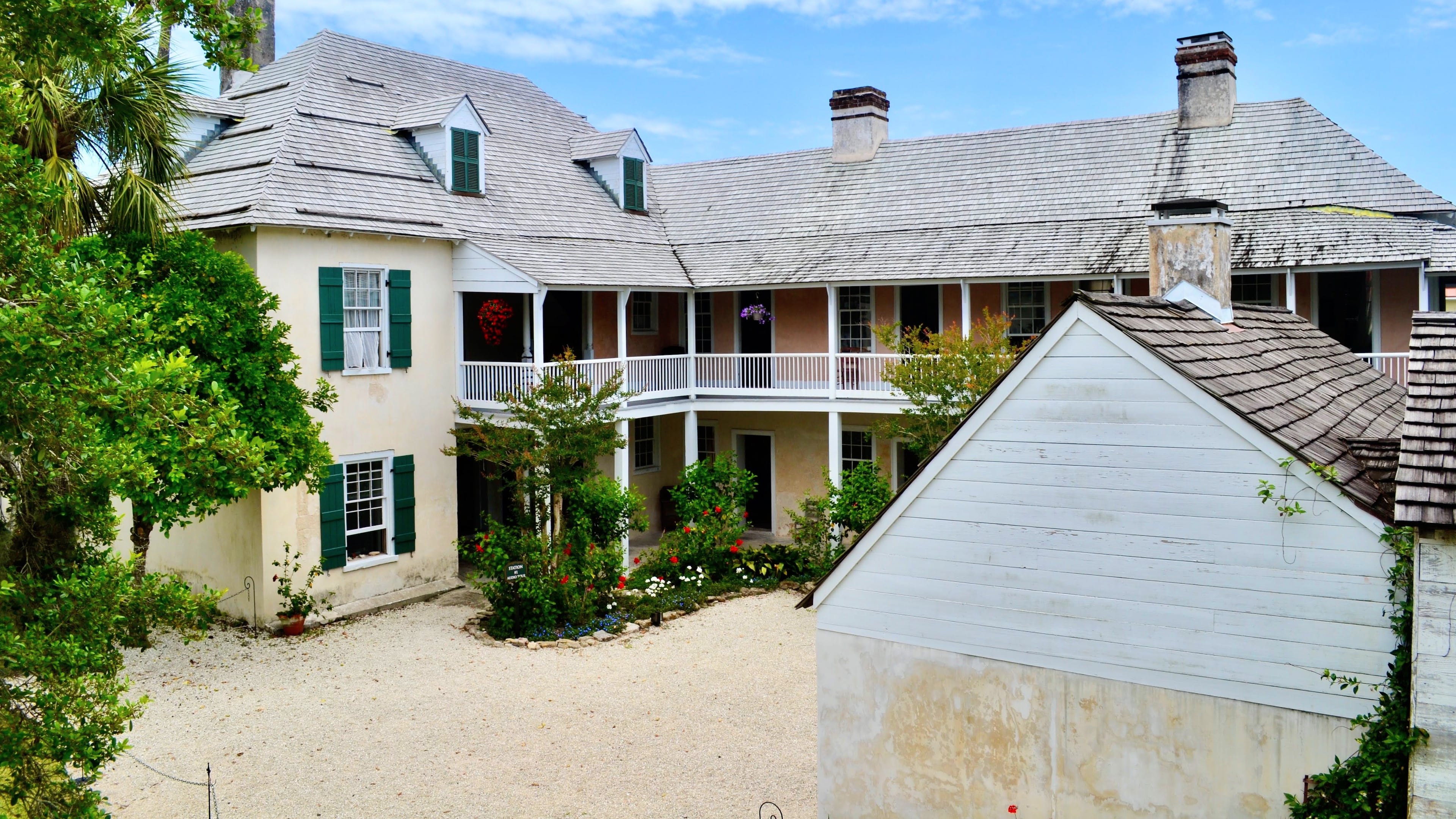
From the gun deck of Castillo de San Marcos National Monument in St. Augustine, Florida, reenactors in colonial-era Spanish military uniforms execute a cannon firing drill as visitors marvel at the pageantry of it all. Devout Catholic soldiers in blue coats and knee-breeches make the sign of the cross, invoking divine protection while performing this dangerous task. The gunner removes his tricorn hat and bows to another artillerist, giving him permission to load the cannon ball.
“Fuego! (Fire!)!” he commands. The spectators cover their ears as the replica cannon booms over Matanzas Bay.
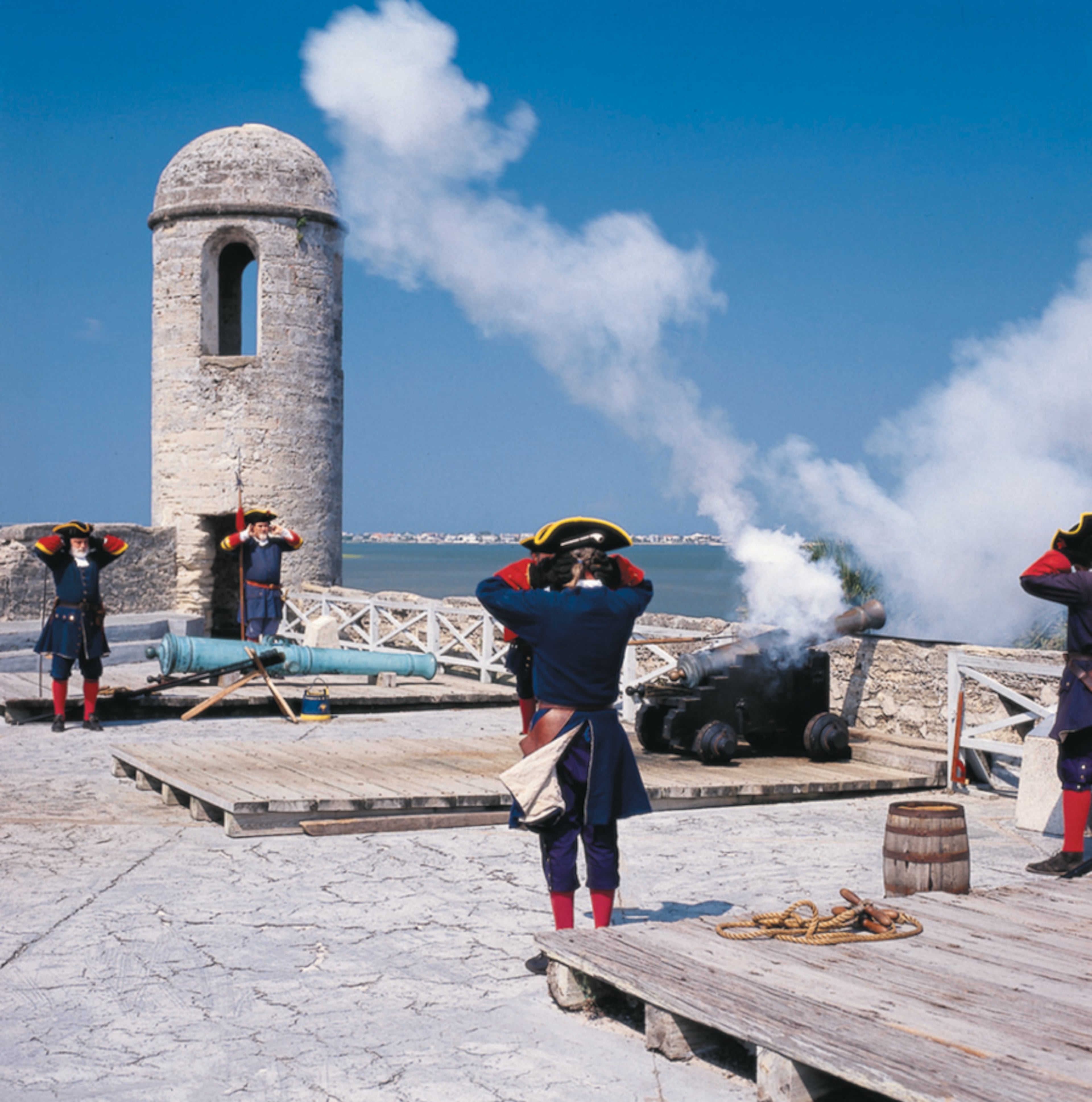
Of course, there’s no actual cannon ball, just a loud burst of gunpowder, but the reenactment is a realistic representation of 17th-century military life inside the imposing fortress built to protect the first permanent European settlement in the New World. Founded by Pedro Menéndez de Avilés in 1565, St. Augustine predates the British colony of Jamestown, Virginia, by 42 years.
The star-shaped stronghold is the oldest masonry fort in the continental United States — an enduring symbol of the city’s Spanish roots. It survived two British attacks (in 1702 and 1740) thanks largely to 12-foot walls made of coquina, a porous stone studded with fossilized seashells. The material absorbs cannon balls without shattering like traditional stone.
It’s obvious why this stretch of Florida’s Atlantic Coast is called the Historic Coast. Even beyond the fort, historic landmarks are everywhere — spanning four centuries from the first Spanish period to the grandeur of the Gilded Age and beyond. And there’s no better time for an immersive history lesson than the fall shoulder season when temps are cooler.
The Ximenez-Fatio House
Check out the three-story Ximenez-Fatio House that sprawls along Aviles Street, the oldest street in the nation. The L-shaped coquina home was built in 1798 for merchant Andres Ximenez, but the house museum mainly interprets the 1830s when Florida was a U.S. territory.
By that time, the mansion was known as Mrs. Whitehurst’s Boarding House, an upscale establishment managed by Eliza Whitehurst. Later the boarding house was run by Louisa Fatio, whose name joins Ximenez’s in the house’s modern designation.
“Women’s history is at the heart of our story,” manager Julia Brennan said. “In the 19th century, it was very rare for women to own and operate businesses, yet the women connected to our house did exactly that.”
In the early 1800s, visitors often chose boarding houses over hotels because they were more affordable for a long-term stay. In a pre-aviation age, travelers didn’t come for a long weekend — they came for winter.
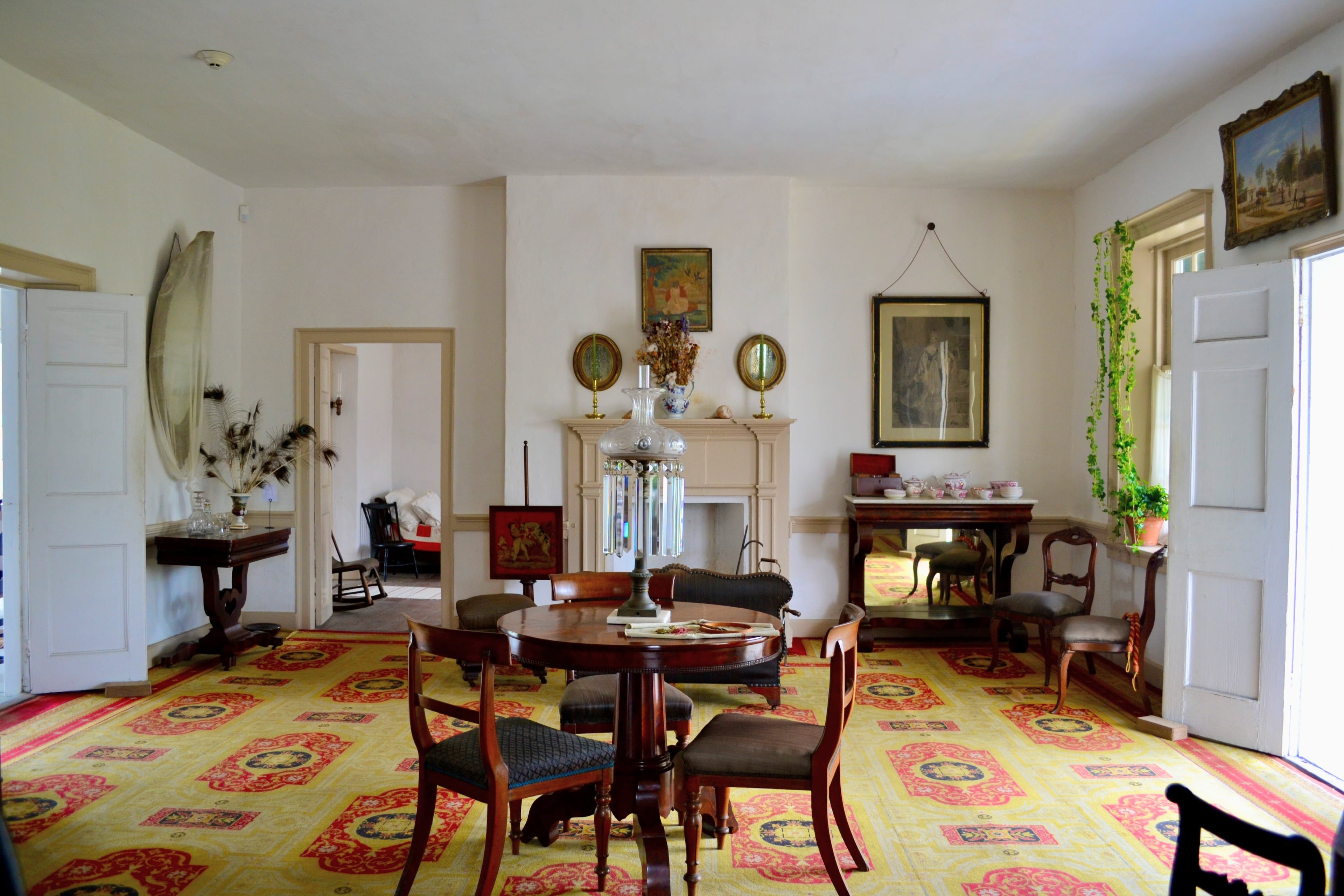
For $10 a week, guests got a very fine roof over their heads and three meals a day. Lunch was an elaborate, nine-course meal. The dining table is set with Blue Willow china and crystal goblets, but to modern eyes, the most interesting thing is the punkah, a large fan over the table that shooed away the flies.
An array of ancient artifacts has been excavated on the property. The most precious is a Caravaca Cross, circa 1650, that symbolizes the end of the Black Plague in Europe. It’s on view in the museum gift shop.
Take a docent-led or self-guided tour of this intriguing time capsule.
St. Photios Greek Orthodox National Shrine
On St. George Street in Old Town stands an inconspicuous wooden door that crowds pass every day without bothering to see what’s on the other side. Those inquisitive enough to open that door, however, will find a secret garden blooming with bougainvillea, a respite from the bustling pedestrian thoroughfare.
Keep going, and there’s a second door — the entrance to St. Photios Greek Orthodox National Shrine, formerly the Avero House, a memorial to the first Greek settlers in the New World.
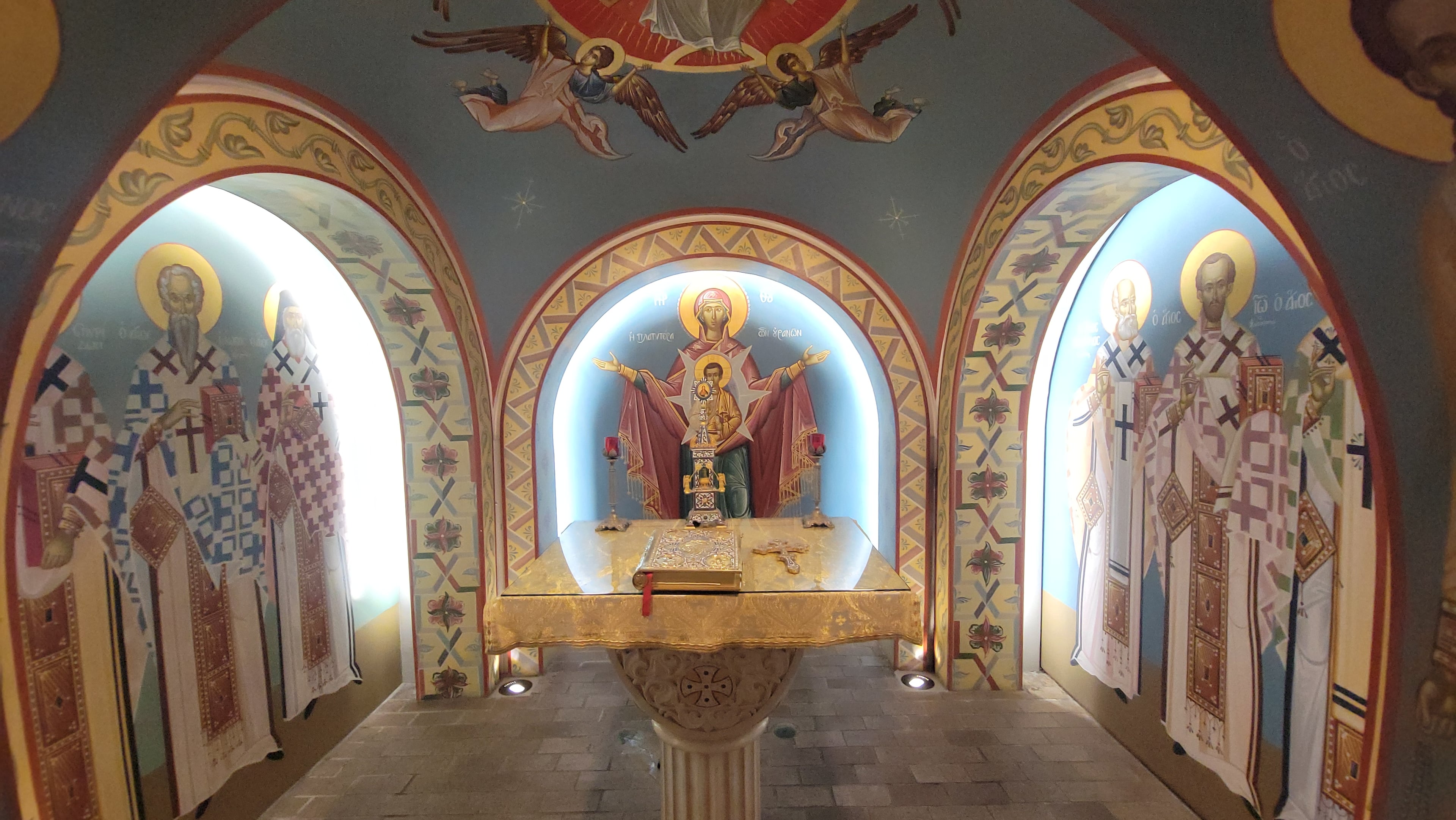
Visitors will find themselves surrounded by magnificent Byzantine-style frescoes glowing from the chapel walls and domed ceiling. As they wonder at the vivid Christian iconography that includes St. Photios the Great, the chapel’s namesake, a haunting Byzantine chant sets a reverent tone.
The adjacent museum chronicles the tragic story of the Greek colony of New Smyrna.
In 1768 when Florida was under British rule, Scottish businessman Dr. Andrew Turnbull recruited 1,400 Mediterranean laborers to work as indentured servants on his indigo plantation about 70 miles south of St. Augustine. Collectively, they became known as Minorcans because the party set sail from the island of Menorca, but they hailed from Greece, Italy and other Mediterranean countries.
Turnbull named New Smyrna after the port city that was his Greek wife’s homeland (now known as Izmir in modern-day Turkey). He assumed workers from the Mediterranean would be well-suited to Florida’s hot, humid climate, but there was more to adapt to than the weather.
“None of the indentured servants were accustomed to the threat of alligators, water moccasins nor mosquitoes as large as hummingbirds,” executive director Carl Hollister explained.
Cruel overseers and deadly diseases quickly dashed their dreams of a better life. In 1777, the surviving Minorcans marched to St. Augustine to plead their case to Gov. Patrick Tonyn. Moved by their hardships, he terminated their contracts as indentured servants and granted them land.
Many sheltered for a time at the Avero House, where the shrine stands today, and practiced their faith.
“For the Greek diaspora, this represents not only the Plymouth Rock of the first Greeks coming to America, it also represents the beginning of the Orthodox faith in North America,” Hollister said.
While many stroll past the shrine without realizing its significance, thousands of the faithful make pilgrimages here and light candles as a remembrance.
The Henry Flagler era
Unlike the ill-fated Minorcans, Gilded Age visitors to St. Augustine enjoyed every luxury.
Henry Flagler, the railroad and hotel magnate widely known as the “Father of Modern Florida” ushered in a new era of tourism in the 1880s, transforming an inaccessible backwater into a winter retreat for the rich.
Flagler understood that no matter how many lavish hotels he built, they would remain empty if elite Northerners couldn’t travel there comfortably. So, he linked several small railroad lines, allowing passengers to travel faster and in grand style.
When they arrived, many stayed at Flagler’s palatial Hotel Ponce de Leon, which opened in 1888.
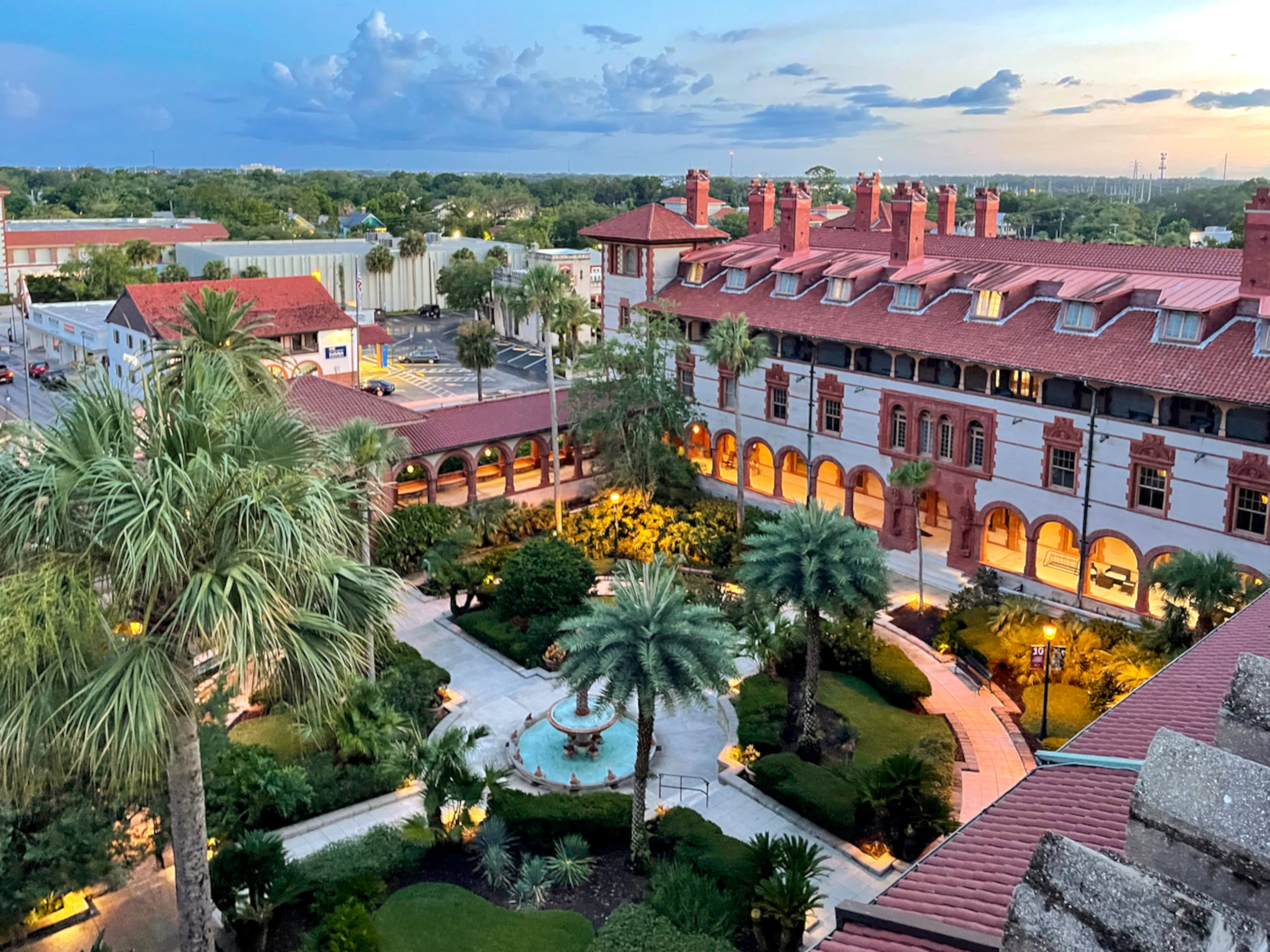
Even those accustomed to the best of everything were likely impressed with this masterpiece of Spanish Renaissance architecture featuring red roof tiles, imposing towers and a series of graceful arches.
Today, it’s Flagler College, and tours are available.
One of the most striking architectural features of this National Historic Landmark is the cavernous rotunda in the main lobby. A 68-foot dome gleams with gold leaf paintings. Names of Spanish explorers, including Juan Ponce de León, the founder of Florida, are hidden within the artworks.
In St. Augustine, numerous attractions bring the past to life, but it’s impossible to take in more than 400 years’ worth of history in one trip. If you’re confident you passed the introductory course, come back soon for St. Augustine history 2.0.
If you go
Where to stay
- St. George Inn is a boutique property in the heart of action in the historic district. stgeorge-inn.com
- St. Francis Inn is a quiet, luxury bed-and-breakfast in the historic district. stfrancisinn.com
Where to eat
- 17 King American Bistro is a wine-centric bistro that serves upscale American cuisine. 17kingsta.com
- The Raintree restaurant features Mediterranean and Asian-inspired dishes. raintreerestaurant.com