Will the breakthrough that helped Jimmy Carter be around for the next patient?
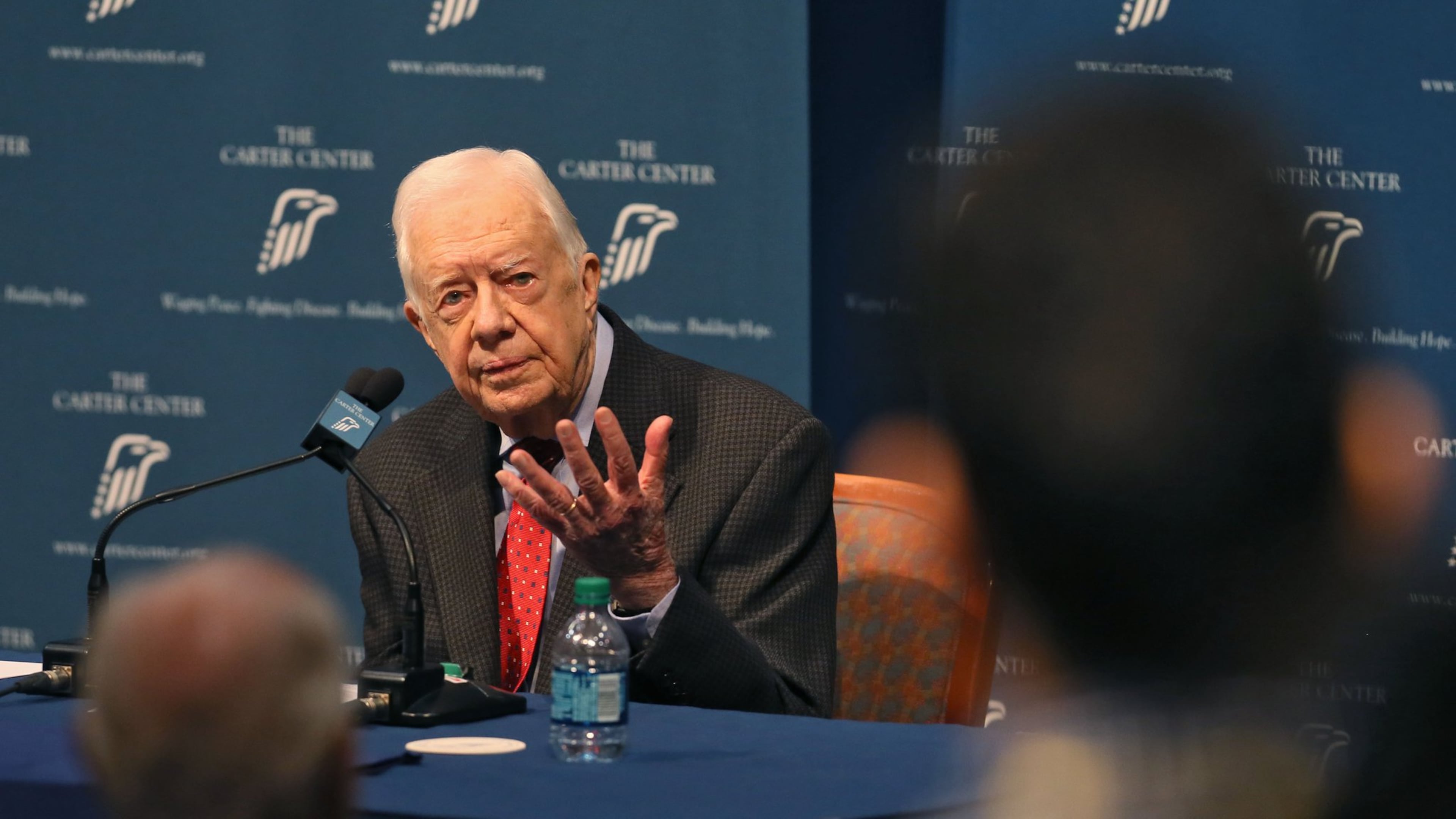
In 2015, former President Jimmy Carter was told his cancer had spread to his brain. At the time, that diagnosis was often a death sentence. Months later, his doctors told him something almost unthinkable: the tumors were gone. The treatment did not come from luck. It came from a new kind of medicine — one that helped his own immune system attack the cancer.
That breakthrough did not happen overnight, and it did not happen by accident. It was built.
For decades, American scientists studied how the immune system works. The federal government funded that research. Private investors backed early experiments many thought would fail. Regulators allowed careful testing. And patients volunteered for clinical trials, often not knowing whether the treatment would help them, but knowing it might help someone else.
That system — science, capital, regulation and trust — turned an idea into a treatment that saved lives. It is one of the most powerful engines of progress this country has ever created.
And today, it is under strain.
Political pressure threatens scientific research

The United States did not become a leader in medicine by chance. It built a system where ideas could be tested, challenged and proved. The National Institutes of Health invests roughly $50 billion each year in research, not to pick corporate winners, but to give scientists the freedom to ask hard questions and follow the evidence.
Private companies take those ideas and try to turn them into real treatments. Many fail. Some succeed in ways that change the world. Patients take part in clinical trials, often when the outcome is uncertain. That willingness to take part — even without knowing the outcome — is what makes progress possible.
The danger today is not that science is failing. In fact, the science is stronger than ever. We can edit genes, design drugs with artificial intelligence, and begin to repair biology itself.
The danger is that the system around that science is weakening.
Political pressure is creeping into scientific institutions. Funding is becoming less predictable. Regulatory rules are shifting in ways that make long-term investment harder.
When the system becomes less stable, progress slows — not all at once, but gradually. Fewer breakthroughs.
More uncertainty. More dependence on other countries for critical medicines and technologies.
We have seen what happens when politics replaces science.
In the Soviet Union, leaders rejected modern genetics because it conflicted with ideology. Scientists were silenced.
Agricultural policy followed politics instead of facts. Crop failures followed, and progress stalled for decades. The lesson is simple: When facts lose, people pay the price.
Research must remain independent
None of this is inevitable. The system that produced breakthroughs like Carter’s treatment can be protected. But it requires discipline.
Keep research independent. Keep funding stable and predictable. Keep decisions grounded in evidence — not ideology. This is not about politics. It is about whether facts still matter.
The treatment that helped Carter did not exist a decade before he needed it. The question is if the next patient will be as fortunate.
Because five years from now, somewhere in this country, a parent will sit in a doctor’s office and ask: Is there anything you can do?
The answer to that question will depend on whether we protected the system that makes new medicines possible — or allowed it to crumble and vanish with the wind.
Jeremy M. Levin, M.D., Ph.D., is a biotechnology executive and former CEO of Teva Pharmaceutical Industries, and chairman of the Biotechnology Innovation Organization. He currently serves as executive chairman of Ovid Therapeutics and has spent decades working at the intersection of scientific discovery, capital formation and public policy. His new book is “Biotech in the Balance: Saving a Strategic Industry in an Age of Distrust” (Rodin Books, May 19, 2026).
Send letters to the editor of 250 words or fewer with your name, city or town and contact information to letters@ajc.com.